
中国畜牧兽医 ›› 2026, Vol. 53 ›› Issue (2): 543-554.doi: 10.16431/j.cnki.1671-7236.2026.02.003
史佳琦( ), 王城名, 王文婧, 张卓雅, 杨立杰()
修回日期:2025-09-03
出版日期:2026-02-20
发布日期:2026-01-28
通讯作者:
杨立杰
E-mail:Sjq77317@163.com;yanglijie@sdau.edu.cn
作者简介:史佳琦,E-mail:Sjq77317@163.com
基金资助:
SHI Jiaqi(), WANG Chengming, WANG Wenjing, ZHANG Zhuoya, YANG Lijie()
Revised:2025-09-03
Online:2026-02-20
Published:2026-01-28
Contact:
YANG Lijie
E-mail:Sjq77317@163.com;yanglijie@sdau.edu.cn
摘要:
微生物是地球上储量最丰富的生物群体,在人类生产、健康和生活中均扮演着重要的角色。传统挖掘培养方案相对落后,只有极少一部分微生物能够被培养。近年来,随着高通量测序技术的飞速发展,培养组学逐渐进入研究者的视野,并在微生物种质资源的开发中显示出巨大的应用潜力,如通过多种培养条件结合基质辅助激光解吸时间飞行质谱(MALDI-TOF MS)技术成功在畜禽肠道、森林或海洋沉积物等环境中筛选出新菌株,为微生物资源挖掘提供了新途径。与此同时,通过构建微生物细胞工厂、解析非模式菌株代谢网络及设计合成微生物群落,为微生物的定向改造与功能强化提供了新思路,如通过构建微生物细胞工厂,可实现青蒿酸、聚羟基脂肪酸酯等产物的高效合成;基于嗜热菌、耐盐放线菌等非模式菌株开发的新型底盘细胞,突破了传统模式菌的代谢限制;而合成微生物群落优化了复杂产物的生物合成途径,提高了微生物的筛选与培养效率。文章综述了近年来微生物种质资源挖掘及选育技术,重点论述了培养组学及其他技术手段的联合应用策略,并整合了微生物细胞工厂构建、非模式菌株改造及合成微生物群落设计等方面的研究进展及其在不同领域的应用与挑战,以期为中国微生物种质资源的挖掘与高效应用提供理论基础与技术参考。
中图分类号:
史佳琦, 王城名, 王文婧, 张卓雅, 杨立杰. 微生物种质资源挖掘及选育技术研究进展[J]. 中国畜牧兽医, 2026, 53(2): 543-554.
SHI Jiaqi, WANG Chengming, WANG Wenjing, ZHANG Zhuoya, YANG Lijie. Research Progress on the Exploration and Breeding of Microbial Germplasm Resources[J]. China Animal Husbandry & Veterinary Medicine, 2026, 53(2): 543-554.
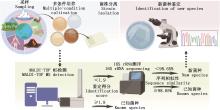
图1
培养组学应用流程"

表1
培养组学在微生物筛选中的应用"
样本来源 Sample source | 微生物种类 Microbial species | 所用技术 Technology | 优点 Advantages | 参考文献 References | |
|---|---|---|---|---|---|
动物 Animals | 奶牛粪便 Dairy cow feces | 芽孢杆菌 | 6种培养基筛选芽孢杆菌、特异性引物PCR检测、生物信息相似性检测 | 提高筛选出的芽孢杆菌种类及数量 | 王浩先等[ |
人体血液 Human blood | 苏云金芽孢杆菌、痤疮丙酸杆菌、短短芽孢杆菌等 | 培养组学培养鉴定、宏基因组学进行物种分析 | 培养组学与宏基因组学相互验证,准确性高 | 赵梦伊等[ | |
人体阴道 Human vagina | 乳杆菌、链球菌、放线菌、拟杆菌等 | 35种不同培养基、 MALDI-TOF MS鉴定 | 精确的描述微生物及多样性 | Abou Chacra等[ | |
人体肺部 Human lung | 副血链球菌、毗邻颗粒链菌、非典型韦荣菌等 | 采用瘤胃液和羊血的厌氧/需氧培养基、MALDI-TOF MS检测、16S rRNA基因测序 | 提高微生物丰度 | 刘月姣等[ | |
人体粪便 Human feces | 普雷沃氏菌、脆弱拟杆菌、普氏粪杆菌等 | 宏基因组学和培养组学相结合 | 微生物信息、菌株-菌株/宿主互作信息丰富,靶向筛选功能菌 | 句英娇等[ | |
肉鸡盲肠 Broiler cecum | 果囊乳杆菌、粪肠球菌、乳杆菌、拟杆菌等 | 16S rDNA测序、不同时间/培养基培养、MALDI-TOF MS技术 | 可培养出未培养或难培养的菌株,简单、快速、高通量 | 黄明星 [ | |
乙肝患者粪便 Feces of patients with hepatitis B | 拟杆菌属、肠球菌属、肠球菌属、链球菌属等 | 厌/需氧培养基、MALDI-TOF MS检测、16S rDNA测序 | 提高对菌群失调和乙肝病毒关系的认识 | Magdy Wasfy等[ | |
自然环境 Natural environment | 森林沉积物 Forest sediment | 热带念珠菌、粪壳菌纲、散囊菌纲、座囊菌纲等 | 真菌富集培养法和真菌分离芯片 | 提高未培养真菌的分离与检测效率 | Li等[ |
海洋沉积物 Marine sediment | 放线菌、黄叶杆菌、疣状菌等 | 微胶囊原位培养 | 筛选出更多菌种 | Pope等[ | |
苜蓿根部 Alfalfa roots | 草木樨中华根瘤菌、苜蓿根瘤菌、荣杆菌属、新鞘脂菌属等 | 纯植物性培养基、16S rDNA测序 | 显著提高苜蓿根部内生菌的可培养数量 | Hagazi等[ | |
表2
细胞分选方法及其应用"
类别 Category | 方法 Methods | 功能 Functions | 应用 Applications | 优点 Advantages | 参考文献 References |
|---|---|---|---|---|---|
微囊封装 Microcapsule encapsulation | 凝固琼脂糖微胶囊 | 封装单个细胞 | 鉴定并分离浮游菌和α变形菌 | 应用环境广 | Zengler等[ |
| 海藻酸盐微胶囊 | 将细菌与海藻酸钠溶液混合后,滴入含Ca2+的溶液中,将微生物包裹培养 | 培养疣状微生物和Epsilonproteo | 可模拟天然微环境,避免种间抑制,提高菌株存活率 | Ji等[ | |
基于特定标记分选 Marker-specific sorting | 荧光激活 | 将目标微生物荧光标记,通过仪器检测荧光信号,筛选具有特殊功能的菌种 | 根据液滴特性对封装微生物进行分选 | 精准定位功能菌,避免不必要干扰 | Eun等[ |
微环境培养 Microenvironment cultivation | 微生物液滴培养系统 | 根据需要对液滴进行操纵培养 | 将液滴封装在聚磺酸盐膜内,实现细胞与环境隔离培养 | 可对生长缓慢的微生物进行单独培养 | Jian等[ |
| 微生物观察和培养阵列 | 不需要任何复杂设备,进行小规模微生物培养 | 分离海洋微生物,包括假交替单胞菌属、希瓦氏菌属、科尔韦利亚属 | 系统更简单,可在较小的体系中利用不同培养基进行培养 | Gao等[ | |
拉曼细胞分选 Raman-activated cell sorting | 单细胞拉曼光谱 | 激光与样品作用激发化学键振动或旋转以识别分子指纹,结合共聚焦显微镜等实现单细胞检测 | 对细胞功能进行定量及多方面研究 | 高通量,高纯度 | Yan等[ |
光镊技术 Optical tweezers | 使用高度聚焦的激光束来捕捉和操纵微观的中性物体 | 分离海洋微生物 | 无需物理接触即可在无菌封闭室中实现细胞分离 | Liu等[ |
表3
微生物细胞工厂工业化产物及生产挑战"
产物类型 Product types | 代表产物 Representative products | 底盘细胞 Chassis cells | 应用 Applications | 挑战 Challenges | 突破方向 Breakthrough direction | 参考文献 References |
|---|---|---|---|---|---|---|
医药 Medical drugs | 青蒿酸 | 酿酒酵母 | 产量从0.1 g/L提高到25 g/L,治疗疟疾 | 氧化酶活性低,生产效率低 | 优化宿主中氧化酶性能 | Ro等[ |
| 白藜芦醇 | 酿酒酵母、大肠杆菌 | 产量约5 g/L,预防糖尿病、癌症 | 底盘微生物生长受产物抑制 | 构建耐受性底盘细胞 | Wu等[ | |
| 类胡萝卜素 | 酿酒酵母 | 滴度达到2.09 g/L,降低慢性病风险 | 产率较低 | 诱变和高通量筛选结合,选育高产菌株 | Cho等[ | |
燃料 Fuels | 生物乙醇 | 蓝藻菌 | 清洁燃料 | 生产效率低 | 利用基因编辑技术敲除竞争途径基因 | Zhao等[ |
| 丁醇 | 梭菌 | 航空燃料 | 原料成本高,产物自身抑制微生物生长 | 发掘具有丁醇耐受基因菌株 | Borden等[ | |
生物材料 Biomaterials | 聚羟基脂肪酸酯 | 假单胞菌 | 降解塑料 | 产率低,底物成本高 | 简化提取过程,降低成本 | Ene等[ |
| 聚乳酸 | 酿酒酵母、大肠杆菌 | 食品包装 | 耐热性差 | 在聚乳酸链中引入其他单体形成共聚物 | Yang等[ | |
| 透明质酸 | 枯草芽孢杆菌 | 关节润滑剂 | 生产成本高 | 利用低成本碳源 | Vu等[ | |
化学制品 Chemical products | 1,3-丙二醇 | 大肠杆菌 | 聚酯纤维 | 底物转化率低 | 平衡合成途径中碳流分布 | Yang等[ |
| 琥珀酸 | 大肠杆菌 | 酸化剂 | pH敏感,副产物积累多 | 构建pH耐受菌株,沉默副产物代谢途径 | Yan等[ | |
| 抗生素 | 链霉菌 | 抗感染药物(青霉素) | 底物成本高,发酵周期长 | 重构代谢途径,低成本碳源生产 | Alam等[ |
| [1] | LAGIER J C, KHELAIFIA S, ALOU M T, et al. Culture of previously uncultured members of the human gut microbiota by culturomics[J]. Nature Microbiology, 2016, 1(12): 16203. |
| [2] | 陆 琼, 畅灵丽, 王江栓. 微生物菌种选育技术的探索[J]. 中国食品工业, 2023, 14: 87-89. |
| LU Q, CHANG L L, WANG J S. Exploration of microbial strain breeding techniques[J]. China Food Industry, 2023, 14: 87-89. (in Chinese) | |
| [3] | SOOD U, KUMAR R, HIRA P. Expanding culturomics from gut to extreme environmental settings[J]. Msystems, 2021, 6(4): e00848-21. |
| [4] | 艾 铄, 张丽杰, 肖芃颖, 等. 高通量测序技术在环境微生物领域的应用与进展[J]. 重庆理工大学学报(自然科学), 2018, 32(9): 111-121. |
| AI S, ZHANG L J, XIAO P Y, et al. Application and progress of high-throughput sequencing technology in the field of environmental microorganisms[J]. Journal of Chongqing University of Technology (Natural Science), 2018, 32(9): 111-121. (in Chinese) | |
| [5] | BILEN M, DUFOUR J C, LAGIER J C, et al. The contribution of culturomics to the repertoire of isolated human bacterial and archaeal species[J]. Microbiome, 2018, 6(1): 94. |
| [6] | KOCH R. Zur Untersuchung Von Pathogenen Organismen[M]. Berlin: Norddeutschen Buchdruckerei und Verlagsanstalt, 1881. |
| [7] | REMENÁR M, KARELOVÁ E, HARICHOVÁ J, et al. Isolation of previously uncultivable bacteria from a nickel contaminated soil using a diffusion-chamber-based approach[J]. Applied Soil Ecology, 2015, 95: 115-127. |
| [8] | ARAYA M A, VALENZUELA T, INOSTROZA N G, et al. Isolation and characterization of cold-tolerant hyper-ACC-degrading bacteria from the rhizosphere, endosphere, and phyllosphere of Antarctic vascular plants[J]. Microorganisms, 2020, 8(11): 1788. |
| [9] | ZENGLER K, TOLEDO G, RAPPÉ M, et al. Cultivating the uncultured[J]. Proceedings of the National Academy of Sciences of the United States of America, 2002, 99(24): 15681-15686. |
| [10] | KAEBERLEIN T, LEWIS K, EPSTEIN S S. Isolating "uncultivable" microorganisms in pure culture in a simulated natural environment[J]. Science, 2002, 296(5570): 1127-1129. |
| [11] | PARK J, KERNER A, BURNS M A, et al. Microdroplet-enabled highly parallel co-cultivation of microbial communities[J]. PLoS One, 2011, 6(2): e17019. |
| [12] | LAGIER J C, DUBOURG G, MILLION M, et al. Culturing the human microbiota and culturomics[J]. Nature Reviews Microbiology, 2018, 16(9): 540-550. |
| [13] | CHEN L, GAO W, TAN X, et al. MALDI-TOF MS is an effective technique to classify specific microbiota[J]. Microbiology Spectrum, 2023, 11(3): e00307-23. |
| [14] | SULAIMAN I M, MIRANDA N, SIMPSON S. MALDI-TOF mass spectrometry and 16S rRNA gene sequence analysis for the identification of foodborne Clostridium spp.[J]. Journal of AOAC International, 2021, 104(5): 1381-1388. |
| [15] | NAUD S, KHELAIFIA S, MBOGNING FONKOU M D, et al. Proof of concept of culturomics use of time of care[J]. Frontiers in Cellular and Infection Microbiology, 2020, 10: 524769. |
| [16] | 王浩先, 陈 宇, 马 宁, 等. 应用培养组学分离鉴定牛源芽孢杆菌及其系统发育性分析[J]. 黑龙江八一农垦大学学报, 2022, 34(4): 37-45. |
| WANG H X, CHEN Y, MA N, et al. The analysis of bovine-derived spores and their system developmental properties identified by separation of culture histology[J]. Journal of Heilongjiang Bayi Agricultural University, 2022, 34(4): 37-45. (in Chinese) | |
| [17] | 赵梦伊, 刘安庆, 赵玉伟, 等. 基于培养组学和宏基因组学的血小板细菌检测方法研究[J]. 中国输血杂志, 2023, 36(11): 978-986. |
| ZHAO M Y, LIU A Q, ZHAO Y W, et al. Detection of platelet bacteria based on culturomics and metagenomics[J]. Chinese Journal of Blood Transfusion, 2023, 36(11): 978-986. (in Chinese) | |
| [18] | ABOU CHACRA L, BENATMANE A, IWAZA R, et al. Culturomics reveals a hidden world of vaginal microbiota with the isolation of 206 bacteria from a single vaginal sample[J]. Archives of Microbiology, 2024, 206(1): 20. |
| [19] | 刘月姣, 李俭杰, 孙一凡, 等. 利用培养组学技术分离培养肺部微生物群研究[J]. 微生物学报, 2022, 62(3): 1110-1118. |
| LIU Y J, LI J J, SUN Y F, et al. Isolation and cultivation of lung microbiota with culturomics[J]. Acta Microbiologica Sinica, 2022, 62(3): 1110-1118. (in Chinese) | |
| [20] | 句英娇, 王小通, 王隐瑜, 等. 宏基因组及培养组学技术在粪菌移植中的应用[J]. 生物工程学报, 2022, 38(10): 3594-3605. |
| JU Y J, WANG X T, WANG Y Y, et al. Application of metagenomic and culturomic technologies in fecal microbiota transplantation: A review[J]. Chinese Journal of Biotechnology, 2022, 38(10): 3594-3605. (in Chinese) | |
| [21] | 黄明星. 基于培养组学对肉鸡盲肠菌群分离及益生菌的筛选[D]. 南昌: 江西农业大学, 2022. |
| HUANG M X. Isolation of cecal microflora and screening of probiotics in broilers based on culturomics[D]. Nanchang: Jiangxi Agricultural University, 2022. (in Chinese) | |
| [22] | MAGDY WASFY R, MBAYE B, BORENTAIN P, et al. Ethanol-producing Enterocloster bolteae is enriched in chronic hepatitis B-associated gut dysbiosis: A case-control culturomics study[J]. Microorganisms, 2023, 11(10): 2437. |
| [23] | LI M, RAZA M, SONG S, et al. Application of culturomics in fungal isolation from mangrove sediments[J]. Microbiome, 2023, 11(1): 272. |
| [24] | POPE E, CARTMELL C, HALTLI B, et al. Microencapsulation and in situ incubation methodology for the cultivation of marine bacteria[J]. Frontiers in Microbiology, 2022, 13: 958660. |
| [25] | HEGAZI N A, SARHAN M S, FAYEZ M, et al. Plant-fed versus chemicals-fed rhizobacteria of lucerne: Plant-only teabags culture media not only increase culturability of rhizobacteria but also recover a previously uncultured Lysobacter sp., Novosphingobium sp. and Pedobacter sp.[J]. PLoS One, 2017, 12(7): e0180424. |
| [26] | NEGERI N G, NGUYEN D D A, MICHAEL M, et al. Multi-omic dereplication of antibiotic production by diffusion chamber isolated bacteria from Australian soils[J]. BioRxiv, 2025, 2025:667785. |
| [27] | CHABIB L, RUSTANDI T, FAWWAZI M H A F, et al. Harnessing iChip technology for novel antibiotic discovery from peat soil microbiomes to combat antimicrobial resistance[J]. Frontiers in Microbiology, 2025, 16: 1530273. |
| [28] | 梁怡萧, 潘建章, 方 群. 基于微流控技术的细胞水平高通量药物筛选系统的研究进展[J]. 色谱, 2021, 39(6): 567-577. |
| LIANG Y X, PAN J Z, FANG Q. Research advances of high-throughput cell-based drug screening systems based on microfluidic technique[J]. Chinese Journal of Chromatography, 2021, 39(6): 567-577. (in Chinese) | |
| [29] | MARTIN K, HENKEL T, BAIER V, et al. Generation of larger numbers of separated microbial populations by cultivation in segmented-flow microdevices[J]. Lab on a Chip, 2003, 3(3): 202-207. |
| [30] | JAROSZ D F, BROWN J C S, WALKER G A, et al. Cross-kingdom chemical communication drives a heritable, mutually beneficial prion-based transformation of metabolism[J]. Cell, 2014, 158(5): 1083-1093. |
| [31] | TEREKHOV S S, SMIRNOV I V, MALAKHOVA M V, et al. Ultrahigh-throughput functional profiling of microbiota communities[J]. Proceedings of the National Academy of Sciences of the United States of America, 2018, 115(38): 9551-9556. |
| [32] | QIAO Y, HU R, CHEN D, et al. Fluorescence-activated droplet sorting of PET degrading microorganisms[J]. Journal of Hazardous Materials, 2022, 424: 127417. |
| [33] | TAUZIN A S, PEREIRA M R, VAN VLIET L D, et al. Investigating host-microbiome interactions by droplet based microfluidics[J]. Microbiome, 2020, 8(1): 141. |
| [34] | NAKAMURA A, SUZUKI Y, HOMMA N, et al. Ultrahigh-throughput screening of environmental bacteria for proteolytic activity using droplet-based microfluidics[J]. Applied and Environmental Microbiology, 2025, 91(7): e00109-25. |
| [35] | 庄琪琛, 宁芮之, 麻 远, 等. 微流控技术应用于细胞分析的研究进展[J]. 分析化学, 2016, 44(4): 522-532. |
| ZHUANG Q C, NING R Z, MA Y, et al. Recent development in microfluidic chips for in vitro cell-based research[J]. Chinese Journal of Analytical Chemistry, 2016, 44(4): 522-532. (in Chinese) | |
| [36] | 李斌斌, 吴丹妮, 聂国兴, 等. 未/难培养微生物可培养策略研究:机遇与挑战[J]. 微生物学通报, 2023, 50(2): 832-844. |
| LI B B, WU D N, NIE G X, et al. Isolation and culture techniques of uncultured microorganisms: Challenges and opportunities[J]. Microbiology China, 2023, 50(2): 832-844. (in Chinese) | |
| [37] | 叶姜瑜, 罗固源. 微生物可培养性低的生态学释因与对策[J]. 微生物学报, 2005, 45(3): 478-482. |
| YE J Y, LUO G Y. Ecological interpretation and related strategies for low culturability of microorganisms[J]. Acta Microbiologica Sinica, 2005, 45(3): 478-482. (in Chinese) | |
| [38] | LI J, XIAO X, ZHOU M, et al. Strategy for the adaptation to stressful conditions of the novel isolated conditional Piezophilic strain Halomonas titanicae ANRCS81[J]. Applied and Environmental Microbiology, 2023, 89(3): e01304-22. |
| [39] | HARDER W, DIJKHUIZEN L. Physiological responses to nutrient limitation[J]. Annual Review of Microbiology, 1983, 37(1): 1-23. |
| [40] | 周 楠, 姜成英, 刘双江. 从环境中分离培养微生物:培养基营养水平至关重要[J]. 微生物学通报, 2016, 43(5): 1075-1081. |
| ZHOU N, JIANG C Y, LIU S J. Cultivation of microorganisms from environments: Nutrient level of the culture medium is of great importance[J]. Microbiology China, 2016, 43(5): 1075-1081. (in Chinese) | |
| [41] | IMACHI H, NOBU M K, NAKAHARA N, et al. Isolation of an archaeon at the prokaryote-eukaryote interface[J]. Nature, 2020, 577(7791): 519-525. |
| [42] | JUNG D, MACHIDA K, NAKAO Y, et al. Cultivation of previously uncultured sponge-associated bacteria using advanced cultivation techniques: A perspective on possible key mechanisms[J]. Frontiers in Marine Science, 2022, 9: 963277. |
| [43] | LIU S, YU Z, ZHONG H, et al. Functional gene-guided enrichment plus in situ microsphere cultivation enables isolation of new crucial ureolytic bacteria from the rumen of cattle[J]. Microbiome, 2023, 11(1): 76. |
| [44] | JI S, ZHAO R, YIN Q, et al. Gel microbead cultivation with a subenrichment procedure can yield better bacterial cultivability from a seawater sample than standard plating method[J]. Journal of Ocean University of China, 2012, 11(1): 45-51. |
| [45] | BÖRNER R A, ALIAGA M T A, MATTIASSON B. Microcultivation of anaerobic bacteria single cells entrapped in alginate microbeads[J]. Biotechnology Letters, 2013, 35(3): 397-405. |
| [46] | EUN Y J, UTADA A S, COPELAND M F, et al. Encapsulating bacteria in agarose microparticles using microfluidics for high-throughput cell analysis and isolation[J]. ACS Chemical Biology, 2011, 6(3): 260-266. |
| [47] | ZANG E, BRANDES S, TOVAR M, et al. Real-time image processing for label-free enrichment of actinobacteria cultivated in picolitre droplets[J]. Lab on a Chip, 2013, 13(18): 3707-3713. |
| [48] | ESPINA L. An approach to increase the success rate of cultivation of soil bacteria based on fluorescence-activated cell sorting[J]. PLoS One, 2020, 15(8): e0237748. |
| [49] | JIAN X, GUO X, WANG J, et al. Microbial microdroplet culture system (MMC): An integrated platform for automated, high-throughput microbial cultivation and adaptive evolution[J]. Biotechnology and Bioengineering, 2020, 117(6): 1724-1737. |
| [50] | BEN-DOV E, KRAMARSKY-WINTER E, KUSHMARO A. An in situ method for cultivating microorganisms using a double encapsulation technique: In situ method for cultivating microorganisms[J]. FEMS Microbiology Ecology, 2009, 68(3): 363-371. |
| [51] | GAO W, NAVARROLI D, NAIMARK J, et al. Microbe observation and cultivation array (MOCA) for cultivating and analyzing environmental microbiota[J]. Microbiome, 2013, 1(1): 4. |
| [52] | YAN S, QIU J, GUO L, et al. Development overview of Raman-activated cell sorting devoted to bacterial detection at single-cell level[J]. Applied Microbiology and Biotechnology, 2021, 105(4): 1315-1331. |
| [53] | LIU B, LIU K, WANG N, et al. Laser tweezers Raman spectroscopy combined with deep learning to classify marine bacteria[J]. Talanta, 2022, 244: 123383. |
| [54] | CROSS K L, CAMPBELL J H, BALACHANDRAN M, et al. Targeted isolation and cultivation of uncultivated bacteria by reverse genomics[J]. Nature biotechnology, 2019, 37(11): 1314-1321. |
| [55] | GAO J, DU M, ZHAO J, et al. Design of a genetically encoded biosensor to establish a high-throughput screening platform for L-cysteine overproduction[J]. Metabolic Engineering, 2022, 73: 144-157. |
| [56] | NIELSEN J, KEASLING J D. Engineering cellular metabolism[J]. Cell, 2016, 164(6): 1185-1197. |
| [57] | 赵东东, 宗 媛, 尹 蕾, 等. 基因组编辑技术及未来发展[J]. 生命科学, 2021, 33(12): 1462-1468. |
| ZHAO D D, ZONG Y, YIN L, et al. Genome editing technology and future development[J]. Chinese Bulletin of Life Sciences, 2021, 33(12): 1462-1468. (in Chinese) | |
| [58] | 胥健萍, 王 颖, 李 春, 等. 微生物细胞工厂中代谢途径动态调控策略与网络构建[J]. 化工进展, 2022, 41(12): 6511-6521. |
| XU J P, WANG Y, LI C, et al. Dynamic regulation strategies and network construction of metabolic pathways in microbial cell factories[J]. Chemical Industry and Engineering Progress, 2022, 41(12): 6511-6521. (in Chinese) | |
| [59] | MAO J, ZHANG H, CHEN Y, et al. Relieving metabolic burden to improve robustness and bioproduction by industrial microorganisms[J]. Biotechnology Advances, 2024, 74: 108401. |
| [60] | 杨永富, 耿碧男, 宋皓月, 等. 合成生物学时代基于非模式细菌的工业底盘细胞研究现状与展望[J]. 生物工程学报, 2021, 37(3): 874-910. |
| YANG Y F, GENG B N, SONG H Y, et al. Progress and perspective on development of non-model industrial bacteria as chassis cells for biochemical production in the synthetic biology era[J]. Chinese Journal of Biotechnology, 2021, 37(3): 874-910. (in Chinese) | |
| [61] | RO D K, PARADISE E M, OUELLET M, et al. Production of the antimalarial drug precursor artemisinic acid in engineered yeast[J]. Nature, 2006, 440(7086): 940-943. |
| [62] | BARBACKA K, BAER-DUBOWSKA W. Searching for artemisinin production improvement in plants and microorganisms[J]. Current Pharmaceutical Biotechnology, 2011, 12(11): 1743-1751. |
| [63] | WU C F, YANG J Y, WANG F, et al. Resveratrol: Botanical origin, pharmacological activity and applications[J]. Chinese Journal of Natural Medicines, 2013, 11(1): 1-15. |
| [64] | LIU X, DING W, JIANG H. Engineering microbial cell factories for the production of plant natural products: From design principles to industrial-scale production[J]. Microbial Cell Factories, 2017, 16(1): 125. |
| [65] | CHO N R, PARK M S, LEE D H, et al. Method of producing lycopene using recombinant Esherichia coli : US8828697B2[P]. 2014-09-09. |
| [66] | LIU N, QIAO K, STEPHANOPOULOS G. 13C metabolic flux analysis of acetate conversion to lipids by Yarrowia lipolytica [J]. Metabolic Engineering, 2016, 38: 86-97. |
| [67] | LIN P, ZHANG L, DU G, et al. Construction of Saccharomyces cerevisiae platform strain for the biosynthesis of carotenoids and apocarotenoids[J]. Journal of Agricultural and Food Chemistry, 2025, 73(15): 9187-9196. |
| [68] | ZHAO D, ZHU X, ZHOU H, et al. CRISPR-based metabolic pathway engineering[J]. Metabolic Engineering, 2021, 63: 148-159. |
| [69] | LUAN G, QI Y, WANG M, et al. Combinatory strategy for characterizing and understanding the ethanol synthesis pathway in cyanobacteria cell factories[J]. Biotechnology for Biofuels, 2015, 8(1): 184. |
| [70] | BORDEN J R, PAPOUTSAKIS E T. Dynamics of genomic-library enrichment and identification of solvent tolerance genes for Clostridium acetobutylicum [J]. Applied and Environmental Microbiology, 2007, 73(9): 3061-3068. |
| [71] | ENE N, SOARE VLADU M G, LUPESCU I, et al. The production of biodegradable polymers-medium-chain-length polyhydroxyalkanoates (mcl-PHA) in Pseudomonas putida for biomedical engineering applications[J]. Current Pharmaceutical Biotechnology, 2022, 23(8): 1109-1117. |
| [72] | YANG Z, YIN G, SUN S, et al. Medical applications and prospects of polylactic acid materials[J]. iScience, 2024, 27(12): 111512. |
| [73] | VU D G, VAN DO T C, THI L M D, et al. Enhanced hyaluronic acid production from Priestia flexa N7 isolates[J]. Biomedical and Biotechnology Research Journal, 2024, 8(1): 19-26. |
| [74] | YANG B, LIANG S, LIU H, et al. Metabolic engineering of Escherichia coli for 1,3-propanediol biosynthesis from glycerol[J]. Bioresource Technology, 2018, 267: 599-607. |
| [75] | YAN D, WANG C, ZHOU J, et al. Construction of reductive pathway in Saccharomyces cerevisiae for effective succinic acid fermentation at low pH value[J]. Bioresource Technology, 2014, 156: 232-239. |
| [76] | ALAM K, MAZUMDER A, SIKDAR S, et al. Streptomyces: The biofactory of secondary metabolites[J]. Frontiers in Microbiology, 2022, 13: 968053. |
| [77] | THAK E J, YOO S J, MOON H Y, et al. Yeast synthetic biology for designed cell factories producing secretory recombinant proteins[J]. FEMS Yeast Research, 2020, 20(2): foaa009. |
| [78] | ATSUMI S, LIAO J C. Metabolic engineering for advanced biofuels production from Escherichia coli [J]. Current Opinion in Biotechnology, 2008, 19(5): 414-419. |
| [79] | SCOWN C D, KEASLING J D. Sustainable manufacturing with synthetic biology[J]. Nature Biotechnology, 2022, 40(3): 304-307. |
| [80] | PAREDES-BARRADA M, KOPSIAFTIS P, CLAASSENS N J, et al. Parageobacillus thermoglucosidasius as an emerging thermophilic cell factory[J]. Metabolic Engineering, 2024, 83: 39-51. |
| [81] | YAN X, BAO W, WU Y, et al. Paradigm of engineering recalcitrant non-model microorganism with dominant metabolic pathway as a biorefinery chassis[J]. Nature Communications, 2024, 15(1): 10441. |
| [82] | DING T, LIANG Z, YANG Y, et al. Rapidly engineering an osmotic-pressure-tolerant gut bacterium for efficient non-sterile production of bulk chemicals[J]. Chemical Engineering Journal, 2024, 491: 152076. |
| [83] | XU S, HAN R, TAO L, et al. Newly isolated halotolerant Gordonia terrae S-LD serves as a microbial cell factory for the bioconversion of used soybean oil into polyhydroxybutyrate[J]. Biotechnology for Biofuels and Bioproducts, 2025, 18(1): 15. |
| [84] | ZHAO Y, WANG Z, WANG Q, et al. Efficient transformation and genome editing in a nondomesticated, biocontrol strain, Bacillus subtilis GLB191[J]. Phytopathology Research, 2024, 6(1): 69. |
| [85] | NOGALES J, MUELLER J, GUDMUNDSSON S, et al. High-quality genome-scale metabolic modelling of Pseudomonas putida highlights its broad metabolic capabilities[J]. Environmental Microbiology, 2020, 22(1): 255-269. |
| [86] | PARKS D H, RINKE C, CHUVOCHINA M, et al. Recovery of nearly 8 000 metagenome-assembled genomes substantially expands the tree of life[J]. Nature Microbiology, 2017, 2(11): 1533-1542. |
| [87] | STAMS A J M, PLUGGE C M. Electron transfer in syntrophic communities of anaerobic bacteria and archaea[J]. Nature Reviews Microbiology, 2009, 7(8): 568-577. |
| [88] | LI T, SHI X, WANG J, et al. Turning antagonists into allies: Bacterial-fungal interactions enhance the efficacy of controlling Fusarium wilt disease[J]. Science Advances, 2025, 11(7): eads5089. |
| [89] | ZENGLER K, ZARAMELA L S. The social network of microorganisms—How auxotrophies shape complex communities[J]. Nature Reviews Microbiology, 2018, 16(6): 383-390. |
| [90] | YANG L, YAO B, ZHANG S, et al. Division mechanism of labor in Diqing Tibetan pigs gut microbiota for dietary fiber efficiently utilization[J]. Microbiological Research, 2025, 290: 127977. |
| [91] | 范定坤, 张吉贤, 付域泽, 等. 反刍动物瘤胃微生物培养组学研究进展[J]. 畜牧兽医学报, 2024, 55(1): 51-58. |
| FAN D K, ZHANG J X, FU Y Z, et al. Research progress of ruminant microbial culturomics[J]. Acta Veterinaria et Zootechnica Sinica, 2024, 55(1): 51-58. (in Chinese) | |
| [92] | CHENG A G, HO P Y, ARANDA-DÍAZ A, et al. Design, construction, and in vivo augmentation of a complex gut microbiome[J]. Cell, 2022, 185(19): 3617-3636. e19. |
| [93] | CHEN S, LIU Q, LI D. Synthetic microbial community enhances lignocellulose degradation at the composting thermophilic phase: Metagenomic and metabolic pathway insights[J].Chemical Engineering Journal, 2025,520: 165847. |
| [94] | ZHANG M, SHI S, FENG Y, et al. Synthetic microbial community improves chicken intestinal homeostasis and provokes anti-Salmonella immunity mediated by segmented filamentous bacteria[J]. The ISME Journal, 2025, 19(1): wraf076. |
| [95] | ZHOU Z, YANG M, FANG H, et al. Tailoring a functional synthetic microbial community alleviates Fusobacterium nucleatum-infected colorectal cancer via ecological control[J]. Advanced Science, 2025,12(31):e14232. |
| [1] | 李昌昌, 武莹莲, 杨振祥, 李林贵, 秦荣艳, 刘艳丰, 许贵善, 王文奇, 刁其玉. 盐地碱蓬提取物对湖羊瘤胃发酵参数及胃肠道微生物群落结构的影响[J]. 中国畜牧兽医, 2026, 53(2): 749-760. |
| [2] | 毕毅, 杨秋月, 谢瞰, 杨亚晋, 陈彦宏, 李青青, 郭爱伟. 饲粮中添加膳食纤维对黄羽肉鸡屠宰性能、胫骨性能指标、粪便微生物和耐药基因的影响[J]. 中国畜牧兽医, 2026, 53(2): 761-775. |
| [3] | 王旭敖, 周小栋, 马小婧, 马成艳, 张嘉琦, 黄帅. 甘草粗多糖对苜蓿青贮品质、抗氧化活性、微生物群落结构及体外瘤胃发酵参数的影响[J]. 中国畜牧兽医, 2026, 53(1): 151-164. |
| [4] | 张婷, 袁伟涛, 张铁涛. 降解玉米赤霉烯酮芽孢杆菌的筛选及其安全性评价[J]. 中国畜牧兽医, 2026, 53(1): 256-265. |
| [5] | 李雅婷, 周伟, 庄蕾, 牟启铭, 金永燕, 赵健楠, 谢明, 周正奎, 夏呈强, 唐静. 维生素D3和25-羟基维生素D3对产蛋后期种鸭胫骨质量和肠道微生物组成的影响[J]. 中国畜牧兽医, 2025, 52(9): 4043-4056. |
| [6] | 党丹岐, 孔晓慧, 田浩亮, 廉红霞, 高腾云, 张良玉, 张立阳, 付彤. 花生秧复合膨化饲料对育肥湖羊生长性能、瘤胃发酵及微生物组成的影响[J]. 中国畜牧兽医, 2025, 52(9): 4082-4093. |
| [7] | 王宇艳, 李梦琳, 曹庆云, 周巧仪, 张兴月, 肖娅琪, 黄诗蕊, 张之盈, 胡铁生, 石达友. 发酵茶叶对强制换羽后蛋鸡产蛋性能的影响[J]. 中国畜牧兽医, 2025, 52(8): 3574-3583. |
| [8] | 庞小童, 匡宇, 耿明阳, 南珊珊, 马小雪, 魏欣, 谢松, 聂存喜. 复合酶制剂对围产期奶牛养分消化率、乳成分、瘤胃发酵参数及菌群的影响[J]. 中国畜牧兽医, 2025, 52(8): 3607-3619. |
| [9] | 陈金凤, 张志宏, 王子涵, 旷羿宸, 高鹏飞. 不同初生重仔猪哺乳期肠道微生物多样性分析[J]. 中国畜牧兽医, 2025, 52(8): 3620-3629. |
| [10] | 何航, 黄榆智, 向邦全, 郝永峰, 刘星妤, 章杰, 彭津津. 酵母肽对四川白鹅免疫功能、消化性能及肠道微生物的影响[J]. 中国畜牧兽医, 2025, 52(8): 3661-3671. |
| [11] | 郁希龙, 张小雨, 冀凤杰, 胡诚军, 彭维祺, 徐良梅, 吕仁龙, 武洪志. 不同净能水平饲粮对屯昌猪结肠微生物区系和短链脂肪酸组成的影响[J]. 中国畜牧兽医, 2025, 52(7): 3093-3103. |
| [12] | 李芷珊, 周照月, 刘天龙, 王帅玉, 江海洋. 基于16S rRNA技术分析桔梗超微粉对小鼠肠道菌群多样性的影响[J]. 中国畜牧兽医, 2025, 52(7): 3372-3385. |
| [13] | 周路松, 赵媛媛, 杨宇为, 赵青余, 马青, 汤超华, 张会艳, 张军民, 秦洋, 秦玉昌. 苦豆子和苦豆子生物碱对滩羊生长性能和瘤胃微生物区系的影响[J]. 中国畜牧兽医, 2025, 52(6): 2540-2551. |
| [14] | 韩一铭, 张照杰, 高宇凤, 杨文华, 任晓丽, 宋超, 石冬梅, 章越, 马梦辉, 皇甫和平, 王金明. 基于体外产气法探究不同假单胞菌添加量对人工瘤胃内环境的影响[J]. 中国畜牧兽医, 2025, 52(6): 2569-2581. |
| [15] | 杨晨, 王晓婷, 张欣怡, 董津汝, 郭爽, 王月影, 杨秋云, 李和平, 化党领. 牛粪堆肥过程中理化性质与微生物群落变化[J]. 中国畜牧兽医, 2025, 52(6): 2592-2602. |
| 阅读次数 | ||||||
|
全文 |
|
|||||
|
摘要 |
|
|||||
