
China Animal Husbandry & Veterinary Medicine ›› 2026, Vol. 53 ›› Issue (1): 499-508.doi: 10.16431/j.cnki.1671-7236.2026.01.045
• Basic Veterinary Medicine • Previous Articles Next Articles
LI Fuxiang( ), SONG Jianling, LI Zhanhong
Received:2025-06-09
Online:2026-01-05
Published:2025-12-26
Contact:
LI Fuxiang
E-mail:lfxkmkm@163.com
CLC Number:
LI Fuxiang, SONG Jianling, LI Zhanhong. Isolation, Identification and Biological Characterization of Actinobacillus pleuropneumoniae Serotype 7 from Pigs in Yunnan[J]. China Animal Husbandry & Veterinary Medicine, 2026, 53(1): 499-508.
Table 1
PCR primers for serotyping of Actinobacillus pleuropneumoniae"
血清型 Serotypes | 引物 Primers | 引物序列 Primer sequences (5′→3′) | 产物大小 Product size/bp | 目的基因 Target genes |
|---|---|---|---|---|
| 1 | AP1F | CTGGAGTAATTACGGCGACTATTCC | 959 | cps1B |
| AP1R | AGGAGAAGCTAGTAGTACTTGCATTTTC | |||
| 5 | AP5F | AGCCACAAGACCCGAATGGTATAATG | 825 | cps5B |
| AP5R | CCATCAAATGCAGCTTCAAGGAGC | |||
| 7 | AP7F | TTGGAATGGATTCATGATTGGGC | 601 | cps7E |
| AP7R | CGGAAATGGCCTATTGAAAAACG | |||
| 15 | AP15F | GCAACTTGGAGAACATGGTTAAATCAAG | 1 595 | cps15B/cps15C |
| AP15R | CAACCCTCCAATGTAAGCGAAGG |
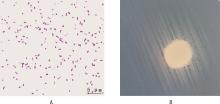
Fig.1
The results of Gram staining microscopic examination (A) and NAD-dependent test (B) of the isolate"
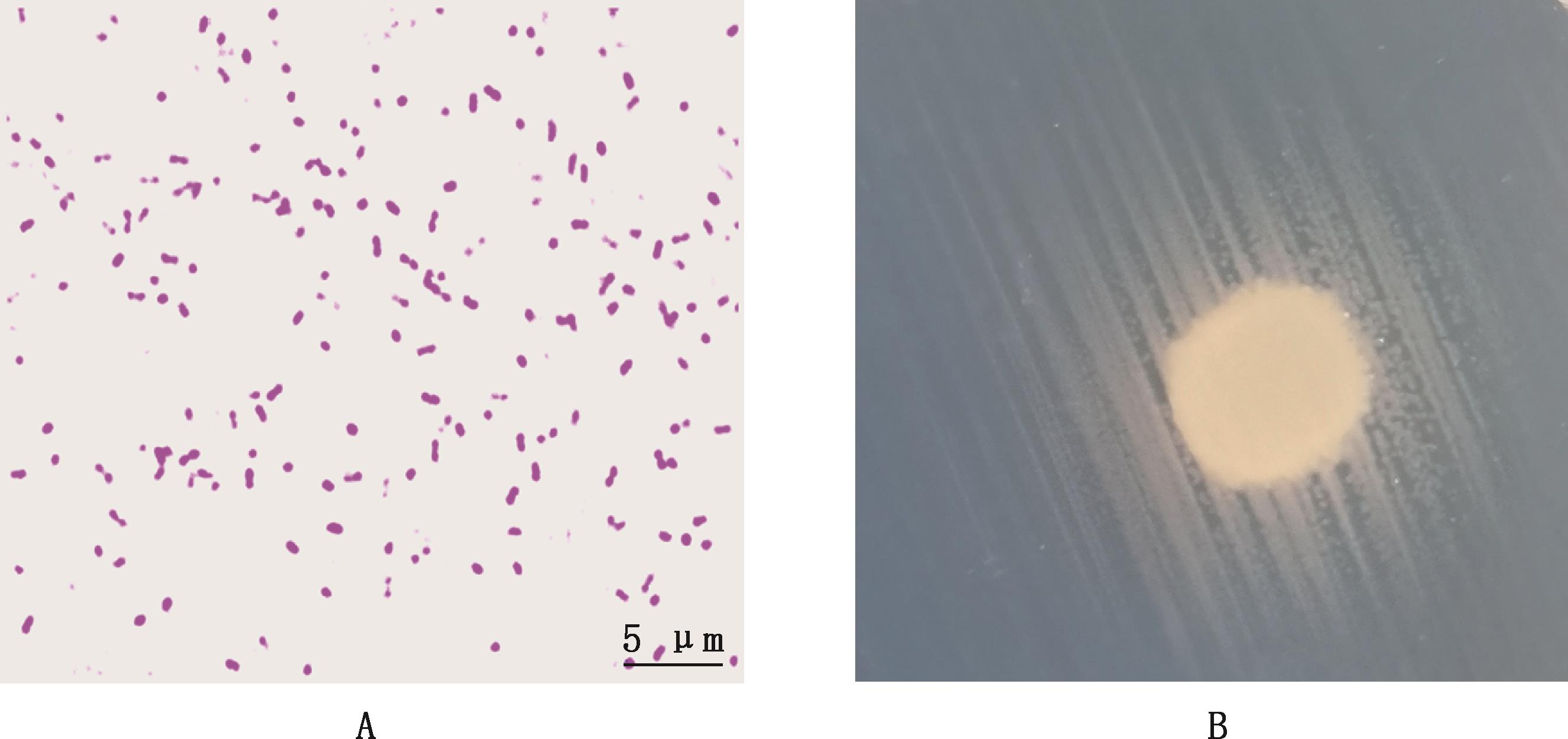
Table 2
Biochemical test results of the isolate YN24074"
项目 Items | 结果 Results | 项目 Items | 结果 Results |
|---|---|---|---|
| 葡萄糖 Glucose | + | 水杨素 Sulicin | ― |
| 果糖 Fructose | + | 甘露醇 Mannitol | + |
| 蔗糖 Saccharose | + | 山梨醇 Sorbitol | ― |
| 木糖 Xylose | + | 硝酸盐还原 Nitrate reduction | + |
| 蕈糖 Mushroom sugar | ― | 尿素酶 Urease | + |
| 棉子糖 Raffinose | ― | 氧化酶 Oxidase | + |
| 菊糖 Inulin | ― | 过氧化氢酶 Catalase | ― |
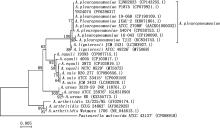
Fig.2
Phylogenetic tree of 16S rDNA gene of the isolate YN24074"
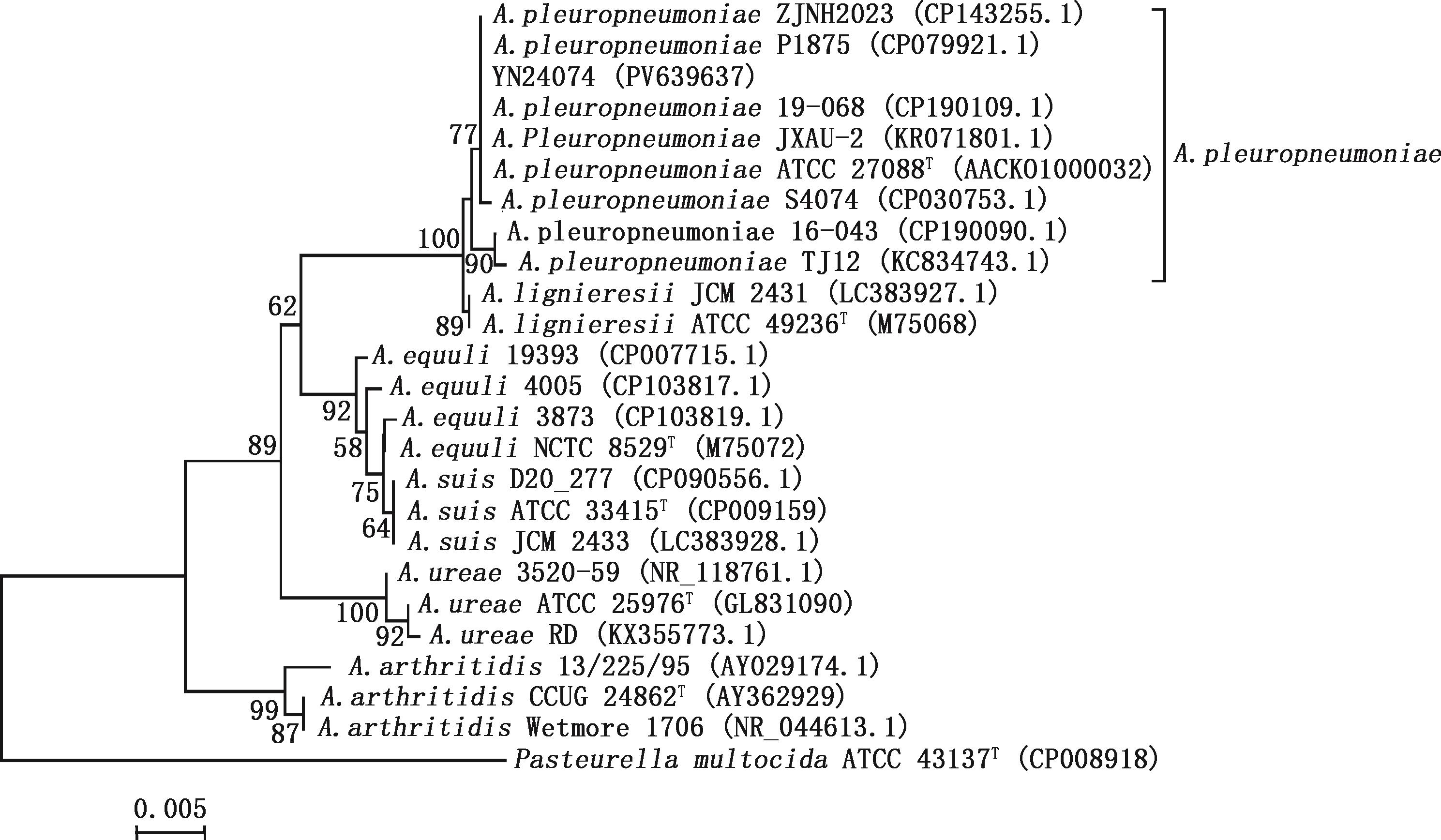
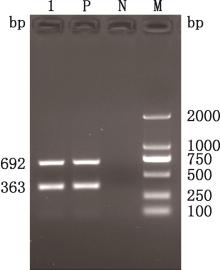
Fig.3
PCR identification results of the isolate YN240741, Isolate YN24074; P, Positive control; N, Negative control; M, DL2000 DNA Marker"
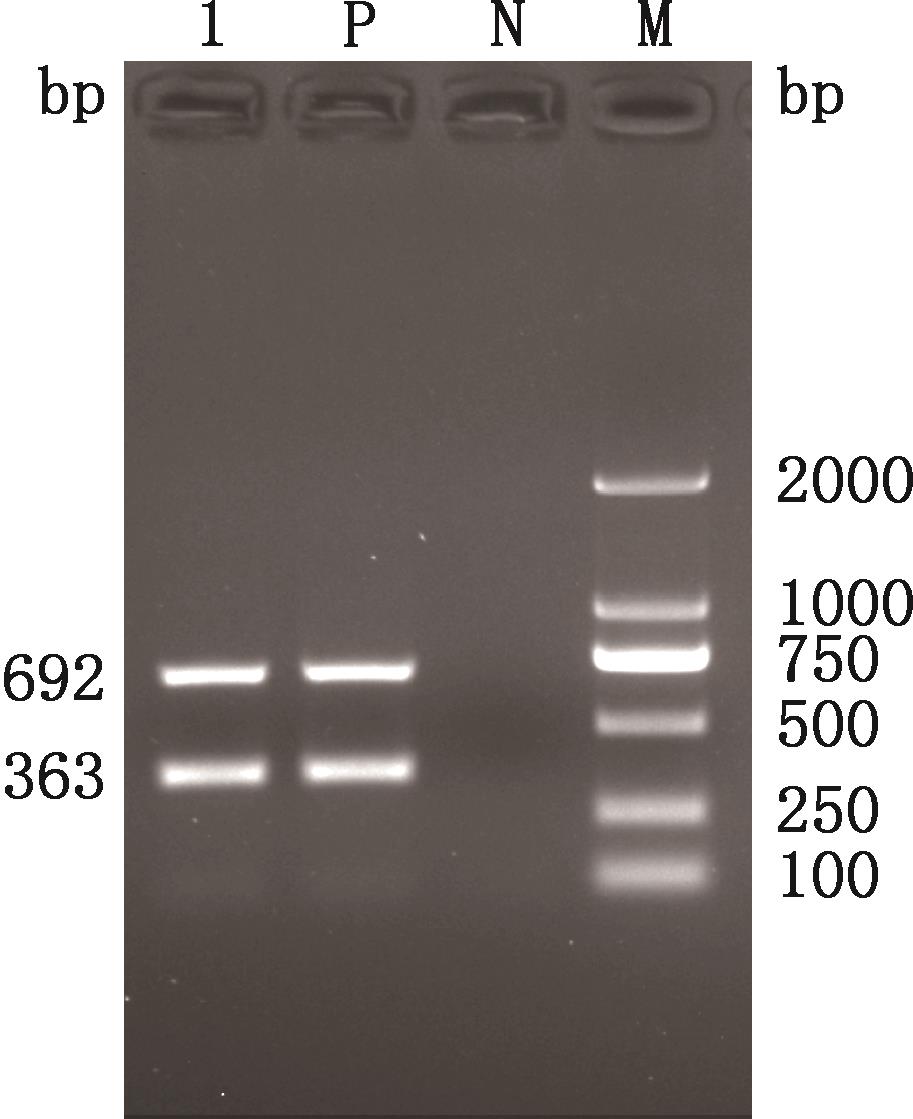
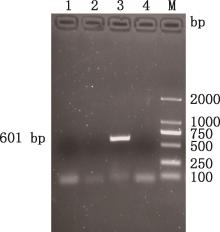
Fig.4
PCR identification results of serotype of the isolate YN240741-4, PCR amplification primers for serotypes 1, 5, 7 and 15, respectively;M,DL2000 DNA Marker"
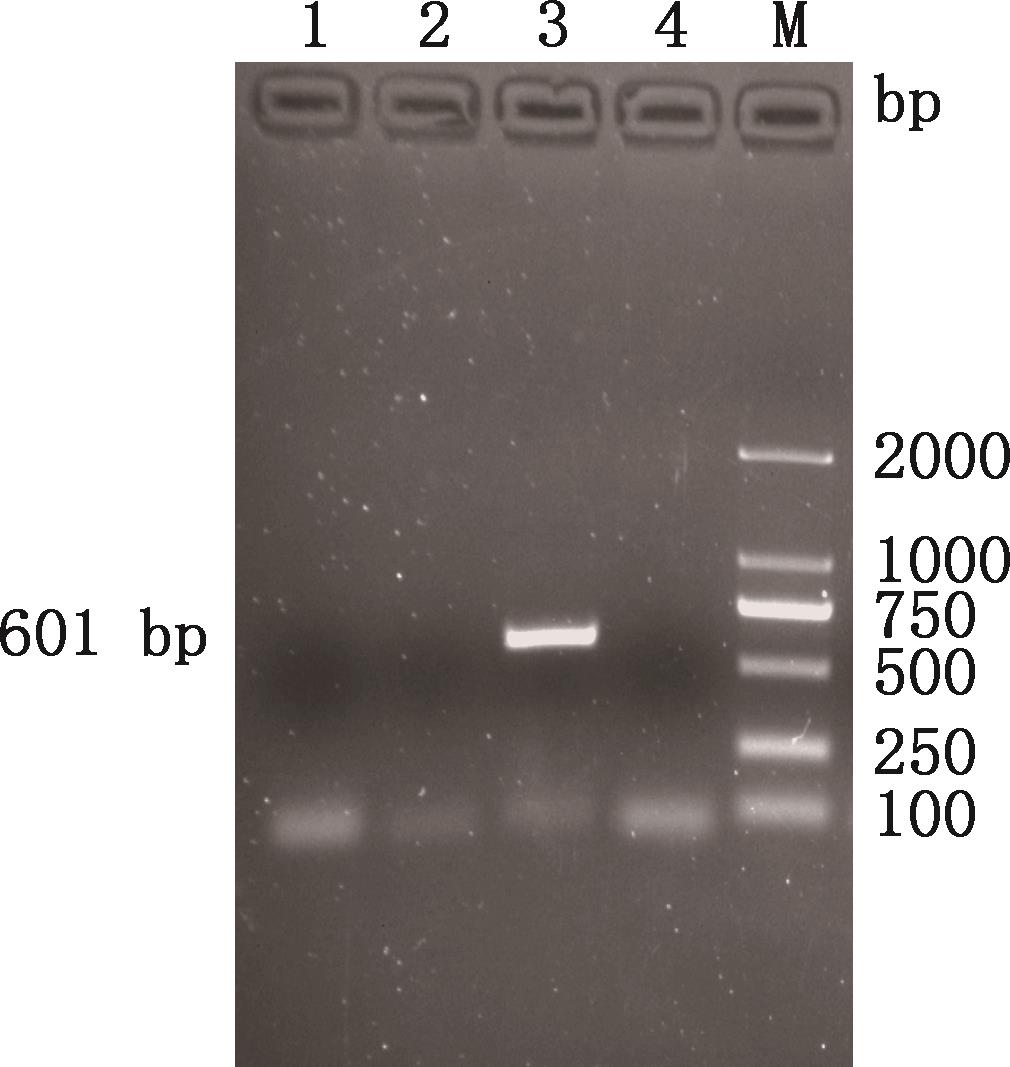
Fig.5
PCR test results for the resistance genes blaTEM(A), blaCIT(B) and tetM(C) of the isolate YN240741,Isolate YN24074;P1, Positive control of blaTEM gene;N, Negative control;M,DL2000 DNA Marker;P2, Positive control of blaCIT gene;P3, Positive control of tetM gene"
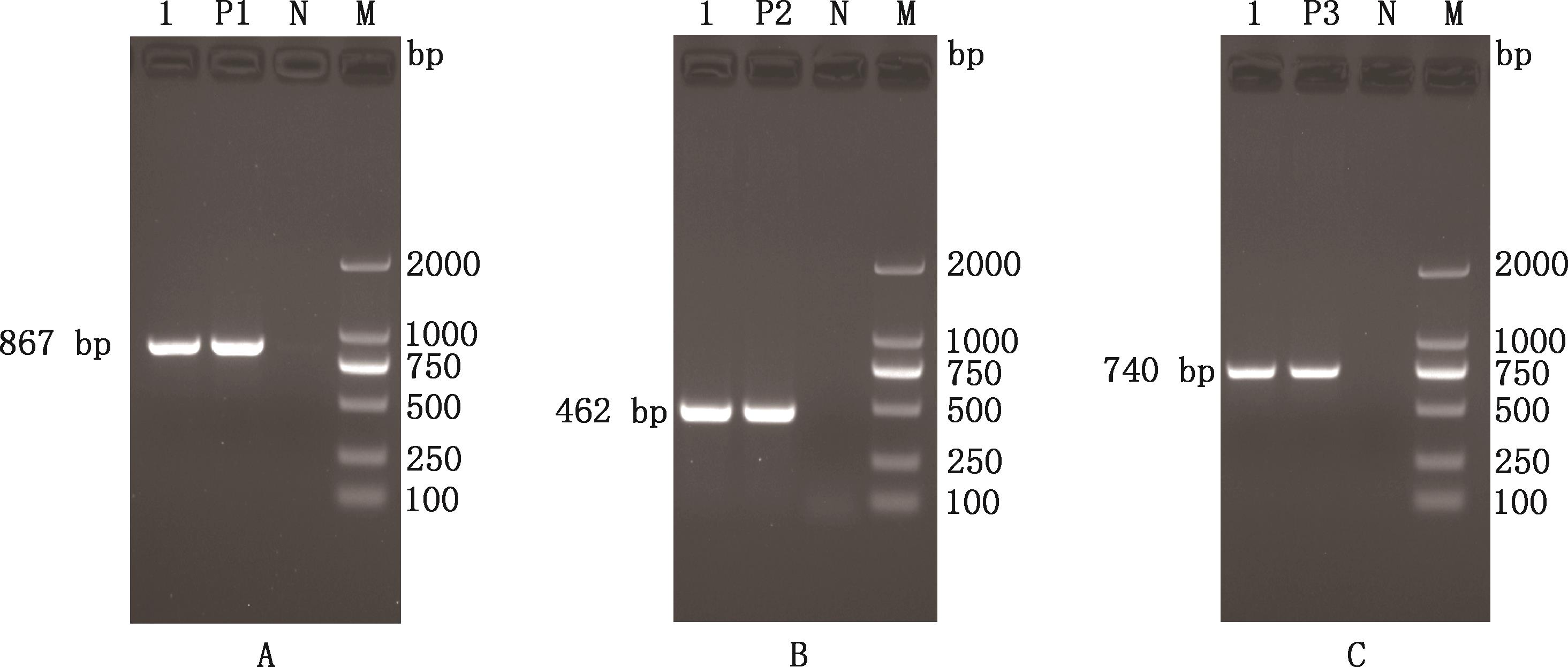
Table 3
Antimicrobial susceptibility test results of the isolate YN24074"
抗菌药物类别 Class of antibacterial agents | 抗菌药物 Antibacterial agents | 抑菌圈直径 Inhibition zone diameter/mm | 结果 Results |
|---|---|---|---|
| 青霉素类 Penicillins | 青霉素 Penicillin(10 units) | 6 | R |
| 氨苄西林 Ampicillin (10 μg) | 6 | R | |
| 哌拉西林 Piperacillin (100 μg) | 6 | R | |
| 氨基糖苷类 Aminoglycosides | 阿米卡星 Amikacin (30 μg) | 17 | S |
| 卡那霉素 Kanamycin (30 μg) | 14 | I | |
| 庆大霉素 Gentamicin (30 μg) | 15 | S | |
| 链霉素 Streptomycin (10 μg) | 12 | I | |
| 喹诺酮类 Quinolones | 氧氟沙星 Ofloxacin (5 μg) | 34 | S |
| 大环内酯类 Macrolides | 红霉素 Erythromycin (15 μg) | 21 | I |
| 酰胺醇类 Chloramphenicols | 氟苯尼考 Florfenicol (30 μg) | 35 | S |
| 四环素类 Tetracyclines | 四环素 Tetracycline (30 μg) | 18 | S |
| 磺胺类 Sulfonamides | 磺胺甲噁唑 Sulfamethoxazole (30 μg) | 25 | S |
| 糖肽类 Glycopeptides | 万古霉素 Vancomycin (30 μg) | 6 | R |
| 头孢菌素类 Cephalosporins | 头孢呋辛 Cefuroxime (30 μg) | 32 | S |
| 头孢噻肟 Cefotaxime (30 μg) | 34 | S |
Table 4
Pathogenicity test results of the isolate YN24074"
剂量 Dose/CFU | 死亡率 Mortality/% | 半数致死量 LD50/CFU |
|---|---|---|
| 3.0×10⁶ | 100(10/10) | 7.5×10⁴ |
| 3.0×10⁵ | 90(9/10) | |
| 3.0×10⁴ | 20(2/10) | |
| 3.0×10³ | 0(0/10) |
| [1] | POHL S, BERTSCHINGER H U, FREDERIKSEN W, et al. Transfer of Haemophilus pleuropneumoniae and the Pasteurella haemolytica-like organism causing porcine necrotic pleuropneumonia to the genus Actinobacillus (Actinobacillus pleuropneumoniae comb. nov.) on the basis of phenotypic and deoxyribonucleic acid relatedness[J]. International Journal of Systematic Bacteriology, 1983, 33(3):510-514. |
| [2] | STRINGER O W, BOSSÉ J T, LACOUTURE S, et al. Proposal of Actinobacillus pleuropneumoniae serovar 19, and reformulation of previous multiplex PCRs for capsule-specific typing of all known serovars[J]. Veterinary Microbiology, 2021, 255:109021. |
| [3] | SÁRKÖZI R, MAKRAI L, FODOR L. Isolation of biotype 1 serotype 12 and detection of Actinobacillus pleuropneumoniae from wild boars[J]. Pathogens, 2022, 11(5): 505. |
| [4] | LOSINGER W C. Economic impacts of reduced pork production associated with the diagnosis of Actinobacillus pleuropneumoniae on grower/finisher swine operations in the United States[J]. Preventive Veterinary Medicine, 2005, 68(2-4): 181-193. |
| [5] | PÉREZ MÁRQUEZ V M, OCHOA J L, CRUZ C V, et al. Isolation of Actinobacillus pleuropneumoniae from layer hens showing clinical signs of infectious coryza[J]. Avian Diseases, 2014, 58(4): 638-641. |
| [6] | ZIMMERMAN J J, KARRIKER L A, RAMIREZ A,et al. Diseases of Swine[M]. 11th ed. Hoboken: Wiley-Blackwell, 2019. |
| [7] | SÁRKÖZI R, MAKRAI L, FODOR L. Actinobacillus pleuropneumoniae serotypes in Hungary[J]. Acta Veterinaria Hungarica, 2018, 66(3): 343-349. |
| [8] | PLASENCIA-MUÑOZ B, AVELAR-GONZÁLEZ F J, DE LA GARZA M, et al. Actinobacillus pleuropneumoniae interaction with swine endothelial cells[J]. Frontiers in Veterinary Science, 2020, 7: 569370. |
| [9] | GUARNERI F, ROMEO C, SCALI F, et al. Serotype diversity and antimicrobial susceptibility profiles of Actinobacillus pleuropneumoniae isolated in Italian pig farms from 2015 to 2022[J]. Veterinary Research, 2024, 55(1): 48. |
| [10] | LI F, ZONG X, CHEN G, et al. Isolation, antimicrobial susceptibility, and genotypes of three Pasteurellaeae species prevalent on pig farms in China between 2021 and 2023[J]. Microorganisms, 2025, 13(4): 938. |
| [11] | 杨 圆, 于 慧, 何 乐, 等. 福建省某规模化猪场胸膜肺炎放线杆菌血清1型的分离鉴定[J]. 中国畜牧兽医,2024, 51(12): 5449-5458. |
| YANG Y, YU H, HE L, et al. Isolation and identification of Actinobacillus pleuropneumoniae serotype 1 from a swine farm in Fujian province[J]. China Animal Husbandry & Veterinary Medicine, 2024, 51(12): 5449-5458. (in Chinese) | |
| [12] | 李凯明, 董发明, 刘守川, 等. 洛阳某猪场猪传染性胸膜肺炎放线杆菌的分离鉴定[J]. 中国畜牧兽医, 2020, 47(4): 1241-1249. |
| LI K M, DONG F M, LIU S C, et al. Isolation and identification of porcine contagious Actinobacillus pleuropneumoniae in Luoyang[J]. China Animal Husbandry & Veterinary Medicine, 2020, 47(4): 1241-1249. (in Chinese) | |
| [13] | 马 爽, 于国营, 郭莉莉, 等. 我国局部猪胸膜肺炎流行调查和血清型分析[J]. 中国畜禽种业, 2016, 12(4): 125-127. |
| MA S, YU G Y, GUO L L, et al. Epidemiological investigation of porcine contagious pleuropneumonia and serotype analysis of Actinobacillus pleuropneumoniae in China[J]. The Chinese Livestock and Poultry Breeding, 2016, 12(4): 125-127. (in Chinese) | |
| [14] | 徐民生, 柯海意, 施科达, 等. 广东省猪传染性胸膜肺炎放线杆菌分离鉴定及耐药表型和耐药基因检测与分析[J]. 中国畜牧兽医, 2022, 49(8): 3212-3225. |
| XU M S, KE H Y, SHI K D, et al. Isolation and identification of Actinobacillus pleuropneumoniae from Guangdong province and detection and analysis of drug resistance phenotype and gene[J]. China Animal Husbandry & Veterinary Medicine, 2022, 49(8): 3212-3225. (in Chinese) | |
| [15] | POLZ M F, CAVANAUGH C M. Bias in template-to-product ratios in multitemplate PCR[J]. Applied Environmental Microbiology, 1998, 64(10): 3724-3730. |
| [16] | 李树清, 易建平, 陈志飞, 等. 复合PCR鉴定胸膜肺炎放线杆菌方法的建立及初步应用[J]. 微生物学报, 2005,6: 150-153. |
| LI S Q, YI J P, CHEN Z F, et al. Development and application of multiplex-PCR for identification of Actinobacillus pleuropneumoniae [J]. Acta Microbiologica Sinica, 2005, 6: 150-153. (in Chinese) | |
| [17] | BOSSÉ J T, LI Y, ANGEN Ø, et al. Multiplex PCR assay for unequivocal differentiation of Actinobacillus pleuropneumoniae serovars 1 to 3, 5 to 8, 10, and 12[J]. Journal of Clinical Microbiology, 2014, 52(7): 2380-2385. |
| [18] | BOSSÉ J T, LI Y, FERNANDEZ CRESPO R, et al. Comparative sequence analysis of the capsular polysaccharide loci of Actinobacillus pleuropneumoniae serovars 1-18, and development of two multiplex PCRs for comprehensive capsule typing[J]. Veterinary Microbiology, 2018, 220: 83-89. |
| [19] | 李富祥, 王慧辉, 赵文华, 等. 云南省畜禽细菌耐药基因分布特征[J]. 中国兽医学报, 2021, 41(12): 2454-2460. |
| LI F X, WANG H H, ZHAO W H, et al. Distribution characteristics of antibiotic resistance genes in bacteria from livestock and poultry in Yunnan province[J]. Chinese Journal of Veterinary Science, 2021, 41(12): 2454-2460. (in Chinese) | |
| [20] | CLSI. Performance standards for antimicrobial susceptibility testing. 29th ed. CLSI supplement M100 [S]. Wayne, PA: Clinical and Laboratory Standards Institute, 2019. |
| [21] | 孙瑞元. 简捷实用的半数致死量综合计算法[J]. 药学学报, 1963, 2: 65-74. |
| SUN R Y. A practical combined method for computing the median lethal dose (LD50)[J]. Acta Pharmaceutica Sinica, 1963, 2: 65-74. (in Chinese) | |
| [22] | 王丹丹, 陈国强, 张常印, 等. 猪胸膜肺炎放线杆菌血清8型菌株的分离鉴定及耐药性研究[J]. 中国畜牧兽医, 2019, 46(10): 3124-3130. |
| WANG D D, CHEN G Q, ZHANG C Y, et al. Isolation, identification and drug sensitive test of Actinobacillus pleuropneumoniae serotype 8[J]. China Animal Husbandry & Veterinary Medicine, 2019, 46(10): 3124-3130. (in Chinese) | |
| [23] | CHUN J, OREN A, VENTOSA A, et al. Proposed minimal standards for the use of genome data for the taxonomy of prokaryotes[J]. International Journal of Systematic and Evolutionary Microbiology, 2018, 68:461-466. |
| [24] | FUSSING V, PASTER B J, DEWHIRST F E, et al. Differentiation of Actinobacillus pleuropneumoniae strains by sequence analysis of 16S rDNA and ribosomal intergenic regions, and development of a species specific oligonucleotide for in situ detection[J]. Systematic and Applied Microbiology, 1998, 21(3): 408-418. |
| [25] | 王佳凡, 郑博文, 杨 超, 等. 四川猪传染性胸膜肺炎放线杆菌耐药基因流行规律与表型相关性研究[J].云南农业大学学报(自然科学), 2021,36(4): 631-639. |
| WANG J F, ZHENG B W, YANG C, et al. Study on the epidemiology regularity and phenotype correlation of drug-resistant genes of infectious Actinobacillus pleuropneumoniae in Sichuan[J]. Journal of Yunnan Agricultural University (Natural Science), 2021, 36(4): 631-639. (in Chinese) | |
| [26] | 陈 旺. 新疆部分地区猪常见呼吸道细菌性疾病病原的检测[D].乌鲁木齐: 新疆农业大学, 2023. |
| CHEN W. Detection of pathogens of common respiratory tract bacterial diseases in pigs in some areas of Xinjiang[D]. Urumqi: Xinjiang Agricultural University, 2023. (in Chinese) | |
| [27] | 吕佩帅, 张丽红, 丁小松, 等. 胸膜肺炎放线杆菌在不同培养基中生长、生物膜形成及Apx毒素分泌能力的差异研究[J]. 动物医学进展, 2022, 43(1): 6-11. |
| LYU P F, ZHANG L H, DING X S, et al. Diversity on growth, biofilm formation and Apx toxin secretion of Actinobacillus pleuropneumoniae in different culture media[J]. Progress in Veterinary Medicine, 2022, 43(1): 6-11. (in Chinese) | |
| [28] | 刘赵何. 某规模化猪场猪接触传染性胸膜肺炎的综合防治[D].合肥: 安徽农业大学, 2016. |
| LIU Z H. Integrated control of porcine contagious pleuropneumonia in certain large-scale swine farm[D]. Hefei: Anhui Agricultural University, 2016.(in Chinese) | |
| [29] | 陈虹宇, 朋 璐, 张 娇, 等. 猪胸膜肺炎放线杆菌临床分离株特性分析及疫苗候选菌株筛选[J]. 四川农业大学学报, 2025, 43(2): 458-468. |
| CHEN H Y, PENG L, ZHANG J, et al. Characterization of porcine Actinobacillus pleuropneumoniae isolates and screening of vaccine candidate strains[J]. Journal of Sichuan Agricultural University, 2025, 43(2): 458-468. (in Chinese) |
| [1] | LUO Qi, LONG Dingbiao, WANG Jing, XIAO Rong, WANG Qi. Effects of Rare Earth-chitosan Chelate on Growth Performance, Digestibility of Nutrients, Serum Indices and Fecal Microbiota of Growing-finishing Pigs [J]. China Animal Husbandry & Veterinary Medicine, 2026, 53(2): 787-797. |
| [2] | XU Juan, ZHANG Huibin, ZHANG Xiaodong, LI Qinggang. Association Analysis of PTER and CALB2 Gene Polymorphisms with Growth Traits in American Yorkshire pigs [J]. China Animal Husbandry & Veterinary Medicine, 2026, 53(2): 859-869. |
| [3] | LAI Jinhua, WANG Xiaoyi, WU Ya, ZHU Dongxia, ZHU Yixuan, ZHANG Kezhong, HUANG Zhaojun, GUAN Heping, LI Mingli, LU Shaoxiong. Polymorphisms of ADRP and FASN Genes and Their Association with Meat Quality Traits in Xuanhe Pigs [J]. China Animal Husbandry & Veterinary Medicine, 2026, 53(2): 879-891. |
| [4] | ZHANG Sui, CHENG Chunjie, YANG Chun, CHEN Mengjiao, CHENG Jing, ZHOU Linyi, LI Yongqing, WANG Xiaoying, LIU Wenxiao. Isolation, Identification and Pathogenicity Analysis of Dairy Cow-derived Klebsiella pneumoniae and Mannheimia haemolytica [J]. China Animal Husbandry & Veterinary Medicine, 2026, 53(2): 903-915. |
| [5] | ZHANG Min, LI Yingxiao, ZHANG Lulu, HE Shuhai, QU Zhehui, QIN Dongsheng, LIU Jicheng, JIAO Fengchao. Whole Genome Amplification and Phylogenetic Analysis of Duck Astrovirus Type 1 Xinyang Strain [J]. China Animal Husbandry & Veterinary Medicine, 2026, 53(2): 959-972. |
| [6] | ZHANG Hanbing, GUO Yaping, ZHANG Jiaqing, REN Qiaoling, CHEN Junfeng, LIU Fujiu, WANG Jing, XING Baosong. Research Progress on Gene Editing Technology and Its Application in Breeding of Pigs [J]. China Animal Husbandry & Veterinary Medicine, 2026, 53(1): 1-14. |
| [7] | CHEN Lin, LIU Jiayi, WU Hua, ZHANG Yuan, DENG Zhijie, HAN Yaohui, SHI Yinliang. Effects of Lycium ruthenicum Murr. Extract on Lipid Metabolism in Bamei Ternary Hybrid Pigs [J]. China Animal Husbandry & Veterinary Medicine, 2026, 53(1): 245-255. |
| [8] | LIANG Bingkun, WANG Zhen, LIU Ziyu, YAN Dawei, DONG Xinxing, ZHU Jiawei. Sequence Characteristics and Tissue Expression of SCARB2 Gene in Lijiang Pigs [J]. China Animal Husbandry & Veterinary Medicine, 2026, 53(1): 343-358. |
| [9] | ZHANG Xinxin, ZHANG Yue, CUI An, LI Jinru, ZHANG Yunjing, HE Lixia, YANG Guijun, REN Yudong, LI Guangxing. Isolation, Identification and Genetic Evolution Analysis of PEDV Epidemic Strains in Heilongjiang Province [J]. China Animal Husbandry & Veterinary Medicine, 2026, 53(1): 378-389. |
| [10] | LIAN Kaiqi, WANG Yuhang, MENG Xiangfeng, ZHANG Mingliang, ZHOU Lingling. Isolation, Identification and Drug Resistance Analysis of Pathogenic Escherichia coli from Pavo cristatus [J]. China Animal Husbandry & Veterinary Medicine, 2026, 53(1): 448-458. |
| [11] | WANG Ya, LI Zhiguo, LUO Rongyan, LIU Ruiguo, ZUO Zhicai, MA Xiaoping. Isolation, Identification, Phylogenetic Analysis and Drug Sensitivity Test of Trichophyton verrucosum from Beef Cattle in Sichuan [J]. China Animal Husbandry & Veterinary Medicine, 2026, 53(1): 459-468. |
| [12] | WANG Qilin, CAO Runlai, LIU Peiwen, LIU Ziyu, XUE Zhuqing, DU Haixia, ZHANG Yue, ZHANG Minjing, LI Yacong, WANG Weiyang, CONG Yanfang, WANG Xiaoxu, LIU Zhijie. Isolation, Identification and Biological Characteristics Analysis of Bordetella bronchiseptica from Raccoon dog(Nyctereutes procyonoides) [J]. China Animal Husbandry & Veterinary Medicine, 2026, 53(1): 489-498. |
| [13] | CHEN Bo, WANG Difei, YANG Xuexi, LIU Rui, CHEN Lin, LIU Yue, ZHANG Jize, GAO Yang. Effects of Dietary Supplementation with Squalene on Growth Performance,Meat Quality,and Antioxidant Function in Growing-finishing Pigs [J]. China Animal Husbandry & Veterinary Medicine, 2025, 52(9): 4146-4154. |
| [14] | GUO Meng, XIA Panjie, ZHOU Guangliang, YUAN Renqiang, ZHAO Yunxiang. Improving Genomic Selection Accuracy for Feed Efficiency-related Traits in Duroc Boars Based on Duroc×Landrace×Yorkshire Commercial Pigs Population [J]. China Animal Husbandry & Veterinary Medicine, 2025, 52(9): 4155-4162. |
| [15] | ZHAO Runze, MIN Zhaoling, NIU Naiqi, ZONG Wencheng, YAN Yibo, ZHANG Longchao. Identification of Major Genes Affecting the Number of Thoracic Vertebrae in Beijing Black Pigs Based on the Joint Analysis of GWAS and Embryonic Gene Expression Differences in Divergently Selected Lines [J]. China Animal Husbandry & Veterinary Medicine, 2025, 52(9): 4182-4194. |
| Viewed | ||||||
|
Full text |
|
|||||
|
Abstract |
|
|||||
