
China Animal Husbandry & Veterinary Medicine ›› 2026, Vol. 53 ›› Issue (1): 49-60.doi: 10.16431/j.cnki.1671-7236.2026.01.005
• Review • Previous Articles Next Articles
QIU Xiaotong1,2( ), FU Bing2, FAN Lanfen1, ZHOU Donglai2, LI Qingrong2, XING Dongxu2()
Received:2025-03-19
Online:2026-01-05
Published:2025-12-26
Contact:
XING Dongxu
E-mail:qiuxtong56@163.com;dongxuxing@126.com
CLC Number:
QIU Xiaotong, FU Bing, FAN Lanfen, ZHOU Donglai, LI Qingrong, XING Dongxu. Application of Mulberry Resources in Aquatic Animals[J]. China Animal Husbandry & Veterinary Medicine, 2026, 53(1): 49-60.
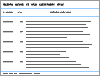
Table 1
Extraction /preparation method of main active ingredients in mulberry resources"
桑树资源种类 Mulberry resource types | 活性成分 Active ingredients | 提取/制备方法 Extraction / preparation method | 提取/制备条件 Extraction/preparation conditions | 得率 Yield | 参考文献 References |
|---|---|---|---|---|---|
桑椹 White mulberry fruit | 桑椹多糖 | 超声提取法 | 脱脂桑椹粉∶蒸馏水=1∶27,超声功率100 W,超声时间35 min,提取3次 | 10.81% | 李德龙等[ |
| 花青素 | 超声波辅助法 | 桑椹粉∶乙醇(65%)=1∶10,超声功率1 600 W,提取时间20 min,提取温度50 ℃ | 2.88 mg/g | 卫春会等[ | |
桑叶 White mulberry leaf | 桑叶多糖 | 超声-微波协同提取法 | 脱脂桑叶粉∶乙醇(75%)=1∶25,超声功率139 W,微波功率250 W,协同时间14 min | 5.19% | 张华等[ |
| 桑叶黄酮 | 超声波辅助法 | 桑叶粉∶乙醇(55%)=1∶30,超声时间17 min,提取温度50 ℃ | 3.62% | 张心壮等[ | |
| 1-脱氧野尻霉素 | 超声细胞破碎机提取法 | 氯化胆碱/甘油的摩尔比为1∶3.4,含水量40%,超声时间32 min,重复3次 | 1.445 mg/g | 王璐等[ | |
| 桑叶多酚 | 超声辅助低共熔溶剂法 | 氯化胆碱/果糖/乙醇摩尔比为1∶1∶2,含水量45%,桑叶粉∶蒸馏水=1∶40,超声功率360 W,超声温度40 ℃,超声时间40 min | 76.82 mg/g | 吴均等[ | |
| 桑叶低聚糖 | 生物酶解法 | 半纤维素酶添加量60 U/mL,桑叶多糖浓度20 mg/mL,反应温度55 ℃,pH 4.7,反应时间8 h | 20.2% | 谭凤翔等[ | |
| 桑叶提取物 | 水提法 | 脱脂桑叶粉∶蒸馏水=1∶30,100 ℃水浴回流,提取3次 | 桑叶多糖352.18 mg/g;桑叶黄酮 41.91 mg/g | 周东来等[ | |
| 桑叶提取物 | 醇提法(超声波辅助) | 脱脂桑叶粉∶乙醇(75%)=1∶30,超声时间30 min,提取温度40 ℃,提取3次 | 桑叶多糖15.57%;桑叶黄酮2.69% | 周东来等[ | |
桑枝 White mulberry branchlet | 桑枝生物碱 | 超声提取法 | 桑枝粉∶蒸馏水=1∶30,超声功率300 W,提取温度65 ℃,pH 2.5 | 0.1026% | 曹琳等[ |
| 桑枝多糖 | 微波法 | 脱脂桑枝粉∶蒸馏水=1∶20,微波功率400 W,微波时间6 min | 2.81% | 纵伟等[ | |
| 桑枝(总)黄酮 | 超声提取法 | 桑枝粉∶乙醇(80%)=1∶8,超声时间20 min提取3次 | 0.719% | 陈建明等[ | |
| 桑枝低聚糖 | 酶解法 | 桑枝粉∶McIlvaine缓冲液(100 mmol/L,pH 5.0)=1∶25,木聚糖酶-甲基丙烯酸酯和纤维素酶各50 U/mL,转速140 r/min,酶解时间20 h,酶解温度50 ℃ | 8.72 mg/mL | Shi等[ | |
桑根皮 White mulberry root | 桑根皮黄酮 | 醇提取法 | 桑根皮粉∶乙醇(90%)=1∶25,提取温度95 ℃,提取3次,每次3 h | 2.452% | 杨晶等[ |
| 桑根皮多糖 | 超声波辅助法 | 桑根皮粉∶蒸馏水=1∶20, 超声时间30 min, 提取温度50 ℃, 提取2次 | 6.20% | 陈华等[ |
| [1] | 李建琴,梁 巧,顾国达.2023年我国蚕桑产业发展态势与未来发展建议[J].中国畜牧杂志,2024,60(3):352-356. |
| LI J Q, LIANG Q, GU G D. Development trend and future development suggestions of China’s sericulture industry in 2023[J]. Chinese Journal of Animal Science, 2024,60(3):352-356. (in Chinese) | |
| [2] | 黄 越,黄传书,吴 均,等.桑资源生物活性物质及其在食品领域应用研究进展[J].食品与发酵工业,2023,49(23):362-370. |
| HUANG Y, HUANG C S, WU J, et al. Research progress on bioactive substances of mulberry resources and their application in food field[J]. Food and Fermentation Industries, 2023,49(23):362-370. (in Chinese) | |
| [3] | 刘颖健.农业文化遗产地居民环境责任行为意向影响因素研究-以浙江湖州桑基鱼塘系统为例[D].南京:南京农业大学,2022. |
| LIU Y J. A study on influencing factors of residents’ environmental responsibility behavior intention in agricultural cultural heritage system sites—Taking the mulberry fish pond system in Huzhou, Zhejiang as an example[D]. Nanjing: Nanjing Agricultural University,2022 (in Chinese) | |
| [4] | 高胜男,马卉佳,徐 韬,等.高脂饲料中添加发酵桑叶对杂交鳢生长性能、体组成及血清生化指标的影响[J].动物营养学报,2017,29(9):3422-3428. |
| GAO S N, MA H J, XU T, et al. Effect of high-fat diet supplemented with fermented mulberry leaves on growth performance, body composition and serum biochemical indexes of hybrid snakehead[J]. Chinese Journal of Animal Nutrition, 2017,29(9):3422-3428. (in Chinese) | |
| [5] | TANG T, BAI J, AO Z, et al. Effects of dietary paper mulberry (Broussonetia papyrifera) on growth performance and muscle quality of grass carp (Ctenopharyngodon idella)[J]. Animals,2021,11(6):1655. |
| [6] | SHI Y, ZHONG L, FAN Y, et al. The protective effect of mulberry leaf flavonoids on high-carbohydrate-induced liver oxidative stress, inflammatory response and intestinal microbiota disturbance in Monopterus albus [J]. Antioxidants,2022,11(5):976. |
| [7] | WEI Y, HUANG J, SUN H, et al. Impact of different processing mulberry leaf on growth, metabolism and liver immune function of largemouth bass (Micropterus salmoides)[J]. Aquaculture Reports,2023,29:101508. |
| [8] | YILMAZ S, ERGUN S, YIGIT M, et al. Dietary supplementation of black mulberry (Morus nigra) syrup improves the growth performance, innate immune response, antioxidant status, gene expression responses, and disease resistance of Nile tilapia (Oreochromis niloticus)[J]. Fish & Shellfish Immunology, 2020,107:211-217. |
| [9] | LI S, ZHOU D, PANG D, et al. Effects of Ramulus mori oligosaccharides on growth performance, serum physiological and biochemical parameters, and immunomodulation in largemouth bass (Micropterus salmoides)[J]. Aquaculture,2024,589:741008. |
| [10] | 周东来,廖森泰,黄 勇,等.饲料中添加桑叶粉对草鱼生长性能和肉质风味的影响[J].广东农业科学,2021,48(4):119-130. |
| ZHOU D L, LIAO S T, HUANG Y, et al. Effects of dietary mulberry (Morus alba L.) leaf powder on growth performance, meat quality and flavor of grass carp (Ctenopharyngodon idella)[J]. Guangdong Agricultural Sciences, 2021,48(4):119-130. (in Chinese) | |
| [11] | 符 兵,周东来,李庆荣,等.桑叶及其活性物质对动物肠道微生物的调控作用研究进展[J].中国畜牧兽医,2024,51(6):2460-2470. |
| FU B, ZHOU D L, LI Q R, et al. Research progress on the regulation of animal intestinal microbiota by mulberry leaves and its active substances[J]. China Animal Husbandry & Veterinary Medicine, 2024,51(6):2460-2470. (in Chinese) | |
| [12] | WANG L, GAO H, SUN C, et al. Protective application of Morus and its extracts in animal production[J]. Animals,2022,12(24):3541. |
| [13] | ZHANG H, MA Z, LUO X, et al. Effects of mulberry fruit (Morus alba L.) consumption on health outcomes: A mini-review[J]. Antioxidants, 2018,7(5):69. |
| [14] | 佟万红,曾益春,黄盖群.四川省果桑产业的现状与发展建议[J].蚕学通讯,2021,41(2):15-19. |
| TONG W H, ZENG Y C, HUANG G Q. The current situation and suggestions of the fruit mulberry industry development in Sichuan province[J]. Newsletter of Sericultural Science, 2021,41(2):15-19. (in Chinese) | |
| [15] | 李仕培,黎尔纳,周东来,等.桑树资源功能性饲料开发的研究进展[J].中国饲料,2024,3:156-164. |
| LI S P, LI E N, ZHOU D L, et al. Research progress on functional feed development of mulberry resources[J]. China Feed, 2024,3:156-164. (in Chinese) | |
| [16] | 郝森林,邹 颖,余元善,等.桑果渣营养成分分析及果渣饲料发酵工艺研究[J].蚕业科学,2019,45(4):563-568. |
| HAO S L, ZOU Y, YU Y S, et al. Analysis on nutrient composition of mulberry pomace and study on its fermentation technology for feed[J]. Acta Sericologica Sinica, 2019,45(4):563-568. (in Chinese) | |
| [17] | 李来成,张士凯,许方舟,等.桑叶综合利用的研究进展[J].食品工业科技,2022,43(2):397-404. |
| LI L C, ZHANG S K, XU F Z, et al. Research progress of mulberry leaf comprehensive utilization[J]. Science and Technology of Food Industry, 2022,43(2):397-404. (in Chinese) | |
| [18] | 崔晓鹏.发酵桑叶关键技术优化及对肉羊抗氧化与脂肪代谢调控机制研究[D].杨凌:西北农林科技大学,2023. |
| CUI X P. Optimization of key technology of fermented mulberry leaves and its regulation mechanism of antioxidant and lipid metabolism in mutton sheep[D]. Yangling: Northwest A&F University, 2023. (in Chinese) | |
| [19] | 许金伟,周晓红,冯文婕,等.桑叶粉及桑叶提取物的功效和应用现状[J].保鲜与加工,2024,24(2):91-96. |
| XU J W, ZHOU X H, FENG W J, et al. Efficacy and application status of mulberry leaf powder and mulberry leaf extract[J]. Storage and Process, 2024,24(2):91-96. (in Chinese) | |
| [20] | 李金转,阳田恬,蒋晓晗,等.发酵桑叶的营养价值及其在畜禽生产上的应用[J].饲料工业,2022,43(19):14-17. |
| LI J Z, YANG T T, JIANG X H, et al. Nutritional value of fermented mulberry leaves and its application in livestock and poultry production[J]. Feed Industry, 2022,43(19):14-17. (in Chinese) | |
| [21] | 罗玙卓,李 冰,朱宇旌.桑叶在动物生产中的不同利用方式研究进展[J].中国畜牧杂志,2021,57(7):27-31. |
| LUO Y Z, LI B, ZHU Y J. Research progress on different utilization ways of mulberry leaf in animal production[J]. Chinese Journal of Animal Science, 2021,57(7):27-31. (in Chinese) | |
| [22] | 吴洪丽,孙 波,周洪英,等.桑枝单位面积产量调查及营养成分检测初报[J].中国蚕业,2022,43(2):11-13. |
| WU H L, SUN B, ZHOU H Y, et al. Preliminary report on yield per unit area investigation and nutrient composition detection of mulberry branch[J]. China Sericulture, 2022,43(2):11-13. (in Chinese) | |
| [23] | 张宸瑞,崔 琛,李 莎,等.桑枝活性成分、药理作用及多元化利用研究进展[J].蚕业科学,2022,48(6):546-558. |
| ZHANG C R, CUI C, LI S, et al. Research progress on active components, pharmacological effects and diversified utilization of Ramulus mori [J]. Acta Sericologica Sinica, 2022,48(6):546-558. (in Chinese) | |
| [24] | 黄雁飞,陈桂芬,熊柳梅,等.不同秸秆生物炭对水稻生长及土壤养分的影响[J].南方农业学报,2020,51(9):2113-2119. |
| HUANG Y F, CHEN G F, XIONG L M, et al. Effects of different straw biochars on rice growth and soil nutrients[J]. Journal of Southern Agriculture, 2020,51(9):2113-2119. (in Chinese) | |
| [25] | 黄雨晨,徐开遵,屈达才.桑枝发酵饲料生产工艺研发进展[J].蚕学通讯,2021,41(3):13-16. |
| HUANG Y C, XU K Z, QU D C. The research progress of mulberry branch fermented feed production technology[J]. Newsletter of Sericultural Science, 2021,41(3):13-16. (in Chinese) | |
| [26] | 张梦巧.桑枝生物炭及其复合材料对水中典型污染物降解的研究[D].重庆:西南大学,2024. |
| ZHANG M Q. Study on degradation of typical pollutants in water by mulberry branch biochar and its composite materials[D]. Chongqing: Southwest University, 2024. (in Chinese) | |
| [27] | 王启芝,黄光云,梁琪妹,等.广西17种非粮饲料资源营养价值监测[J].粮食与饲料工业,2018,4:47-50. |
| WANG Q Z, HUANG G Y, LIANG Q M, et al. Nutritional value monitoring of 17 kinds of non-grain feed resources in Guangxi[J]. Cereal & Feed Industry, 2018,4:47-50. (in Chinese) | |
| [28] | 郑 旺,黄传书,张洪燕,等.不同加工方式制作桑枝饲料的营养价值及用于肉牛饲养的瘤胃降解特性[J].蚕业科学,2018,44(4):594-600. |
| ZHENG W, HUANG C S, ZHANG H Y, et al. Nutritional value of mulberry branch feed from different processing methods and degradation characteristics in rumen of beef cattle[J]. Acta Sericologica Sinica, 2018,44(4):594-600. (in Chinese) | |
| [29] | 侯宝林,施 洋,赵俊芳,等.桑白皮化学成分及药理作用研究进展[J].辽宁中医杂志,2020,47(8):212-214. |
| HOU B L, SHI Y, ZHAO J F, et al. Research progress of chemical compounds and pharmacological effects of Sangbaipi(Cortex Mori)[J]. Liaoning Journal of Traditional Chinese Medicine, 2020,47(8):212-214. (in Chinese) | |
| [30] | 刘滢,董金香,高原,等.基于多指标综合评价炒桑白皮炮制工艺研究[J].时珍国医国药,2022,33(9):2150-2153. |
| LIU Y, DONG J X, GAO Y, et al. Research on processing technology of fried mulberry bark based on comprehensive evaluation of multiple indexes[J]. Lishizhen Medicine and Materia Medica Research, 2022,33(9):2150-2153. (in Chinese) | |
| [31] | 徐小飞,陈 康,陈燕霞,等.桑白皮蜜炙前后东莨菪内酯含量变化研究[J].广东药学院学报,2011,27(6):579-581. |
| XU X F, CHEN K, CHEN Y X, et al, Study on the contents of scopoletin in cortex mori and its honey processed products[J]. Journal of Guangdong Pharmaceutical University, 2011,27(6):579-581. (in Chinese) | |
| [32] | 岳春雨,陈迎迎,王丽霞,等.炒桑白皮炮制过程中色谱及色度值的变化规律研究[J].中国中药杂志,2024,49(7):1865-1871. |
| YUE C Y, CHEN Y Y, WANG L X, et al. Changes in fingerprint and chromaticity values of mori cortex during stir-frying process[J]. China Journal of Chinese Materia Medica, 2024,49(7):1865-1871. (in Chinese) | |
| [33] | 李德龙,伊丽则热·艾拜杜拉,陈冰婷,等.响应面优化药桑椹多糖超声提取工艺及其抗氧化活性研究[J].中国食品添加剂,2021,32(7):14-22. |
| LI D L, YILIZERE A B D L, CHEN B T, et al. Optimization of ultrasonic extraction of polysaccharides from medicinal mulberry by response surface methodology and its antioxidant activity[J]. China Food Additives, 2021,32(7):14-22. (in Chinese) | |
| [34] | 卫春会,张兰兰,邓 杰,等.桑葚花青素超声波辅助提取工艺优化[J].食品工业,2020,41(12):96-100. |
| WEI C H, ZHANG L L, DENG J, et al. Optimization of ultrasonic assisted extraction process for anthocyanins of mulberry[J]. The Food Industry, 2020,41(12):96-100. (in Chinese) | |
| [35] | 张 华,孟 博,王 莉,等.桑叶多糖超声-微波协同提取工艺优化及其抗氧化活性[J].中成药,2020,42(8):1972-1977. |
| ZHANG H, MENG B, WANG L, et al. Ultrasonic-microwave synergistic extraction process optimization and antioxidant activity for polysaccharides from mori folium[J]. Chinese Traditional Patent Medicine, 2020,42(8):1972-1977. (in Chinese) | |
| [36] | 张心壮,刘 宇,芒 来.响应面法优化桑叶黄酮的提取工艺及提取物抗氧化性能的研究[J].饲料工业,2021,42(19):42-48. |
| ZHANG X Z, LIU Y, MANG L. Optimization of extraction process and extractive antioxidant activity of flavonoids from mulberry leaves by response surface methodology[J]. Feed Industry, 2021,42(19):42-48. (in Chinese) | |
| [37] | 王 璐,许路路,陈 雄,等.响应面法优化低共熔溶剂提取桑叶DNJ[J].食品工业,2020,41(8):14-17. |
| WANG L, XU L L, CHEN X, et al. Response surface optimization of deep eutectic solvents for DNJ extraction from mulberry leaves[J]. The Food Industry, 2020,41(8):14-17. (in Chinese) | |
| [38] | 吴 均,吴俊葶,赵 珮,等.桑叶多酚的超声辅助低共熔溶剂提取工艺优化及其抗氧化活性研究[J].食品科技,2024,49(1):225-233. |
| WU J, WU J T, ZHAO P, et al. Optimization of ultrasonic assisted deep eutectic solvents extraction process of polyphenols from mulberry leaf and its antioxidant activity[J]. Food Science and Technology, 2024,49(1):225-233. (in Chinese) | |
| [39] | 谭凤翔,余元善,邹宇晓,等.酶法水解桑叶多糖制备低聚糖及其抑菌活性研究[J].蚕业科学,2024,50(2):127-138. |
| TAN F X, YU Y S, ZHOU Y X, et al. Study on preparation of oligosaccharide from mulberry leaf polysaccharides by enzymatic hydrolysis and its antibacterial activity[J]. Acta Sericologica Sinica, 2024,50(2):127-138. (in Chinese) | |
| [40] | 周东来,刘 凡,杨 琼,等.桑叶水提物对鳜生长、脂质代谢、抗氧化能力和肝脏肠道健康的影响[J].中国水产科学,2023,30(2):206-217. |
| ZHOU D L, LIU F, YANG Q, et al. Effects of mulberry leaf water extract on growth, lipid metabolism, antioxidant capacity, and liver and intestinal health of Siniperca chuatsi [J]. Journal of Fishery Sciences of China, 2023,30(2):206-217. (in Chinese) | |
| [41] | 周东来,刘 凡,汪福保,等.桑叶提取物对鳜鱼生长性能、血清免疫指标、抗氧化能力及肝脏和肠道健康的影响[J].动物营养学报,2023,35(2): 1147-1159. |
| ZHOU D L, LIU F, WANG F B, et al. Effects of mulberry leaf extract on growth performance, serum immune indices, antioxidant ability and liver and intestinal health of Siniperca chuatsi [J]. Chinese Journal of Animal Nutrition, 2023,35(2):1147-1159. (in Chinese) | |
| [42] | 曹 琳,骈继鑫,郝 治.超声法提取桑枝中DNJ的工艺研究[J].广东化工,2020,47(2):21-23. |
| CAO L, PIAN J X, HAO Z. Study on ultrasonic extraction of DNJ technology from Ramulus mori [J]. Guangdong Chemical Industry, 2020,47(2):21-23. (in Chinese) | |
| [43] | 纵 伟,霍智文,颜新培.响应面优化微波法提取桑枝多糖的最佳工艺研究[J].北方园艺,2013(12):136-139. |
| ZONG W, HUO Z W, YAN X P. Optimization for microwave extraction technology of polysaccharides from Morus alba by response surface method[J]. Northern Horticulture, 2013(12):136-139. (in Chinese) | |
| [44] | 陈建明,陈 彬,陈建真.桑枝总黄酮的超声提取工艺研究[J].医学研究杂志,2010,39(5):105-106. |
| CHEN J M, CHEN B, CHEN J Z. Study on ultrasonic extraction of flavonoids from Ramulus mori [J]. Journal of Medical Research, 2010,39(5):105-106. (in Chinese) | |
| [45] | SHI C Y, ZHAN Y F, LIU Y, et al. Hydrophobic effects enhance xylooligosaccharides production from mulberry branch using xylanase-methacrylate conjugate-catalyzed hydrolysis[J]. Biochemical Engineering Journal,2023,193:108851. |
| [46] | 杨 晶,刘嘉琪,王宝昌,等.正交试验优选桑白皮总黄酮的最佳提取工艺[J].辽宁中医杂志,2014,41(2):319-321. |
| YANG J, LIU J Q, WANG B C, et al. Optimization of technology by orthogonal test for extracting total flavonoids from mori cortex[J]. Liaoning Journal of Traditional Chinese Medicine, 2014,41(2):319-321. (in Chinese) | |
| [47] | 陈 华,贾 巧,赵荣华,等.桑白皮多糖提取工艺研究及抗氧化活性评价[J].重庆大学学报,2014,37(7):74-80. |
| CHEN H, JIA Q, ZHAO R H, et al. Study of extraction process of polysaccharides from cortex mori radicis and evaluation of their antioxidantion[J]. Journal of Chongqing University, 2014,37(7):74-80. (in Chinese) | |
| [48] | SHEKARABI S P H, OMIDI A H, DAWOOD M A, et al. Effect of black mulberry (Morus nigra) powder on growth performance, biochemical parameters, blood carotenoid concentration, and fillet color of rainbow trout[J]. Annals of Animal Science,2020,20(1):125-136. |
| [49] | ABDULRAHMAN N M A. Effect of white mulberry (Morus albas L.) on common carp performance, biological parameters, and blood picture[J]. Journal of Applied Veterinary Sciences,2021,6(4):7-14. |
| [50] | ZHU W, XIAO S, CHEN S, et al. Effects of fermented mulberry leaves on growth, serum antioxidant capacity, digestive enzyme activities and microbial compositions of the intestine in crucian (Carassius carassius)[J]. Aquaculture Research,2021,52(12):6356-6366. |
| [51] | ZHOU S, HUANG Z, LIN H, et al. Effects of mulberry leaf extract on the intestinal health of spotted sea bass (Lateolabrax maculatus)[J]. Frontiers in Marine Science, 2023,10:1185795. |
| [52] | TANG X, FU J, GAO Q, et al. Effects of mulberry (Morus alba L.) leaf extracts on growth, immune response, and antioxidant functions in Nile tilapia (Oreochromis niloticus)[J]. Annals of Animal Science,2022,22(1):349-369. |
| [53] | LI H, LU L, WU M, et al. The effects of dietary extract of mulberry leaf on growth performance, hypoxia-reoxygenation stress and biochemical parameters in various organs of fish[J]. Aquaculture Reports,2020,18:100494. |
| [54] | MA J, YAN X, XU H, et al. Effects of mulberry leaf extract on growth, digestion, liver lipid metabolism and hypoglycaemic ability in mandarin fish (Siniperca chuatsi)[J]. Aquaculture Reports,2024,39:102513. |
| [55] | 李金鸿,李 翔,陈 冰,等.饲料中添加桑枝生物炭对大口黑鲈生长性能及抗氧化指标的影响[J].淡水渔业,2024,54(6):71-78. |
| LI J H, LI X, CHEN B, et al. Effects of adding mulberry branch biochar to feed on growth performance and antioxidant indicators of Micropterus salmoides [J]. Freshwater Fisheries, 2024,54(6):71-78. (in Chinese) | |
| [56] | PRISINGKORN W, RINTHONG P, KAMOLRAT N, et al. Impact of dietary mulberry (Morus alba) fruit extract on the growth performance, skin color, and immune response of fancy carp (Cyprinus carpio)[J]. Aquaculture Reports,2025,40:102611. |
| [57] | 杨继华,陈 冰,黄燕华,等.饲料中添加桑叶黄酮对吉富罗非鱼生长性能、体成分、抗氧化指标及抗亚硝酸盐应激能力的影响[J].动物营养学报,2017,29(9):3403-3412. |
| YANG J H, CHEN B, HUANG Y H, et al. Effects of dietary mulberry leaf flavonoids on growth performance, body composition, antioxidant indices and resistance to nitrite exposure of genetic improvement of farmed tilapia (Oreochromis niloticus)[J]. Chinese Journal of Animal Nutrition, 2017,29(9):3403-3412. (in Chinese) | |
| [58] | 王咏梅,陈 冰,王国霞,等.饲料中添加桑叶黄酮对凡纳滨对虾生长性能、抗氧化指标及抗胁迫能力的影响[J].中国水产科学,2020,27(10):1184-1195. |
| WANG Y M, CHEN B, WANG G X, et al. Effects of dietary mulberry leaf flavonoids on growth performance, antioxidant indices, and anti-hypoxic stress ability of Litopenaeus vannamei [J]. Journal of Fishery Sciences of China, 2020,27(10):1184-1195. (in Chinese) | |
| [59] | XV Z C, HE G L, WANG X L, et al. Mulberry leaf powder ameliorate high starch-induced hepatic oxidative stress and inflammation in fish model[J]. Animal Feed Science and Technology,2021,278:115012. |
| [60] | CHEN G, LONG J, LI H, et al. The protective effect of a dietary extract of mulberry (Morus alba L.) leaves against a high stocking density, copper and trichlorfon in crucian carp (Carassius auratus)[J]. Broussonetia Papyrifera,2023,13(16):2652. |
| [61] | FU B, ZHOU D, QIU X, et al. Mulberry leaf extract reduces damage by regulating the oxidative response, immune response and intestinal flora of largemouth bass (Micropterus salmoides) under chronic heat stress[J]. Frontiers in Marine Science,2025,12:1543540. |
| [62] | 周启升,刘训理,段祖安.植物多糖的研究与开发应用进展[J].蚕业科学,2010,36(3):465-469. |
| ZHOU Q S, LIU X L, DUAN Z A. Progress of research, development and application of plant polysaccharides[J]. Acta Sericologica Sinica, 2010,36(3):465-469. (in Chinese) | |
| [63] | YAHFOUFI N, ALSADI N, JAMBI M, et al. The immunomodulatory and anti-inflammatory role of polyphenols[J]. Nutrients,2018,10(11):1618. |
| [64] | ZHOU D, ZHONG W, FU B, et al. Dietary supplementation of mulberry leaf oligosaccharides improves the growth, glucose and lipid metabolism, immunity, and virus resistance in largemouth bass (Micropterus salmoides)[J]. Frontiers in Immunology,2025,16:1525992. |
| [65] | ZHOU S, LIN H, KONG L, et al. Effects of mulberry leaf extract on the liver function of juvenile spotted sea bass (Lateolabrax maculatus)[J]. Aquaculture Nutrition,2023,2023(1):2892463. |
| [66] | HE K, LUO X, WEN M, et al. Effect of acute ammonia toxicity on inflammation, oxidative stress and apoptosis in head kidney macrophage of Pelteobagrus fulvidraco and the alleviation of curcumin[J]. Comparative Biochemistry and Physiology Part C: Toxicology & Pharmacology,2021,248:109098. |
| [67] | ZHAO L, LIAO L, TANG X, et al. High-carbohydrate diet altered conversion of metabolites, and deteriorated health in juvenile largemouth bass[J]. Aquaculture,2022,549:737816. |
| [68] | KWON D H, JEONG J W, CHOI E O, et al. Inhibitory effects on the production of inflammatory mediators and reactive oxygen species by morifolium in lipopolysaccharide-stimulated macrophages and zebrafish[J]. Anais da Academia Brasileira de Ciências,2017,89(1 ):661-674. |
| [69] | JIANG W, LIN Y, QIAN L, et al. Mulberry leaf polysaccharides attenuate oxidative stress injury in peripheral blood leukocytes by regulating endoplasmic reticulum stress[J]. Antioxidants,2024,13(2):136. |
| [70] | MANSURI M L, PARIHAR P, SOLANKI I, et al. Flavonoids in modulation of cell survival signalling pathways[J]. Genes & Nutrition,2014,9:1-9. |
| [71] | HASSAN F U, ARSHAD M A, LI M, et al. Potential of mulberry leaf biomass and its flavonoids to improve production and health in ruminants: Mechanistic insights and prospects[J]. Broussonetia Papyrifera,2020,10(11):2076. |
| [72] | JONES J G. Hepatic glucose and lipid metabolism[J]. Diabetologia,2016,59(6):1098-1103. |
| [73] | ADJOUMANI J J Y, ABASUBONG K P, ZHANG L, et al. A time-course study of the effects of a high-carbohydrate diet on the growth performance, glycolipid metabolism and mitochondrial biogenesis and function of blunt snout bream (Megalobrama amblycephala)[J]. Aquaculture,2022,552:738011. |
| [74] | ZHENG L, WANG Z, ZHANG B, et al. Effects of high dietary carbohydrate levels on growth performance, enzyme activities, expression of genes related to liver glucose metabolism, and the intestinal microbiota of Lateolabrax maculatus juveniles[J]. Fishes,2023,8(9):431. |
| [75] | 刘春连.桑叶的化学成分及降血糖作用的研究进展[J].农产品加工,2019,9:79-80. |
| LIU C L. Advances in the study of chemical constituents and hypoglycemic effects of mulberry leaves[J]. Agricultural Products Processing, 2019,9:79-80. (in Chinese) | |
| [76] | 陈建国,步文磊,来伟旗,等.桑叶多糖降血糖作用及其机制研究[J].中草药,2011,42(3):515-520. |
| CHEN J G, BU W L, LAI W Q, et al. Hypoglycemic effects and mechanism of mulberry leaves polysaccharide[J]. Chinese Traditional and Herbal Drugs, 2011,42(3):515-520. (in Chinese) | |
| [77] | 沈黄冕,彭祥和,林仕梅,等.发酵桑叶对高脂血症罗非鱼血脂、血糖水平的调节作用[J].动物营养学报,2016,28(4):1250-1256. |
| SHEN H M, PENG X H, LIN S M, et al. Regulation of fermented mulberry leaves on serum lipid and blood glucose levels of hyperlipidemia tilapia (Oreochromis niloticus)[J]. Chinese Journal of Animal Nutrition, 2016,28(4):1250-1256.(in Chinese) | |
| [78] | 梁 璐,黄慧学,陈 路,等.桑叶降血脂作用的研究进展[J].广西中医药,2021,44(2):74-76. |
| LIANG L, HUAN H X, CHEN L, et al. Research progress on the effect of mulberry leaf in lowering blood lipid[J]. Guangxi Journal of Traditional Chinese Medicine, 2021,44(2):74-76. (in Chinese) | |
| [79] | HOU Q, THIDZA I Z, MIAO L, et al. Lipid metabolism responses of common carp (Cyprinus carpio L.) to mulberry leaf meal in diet[J]. Aquaculture Research,2020,51(2):719-727. |
| [80] | 徐 韬,彭祥和,陈拥军,等.发酵桑叶替代鱼粉对大口黑鲈生长、脂质代谢与抗氧化能力的影响[J].水产学报,2016,40(9):1408-1415. |
| XU T, PENG X H, CHEN Y J, et al. Effects of replacing fish meal with fermented mulberry leaves on the growth, lipid metabolism and antioxidant capacity in largemouth bass (Micropterus salmoides)[J]. Journal of Fisheries of China, 2016,40(9):1408-1415. (in Chinese) | |
| [81] | 钟文豪,黎尔纳,李庆荣,等.桑叶低聚糖对大口黑鲈生长性能以及肠道消化酶活性、免疫功能和菌群的影响[J].动物营养学报,2024,36(3):1795-1805. |
| ZHONG W H, LI E N, LI Q R, et al. Effects of mulberry leaf oligosaccharides on growth performance, intestinal digestive enzyme activity, immune function and microflora of largemouth bass (Micropterus salmoides)[J]. Chinese Journal of Animal Nutrition, 2024,36(3):1795-1805. (in Chinese) | |
| [82] | CAI Z, FENG S, XIANG X, et al. Effects of dietary phospholipid on lipase activity, antioxidant capacity and lipid metabolism-related gene expression in large yellow croaker larvae (Larimichthys crocea)[J]. Comparative Biochemistry and Physiology Part B: Biochemistry and Molecular Biology,2016,201:46-52. |
| [83] | GUO J L, ZHOU Y L, ZHAO H, et al. Effect of dietary lipid level on growth, lipid metabolism and oxidative status of largemouth bass, Micropterus salmoides [J]. Aquaculture,2019,506:394-400. |
| [84] | 敬庭森.桑叶提取物改善摄食高淀粉日粮大口黑鲈的非特异免疫和抗氧化功能[D].重庆:西南大学,2022. |
| JING T S. Mulberry leaf extract improves nonspecific immune and antioxidant capacity of largemouth bass (Micropterus salmoides) fed high starch diet[D]. Chongqing: Southwest University, 2022. (in Chinese) | |
| [85] | 乐贻荣,肖 炜,邹芝英,等.奥尼罗非鱼肌肉营养成分分析和营养价值评定[J].中国农学通报,2015,31(11):88-93. |
| LE Y R, XIAO W, ZOU Z Y, et al. Analysis and evaluation of nutritional components in meat of tilapia (Oreochromis niloticus×O.aureus)[J]. Chinese Agricultural Science Bulletin, 2015,31(11):88-93. (in Chinese) | |
| [86] | 弓 剑,晓 敏.多不饱和脂肪酸代谢产物氧脂对氧化应激的调节作用[J].中国饲料,2021,3:1-6. |
| GONG J, XIAO M. The regulation of oxylipids produced by polyunsaturated fatty acid metabolism on oxidative stress[J]. China Feed, 2021,3:1-6. (in Chinese) | |
| [87] | 孙 彤.饲料添加桑叶粉对草鱼生长、肉质及抗氧化功能的影响[D].长沙:湖南农业大学,2021. |
| SUN T. Effect of mulberry leaf meal on growth, meat quality and antioxidant function of grass crap (Crenopharyngodon idella)[D]. Changsha: Hunan Agriculture University, 2021. (in Chinese) | |
| [88] | MASHILOANE T. Black mulberry fruit as a nutraceutical source for juvenile dusky kob: Physiological and tissue nutrient responses[D].Mbombela: University of Mpumalanga, 2022. |
| [89] | 陈依萍,崔文萱,高瑞昌,等.冷藏与微冻贮藏过程中鲟鱼肉品质变化[J].渔业科学进展,2020,41(1):178-186. |
| CHEN Y P, CUI W X, GAO R C, et al. Changes in quality of sturgeon fillet during 4 ℃ and -3 ℃ partial freezing storage[J]. Progress in Fishery Sciences, 2020,41(1):178-186. (in Chinese) | |
| [90] | 李法见,杨 阳,陈文燕,等.桑叶对罗非鱼生长性能、脂质代谢和肌肉品质的影响[J].动物营养学报,2014,26(11):3485-3492. |
| LI F J, YANG Y, CHEN W Y, et al. Effects of dietary mulberry leaves on growth performance, fat metabolism and muscle quality of tilapia (Oreochromis niloticus)[J]. Chinese Journal of Animal Nutrition, 2014,26(11):3485-3492. (in Chinese) | |
| [91] | YU E M, ZHANG H F, LI Z F, et al. Proteomic signature of muscle fibre hyperplasia in response to faba bean intake in grass carp[J]. Scientific Reports,2017,7(1):45950. |
| [92] | 陈 冰,杨继华,曹俊明,等.桑叶黄酮对吉富罗非鱼肌肉抗氧化指标及营养组成的影响[J].淡水渔业,2018,48(3):90-95. |
| CHEN B, YANG J H, CAO J M, et al. Effects of dietary mulberry leaf flavonoids on muscle antioxidant indices and nutritional compositions of GIFT, Oreochromis niloticus [J]. Freshwater Fisheries, 2018,48(3):90-95. (in Chinese) |
| [1] | WANG Chenjun, YU Hongji, ZHAO Jing, WANG Yunzhao, YIN Xintong, WANG Di, WU Yingjie, LIU Ning, QIN Yinghe. Effects of Dietary Quercetagetin on Reproductive Performance of Female Rabbits and Growth of Offspring [J]. China Animal Husbandry & Veterinary Medicine, 2026, 53(2): 639-647. |
| [2] | ZHANG Zhiying, HU Xiaodi, PENG Su, ZHANG Xingyue, SHE Peining, HUANG Xiaojie, SHI Dayou. Effects of LPS on the Growth Performance, Serum Biochemistry and Intestinal Health of Mahuang Chickens [J]. China Animal Husbandry & Veterinary Medicine, 2026, 53(2): 659-670. |
| [3] | SUN Lu, LI Shufang, WANG Lina, ZHAO Jianxin, LU Henan, WANG Hairong. Effects of Total Alkaloids from Sophora alopecuroides Added to a High-concentrate Diet on Hepatic Glucose Metabolism in Sheep Based on Transcriptome Sequencing [J]. China Animal Husbandry & Veterinary Medicine, 2026, 53(2): 671-681. |
| [4] | LI Yumeng, WU Yongbao, WU Sen, XU Tong, WANG Ning, LU Zhentao, REN Wenwen, WANG Qimeng, CAO Junting, YANG Yiwen, XING Guangnan, TANG Jing, HOU Shuisheng, WEN Zhiguo. Difference Analysis of Growth Performance, Carcass Performance and Plasma Biochemical Indicators of Meat Ducks with Different Feed Efficiency [J]. China Animal Husbandry & Veterinary Medicine, 2026, 53(2): 692-702. |
| [5] | BAI Qin, LUO Xiaolin, SHANG Kaiyuan, GUAN Jiuqiang, HUA Haiquan, XU Chunxi, AN Tianwu, ZHAO Hongwen, GOU Yuting, ZHANG Xiangfei. Effect of Seasonal Differential Feeding of Full Year on Growth Performance, Serum Biochemistry Indicators and Feeding Benefits of Yaks [J]. China Animal Husbandry & Veterinary Medicine, 2026, 53(2): 735-748. |
| [6] | LUO Qi, LONG Dingbiao, WANG Jing, XIAO Rong, WANG Qi. Effects of Rare Earth-chitosan Chelate on Growth Performance, Digestibility of Nutrients, Serum Indices and Fecal Microbiota of Growing-finishing Pigs [J]. China Animal Husbandry & Veterinary Medicine, 2026, 53(2): 787-797. |
| [7] | JI Zhenzhen, CHENG Pu, XI Lei, LIU Tongshuai, WANG Yongfen. Effects of Eucalyptus globulus Essential Oil on Growth Performance, Serum Biochemical Indicators, Antioxidant Capacity and Intestinal Health of Broilers Under Heat Stress [J]. China Animal Husbandry & Veterinary Medicine, 2026, 53(1): 136-150. |
| [8] | WANG Xiaohan, WU Huiguang, REN Lijing, ZHAO Jiangnan, LIN Miao, ZHAO Jingwen. Effects of Glycerol Monolaurate on Growth Performance, Rumen Fermentation Parameters, Serum Biochemical Indices, and Gas Emissions in Dairy Cows [J]. China Animal Husbandry & Veterinary Medicine, 2026, 53(1): 179-189. |
| [9] | LIANG Haohui, QIN Yao, XIONG Pan, CAO Junming, CAI Jia, HU Junru, CHEN Xiaoying, WANG Guoxia. Study on Vitamin B6 Requirements of Juvenile Largemouth Bass (Micropterus salmoides) [J]. China Animal Husbandry & Veterinary Medicine, 2026, 53(1): 190-200. |
| [10] | CHEN Lin, LIU Jiayi, WU Hua, ZHANG Yuan, DENG Zhijie, HAN Yaohui, SHI Yinliang. Effects of Lycium ruthenicum Murr. Extract on Lipid Metabolism in Bamei Ternary Hybrid Pigs [J]. China Animal Husbandry & Veterinary Medicine, 2026, 53(1): 245-255. |
| [11] | LIU Shasha, LI Wenfang, ZHANG Zhaoxin, XIANG Shuangyun, FU Jingtao. Effects of Exercise on Plasma and Fecal Metabolomes in Turkmen Horses and Their Correlation Analysis [J]. China Animal Husbandry & Veterinary Medicine, 2026, 53(1): 276-286. |
| [12] | CHEN Wanhong, YANG Wenpeng, HUANG Shaohua, ZHU Peiji, JIA Daihan, ZHAO Minmeng, ZHANG Jun, LI Jun, GONG Daoqing. Effects of Different Energy and Protein Levels Diets on the Growth Performance of Offspring of Snowy Mountain Chicken Breeder Hens [J]. China Animal Husbandry & Veterinary Medicine, 2025, 52(9): 4057-4068. |
| [13] | FAN Qiuli, GOU Zhongyong, WANG Yitong, CUI Yan, LUO Qili, YE Jinling, LIN Xiajing, WANG Yibing, JIANG Shouqun. Effects of Fermented Mixed Meal on Growth Performance,Plasma Biochemical Indices and Meat Quality of Medium-growing Yellow-feathered Chickens [J]. China Animal Husbandry & Veterinary Medicine, 2025, 52(9): 4069-4081. |
| [14] | DANG Danqi, KONG Xiaohui, TIAN Haoliang, LIAN Hongxia, GAO Tengyun, ZHANG Liangyu, ZHANG Liyang, FU Tong. Effects of Peanut Vine Compound Extruded Feed on Growth Performance, Rumen Fermentation and Microbial Composition of Fattening Hu Sheep [J]. China Animal Husbandry & Veterinary Medicine, 2025, 52(9): 4082-4093. |
| [15] | LIU Huiying, GAO Libing, LI Xiaomin, LI Wei, WANG Qiuju, WANG Jing. Effects of Dietary Bile Acids or Compound Essential Oils on Laying Performance and Lipid Metabolism of Hens During the Extended Laying Period [J]. China Animal Husbandry & Veterinary Medicine, 2025, 52(9): 4105-4113. |
| Viewed | ||||||
|
Full text |
|
|||||
|
Abstract |
|
|||||
