
中国畜牧兽医 ›› 2026, Vol. 53 ›› Issue (2): 598-609.doi: 10.16431/j.cnki.1671-7236.2026.02.008
赵庆露( ), 王炫杰, 张瑞()
收稿日期:2025-05-08
出版日期:2026-02-20
发布日期:2026-01-28
通讯作者:
张瑞
E-mail:3278153307@qq.com;zhangrui.caas@foxmail.com
作者简介:赵庆露,E-mail:3278153307@qq.com
基金资助:
ZHAO Qinglu(), WANG Xuanjie, ZHANG Rui()
Received:2025-05-08
Online:2026-02-20
Published:2026-01-28
Contact:
ZHANG Rui
E-mail:3278153307@qq.com;zhangrui.caas@foxmail.com
摘要:
自噬是真核细胞内一种高度保守的自我降解过程,通过清除受损细胞器、异常蛋白质及入侵的病原体来维持细胞内稳态,并在应激条件下为细胞提供能量和物质支持,实现细胞内物质的循环利用与更新。自噬相关蛋白(autophagy-related proteins, ATGs)是这一过程的核心执行者。ATG5作为自噬过程中的核心蛋白,通过2个泛素样结构域(UblA和UblB)和1个富含螺旋的结构域与ATG12、ATG16L1等蛋白相互作用形成复合物,驱动自噬体的形成与延伸。在自噬过程中,ATG5通过促进LC3脂化介导自噬体膜延伸。ATG5的翻译后修饰(如磷酸化、泛素化和SUMO化)进一步精细调控其功能,影响自噬体的成熟和细胞定位。ATG5不仅参与自噬调控,还在细胞凋亡、炎症反应、DNA损伤修复及代谢调控等非自噬途径中发挥重要作用。此外,ATG5的异常表达或功能失调与肿瘤、神经退行性疾病、自身免疫性疾病和代谢性疾病等多种疾病密切相关。笔者系统综述了ATG5的结构特征、生物学功能及其在疾病中的作用机制,旨在为相关疾病的治疗提供借鉴和参考。
中图分类号:
赵庆露, 王炫杰, 张瑞. 自噬相关蛋白5在疾病中的生物学功能研究进展[J]. 中国畜牧兽医, 2026, 53(2): 598-609.
ZHAO Qinglu, WANG Xuanjie, ZHANG Rui. Research Progress on the Biological Functions of Autophagy-related Protein 5 in Diseases[J]. China Animal Husbandry & Veterinary Medicine, 2026, 53(2): 598-609.
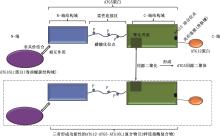
图1
ATG5功能域结构示意图"

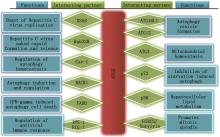
图2
ATG5相互作用蛋白示意图"

| [1] | GALLUZZI L, PIETROCOLA F, LEVINE B, et al. Metabolic control of autophagy[J]. Cell, 2014,159(6):1263-1276. |
| [2] | GALLAGHER L E, WILLIAMSON L E, CHAN E Y W. Advances in autophagy regulatory mechanisms[J]. Cells, 2016,5(2):24. |
| [3] | MIZUSHIMA N, KOMATSU M. Autophagy: Renovation of cells and tissues[J]. Cell, 2011,147(4):728-741. |
| [4] | KLIONSKY D J, ABDEL-AZIZ A K, ABDELFATAH S, et al. Guidelines for the use and interpretation of assays for monitoring autophagy (4th edition)1 [J]. Autophagy, 2021,17(1):1-382. |
| [5] | ESKELINEN E. Autophagy: Supporting cellular and organismal homeostasis by self-eating[J]. International Journal of Biochemistry & Cell Biology, 2019,111:1-10. |
| [6] | MIZUSHIMA N, NODA T, YOSHIMORI T, et al. A protein conjugation system essential for autophagy[J]. Nature, 1998,395(6700):395-398. |
| [7] | 彭俊雅. Atg5蛋白调控晚期胞内体和溶酶体的生成[D]. 北京:清华大学, 2015. |
| PENG J Y. Atg5 regulates late endosome and lysosome biogenesis[D]. Beijing: Tsinghua University, 2015. (in Chinese) | |
| [8] | MASKEY D, YOUSEFI S, SCHMID I, et al. Editorial expression of concern: ATG5 is induced by DNA-damaging agents and promotes mitotic catastrophe independent of autophagy[J]. Nature Communications, 2025,16(1):2415. |
| [9] | 王雪松, 寿松涛, 姚咏明. 自噬相关基因ATG5在感染和炎症性疾病中的作用[J]. 生理科学进展, 2020,51(5):337-341. |
| WANG X S, SHOU S T, YAO Y M. The role of autophagy related gene ATG5 in infection and inflammatory diseases[J]. Progress in Physiological Sciences, 2020,51(5):337-341. (in Chinese) | |
| [10] | LI S, SUN J, ZHANG B, et al. ATG5 attenuates inflammatory signaling in mouse embryonic stem cells to control differentiation[J]. Developmental Cell, 2024,59(7):882-897. |
| [11] | ZHANG J. The role of BRCA1 in homologous recombination repair in response to replication stress: Significance in tumorigenesis and cancer therapy[J]. Cell and Bioscience, 2013,3(1):11. |
| [12] | CUMMINS T D, HOLDEN C R, SANSBURY B E, et al. Metabolic remodeling of white adipose tissue in obesity[J]. American Journal of Physiology. Endocrinology and Metabolism, 2014,307(3):E262-E277. |
| [13] | YE X, ZHOU X, ZHANG H. Exploring the role of autophagy-related gene 5 (ATG5) yields important insights into autophagy in autoimmune/autoinflammatory diseases[J]. Frontiers in Immunology, 2018,9:2334. |
| [14] | YAMAMOTO K, VENIDA A, YANO J, et al. Autophagy promotes immune evasion of pancreatic cancer by degrading MHC-Ⅰ[J]. Nature, 2020,581(7806):100-105. |
| [15] | SIMON H U, YOUSEFI S, SCHMID I, et al. ATG5 can regulate p53 expression and activation[J]. Cell Death & Disease, 2014,5(7):e1339. |
| [16] | KOMATSU M, WAGURI S, CHIBA T, et al. Loss of autophagy in the central nervous system causes neurodegeneration in mice[J]. Nature, 2006,441(7095):880-884. |
| [17] | ZHOU X, LU X, LV J, et al. Genetic association of PRDM1-ATG5 intergenic region and autophagy with systemic lupus erythematosus in a Chinese population[J]. Annals of the Rheumatic Diseases, 2011,70(7):1330-1337. |
| [18] | GARCIA-GARCIA A, ANANDHAN A, BURNS M, et al. Impairment of Atg5-dependent autophagic flux promotes paraquat- and MPP⁺-induced apoptosis but not rotenone or 6-hydroxydopamine toxicity[J]. Toxicological Sciences, 2013,136(1):166-182. |
| [19] | TANG Q, LIU W, YANG X, et al. ATG5-mediated autophagy may inhibit pyroptosis to ameliorate oleic acid-induced hepatocyte steatosis[J]. DNA and Cell Biology, 2022,41(12):1038-1052. |
| [20] | REN Q, SUN Q, FU J. Dysfunction of autophagy in high-fat diet-induced non-alcoholic fatty liver disease[J]. Autophagy, 2024,20(2):221-241. |
| [21] | MATSUSHITA M, SUZUKI N N, OBARA K, et al. Structure of Atg5.Atg16, a complex essential for autophagy[J]. The Journal of Biological Chemistry, 2007,282(9):6763-6772. |
| [22] | 严俊, 吴祖泽, 王立生. 白血病细胞自噬调控的研究进展[J]. 中国实验血液学杂志, 2010,18(2):540-543. |
| YAN J, WU Z Z, WANG L S. Advances of research on autophagy regulation in leukemia cells—Review[J]. Journal of Experimental Hematology, 2010,18(2):540-543. (in Chinese) | |
| [23] | 谢昆, 李密杰, 蒋成砚, 等. 自噬相关蛋白ATG5/BECLIN-1调控细胞自噬和凋亡的分子机理研究进展[J]. 中国人兽共患病学报, 2018,34(3):272-275. |
| XIE K, LI M J, JIANG C Y, et al. Research progress on autophagy-related protein 5 and BECLIN-1 regulate autophagy and apoptosis[J]. Chinese Journal of Zoonoses, 2018,34(3):272-275. (in Chinese) | |
| [24] | OTOMO C, METLAGEL Z, TAKAESU G, et al. Structure of the human ATG12~ATG5 conjugate required for LC3 lipidation in autophagy[J]. Nature Structural & Molecular Biology, 2013,20(1):59-66. |
| [25] | CHANGOTRA H, KAUR S, YADAV S S, et al. ATG5: A central autophagy regulator implicated in various human diseases[J]. Cell Biochemistry and Function, 2022,40(7):650-667. |
| [26] | GAMMOH N, FLOREY O, OVERHOLTZER M, et al. Interaction between FIP200 and ATG16L1 distinguishes ULK1 complex-dependent and -independent autophagy[J]. Nature Structural and Molecular Biology, 2013,20(2):144-149. |
| [27] | QI N, WANG B, XING W, et al. Impact of quercetin on autophagy and apoptosis induced by a high concentration of CuSO4 in porcine ovarian granulosa cells[J]. Domestic Animal Endocrinology, 2025,90:106881. |
| [28] | 周盼, 陈幸, 曾辰, 等. SUMO化修饰与细胞迁移和侵袭[J]. 生命科学, 2019,31(7):678-685. |
| ZHOU P, CHEN X, ZENG C, et al. Sumoylation and its role in cell migration and invasion[J]. Chinese Bulletin of Life Sciences, 2019,31(7):678-685. (in Chinese) | |
| [29] | YOUSEFI S, PEROZZO R, SCHMID I, et al. Calpain-mediated cleavage of Atg5 switches autophagy to apoptosis[J]. Nature Cell Biology, 2006,8(10):1124-1132. |
| [30] | 金露琪, 闫春兰, 刘威岗, 等. 细胞自噬中关键蛋白乙酰化修饰与相关疾病诊治的研究进展[J]. 中国细胞生物学学报, 2021,43(1):186-193. |
| JIN L Q, YAN C L, LIU W G, et al. Research progresses of acetylation of key protein in cell autophagy and the treatment of related diseases[J]. Chinese Journal of Cell Biology, 2021,43(1):186-193. (in Chinese) | |
| [31] | ROMANOV J, WALCZAK M, IBIRICU I, et al. Mechanism and functions of membrane binding by the Atg5-Atg12/Atg16 complex during autophagosome formation[J]. The EMBO Journal, 2012,31(22):4304-4317. |
| [32] | PYO J, JANG M, KWON Y, et al. Essential roles of Atg5 and FADD in autophagic cell death: Dissection of autophagic cell death into vacuole formation and cell death[J]. The Journal of Biological Chemistry, 2005,280(21):20722-20729. |
| [33] | WANG F, PETERS R, JIA J, et al. ATG5 provides host protection acting as a switch in the atg8ylation cascade between autophagy and secretion[J]. Developmental Cell, 2023,58(10):866-884. |
| [34] | 张雪娣, 丁宁, 穆云萍, 等. 自噬基因Atg5的缺失对精子成熟的影响[J]. 中国药理学通报, 2021,37(2):227-233. |
| ZHANG X D, DING N, MU Y P, et al. Impact of autophagy gene Atg5 deficiency on sperm maturation[J]. Chinese Pharmacological Bulletin, 2021,37(2):227-233. (in Chinese) | |
| [35] | SU M, WENG J T, HSU J B, et al. Investigation and identification of functional post-translational modification sites associated with drug binding and protein-protein interactions[J]. BMC Systems Biology, 2017,11():132. |
| [36] | ZUO X, ZENG H, YANG X, et al. Atg5-mediated lipophagy induces ferroptosis in corneal epithelial cells in dry eye disease[J]. Investigative Ophthalmology & Visual Science, 2024,65(14):12. |
| [37] | 姜晶晶, 陈翀, 年丽, 等. 敲除ATG5、ATG7基因对RPMI-8226细胞铁死亡敏感性的影响[J]. 中国实验血液学杂志, 2024,32(5):1444-1449. |
| JIANG J J, CHEN C, NIAN L, et al. Effects of ATG5 and ATG7 knockout on ferroptosis sensitivity of RPMI-8226 cells[J]. Journal of Experimental Hematology, 2024,32(5):1444-1449. (in Chinese) | |
| [38] | LIAO Z, DAI Z, CAI C, et al. Knockout of Atg5 inhibits proliferation and promotes apoptosis of DF-1 cells[J]. In Vitro Cellular & Developmental Biology-Animal, 2019,55(5):341-348. |
| [39] | MASKEY D, YOUSEFI S, SCHMID I, et al. ATG5 is induced by DNA-damaging agents and promotes mitotic catastrophe independent of autophagy[J]. Nature Communications, 2013,4:2130. |
| [40] | LI S, ZHANG L, ZHANG G, et al. A nonautophagic role of ATG5 in regulating cell growth by targeting c-Myc for proteasome-mediated degradation[J]. Iscience, 2021,24(11):103296. |
| [41] | YANG L, HAN B, ZHANG Y, et al. Engagement of circular RNA HECW2 in the nonautophagic role of ATG5 implicated in the endothelial-mesenchymal transition[J]. Autophagy, 2018,14(3):404-418. |
| [42] | HAN F, XIAO Q, PENG S, et al. Atorvastatin ameliorates LPS-induced inflammatory response by autophagy via AKT/mTOR signaling pathway[J]. Journal of Cellular Biochemistry, 2018,119(2):1604-1615. |
| [43] | 郭红英, 张婉沁, 刘志勇, 等. 自噬相关基因5通过影响p53信号通路促进肝细胞癌发展[J]. 中国临床医学, 2023,30(1):72-79. |
| GUO H Y, ZHANG W Q, LIU Z Y, et al. ATG5 interacts with the p53 signaling pathway to promote the development of hepatocellular carcinoma[J]. Chinese Journal of Clinical Medicine, 2023,30(1):72-79. (in Chinese) | |
| [44] | MROCZEK A, CIELOCH A, MANDA-HANDZLIK A, et al. Overexpression of ATG5 gene makes granulocyte-like HL-60 susceptible to release reactive oxygen species[J]. International Journal of Molecular Sciences, 2020,21(15): 5194. |
| [45] | 刘峰, 庄万欣, 杨媛, 等. NLRP3炎症小体激活的调控机制研究进展[J]. 生物医学转化, 2024,5(2):2-11. |
| LIU F, ZHUANG W X, YANG Y, et al. Research advances in the regulatory mechanisms of NLRP3 inflammasome activation[J]. Biomedical Transformation, 2024, 5(2):2-11. (in Chinese) | |
| [46] | DI Q, ZHAO X, TANG H, et al. USP22 suppresses the NLRP3 inflammasome by degrading NLRP3 via ATG5-dependent autophagy[J]. Autophagy, 2023,19(3):873-885. |
| [47] | 林通, 郭娜, 杨泽庆, 等. 自噬在自身炎症性疾病中的研究进展[J]. 现代免疫学, 2020,40(2):162-166. |
| LIN T, GUO N, YANG Z Q, et al. Advances in autophagy in autoinflammatory diseases[J]. Current Immunology, 2020,40(2):162-166. (in Chinese) | |
| [48] | 肖孟景, 李利根. 自噬调控过度炎症研究进展[J]. 生理学报, 2014,66(6):739-745. |
| XIAO M J, LI L G. Research progress on autophagy regulating excessive inflammation[J]. Acta Physiologica Sinica, 2014,66(6):739-745. (in Chinese) | |
| [49] | 陈俊泳, 唐智, 吴莉, 等. 突发性耳聋患者血清Atg5、Atg12、LC3水平与病情严重程度和预后的关系[J]. 分子诊断与治疗杂志, 2024,16(12):2282-2285. |
| CHEN J Y, TANG Z, WU L, et al. The relationship between serum Atg5, Atg12, LC3 levels and the severity of disease and prognosis in patients with sudden deafness[J]. Journal of Molecular Diagnostics and Therapy, 2024,16(12):2282-2285. (in Chinese) | |
| [50] | LIU W, SAITO Y, JACKSON J, et al. RAD51 bypasses the CMG helicase to promote replication fork reversal[J]. Science, 2023,380(6643):382-387. |
| [51] | ZAHID S, SEIF EL DAHAN M, IEHL F, et al. The multifaceted roles of Ku70/80[J]. International Journal of Molecular Sciences, 2021,22(8): 4134. |
| [52] | WALCZAK M, MARTENS S. Dissecting the role of the Atg12-Atg5-Atg16 complex during autophagosome formation[J]. Autophagy, 2013,9(3):424-425. |
| [53] | HERHAUS L, GESTAL-MATO U, EAPEN V V, et al. IRGQ-mediated autophagy in MHC class Ⅰ quality control promotes tumor immune evasion[J]. Cell, 2024,187(25):7285-7302. |
| [54] | WANG F, TROSDAL E S, PADDAR M A, et al. The role of ATG5 beyond Atg8ylation and autophagy[J]. Autophagy, 2024,20(2):448-450. |
| [55] | 刘爱静, 李雁儒, 高惠茹, 等. 自噬相关蛋白5在结肠癌中的表达及对结肠癌细胞迁移及侵袭能力的影响[J]. 山东大学学报(医学版), 2024,62(4):14-23. |
| LIU A J, LI Y R, GAO H R, et al. Expression of autophagy-related protein 5 in colon cancer and its impact on the migration and invasion ability of colon cancer cells[J]. Journal of Shandong University (Health Sciences), 2024,62(4):14-23. (in Chinese) | |
| [56] | 徐然, 邵弘, 朱静. 自噬在肿瘤发生发展中的调控作用以及通过靶向自噬抑制肿瘤的研究进展[J]. 生命科学, 2018,30(7):723-731. |
| XU R, SHAO H, ZHU J. Regulation of autophagy in tumor cells and application of targeting autophagy in cancer[J]. Chinese Bulletin of Life Sciences, 2018,30(7):723-731. (In Chinese) | |
| [57] | 张玉梅, 冯凡, 林方方, 等. 自噬相关基因ATG5在肿瘤发生发展及治疗中的作用[J]. 中国肿瘤, 2018,27(10):774-778. |
| ZHANG Y M, FENG F, LIN F F, et al. Roles of autophagy-related gene 5 (ATG5) in tumor development, treatment and prognosis[J]. China Cancer, 2018,27(10):774-778. (in Chinese) | |
| [58] | 刘如爱, 王播勇, 李锦松, 等. 自噬相关基因5在人恶性胸膜间皮瘤中的表达及其意义[J]. 中国医科大学学报, 2024,53(8):673-679. |
| LIU R A, WANG B Y, LI J S, et al. Expression and significance of autophagy-related gene 5 in human malignant pleural mesothelioma[J]. Journal of China Medical University, 2024,53(8):673-679. (in Chinese) | |
| [59] | YUAN Y, XUE M, ZHOU F, et al. USP13 promotes acute myeloid leukemia cell proliferation and autophagy by promoting ATG5[J]. Tissue and Cell, 2024,91:102494. |
| [60] | 曹蒙. 上皮性卵巢癌组织中Atg5、Beclin1、P53的表达及相关性研究[D]. 郑州:郑州大学, 2016. |
| CAO M. Expression and correlation of Atg5, Beclin1 and P53 in epithelial ovarian carcinoma[D]. Zhengzhou: Zhengzhou University, 2016. (in Chinese) | |
| [61] | 杨军. miR-181a通过调控靶基因ATG5抑制肝细胞性肝癌的自噬[D]. 南京:南京医科大学, 2017. |
| YANG J. MicroRNA-181a inhibits autophagy by targeting ATG5 in hepatocellular carcinoma[D]. Nanjing: Nanjing Medical University, 2017. (in Chinese) | |
| [62] | 许祥云, 陈书昌, 孔德九, 等. 自噬相关基因LC3和ATG5在胃癌中的表达及临床意义[J]. 实用医学杂志, 2020,36(14):1939-1945. |
| XU X Y, CHEN S C, KONG D J, et al. Expression and clinical significance of autophagy-related genes LC3 and ATG5 in gastric cancer[J]. The Journal of Practical Medicine, 2020,36(14):1939-1945. (in Chinese) | |
| [63] | YANG F, PENG Z, JI W, et al. LncRNA CCAT1 upregulates ATG5 to enhance autophagy and promote gastric cancer development by absorbing miR-140-3p[J]. Digestive Diseases and Sciences, 2022,67(8):3725-3741. |
| [64] | 胡福清, 陈雅祺, 吴齐, 等. 自噬相关蛋白5通过p53/p21通路调控结肠癌细胞衰老[J]. 肿瘤防治研究, 2019,46(12):1068-1072. |
| HU F Q, CHEN Y Q, WU Q, et al. Autophagy related protein 5 regulates colon cancer cell senescence through p53/p21 pathway[J]. Cancer Research on Prevention and Treatment, 2019,46(12):1068-1072. (in Chinese) | |
| [65] | YU Z, TANG H, CHEN S, et al. Exosomal LOC85009 inhibits docetaxel resistance in lung adenocarcinoma through regulating ATG5-induced autophagy[J]. Drug Resistance Updates, 2023,67:100915. |
| [66] | 梁译丹. ACSS2调控ATG5依赖的自噬在镉暴露促乳腺癌效应中的作用与机制研究[D]. 南宁:广西大学, 2022. |
| LIANG Y D. ACSS2 mediating ATG5-dependent autophagy in Cd-induced bresast cancer progression[D]. Nanning: Guangxi University, 2022. (in Chinese) | |
| [67] | 张国臣, 刘璐, 唐敬翔, 等. miR-30d-5p靶向ATG5影响A549细胞增殖迁移和自噬的研究[J]. 中华肿瘤防治杂志, 2024,31(18):1101-1107. |
| ZHANG G C, LIU L, TANG J X, et al. Mechanism of miR-30d-5p targeting ATG5 on proliferation, migration and autophagy of A549 cells[J]. Chinese Journal of Cancer Prevention and Treatment, 2024,31(18):1101-1107. (in Chinese) | |
| [68] | 李秀芳, 黄利英, 韩毅, 等. ATG5和PDIA3在宫颈癌组织中的表达及其临床意义[J]. 中国肿瘤生物治疗杂志, 2024,31(10):1008-1016. |
| LI X F, HUANG L Y, HAN Y, et al. Expression of ATG5 and PDIA3 in cervical cancer tissues and their clinical significance[J]. Chinese Journal of Cancer Biotherapy, 2024,31(10):1008-1016. (in Chinese) | |
| [69] | 李胜, 吕晨曦, 葛承延, 等. ATG5对甲状腺乳头状癌细胞增殖的影响[J]. 中华肿瘤防治杂志, 2021,28(21):1629-1634. |
| LI S, LYU C X, GE C Y, et al.Effect of ATG5 on the proliferation of papillary thyroid carcinoma[J]. Chinese Journal of Cancer Prevention and Treatment, 2021,28(21):1629-1634. (in Chinese) | |
| [70] | ZHOU P, ZHANG Z, LIU M, et al. Effects of autophagy‑related gene 5 on tumor development and treatment (Review)[J]. Oncology Reports, 2023,50(2): 155. |
| [71] | 邓琳, 先梦麟, 杨玉有, 等. ATG5通过细胞自噬调控Ⅱ型胶原表达的实验研究[J]. 陆军军医大学学报, 2023,45(17):1828-1837. |
| DENG L, XIAN M L, YANG Y Y, et al. ATG5 regulates type Ⅱ collagen expression by modulation of autophagy[J]. Journal of Army Medical University, 2023,45(17):1828-1837. (in Chinese) | |
| [72] | 张博文. ATG5调控c-Myc蛋白降解机制的研究[D]. 郑州:河南大学, 2023. |
| ZHANG B W. Study on the mechanism of ATG5 regulating c-Myc protein degradation[D]. Zhengzhou: Henan University, 2023. (in Chinese) | |
| [73] | LV X, JIANG H, LI B, et al. The crucial role of Atg5 in cortical neurogenesis during early brain development[J]. Scientific Reports, 2014,4:6010. |
| [74] | TANG X, WALTER E, WOHLEB E, et al. ATG5 (autophagy related 5) in microglia controls hippocampal neurogenesis in Alzheimer disease[J]. Autophagy, 2024,20(4):847-862. |
| [75] | 李建, 曹炎, 陈迎, 等. 自噬相关蛋白ATG5和ATG7在神经干细胞体外扩增中的作用[J]. 军事医学, 2022,46(11):848-854. |
| LI J, CAO Y, CHEN Y, et al. Roles of autophagy-related proteins ATG5 and ATG7 in the expansion ofneural stem cells in vitro [J]. Military Medical Sciences, 2022,46(11):848-854. (in Chinese) | |
| [76] | DUAN Y, YAO R, LING H, et al. Organellophagy regulates cell death: A potential therapeutic target for inflammatory diseases[J]. Journal of Advanced Research, 2025,70:371-391. |
| [77] | PENG Y, LONG Y, WAN C. NOD-like receptor X1 promotes autophagy and inactivates NLR family pyrin domain containing 3 inflammasome signaling by binding autophagy-related gene 5 to alleviate cerebral ischemia/reperfusion-induced neuronal injury[J]. Journal of Neuropathology and Experimental Neurology, 2025,84(3):223-235. |
| [78] | SINGH R, CUERVO A M. Lipophagy: Connecting autophagy and lipid metabolism[J]. International Journal of Cell Biology, 2012,2012:282041. |
| [79] | ZHANG S, PENG X, YANG S, et al. The regulation, function, and role of lipophagy, a form of selective autophagy, in metabolic disorders[J]. Cell Death & Disease, 2022,13(2):132. |
| [80] | SADEGHI A, NIKNAM M, MOMENI-MOGHADDAM M A, et al. Crosstalk between autophagy and insulin resistance: Evidence from different tissues[J]. European Journal of Medical Research, 2023,28(1):456. |
| [1] | 王娜, 刘源壹, 杨明颖, 石玉杰, 李昕俞, 曹佳龙, 何千倩, 杜明, 芒来. 反10,顺12共轭亚油酸的生物学功能及其在畜禽中的应用[J]. 中国畜牧兽医, 2026, 53(2): 610-621. |
| [2] | 刘梦, 张安池, 丁如欣, 葛延松, 郑家三. 坏死梭杆菌对奶牛真皮成纤维细胞线粒体动力学与自噬的影响[J]. 中国畜牧兽医, 2026, 53(1): 418-426. |
| [3] | 张梦娜, 徐莉莉, 杨雅君, 刘荣徽, 韦燕文, 王倩, 谭镇炜, 吕红珍, 张琳, 高敏, 王承民, 孙永学. 1株黑熊源赫尔曼亚特兰大杆菌的分离鉴定及生物学特性分析[J]. 中国畜牧兽医, 2025, 52(9): 4334-4345. |
| [4] | 李刘慧, 郭方超, 周垠全, 王丫丫, 彭伟龙, 殷韶杰. 丹皮酚生物学功能及其在畜禽抗炎中应用的研究进展[J]. 中国畜牧兽医, 2025, 52(9): 4440-4452. |
| [5] | 雷兴芬, 李舜, 黄云飞, 李亚娟, 孙芹芹, 付强. 自噬在细菌感染中的作用机制研究进展[J]. 中国畜牧兽医, 2025, 52(9): 4505-4514. |
| [6] | 唐煌尧, 张伟, 魏浩, 王斐英, 廖小翠, 张珍誉. 大豆异黄酮的生物学功能及其在动物生产中的应用研究进展[J]. 中国畜牧兽医, 2025, 52(5): 2157-2165. |
| [7] | 宋鹏琰, 锡建中, 陈晓勇, 方翟, 邢凤, 周荣艳. miR-200b生物学功能及其对小鼠卵泡发育的影响[J]. 中国畜牧兽医, 2025, 52(12): 5539-5548. |
| [8] | 马雪琴, 马玉林, 徐晓锋, 张力莉. 有机铬的生物学功能及其在动物营养中的应用研究进展[J]. 中国畜牧兽医, 2025, 52(12): 5715-5725. |
| [9] | 刘辉, 安小娅, 雷初朝. 中草药在肉羊生产中的应用研究进展[J]. 中国畜牧兽医, 2025, 52(11): 5235-5242. |
| [10] | 殷桂彬, 郭昊彤, 赵文豪, 宋健, 羊雨恬, 李佳, 刘晓晔, 陈武. 甘露消毒丹对猫传染性腹膜炎病毒复制及细胞自噬功能的影响[J]. 中国畜牧兽医, 2025, 52(11): 5510-5519. |
| [11] | 于明弘, 王萌, 葛冰洁, 闫可心, 王巍, 刘馨蔓, 刘晓童, 邱谦, 桑锐, 张雪梅. 蒲公英甾醇对AFB1诱导鸡原代肝细胞凋亡和自噬的影响[J]. 中国畜牧兽医, 2024, 51(9): 3762-3770. |
| [12] | 彭颖, 相亦飞, 易丹丹, 刘霞, 王梦会, 赵林艺, 何家康. 迷迭香酸的生物学功能及其在动物生产中的应用研究进展[J]. 中国畜牧兽医, 2024, 51(5): 1912-1920. |
| [13] | 秦天苗, 房晓欢, 李俊杰. SIRT2调控自噬的作用机制研究现状[J]. 中国畜牧兽医, 2024, 51(2): 513-520. |
| [14] | 张博, 耿阳, 李天尊, 敖英男, 卢宇来, 乌音嘎, 齐智利. 自噬在奶牛乳腺炎、酮病、脂肪肝中的作用机制研究进展[J]. 中国畜牧兽医, 2024, 51(12): 5218-5224. |
| [15] | 洪纯, 朱向星, 李新明, 黄秋艳, 刘文华, 杜宗亮, 唐冬生, 王塑天. 自噬调控猪脂肪生成的研究进展[J]. 中国畜牧兽医, 2024, 51(12): 5325-5334. |
| 阅读次数 | ||||||
|
全文 |
|
|||||
|
摘要 |
|
|||||
