
China Animal Husbandry & Veterinary Medicine ›› 2026, Vol. 53 ›› Issue (2): 682-691.doi: 10.16431/j.cnki.1671-7236.2026.02.016
• Nutrition and Feed • Previous Articles Next Articles
WANG Huixin1,2( ), GAO Qingtao1,3, LI Jiaheng1, ZHANG Shunfen1, ZHONG Ruqing1(), WANG Yang2(), CHEN Liang1, ZHANG Hongfu1
Received:2025-05-08
Online:2026-02-20
Published:2026-01-27
Contact:
ZHONG Ruqing, WANG Yang
E-mail:wanghuixint9@163.com;zhongruqing@caas.cn;yangwang@qau.edu.cn
CLC Number:
WANG Huixin, GAO Qingtao, LI Jiaheng, ZHANG Shunfen, ZHONG Ruqing, WANG Yang, CHEN Liang, ZHANG Hongfu. Effects of Lactobacillus plantarum Selenium on Tissue Morphology, Antioxidant Function and Inflammatory Indices in Ovary and Oviduct of Laying Hens[J]. China Animal Husbandry & Veterinary Medicine, 2026, 53(2): 682-691.
Table 1
Composition and nutrient level of the basal diet (air-dry basis)"
原料 Ingredient | 含量 Contents | 营养成分 Nutrient components② | 含量 Contents |
|---|---|---|---|
| 玉米 Corn | 64.40 | 总能 GE/(MJ/kg) | 14.36 |
| 豆粕 Soybean meal | 21.00 | 干物质 DM | 90.81 |
| 膨化大豆 Extruded soybean | 4.00 | 粗蛋白质 CP | 14.17 |
| 石粉 Limestone | 8.29 | 粗脂肪 EE | 2.43 |
| 磷酸氢钙 Dicalcium phosphate | 1.00 | 粗灰分 Ash | 11.95 |
| 1%预混料 1% premix① | 1.00 | 中性洗涤纤维 NDF | 7.01 |
| 98%赖氨酸 98% lysine | 0.10 | 酸性洗涤纤维 ADF | 3.13 |
| DL-蛋氨酸 DL-methionine | 0.16 | 钙 Ca | 3.63 |
| L-苏氨酸 L-threonine | 0.05 | 总磷 TP | 0.48 |
| 总计 Total | 100.00 |
Table 2
Real-time quantitative PCR primer information"
基因 Genes | 引物序列 Primer sequences (5′→3′) | 登录号 Accession No. | 产物长度 Product length/bp | |
|---|---|---|---|---|
| ACTB | F:CTCTATCCTGGCCTCCCT | R:GGGTGTGGGTGTTGGTAA | NM_205518.1 | 127 |
| IL-10 | F:GATGCTGCGCTTCTACACA | R:TGCTTGATGGCTTTGCTC | NM_001004414.2 | 168 |
| IL-1β | F:TACCGTCCCGTTGCTTTT | R:AATACCTCCACCCCGACA | NM_204524.1 | 92 |
| IL-6 | F:GATAGCGAAAAGCAGAACG | R:CTTCAGATTGGCGAGGAG | NM_204628.1 | 141 |
| SOD1 | F:TTTCTCTTACCGGACCACA | R:CATTTCCCACTGCCATCT | NM_205064.1 | 194 |
| CAT | F:TGCCTGTTACTTTCCCTCTT | R:TCCAATCCAACTGCTAGTGA | NM_001031215.2 | 142 |
| TXNRD1 | F:TGCCCCATTCCTACGAC | R:CTCCAAGACCCCACGAA | NM_001030762.2 | 150 |
| TXNRD2 | F:AGGGCTTCTCTCCTCTGTC | R:CCTCTTCACTGGCTGTCC | NM_001122691.1 | 136 |
| TXNRD3 | F:GAACGAACCAATGTGCCT | R:GGAGTTTCCCTGCCTGA | NM_001122777.1 | 94 |
| TNFAIP3 | F:CCCTGACTGACCAAGCC | R:CTCCTGACCTCCATGCAC | XM_015284186.1 | 73 |
| GPX1 | F:GAGGTGAACGGGAAGGG | R:TGATGTACTGCGGGTTGG | NM_001277853.1 | 106 |
| GPX3 | F:CGAAAGTACGCGGGGAA | R:AATTGGTTGGAGGGGAAGC | NM_001163232.2 | 143 |
| GPX4 | F:TCGGCCACCTCCATCTAC | R:CGCGGTCTTTCCTCATTT | XM_015299984.1 | 123 |
Table 3
Detection results of production performance of laying hens"
项目 Items | 组别 Groups | P值 P-value | |
|---|---|---|---|
| CON | SEL | ||
平均日采食量 ADFI/g | 126.26±5.10 | 128.62±6.72 | 0.377 |
| 产蛋率 LR/% | 93.71±3.84 | 91.98±4.33 | 0.797 |
平均日产蛋重 ADE/g | 58.11±6.35 | 59.76±6.32 | 0.729 |
| 料蛋比 Feed-egg ratio | 2.20±0.31 | 2.17±0.20 | 0.670 |
| 软壳蛋率 SR/% | 0.68±1.35 | 0.43±0.84 | 0.430 |
| 破壳蛋率 BER/% | 2.70±5.38 | 1.62±1.86 | 0.228 |
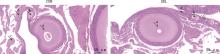
Fig.1
Observation of ovarian tissue structure of laying hens (HE staining)a,Mature follicles;b,Secondary follicles;c,Primary follicles;d,Granulosa cells"

Table 4
Count of ovarian follicles in laying hens"
项目 Items | 组别 Groups | P值 P-value | |
|---|---|---|---|
| CON | SEL | ||
| 排卵前卵泡 POF | 5.75±0.71 | 5.86±0.69 | 0.772 |
| 小白卵泡 SWF | 8.25±2.96 | 13.71±4.57 | 0.016 |
| 大白卵泡 LWF | 12.38±4.78 | 8.86±2.54 | 0.106 |
| 小黄卵泡 SYF | 5.75±2.66 | 7.00±2.58 | 0.374 |
| 大黄卵泡 LYF | 4.63±3.11 | 5.14±2.85 | 0.744 |
| 卵泡总数 Total number of follicles | 36.75±8.94 | 40.57±10.50 | 0.460 |
Table 5
Detection of ovarian hormone levels in laying hens"
激素 Hormone | 组别 Groups | P值 P-value | |
|---|---|---|---|
| CON | SEL | ||
| 促黄体生成素 LH/(mIU/mL) | 4.22±1.66 | 3.36±2.59 | 0.463 |
| 孕激素 PROG/(ng/mL) | 2.69±0.03 | 2.72±0.02 | 0.058 |
| 促卵泡激素 FSH/(mIU/mL) | 1.53±0.01 | 1.60±0.05 | 0.001 |
| 雌二醇 E2/(ng/L) | 1.84±0.01 | 1.85±0.01 | 0.019 |
| 抗缪勒管激素 AMH/(ng/L) | 0.03±0.01 | 0.03±0.01 | 0.664 |
Table 6
Relative expression of antioxidant and inflammation-related genes in ovarian of laying hens"
基因 Genes | 组别 Groups | P值 | |
|---|---|---|---|
| CON | SEL | P-value | |
| GPX1 | 1.06±0.42 | 0.85±0.36 | 0.368 |
| GPX3 | 1.10±0.48 | 0.91±0.53 | 0.531 |
| GPX4 | 1.08±0.41 | 1.05±0.34 | 0.915 |
| CAT | 1.01±0.19 | 1.12±0.34 | 0.533 |
| SOD1 | 1.00±0.10 | 1.18±0.32 | 0.239 |
| TXNRD1 | 1.03±0.29 | 0.84±0.50 | 0.433 |
| TXNRD2 | 1.19±0.66 | 1.83±0.91 | 0.196 |
| TXNRD3 | 1.16±0.69 | 1.97±1.17 | 0.173 |
| IL-1β | 0.74±0.33 | 0.47±0.30 | 0.196 |
| IL-6 | 0.78±0.37 | 0.57±0.54 | 0.493 |
| IL-10 | 1.07±0.39 | 0.84±0.25 | 0.263 |
| TNFAIP3 | 1.02±0.22 | 0.75±0.27 | 0.084 |
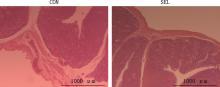
Fig.2
Histological morphology observation of oviduct of laying hens (HE staining)"
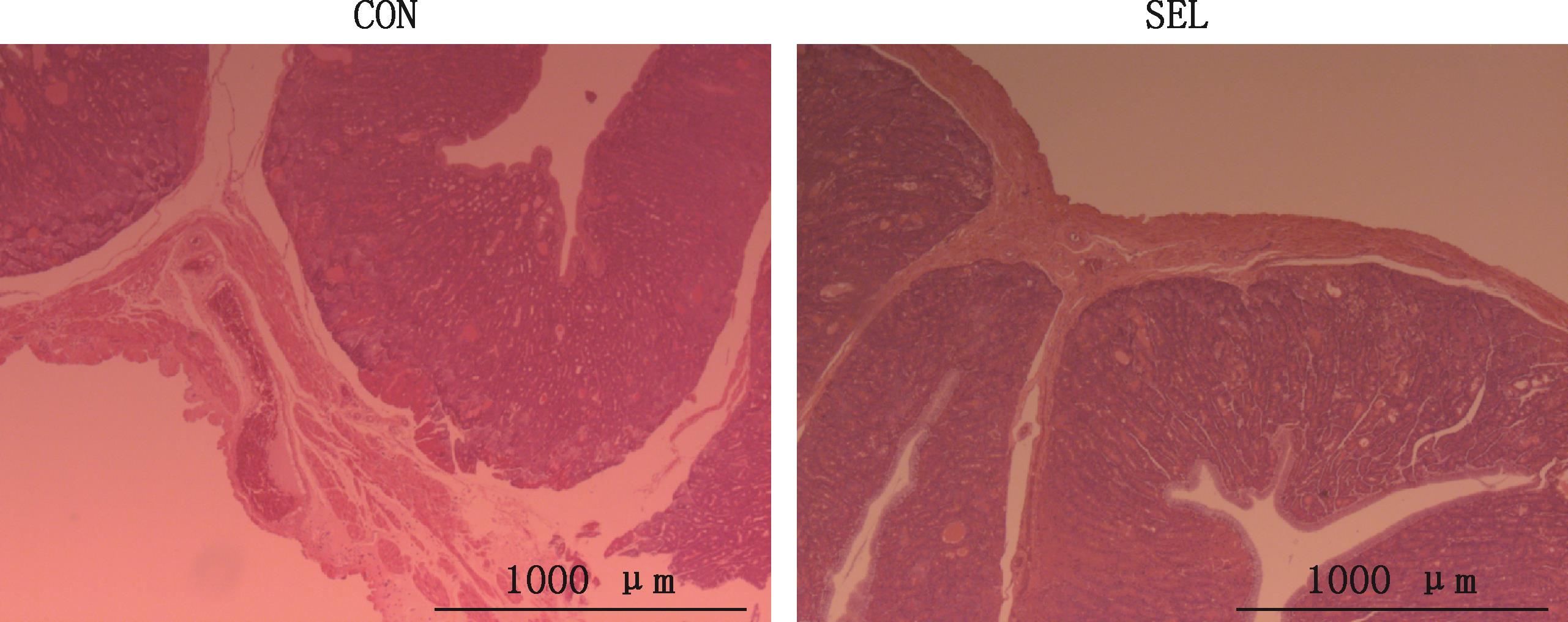
Table 7
Relative expression of antioxidant and inflammation-related genes in oviduct of laying hens"
基因 Genes | 组别 Groups | P值 | |
|---|---|---|---|
| CON | SEL | P-value | |
| GPX1 | 1.07±0.41 | 2.22±0.73 | 0.007 |
| GPX3 | 1.25±0.82 | 1.82±0.71 | 0.394 |
| GPX4 | 1.13±0.57 | 2.44±0.49 | 0.009 |
| CAT | 1.29±0.99 | 2.57±0.62 | 0.023 |
| SOD1 | 1.13±0.58 | 2.25±0.39 | 0.003 |
| TXNRD1 | 1.02±0.20 | 1.35±0.48 | 0.240 |
| TXNRD2 | 1.34±0.98 | 2.81±0.61 | 0.011 |
| TXNRD3 | 1.29±0.92 | 2.92±1.08 | 0.018 |
| IL-1β | 1.08±0.45 | 1.49±0.43 | 0.132 |
| IL-6 | 1.09±0.47 | 1.68±0.34 | 0.032 |
| IL-10 | 1.15±0.61 | 2.12±1.32 | 0.134 |
| TNFAIP3 | 1.17±0.69 | 2.49±0.62 | 0.006 |
| [1] | HOU Q, LI G, PAN X, et al. Long-term supplementation of genistein improves immune homeostasis in the aged gut and extends the laying cycle of aged laying hens[J]. Poultry Science,2024,103(6):103670. |
| [2] | FRANCESCHI C, CAPRI M, MONTI D, et al. Inflammaging and anti-inflammaging: A systemic perspective on aging and longevity emerged from studies in humans[J]. Mechanisms of Ageing and Development,2007,128(1):92-105. |
| [3] | WU Y, ZHOU S, ZHAO A, et al. Protective effect of rutin on ferroptosis-induced oxidative stress in aging laying hens through Nrf2/HO-1 signaling[J]. Cell Biology International,2023,47(3):598-611. |
| [4] | PARK S U, WALSH L, BERKOWITZ K M, et al. Mechanisms of ovarian aging[J]. Reproduction,2021,162(2):R19-R33. |
| [5] | MARTEL J, OJCIUS D M, KO Y F, et al. Hormetic effects of phytochemicals on health and longevity[J]. Trends in Endocrinology & Metabolism,2019,30(6):335-346. |
| [6] | MARZEC A, DAMAZIAK K, KOWALSKA H, et al. Effect of hens age and storage time on functional and physiochemical properties of eggs[J]. Journal of Applied Poultry Research,2019,28(2):290-300. |
| [7] | GLOUX A, LE ROY N, MÊME N, et al. Increased expression of fibroblast growth factor 23 is the signature of a deteriorated Ca/P balance in ageing laying hens[J]. Scientific Reports,2020,10(1):21124. |
| [8] | ZHANG J C, CHEN P, ZHANG C, et al. Yeast culture promotes the production of aged laying hens by improving intestinal digestive enzyme activities and the intestinal health status[J].Poultry Science,2020,99(4):2026-2032. |
| [9] | HAN Q, GUO Y, ZHANG B, et al. Effects of dietary zinc on performance, zinc transporters expression, and immune response of aged laying hens[J]. Biological Trace Element Research,2020,196(1):231-242. |
| [10] | ABDOLLAHI A, KARIMI A, SADEGHI A, et al. The effects of the fiber source and xylanase supplementation on production, egg quality, digestibility, and intestinal morphology in the aged laying hen[J]. Poultry Science,2020,100(3):100936. |
| [11] | WANG J, WANG W W, QI G H, et al. Effects of dietary Bacillus subtilis supplementation and calcium levels on performance and eggshell quality of laying hens in the late phase of production[J]. Poultry Science,2020,100(3):100970. |
| [12] | LÓPEZ OTÍN C, GALLUZZI L, FREIJE J M P, et al. Metabolic control of longevity[J]. Cell,2016,166(4):802-821. |
| [13] | RAYMAN M P. Food-chain selenium and human health: Emphasis on intake[J]. British Journal of Nutrition,2008,100(2):254-268. |
| [14] | QAZI I, CAO Y, YANG H, et al. Impact of dietary selenium on modulation of expression of several non-selenoprotein genes related to key ovarian functions, female fertility, and proteostasis: A transcriptome-based analysis of the aging mice ovaries[J]. Biological Trace Element Research,2021,199(2):633-648. |
| [15] | JOHNSON C C, FORDYCE F M, RAYMAN M. Symposium on ‘Geographical and geological influences on nutrition’ factors controlling the distribution of selenium in the environment and their impact on health and nutrition: Conference on ‘Over- and undernutrition: Challenges and approaches’[J]. Proceedings of the Nutrition Society,2010,69(1):119-132. |
| [16] | AVENDAÑO R, CHAVES N, FUENTES P, et al. Production of selenium nanoparticles in Pseudomonas putida KT2440[J]. Scientific Reports,2016,6(1):37155. |
| [17] | ALZATE A, PÉREZ CONDE M C, GUTIÉRREZ A M, et al. Selenium-enriched fermented milk: A suitable dairy product to improve selenium intake in humans[J]. International Dairy Journal,2010,20(11):761-769. |
| [18] | HANDA E, PUSPITASARI I M, ABDULAH R, et al. Recent advances in clinical studies of selenium supplementation in radiotherapy[J]. Journal of Trace Elements in Medicine and Biology,2020,62:126653. |
| [19] | LI Y, MU T, LI R, et al. Effects of different selenium sources and levels on the physiological state, selenoprotein expression, and production and preservation of selenium-enriched eggs in laying hens[J]. Poultry Science,2024,103(2):103347. |
| [20] | SHANG X, YU P, YIN Y, et al. Effect of selenium-rich Bacillus subtilis against mercury-induced intestinal damage repair and oxidative stress in common carp[J]. Comparative Biochemistry and Physiology Part C: Toxicology & Pharmacology,2021,239:108851. |
| [21] | LIN Y, REN Y, ZHANG Y, et al. Protective role of nano-selenium-enriched Bifidobacterium longum in delaying the onset of streptozotocin-induced diabetes[J]. Royal Society Open Science,2018,5(12):181156. |
| [22] | YAZDI M H, MAHDAVI M, KHERADMAND E, et al. The preventive oral supplementation of a selenium nanoparticle-enriched probiotic increases the immune response and lifespan of 4T1 breast cancer bearing mice[J]. Arzneimittelforschung,2012,62(11):525-531. |
| [23] | WANG B, ZHAO N, LI J, et al. Selenium-enriched Lactobacillus plantarum improves the antioxidant activity and flavor properties of fermented Pleurotus eryngii [J]. Food Chemistry,2021,345:128770. |
| [24] | SONG Y, ZHANG J, LI Y, et al. Potential protective effect of selenium-enriched Lactobacillus plantarum on cadmium-induced liver injury in mice[J]. Journal of Microbiology and Biotechnology,2024,34(6):1328-1339. |
| [25] | ZHANG L, ZHOU J, OBIANWUNA U, et al. Optimizing selenium-enriched yeast supplementation in laying hens: Enhancing egg quality, selenium concentration in eggs, antioxidant defense, and liver health[J]. Poultry Science,2024,104(1):104584. |
| [26] | 周帅帅, 刘家言, 赵鹏宇,等.槲皮万寿菊素对产蛋后期蛋鸡生产性能、蛋品质、抗氧化和脂质沉积的影响[J]. 中国饲料,2023,21:27-35. |
| ZHOU S S, LIU J Y, ZHAO P Y, et al. Effects of quercetagetin on production performance, egg quality, antioxidation and lipid deposition in laying hens during the late laying stage[J]. China Feed,2023,21:27-35.(in Chinese) | |
| [27] | WANG H, CONG X, QIN K, et al. Se-enriched cardamine violifolia improves laying performance and regulates ovarian antioxidative function in aging laying hens[J]. Antioxidants,2023,12(2):450. |
| [28] | PAN C, HUANG K, ZHAO Y, et al. Effect of selenium source and level in hen’s diet on tissue selenium deposition and egg selenium concentrations[J]. Journal of Agricultural and Food Chemistry,2007,55(3):1027-1032. |
| [29] | QU W, YANG J, SUN Z, et al. Effect of selenium nanoparticles on antioxidative level, egg production and quality and blood parameter of laying hens exposed to deoxynivalenol[J]. Journal of Animal Research & Nutrition,2017,2(1).Doi:10.2176/2572-5459.100021 . |
| [30] | CRUZ G, FERNANDOIS D, PAREDES A H. Ovarian function and reproductive senescence in the rat: Role of ovarian sympathetic innervation[J]. Reproduction,2017,153(2):R59-R68. |
| [31] | COSTELLO M F, SHRESTHA B, EDEN J, et al. Metformin versus oral contraceptive pill in polycystic ovary syndrome: A cochrane review[J]. Human Reproduction,2007,22(5):1200-1209. |
| [32] | AYERS K L, SINCLAIR A H, SMITH C A. The molecular genetics of ovarian differentiation in the avian model[J]. Sexual Development,2012,7(1-3):80-94. |
| [33] | SAFIYEH F D, MOJGAN M, PARVIZ S, et al. The effect of selenium and vitamin E supplementation on anti-Mullerian hormone and antral follicle count in infertile women with occult premature ovarian insufficiency:A randomized controlled clinical trial[J]. Complementary Therapies in Medicine,2021,56:102533. |
| [34] | XU S, DONG Y, CHEN S, et al. 2-hydroxy-4-methylselenobutanoic acid promotes follicle development by antioxidant pathway[J]. Frontiers in Nutrition,2022,9:2296-861X. |
| [35] | HAO E Y, WANG D H, CHANG L Y, et al. Melatonin regulates chicken granulosa cell proliferation and apoptosis by activating the mTOR signaling pathway via its receptors[J]. Poultry Science,2020,99(11):6147-6162. |
| [36] | SILVA ISLAS C A, MALDONADO P D. Canonical and non-canonical mechanisms of Nrf2 activation[J]. Pharmacological Research,2018,134:92-99. |
| [37] | TOKMAK A, YILDIRIM G, SARIKAYA E, et al. Increased oxidative stress markers may be a promising indicator of risk for primary ovarian insufficiency: A cross-sectional case control study[J]. Revista Brasileira de Ginecologia e Obstetrićia: Revista da Federação Brasileira das Sociedades de Ginecologia e Obstetrícia,2015,37(9):411-416. |
| [38] | YANG H, QAZI I H, PAN B, et al. Dietary selenium supplementation ameliorates female reproductive efficiency in aging mice[J]. Antioxidants,2019,8(12):634. |
| [39] | BEILSTEIN M A, WHANGER P D. Glutathione peroxidase activity and chemical forms of selenium in tissues of rats given selenite or selenomethionine[J]. Journal of Inorganic Biochemistry,1988,33(1):31-46. |
| [40] | BRENNAN K M, CROWDUS C A, CANTOR A H, et al. Effects of organic and inorganic dietary selenium supplementation on gene expression profiles in oviduct tissue from broiler-breeder hens[J]. Animal Reproduction Science,2011,125(1):180-188. |
| [41] | JIANG X, DONG J, WANG B, et al. Effects of organic selenium supplement on glutathione peroxidase activities: A Meta-analysis of randomized controlled trials[J]. Aquaculture,2012,41(1):120-123. |
| [42] | MENG T, LIU Y L, XIE C Y, et al. Effects of different selenium sources on laying performance, egg selenium concentration, and antioxidant capacity in laying hens[J]. Biological Trace Element Research,2019,189(2):548-555. |
| [43] | KHAN A, KHAN I, KHAN S, et al. Selenium-enriched probiotics improve hepatic protection by regulating pro-inflammatory cytokines and antioxidant capacity in broilers under heat stress conditions[J]. Journal of Advanced Veterinary and Animal Research,2019,6(3):355-361. |
| [44] | 刘兴廷. 衰老蛋鸡卵巢氧化应激缓解措施及其机理的研究[D].杭州:浙江大学,2018. |
| LIU X T. Attenuation of the oxidative stress in the ovaries of the aging laying chicken[D].Hangzhou;Zhejiang Universitity,2018.(in Chinese) | |
| [45] | LIU Q, LI W, ZHANG J, et al. Lipoamide alleviates oxidized fish oil-induced host inflammatory response and oxidative damage in the oviduct of laying hens[J]. Frontiers in Veterinary Science,2022,9:875769. |
| [46] | DIVYASHREE S, YAJURVEDI H N. Chronic stress effects and their reversibility on the Fallopian tubes and uterus in rats[J]. Reproduction, Fertility and Development,2018,30(2):380-390. |
| [47] | VARGAS MENDOZA N, MORALES GONZÁLEZ Á, MORALES MARTÍNEZ M, et al. Flavolignans from silymarin as Nrf2 bioactivators and their therapeutic applications[J]. Biomedicines,2020,8(5):122. |
| [48] | YANG W S, SRIRAMARATNAM R, WELSCH M E, et al. Regulation of ferroptotic cancer cell death by GPX4[J]. Cell,2014,156(1):317-331. |
| [49] | ZHANG W, LIU Y, LIAO Y, et al.GPX4, ferroptosis, and diseases[J]. Biomedicine & Pharmacotherapy,2024,174:116512. |
| [50] | MUHAMMAD A I, MOHAMED D A, CHWEN L T, et al. Effect of sodium selenite, selenium yeast, and bacterial enriched protein on chicken egg yolk color, antioxidant profiles, and oxidative stability[J]. Foods,2021,10(4):871. |
| [51] | YANG Z, XIAN H, HU J, et al. USP18 negatively regulates NF-κB signaling by targeting TAK1 and NEMO for deubiquitination through distinct mechanisms[J]. Scientific Reports,2015,5(1):12738. |
| [1] | Zhilei HAO, Hongrui ZHANG, Yun MA. Effects of Different Oil Sources on Laying Performance, Egg Quality, and Fatty Acid Composition of Egg Yolk [J]. China Animal Husbandry & Veterinary Medicine, 2026, 53(2): 703-710. |
| [2] | Yinghao ZOU, Yong WANG, Lihua SUN, Xing CHEN, Jie WANG, Guohua LIU, Kun WANG, Aijuan ZHENG, Shugui ZHENG. The Effects of Different Levels of Fat Powder on the Egg-laying Performance and Egg Quality of Hy-Line Brown Laying Hens [J]. China Animal Husbandry & Veterinary Medicine, 2026, 53(1): 233-244. |
| [3] | Sichao QI, Haolin YU, Lingzhi ZHANG, Yuping HUA, Leixiao CHEN, Huanan WANG, Jian LI. Potential Mechanisms of Intestinal Mucosal Defense Against Secondary Injury in Laying Hens [J]. China Animal Husbandry & Veterinary Medicine, 2026, 53(1): 427-438. |
| [4] | SONG Wenjing, CHEN Jiang, XIONG Pingwen, SONG Qiongli, AI Gaoxiang, WEI Qipeng, ZOU Zhiheng, CHEN Xiaolian. Effects of Turpiniae folium Extract on Growth Performance,Immunity,Antioxidant Capacity and Intestinal Health in Broilers Stimulated by Lipopolysaccharide [J]. China Animal Husbandry & Veterinary Medicine, 2025, 52(9): 4123-4135. |
| [5] | WANG Yuyan, LI Menglin, CAO Qingyun, ZHOU Qiaoyi, ZHANG Xingyue, XIAO Yaqi, HUANG Shirui, ZHANG Zhiying, HU Tiesheng, SHI Dayou. Effect of Femented Tea on Laying Performance of Laying Hens After Forced Moulting [J]. China Animal Husbandry & Veterinary Medicine, 2025, 52(8): 3574-3583. |
| [6] | BA Hongli, MA Ning. Research Progress on the Mechanism and Application of Bacillus subtilis in Regulating Intestinal Health of Laying Hens [J]. China Animal Husbandry & Veterinary Medicine, 2025, 52(8): 3976-3986. |
| [7] | LYU Lingyan, SUN Ruyu, LIN Changhua, ZHANG Shengbin, QIN Xiuzhen, BAI Xiufang, WU Yongshao, CHEN Zhao, LIU Lei, ZHANG Bing, JIANG Jiaxia, ZHANG Jiaqing. Comparative Analysis of miRNA-mRNA Expression Profile in Hypothalamus-Pituitary-Ovary Gonad Axis During Estrus and Anestrus in Gilts [J]. China Animal Husbandry & Veterinary Medicine, 2025, 52(7): 2965-2980. |
| [8] | LI Jianing, JIANG Zhihui, XING Yueteng, MA Shengming. Effects of 1, 8-cineole Supplementation in Diet on the Antioxidant Capacity of Laying Hens and Eggs [J]. China Animal Husbandry & Veterinary Medicine, 2025, 52(7): 3016-3030. |
| [9] | WANG Beibei, HAO Erying, ZHANG Haihua, ZHANG Haijun, QIU Kai, WU Shugeng. Effects of Dietary Organic Manganese-Iron-Copper-Zinc Compound Preparations on the Production Performance,Blood Biochemical Indices, Follicle Development and Tibia Quality of Laying Hens [J]. China Animal Husbandry & Veterinary Medicine, 2025, 52(5): 2012-2022. |
| [10] | LAN Zhongqi, LI Peng, SHEN Shuang, JIANG Jinfeng, QIN Hongdeng, XIANG Yuting, WANG Jiaxiang. Effects of Dietary Epidermal Growth Factor Supplementation on Morphology, Hormone Content and Expression of Apoptosis Factors of Ovaries in Laying Hens [J]. China Animal Husbandry & Veterinary Medicine, 2025, 52(5): 2035-2044. |
| [11] | ZHAO Na, WANG Lizhong, ZHU Lianying, CAI Yumei, LI Shuang, LI Chenghui. Effects of Chestnut Bur Aqueous Extracts on Growth Performance,Organ Coefficient,Antioxidant Function and Tissue Structure in Mice [J]. China Animal Husbandry & Veterinary Medicine, 2025, 52(5): 2056-2065. |
| [12] | WANG Zihua, YOU Wei, CHENG Haijian, HU Xin, HU Zhiyong, SONG Enliang, JIANG Fugui. Effects of Oleoresin Capsicum on Serum Biochemical,Immune and Antioxidant Indexes of Fattening Cattle [J]. China Animal Husbandry & Veterinary Medicine, 2025, 52(2): 698-706. |
| [13] | LIU Shixiong, LI Xiao, LI Xueqiang, XU Zixuan, LI Songjian, DU Rui, XUE Chen, LIU Dacheng. Effects of Compound Bacteria Culture on Growth Performance,Immune Function and Vaccine Antibody Titer of Mongolian-Han Crossbred Mutton Sheep [J]. China Animal Husbandry & Veterinary Medicine, 2025, 52(2): 718-729. |
| [14] | WANG Yuanzhuo, LIU Tong, WANG Guizhen, HAN Kunliang, GUO Hua. Effects of Compound Chinese Herb Ultrafine Powder on Immune Function and Related Gene Expression of Xinyang Black-feathered Laying Hens [J]. China Animal Husbandry & Veterinary Medicine, 2025, 52(12): 5661-5669. |
| [15] | MA Xueqin, MA Yulin, XU Xiaofeng, ZHANG Lili. Research Progress on Biological Functions of Organic Chromium and Its Application in Animal Nutrition [J]. China Animal Husbandry & Veterinary Medicine, 2025, 52(12): 5715-5725. |
| Viewed | ||||||
|
Full text |
|
|||||
|
Abstract |
|
|||||
