
中国畜牧兽医 ›› 2026, Vol. 53 ›› Issue (2): 587-597.doi: 10.16431/j.cnki.1671-7236.2026.02.007
赵梦然( ), 杨蓓蓓, 王百惠, 朱阵, 马双()
修回日期:2025-09-19
出版日期:2026-02-20
发布日期:2026-01-28
通讯作者:
马双
E-mail:18567797203@163.com;mashuang@hebeu.edu.cn
作者简介:赵梦然,E-mail: 18567797203@163.com
基金资助:
ZHAO Mengran(), YANG Beibei, WANG Baihui, ZHU Zhen, MA Shuang()
Revised:2025-09-19
Online:2026-02-20
Published:2026-01-28
Contact:
MA Shuang
E-mail:18567797203@163.com;mashuang@hebeu.edu.cn
摘要:
动物生殖系统疾病导致的睾丸、卵巢氧化损伤及细胞过度凋亡与信号通路失调密切相关,其中铁代谢在动物生殖疾病中发挥着至关重要的作用。铁死亡作为一种铁依赖的脂质过氧化驱动的调控性细胞死亡方式,其核心特征体现为细胞内铁稳态失衡、脂质过氧化物蓄积及谷胱甘肽过氧化物酶4(GPX4)介导的抗氧化系统功能缺陷,主要通过SystemXc--GSH-GPX4轴、铁代谢通路(转铁蛋白受体1、铁蛋白重链等调控)及脂代谢通路(长链酰基辅酶A合成酶家族成员4等介导)协同调控。在动物生殖领域,铁死亡对哺乳动物(人、啮齿类、家兔等)、家禽的生殖机能具有显著影响:在雄性动物中可诱导睾丸氧化应激、生精细胞损伤及精子质量下降;在雌性动物中则与卵巢功能减退、卵泡闭锁、卵母细胞成熟障碍及胚胎发育异常密切相关。环境污染物(如PM2.5、微塑料)、毒素(如镉、玉米赤霉烯酮)及病理因素可通过激活铁死亡通路加剧生殖损伤,而铁死亡抑制剂(Ferrostatin-1)、铁螯合剂及天然产物(褪黑素、枸杞多糖等)可通过调控Nrf2/GPX4等信号通路缓解相关损伤。本综述系统梳理了铁死亡的分子调控机制,全面总结了其在不同类别动物生殖系统中的作用及相关研究进展,深入分析了铁死亡机制及缓解途径,以期为解析动物生殖疾病病理机制、改善繁殖性能提供全新靶点,为畜牧业生殖障碍的防控策略研发奠定理论基础。
中图分类号:
赵梦然, 杨蓓蓓, 王百惠, 朱阵, 马双. 铁死亡作用机制及其在动物生殖中的研究进展[J]. 中国畜牧兽医, 2026, 53(2): 587-597.
ZHAO Mengran, YANG Beibei, WANG Baihui, ZHU Zhen, MA Shuang. Mechanism of Ferroptosis and Its Research Advance in Animal Reproduction[J]. China Animal Husbandry & Veterinary Medicine, 2026, 53(2): 587-597.
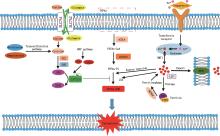
图1
铁死亡作用机制[8]"

| [1] | LOTFI M S, RASSOULI F B. Navigating the complexities of cell death: Insights into accidental and programmed cell death[J]. Tissue & Cell, 2024, 91:102586. |
| [2] | DIXON S J, LEMBERG K M, LAMPRECHT M R, et al. Ferroptosis: An iron-dependent form of nonapoptotic cell death[J]. Cell, 2012, 149(5):1060-1072. |
| [3] | 赵源杰, 秦 歌, 郑浩懿, 等. 铁死亡发生机制及其在雄性动物生殖中的研究进展[J].动物医学进展, 2022, 43(11):85-90. |
| ZHAO Y J, QIN G, ZHENG H Y, et al. Research progress on the mechanism of ferroptosis and its role in male animal reproduction[J]. Progress in Veterinary Medicine, 2022, 43(11):85-90. (in Chinese) | |
| [4] | ZHANG J, SU T, FAN Y, et al. Spotlight on iron overload and ferroptosis: Research progress in female infertility[J]. Science China—Life Sciences, 2024, 340:122370. |
| [5] | NI Z, LI Y, SONG D, et al. Iron-overloaded follicular fluid increases the risk of endometriosis-related infertility by triggering granulosa cell ferroptosis and oocyte dysmaturity[J]. Cell Death & Disease, 2022, 13(7):579. |
| [6] | DENG L, HE S, GUO N, et al. Molecular mechanisms of ferroptosis and relevance to inflammation[J]. Inflammation Research, 2023, 72(2):281-299. |
| [7] | 汪海洋, 韩延华, 董书含, 等. 铁死亡的机制及其在宫颈癌中的研究进展[J].中国医药导报, 2025, 22(8):50-54. |
| WANG H Y, HAN Y H, DONG S H, et al. Research progress on mechanism of ferroptosis and its role in cervical cancer[J]. China Medical Herald, 2025, 22(8):50-54. (in Chinese) | |
| [8] | TANG Y, ZHUANG Y, ZHAO C, et al. The metabolites from traditional Chinese medicine targeting ferroptosis for cancer therapy[J]. Frontiers in Pharmacology, 2024, 15:1280779. |
| [9] | LI F J, LONG H Z, ZHOU Z W, et al. System Xc-/GSH/GPX4 axis: An important antioxidant system for the ferroptosis in drug-resistant solid tumor therapy[J]. Frontiers in Pharmacology, 2022, 13:910292. |
| [10] | YANG M, CHEN X, CHENG C, et al. Cucurbitacin B induces ferroptosis in oral leukoplakia via the SLC7A11/mitochondrial oxidative stress pathway[J]. Phytomedicine, 2024, 129:155548. |
| [11] | LU S, LIU Z, QI M, et al. Ferroptosis and its role in osteoarthritis: Mechanisms, biomarkers, and therapeutic perspectives[J]. Frontiers in Cell and Developmental Biology, 2024, 12:1510390. |
| [12] | DIXON S J, PATEL D N, WELSCH M, et al. Pharmacological inhibition of cystine-glutamate exchange induces endoplasmic reticulum stress and ferroptosis[J]. eLife, 2014, 3:e02523. |
| [13] | XIONG Z, HU X, WANG R, et al. Jingtian granule alleviates adenine-induced renal fibrosis in mice through SIRT3-mediated deacetylation of p53[J]. Frontiers in Pharmacology, 2025, 16:1526414. |
| [14] | 姜晓杰, 谈 勇. 铁死亡与铁代谢在妊娠期并发症中的研究进展[J]. 生殖医学杂志, 2025, 34(1):112-118. |
| JIANG X J, TAN Y. Research progress on ferroptosis and iron metabolism in complications of pregnancy[J]. Journal of Reproductive Medicine, 2025, 34(1):112-118. (in Chinese) | |
| [15] | ZHOU X, ZHENG Y, SUN W, et al. D-mannose alleviates osteoarthritis progression by inhibiting chondrocyte ferroptosis in a HIF-2α-dependent manner[J]. Cell Proliferation, 2021, 54(11):e13134. |
| [16] | KOLASINSKI S L, NEOGI T, HOCHBERG M C, et al. 2019 American college of rheumatology/arthritis foundation guideline for the management of osteoarthritis of the hand, hip, and knee[J]. Arthritis Care & Research, 2020, 72(2):220-233. |
| [17] | XU Y, GE M, XU Y, et al. Ferroptosis: A novel perspective on tumor immunotherapy[J]. Frontiers in Immunology, 2025, 16:1524711. |
| [18] | 王姝雯, 白旭峰, 曹清雨, 等. 基于铁死亡探讨铁脂代谢紊乱的调节机制及中药干预的研究进展[J]. 医药导报, 2024, 43(11):1816-1821. |
| WANG S W, BAI X F, CAO Q Y, et al. Research progress of regulating mechanism and traditional Chinese medicine intervention of iron lipid metabolic disorder based on ferroptosis[J]. Herald of Medicine, 2024, 43(11):1816-1821. (in Chinese) | |
| [19] | 杨雨钐, 吕晋琳, 杨浩毅, 等. 铁死亡与脂代谢异常相关疾病的研究进展[J]. 中国医药导报, 2025, 22(4):78-83. |
| YANG Y S, LYU J L, YANG H Y, et al. Research progress on ferroptosis and diseases related to abnormal lipid metabolism[J]. China Medical Herald, 2025, 22(4):78-83. (in Chinese) | |
| [20] | YUAN W, SUN Z, JI G, et al. Emerging roles of ferroptosis in male reproductive diseases[J]. Cell Death Discovery, 2023, 9(1):358. |
| [21] | SUN T C, LI D M, YU H, et al. Bilateral varicocele leads to ferroptosis, pyroptosis and necroptosis of human spermatozoa and affects semen quality in infertile men[J]. Frontiers in Cell and Developmental Biology, 2023, 11:1091438. |
| [22] | SHEN H P, SONG J Y, ZHOU X, et al. Exploring the mechanisms of ferroptosis in non-obstructive azoospermia based on bioinformatics and machine learning[J]. National Journal of Andrology, 2023, 29(10):874-880. |
| [23] | HAN P, WANG X, ZHOU T, et al. Inhibition of ferroptosis attenuates oligospermia in male Nrf2 knockout mice[J]. Free Radical Biology and Medicine, 2022, 20(1):421-429. |
| [24] | SU Y, LIU Z, XIE K, et al. Ferroptosis: A novel type of cell death in male reproduction[J]. Genes, 2022, 14(1):43. |
| [25] | WANG J, ZHANG Z, SHI F, et al. PM2.5 caused ferroptosis in spermatocyte via overloading iron and disrupting redox homeostasis[J]. Science of the Total Environment, 2023, 872:162089. |
| [26] | 高艺苇, 罗 伟, 吴 琼, 等. 铁死亡与早发性卵巢功能不全的关系[J]. 国际妇产科学杂志, 2024, 51(5):497-502. |
| GAO Y W, LUO W, WU Q, et al. The relationship between ferroptosis and premature ovarian insufficiency[J]. Journal of International Obstetrics and Gynecology, 2024, 51(5):497-502. (in Chinese) | |
| [27] | YE Z, CHENG M, LIAN W, et al. GPX4 deficiency-induced ferroptosis drives endometrial epithelial fibrosis in polycystic ovary syndrome[J]. Redox Biology, 2025, 83(5):103615. |
| [28] | GENG N, DONG S, XIE P, et al. Excessive fluoride induces ovarian function impairment by regulating levels of ferroptosis in fluorosis women and ovarian granulosa cells[J]. Reproductive Toxicology, 2024, 125:108556. |
| [29] | 刘泽宇, 刘健楠, 孙 萍. 铁死亡在乳腺癌治疗中的研究进展[J]. 青岛大学学报(医学版), 2024, 60(6):937-940. |
| LIU Z Y, LIU J N, SUN P. Research advances in ferroptosis in the treatment of breast cancer[J]. Journal of Qingdao University(Medical Sciences), 2024, 60(6):937-940. (in Chinese) | |
| [30] | 丁慧敏, 项 雨, 吴洪慧, 等. 邻苯二甲酸单(2-乙基己基)酯诱导人卵巢颗粒细胞系KGN细胞铁死亡的作用研究[J]. 生殖医学杂志, 2023, 32(10):1551-1557. |
| DING H M, XIANG Y, WU H H, et al. Study of phthalic acid mono-2-ethylhexyl ester-induced ferroptosis in human ovarian granulosa cell line KGN cells[J]. Journal of Reproductive Medicine, 2023, 32(10):1551-1557. (in Chinese) | |
| [31] | CHEN N, DU B, ZHOU H, et al. Abnormal expression of Nrf2 may play an important role in the pathogenesis and development of adenomyosis[J]. International Journal of Molecular Sciences, 2017, 12(8):e0182773. |
| [32] | HE P, HE H, SU C, et al. Amomum villosum Lour. alleviates pre-eclampsia by inducing enrichment of Bifidobacterium bifidum through vanillic acid to inhibit placental ferroptosis[J]. Journal of Ethnopharmacology, 2025, 340:119217. |
| [33] | LI Y, ZENG X, LU D, et al. Erastin induces ferroptosis via ferroportin-mediated iron accumulation in endometriosis[J]. Human Reproduction, 2021, 36(4):951-964. |
| [34] | LI L, WANG M Y, JIANG H B, et al. Bisphenol a induces testicular oxidative stress in mice leading to ferroptosis[J]. Asian Journal of Andrology, 2023, 25(3):375-381. |
| [35] | LI Y, ZHU Z, CUI H, et al. Effect of zearalenone-induced ferroptosis on mice spermatogenesis[J]. Animals, 2022, 12(21):3026. |
| [36] | 王佳博, 李 榕, 娜孜拉·赛提尼亚孜, 等. 聚苯乙烯微塑料致雄性小鼠生殖损伤及铁死亡的作用机制[J].环境与职业医学, 2025, 42(2):224-231. |
| WANG J B, LI R, NAZILA S, et al. Mechanism of reproductive toxicity and ferroptosis induced by polystyrene microplastics in male mice[J]. Journal of Environmental and Occupational Medicine, 2025, 42(2):224-231. (in Chinese) | |
| [37] | DU R, CHENG X, JI J, et al. Mechanism of ferroptosis in a rat model of premature ovarian insufficiency induced by cisplatin[J]. Scientific Reports, 2023, 13(1):4463. |
| [38] | YANG X, HUANG T, CHEN Y, et al. Deoxynivalenol induces testicular ferroptosis by regulating the Nrf2/system Xc-/GPX4 axis[J]. Food and Chemical Toxicology, 2023, 175(5):113730. |
| [39] | XU J, ZHANG L, SI Y, et al. Ferritinophagy-mediated ferroptosis of spermatogonia is involved in busulfan-induced oligospermia in the mice[J]. Chemico-Biological Interactions, 2024, 25(2):110870. |
| [40] | HU D, TIAN L, LI X, et al. Tetramethyl bisphenol a inhibits leydig cell function in late puberty by inducing ferroptosis[J]. Ecotoxicology and Environmental Safety, 2022, 236:113515. |
| [41] | CAO H, XIE Q, LUO P, et al. Di-(2-ethylhexyl) phthalate exposure induces premature testicular senescence by disrupting mitochondrial respiratory chain through STAT5B-mitoSTAT3 in Leydig cell[J]. Geroscience, 2024, 46(5):4373-4396. |
| [42] | LI S, MA S, WANG L, et al. ATF3 as a response factor to regulate Cd-induced reproductive damage by activating the NRF2/HO-1 ferroptosis pathway[J]. Ecotoxicology and Environmental Safety, 2024, 285(10):117114. |
| [43] | MENG P, ZHANG S, JIANG X, et al. Arsenite induces testicular oxidative stress in vivo and in vitro leading to ferroptosis[J]. Ecotoxicology and Environmental Safety, 2020, 194(5):110360. |
| [44] | ZHENG S, ZHAO N, LIN X, et al. Fine particulate matter (PM2.5) and the blood-testis-barrier: An in vivo and in vitro mechanistic study[J]. Environmental Health Perspectives, 2025, 133(4):47005. |
| [45] | MA T, CHENG H, KONG L, et al. Combined exposure of PS-MPs with NaF induces Sertoli cell death and dysfunction via ferroptosis and apoptosis[J]. Toxicology, 2024, 506(8):153849. |
| [46] | HAO J, REN J, CHANG B, et al. Transcriptome and proteomic analysis reveal the protective mechanism of acupuncture on reproductive function in mice with asthenospermia[J]. Heliyon, 2024, 22(8):36664. |
| [47] | WANG C, LI X, YE T, et al. Polydatin, a derivative of resveratrol, ameliorates busulfan-induced oligozoospermia in mice by inhibiting NF-κB pathway activation and suppressing ferroptosis[J]. Bioorganic Chemistry, 2025, 156(3):108170. |
| [48] | LEI Y P, WANG J, YIN P L, et al. Melatonin ameliorates heat stress-induced oxidative apoptosis in mouse spermatocytes via autophagy and ferroptosis pathways[J]. Cell Stress & Chaperones, 2025, 20(4):100078. |
| [49] | FU X, JING Y, YANG R, et al. Guhan Yangshengjing mitigates oxidative stress and ferroptosis to improve reproductive damage in diabetic male rats[J]. Journal of Ethnopharmacology, 2025, 3(4):119746. |
| [50] | LIU C, WANG Y, XIA H, et al. High concentration of iron ions contributes to ferroptosis-mediated testis injury[J]. Biological Trace Element Research, 2025, 203(2):891-902. |
| [51] | LI X, LIN Y, CHENG X, et al. Ovarian ferroptosis induced by androgen is involved in pathogenesis of PCOS[J]. Human Reproduction Open, 2024, 2024(2):13. |
| [52] | 罗 丹. CISD1通过调控铁死亡影响小鼠卵母细胞成熟的机制研究[D]. 吉林:吉林大学, 2024. |
| LUO D. Mechanism of ferroptosis regulated by CISD1 on mouse oocyte maturation[D]. Jilin: Jilin University, 2024. (in Chinese) | |
| [53] | YUE X, PANG M, CHEN Y, et al. Puerarin alleviates symptoms of preeclampsia through the repression of trophoblast ferroptosis via the CREB/HO-1 pathway[J]. Placenta, 2024, 158(12):145-155. |
| [54] | HUANG Y, BAI Z, SUI S. miR-224-5p alleviates preeclampsia-like mouse symptoms by targeting PANX1 to inhibit ferroptosis in trophoblast cells[J]. Placenta, 2024, 158(12):113-125. |
| [55] | YANG H, DING L, XU B, et al. Lycium barbarum polysaccharide alleviates ferroptosis in sertoli cells through NRF2/SLC7A11/GPX4 pathway and ameliorates DEHP-induced male reproductive damage in mice[J]. International Journal of Biological Macromolecules, 2024, 282(12):137241. |
| [56] | 田 莹. 17β-雌二醇通过上调DHODH抑制海马神经元铁死亡,改善雌性大鼠卵巢切除术后的认知记忆下降[D].北京: 北京协和医学院, 2024. |
| TIAN Y. 17β-oestradiol inhibits ferroptosis in the hippocampus by upregulating DHODH and further improves memory decline after ovariectomy[D]. Beijing: Peking Union Medical College, 2024. (in Chinese) | |
| [57] | JIN Z, YANG Y, CAO Y, et al. The gut metabolite 3-hydroxyphenylacetic acid rejuvenates spermatogenic dysfunction in aged mice through GPX4-mediated ferroptosis[J]. Microbiome, 2023, 11(1):212. |
| [58] | ABDELNOUR S A, ABDELAAL M, SINDI R A, et al. Physio-metabolic response, immune function, epigenetic markers, and reproductive performance of rabbits under environmental stress: The mitigating role of boswellia essential oil nanoemulsion[J]. BMC Veterinary Research, 2025, 21(1):168. |
| [59] | EL-RATEL I T, MEKAWY A, HASSAB S H M, et al. Enhancing growing rabbit heat stress resilience through dietary supplementation with natural antioxidants[J]. BMC Veterinary Research, 2025, 21(1):28. |
| [60] | ALRASHEDI S S, ALMASMOUM H A, ELDIASTY J G. The effect of dietary eugenol nano-emulsion supplementation on growth performance, serum metabolites, redox homeostasis, immunity, and pro-inflammatory responses of growing rabbits under heat stress[J]. Open Veterinary Journal, 2024, 14(3):830-839. |
| [61] | LI Q, YANG Q, GUO P, et al. Mitophagy contributes to zinc-induced ferroptosis in porcine testis cells[J]. Food and Chemical Toxicology, 2023, 179(9):113950. |
| [62] | HE Y, YU T, LI H, et al. Polystyrene nanoplastic exposure actives ferroptosis by oxidative stress-induced lipid peroxidation in porcine oocytes during maturation[J]. Journal of Animal Science and Biotechnology, 2024, 15(1):117. |
| [63] | 葛 婷. 单/多羔湖羊卵巢体细胞表达谱及关键代谢物差异研究[D]. 杨凌: 西北农林科技大学, 2024. |
| GE T. Study on the reproductive variations and keymetabolites of somatic cells in the ovaries betweenprimiparous and multiparous Hu ewes[D]. Yangling: Northwest A&F University, 2024. (in Chinese) | |
| [64] | ZHAO Y, QIN G, FAN W, et al. TF and TFRC regulate ferroptosis in swine testicular cells through the JNK signaling pathway[J]. International Journal of Biological Macromolecules, 2025, 307(5):142369. |
| [65] | YANG Z, WEI Y, FU Y, et al. Folic acids promote in vitro maturation of bovine oocytes by inhibition of ferroptosis via upregulated glutathione and downregulated Fe2+ accumulation[J]. Animal Reproduction Science,2024,270(11):107605. |
| [66] | ZHAO Y, QIN G, JIANG B, et al. Melatonin regulates mitochondrial function to alleviate ferroptosis through the MT2/Akt signaling pathway in swine testicular cells[J]. Scientific Reports, 2024, 14(1):15215. |
| [67] | LIU Y, CAI H, GUO X, et al. Melatonin alleviates heat stress-induced testicular damage in dairy goats by inhibiting the PI3K/Akt signaling pathway[J]. Stress Biology, 2022, 14,2(1):47. |
| [68] | HU W, ZHANG Y, WANG D, et al. Iron overload-induced ferroptosis impairs porcine oocyte maturation and subsequent embryonic developmental competence in vitro [J]. Frontiers in Cell and Developmental Biology, 2021, 9(5):673291. |
| [69] | HAI E, LI B, SONG Y, et al. Inhibiting ferroptosis mitigates sheep sperm freezing damage[J]. Frontiers in Veterinary Science, 2025, 7(3):1526474. |
| [70] | MA J, HAN Y, YANG H, et al. Melatonin protects Leydig cells from HT-2 toxin-induced ferroptosis and apoptosis via glucose-6-phosphate dehydrogenase/glutathione -dependent pathway[J]. International Journal of Biochemistry & Cell Biology, 2023, 159(5):106410. |
| [71] | MARTÍN-CANO F E, GAITSKELL-PHILLIPS G, SILVA-ÁLVAREZ E DA, et al. The concentration of glucose in the media influences the susceptibility of stallion spermatozoa to ferroptosis[J]. Reproduction, 2024, 167(1):e230067. |
| [72] | MARTÍN-CANO F E, GAITSKELL-PHILLIPS G, BECERRO-REY L, et al. Pyruvate enhances stallion sperm function in high glucose media improving overall metabolic efficiency[J]. Theriogenology, 2024, 215:113-124. |
| [73] | PEÑA F J, GIBB Z. Oxidative stress and reproductive function: Oxidative stress and the long-term storage of horse spermatozoa[J]. Reproduction, 2022, 164(6):F135-F144. |
| [74] | PENA F J, MARTIN-CANO F E, BECERRO-REY L, et al. Reimagining stallion sperm conservation: Combating carbotoxicity through pyruvate-induced warburg effect to enhance sperm longevity and function[J]. Journal of Equine Veterinary Science, 2024, 143:105204. |
| [75] | ZHANG Y, JIANG Y, DONG X, et al. Follicular fluid-derived exosomal HMOX1 promotes granulosa cell ferroptosis involved in follicular atresia in geese (Anser cygnoides)[J]. Poultry Science, 2024, 103(8):103912. |
| [76] | HAN S, YU C, QIU M, et al. USP13 regulates ferroptosis in chicken follicle granulosa cells by deubiquitinating ATG7[J]. Poultry Science, 2024, 103(11):104209. |
| [77] | GU T, LIU J, ZENG T, et al. New insights into ovarian regression-related mitochondrial dysfunction in the late-laying period[J]. Poultry Science, 2025, 104(4):104938. |
| [78] | ZHU J, DAI X, WANG Y, et al. Molybdenum and cadmium co-induce apoptosis and ferroptosis through inhibiting Nrf2 signaling pathway in duck (Anas platyrhyncha) testes[J]. Poultry Science, 2024, 103(5):103653. |
| [79] | WU Y, ZHOU S, ZHAO A, et al. Protective effect of rutin on ferroptosis-induced oxidative stress in aging laying hens through Nrf2/HO-1 signaling[J]. Cell Biology International, 2023, 47(3):598-611. |
| [80] | YUAN Q, WANG X, XIAO Y, et al. Attenuating effect of a polyphenol ellagic acid on ovarian aging by inhibiting the ferroptosis pathway in low-yield laying chickens[J]. Antioxidants, 2025, 14(5):614. |
| [1] | 王琳莹, 仝江, 张秋云, 姚欣惠, 王莉, 温浩杰, 苏庆, 李晓, 童超, 王学兵, 王红利. 儿茶素通过调控SLC7A11/GPX4通路对脂多糖诱导小鼠乳房炎性损伤的保护作用研究[J]. 中国畜牧兽医, 2026, 53(2): 1023-1032. |
| [2] | 李笑笑, 杨秋莉, 柯金城, 林惠旅, 刘呈香, 杨媛媛, 农丕豪, 蒋寒婷, 李丽. 地菍总黄酮改善大鼠非酒精性脂肪肝的作用机制[J]. 中国畜牧兽医, 2025, 52(8): 3939-3953. |
| [3] | 李笑笑, 唐雨菲, 杨秋莉, 莫烨云, 林惠旅, 刘呈香, 李丽. 基于Nrf2/NQO1/GPX4信号通路探究地菍总黄酮改善小鼠糖尿病肾病的作用机制[J]. 中国畜牧兽医, 2025, 52(5): 2409-2420. |
| [4] | 李艺普, 邵玉新, 张博, 李晶, 王铮, 马腾壑. 植物多酚的生物学功能及其在家禽中的应用研究[J]. 中国畜牧兽医, 2025, 52(11): 5217-5225. |
| [5] | 王辰雨, 陈世豪, 毕瑜林, 陈国宏, 常国斌, 白皓. 基因编辑技术及其在家禽抗病育种中的应用[J]. 中国畜牧兽医, 2025, 52(10): 4765-4775. |
| [6] | 王美桀, 刘兴旺, 白曼. lncRNA在哺乳动物雄性生殖中作用的研究进展[J]. 中国畜牧兽医, 2024, 51(7): 2963-2972. |
| [7] | 胡晓迪, 甄文瑞, 白东英, 仲家乐, 张蕊琳, 张豪杰, 张祎, 马彦博. 应激与家禽肠道菌群的互作及其机制[J]. 中国畜牧兽医, 2024, 51(6): 2471-2480. |
| [8] | 谢兵红, 单艳菊, 范晨宇, 薛夫光, 吴红翔, 巨晓军, 束婧婷, 刘一帆. 家禽骨骼肌肌纤维类型影响因素及其转化的研究进展[J]. 中国畜牧兽医, 2024, 51(4): 1561-1572. |
| [9] | 李有为, 程亚倬, 商继勇, 张廷龙, 孙铭菊. 哺乳动物小卵泡卵母细胞体外成熟的研究进展[J]. 中国畜牧兽医, 2024, 51(3): 1171-1182. |
| [10] | 江博文, 刘国世, 张鲁. 哺乳动物初级性别决定机制研究进展[J]. 中国畜牧兽医, 2024, 51(2): 614-623. |
| [11] | 孙伟翔, 张旺, 李昊达, 张婷, 秦枫, 袁亚梅, 张力, 陈毓, 朱善元. 草质素对巨噬细胞铁死亡效应的影响[J]. 中国畜牧兽医, 2024, 51(10): 4235-4245. |
| [12] | 李翠函, 曲志娜, 高玉斌, 李彦, 王娟, 段笑笑, 王琳, 张喜悦, 赵格, 黄秀梅, 赵建梅, 张青青, 王君玮, 黄保续, 刘俊辉. 三类禽源碳青霉烯类耐药大肠杆菌流行病学调查及全基因组测序分析[J]. 中国畜牧兽医, 2023, 50(4): 1653-1662. |
| [13] | 熊太第, 蒋守群, 张辉华, 朱翠. 家禽运输应激及其缓解措施研究进展[J]. 中国畜牧兽医, 2023, 50(3): 977-988. |
| [14] | 刘彬, 黎梦, 习欠云, 孙加节, 罗君谊, 张永亮, 陈婷. 黑水虻的生物学特性及在家禽生产中的应用研究进展[J]. 中国畜牧兽医, 2023, 50(2): 586-597. |
| [15] | 梁铭其, 陈伟, 张亚男, 王爽, 郑春田. 多不饱和脂肪酸对家禽脂类代谢及繁殖性能调节作用的研究进展[J]. 中国畜牧兽医, 2023, 50(10): 4015-4024. |
| 阅读次数 | ||||||
|
全文 |
|
|||||
|
摘要 |
|
|||||
