
中国畜牧兽医 ›› 2026, Vol. 53 ›› Issue (1): 245-255.doi: 10.16431/j.cnki.1671-7236.2026.01.022
陈林( ), 刘嘉逸, 吴华(), 张源, 邓智杰, 韩耀辉, 史银亮
修回日期:2025-07-18
出版日期:2026-01-05
发布日期:2025-12-26
通讯作者:
吴华
E-mail:1825898245@qq.com;qhwuhua@qhu.edu.cn
作者简介:陈林,E-mail:1825898245@qq.com
基金资助:
CHEN Lin(), LIU Jiayi, WU Hua(), ZHANG Yuan, DENG Zhijie, HAN Yaohui, SHI Yinliang
Revised:2025-07-18
Online:2026-01-05
Published:2025-12-26
Contact:
WU Hua
E-mail:1825898245@qq.com;qhwuhua@qhu.edu.cn
摘要:
目的 试验以八眉三元猪为研究对象,通过在饲粮中添加不同浓度的黑果枸杞提取物,探究其对猪血脂指标、脂肪组织细胞形态学以及脂质代谢相关因子mRNA和蛋白表达的影响。 方法 选取48头(50±2)日龄、平均体重为(7.83±0.52)kg的八眉三元猪,随机分为4组,每组3个重复,每个重复4头猪,分别饲喂基础饲粮(CON组)和添加5、10、15 g/kg黑果枸杞提取物的饲粮(LE、ME、HE组),试验期42 d,试验结束时,每重复屠宰2头猪,采集血液、腹部皮下和附睾脂肪组织。测定血脂指标;观察脂肪组织细胞形态;检测脂肪组织中脂质代谢相关因子mRNA和蛋白表达水平。 结果 与CON组相比,①LE、ME、HE组猪血清甘油三酯(TG)含量显著降低(P<0.05);LE组猪血清总胆固醇(TCH)水平显著降低(P<0.05),血清高密度脂蛋白胆固醇(HDL-C)水平显著升高(P<0.05)。②ME组猪腹部皮下脂肪组织中脂滴面积显著降低(P<0.05);附睾脂肪组织中脂滴面积无显著差异(P>0.05)。③LE、ME、HE组猪腹部皮下脂肪和附睾脂肪中脂质合成相关因子过氧化物酶体增殖物激活受体γ(PPARγ)、乙酰辅酶A羧化酶1(ACC)、甾醇调节元件结合转录因子1(SREBP1)的mRNA及蛋白表达显著或极显著降低(P<0.05;P<0.01),脂质分解相关因子肉碱棕榈酰转移酶1(CPT1)、激素敏感性脂肪酶(HSL)的mRNA及蛋白表达显著或极显著上调(P<0.05;P<0.01)。 结论 饲粮中添加黑果枸杞提取物可通过抑制脂质合成相关因子(PPARγ、ACC、SREBP1)的表达,并促进脂质分解相关因子(CPT1、HSL)的表达,从而显著减少八眉三元猪腹部皮下脂肪的脂质沉积,其中以添加10 g/kg效果最佳。
中图分类号:
陈林, 刘嘉逸, 吴华, 张源, 邓智杰, 韩耀辉, 史银亮. 黑果枸杞提取物对八眉三元猪脂质代谢的影响[J]. 中国畜牧兽医, 2026, 53(1): 245-255.
CHEN Lin, LIU Jiayi, WU Hua, ZHANG Yuan, DENG Zhijie, HAN Yaohui, SHI Yinliang. Effects of Lycium ruthenicum Murr. Extract on Lipid Metabolism in Bamei Ternary Hybrid Pigs[J]. China Animal Husbandry & Veterinary Medicine, 2026, 53(1): 245-255.
表1
基础饲粮组成和营养水平(干物质基础) (%)"
| 原料Ingredients | 含量Contents | 营养成分Nutrient components② | 含量Contents |
|---|---|---|---|
| 玉米Corn | 57.22 | 消化能DE/(MJ/kg) | 13.45 |
| 小麦Wheat | 15.00 | 粗蛋白质CP | 16.52 |
| 干酒糟及其可溶物DDGS | 5.00 | 钙Ca | 0.72 |
| 豆粕Soybean meal | 16.50 | 磷P | 0.65 |
| 石粉Limestone | 0.90 | 赖氨酸Lys | 0.93 |
| 食盐NaCl | 0.35 | 蛋氨酸Met | 0.50 |
| 碳酸氢钙Ca(HCO3)2 | 0.60 | ||
| L-赖氨酸硫酸盐L-Lys · H2SO4 | 0.25 | ||
| DL-蛋氨酸DL-Met | 0.18 | ||
| 预混料Premix① | 4.00 | ||
| 合计 Total | 100.00 |
表2
引物序列信息"
基因 Genes | 登录号 Accession No. | 引物序列 Primer sequences (5'→3') | 产物长度 Product length/bp |
|---|---|---|---|
| PPARγ | NM_214379.1 | F:CTCTGTGGACCTGTCGGTGATG R:GTGGAGTGGAAATGCAGAAATC | 134 |
| ACC | NM_001114269.1 | F:ATTGACACTGGCTGGCTGGAC R:AGATGCTGTTCCGAAGGCTCAC | 244 |
| HSL | NM_214315.3 | F:CCTCGGCTGTCAACTTCTTATTTCG R:CCTCCTTGGTGCTAATCTCGTCTC | 397 |
| SREBP1 | NM_214157.1 | F:GTGCTGGCGGAGGTCTATGTG R:AGGAAGAAGCGGGTCAGAAAGTG | 153 |
| CPT1 | NM_001129805.1 | F:CCTACCAGATGGAGCGGATGTTC R:TCGTAGAGCCACACCTTGAAGAAG | 168 |
| β-actin | NC_010445.4 | F:CCAGGTCATCACCATCGG R:CCGTGTTGGCGTAGAGGT | 139 |
表3
各组八眉三元猪血脂指标测定结果 (mmol/L)"
| 项目Items | 组别Groups | |||
|---|---|---|---|---|
| CON | LE | ME | HE | |
| 甘油三酯TG | 0.68±0.01a | 0.39±0.06b | 0.43±0.03b | 0.42±0.05b |
| 总胆固醇TCH | 3.64±0.34a | 2.43±0.41b | 2.92±0.48ab | 2.89±0.63ab |
| 高密度脂蛋白胆固醇HDL-C | 1.06±0.10b | 1.83±0.11a | 1.28±0.29b | 1.30±0.35b |
| 低密度脂蛋白胆固醇LDL-C | 1.93±0.38 | 1.49±0.37 | 1.86±0.10 | 1.79±0.33 |
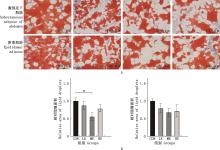
图1
各组八眉三元猪脂肪组织细胞形态学测定结果①A,脂肪组织细胞形态学观察;B,腹部皮下脂肪组织(左侧)和附睾脂肪组织(右侧)单位面积内脂滴分布大小。②脂滴着红色(↑),细胞核着蓝色。③*,差异显著(P<0.05); **,差异极显著(P<0.01);无*,差异不显著(P>0.05)。下同"
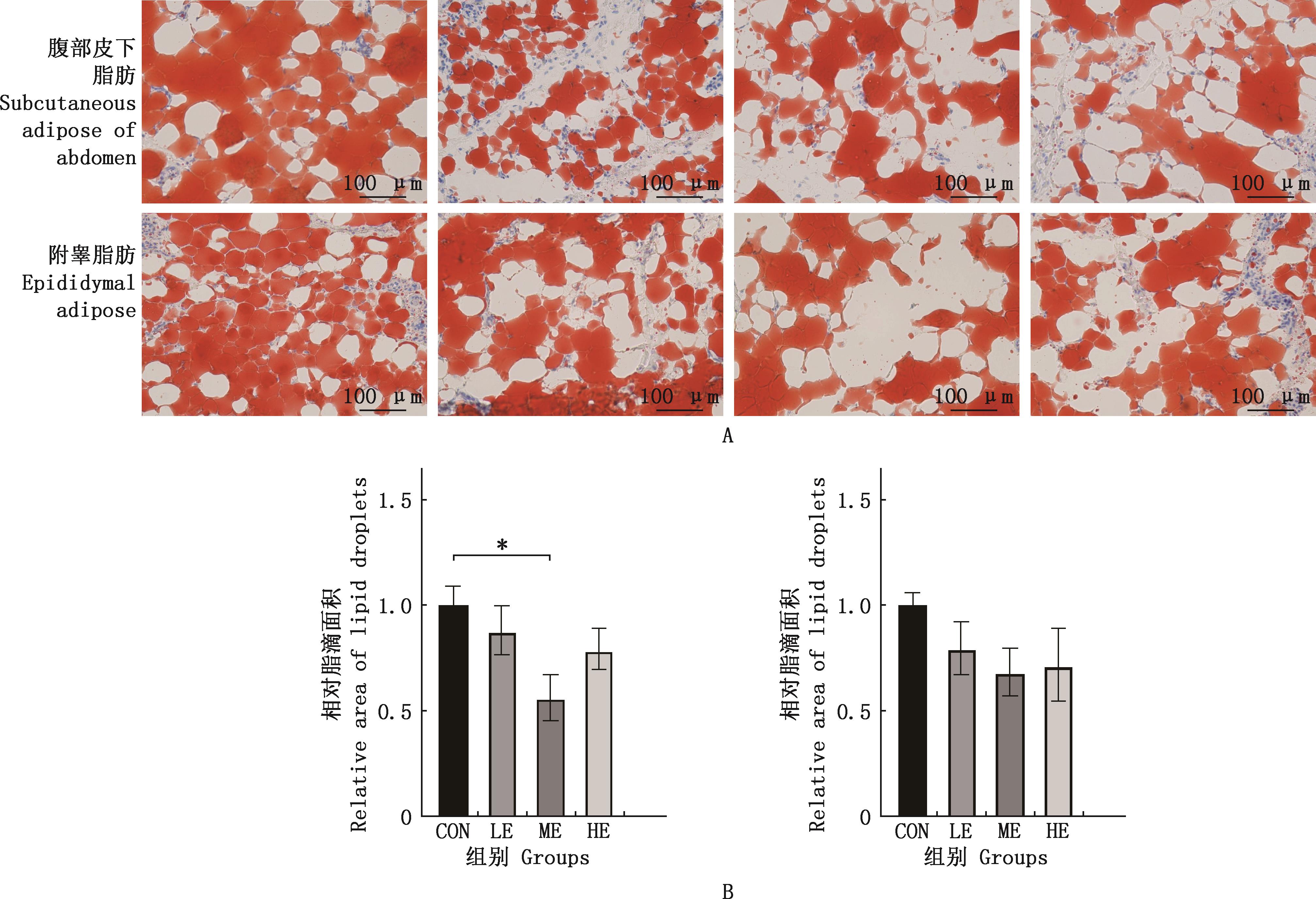
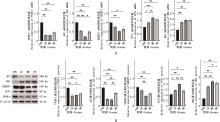
图2
各组八眉三元猪腹部皮下脂肪组织脂质相关因子mRNA(A)及蛋白(B)表达量"

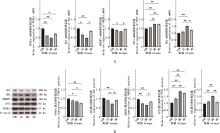
图3
各组八眉三元猪附睾脂肪组织脂质相关因子mRNA(A)及蛋白(B)表达量"

| [1] | O’ROURKE R W. Adipose tissue and the physiologic underpinnings of metabolic disease[J]. Surgery for Obesity and Related Diseases,2018,14(11):1755-1763. |
| [2] | 宋雅萍,张久盘,魏大为,等. FOXO1基因调控牛前体脂肪细胞增殖和分化的功能研究[J].中国农业大学学报,2024,29(4):226-238. |
| SONG Y P, ZHANG J P, WEI D W, et al. Study on the function of FOXO1 gene in regulating the proliferation and differentiation of bovine preadipocytes[J]. Journal of China Agricultural University,2024,29(4):226-238.(in Chinese) | |
| [3] | 张 进,武慧宁,赵林露,等.基于网络药理学和分子对接探究罗汉果提取物抗炎作用机制[J].动物营养学报,2025,37(2):1325-1339. |
| ZHANG J, WU H N, ZHAO L L, et al. To explore the anti-inflammatory mechanism of Momordica grosvenori extract based on network pharmacology and molecular docking[J]. Chinese Journal of Animal Nutrition,2025,37(2):1325-1339.(in Chinese) | |
| [4] | 曹 璐.植物提取物对断奶仔猪及育肥猪生长性能、抗氧化能力和胴体品质的影响[D].成都:四川农业大学,2010. |
| CAO L. The effects of phytogenic feed additive on growth performance, antioxidant capability and carcass characteristics in weanling piglets and finishing pigs[D].Chengdu: Sichuan Agricultural University,2010.(in Chinese) | |
| [5] | 赵运韬,郑 萍,余 冰,等.发酵酶解豆渣替代部分基础饲粮对生长育肥猪生产性能、肠道健康和肉品质的影响[J].饲料工业,2023,44(18):17-24. |
| ZHAO Y T, ZHENG P, YU B, et al. Effects of Tofu residual after fermentation and enzymolysis replacing part of basal dieton production performance, intestinal health and meat quality of growing-finishing pigs[J].Feed Industry,2023,44(18):17-24.(in Chinese) | |
| [6] | 宋倩倩,张金枝,刘 健,等.不同品种猪肉质性状和脂肪酸含量的研究[J].家畜生态学报,2018,39(2):24-28. |
| SONG Q Q, ZHANG J Z, LIU J, et al. Study on the meat quality and fatty acid of longissimus muscle in different breeds of pigs[J]. Journal of Domestic Animal Ecology,2018,39(2):24-28.(in Chinese) | |
| [7] | BA H V, SEO H W, SEONG P N, et al. Live weights at slaughter significantly affect the meat quality and flavor components of pork meat[J]. Animal Science Journal,2019,90(5):667-679. |
| [8] | DE FIGUEIREDO L B F, RODRIGUES R T S, LEITE M F S, et al. Effect of sex on carcass yield and meat quality of Guinea pig [J].Journal of Food Science and Technology,2020,57(8):3024-3030. |
| [9] | 沈 童,吴 华,陈鑫磊,等.黑果枸杞花青素对H9C2大鼠心肌细胞抗氧化能力、炎性因子及能量代谢作用的影响[J].饲料研究,2023,46(9):61-65. |
| SHEN T, WU H, CHEN X L, et al. Effect of Lycium ruthenicum Murray anthocyanin on antioxidant, inflammatory factor and energy metabolism of H9C2 rat cardiomyocytes[J]. Feed Research,2023,46(9):61-65.(in Chinese) | |
| [10] | 吴国芳,周继平,王 磊,等.日粮能量水平对八眉三元杂交猪生长性能、屠宰性能及肉质性状的影响[J].家畜生态学报,2019,40(4):27-31. |
| WU G F, ZHOU J P, WANG L, et al. Effects of dietary energy level on growth performance, slaughter performance and meat quality of Bamei ternary hybrid pig[J]. Journal of Domestic Animal Ecology,2019, 40(4): 27-31.(in Chinese) | |
| [11] | 胡艳霞.猪前体脂肪细胞的诱导分化及13个群体AFLP多态性研究[D].泰安:山东农业大学,2012. |
| HU Y X.Studies on the induced differentiation of porcine preadipocytesand the polymorphism of 13 pig breeds using AFLP markers [D].Tai’an: Shandong Agricultural University,2012.(in Chinese) | |
| [12] | 王文胜,吴 华,李金铭,等.黑果枸杞花青素提取物对八眉三元猪心脏Ca2+稳态途径及血液学参数的影响[J].饲料工业,2025,46(8):124-131. |
| WANG W S, WU H, LI J M, et al. Effects of anthocyanin extract of Lycium ruthenicum Murr on Ca2+ homeostatic pathway and hematological parameters in heart of Bamei ternary porcine[J]. Feed Industry,2025,46(8):124-131.(in Chinese) | |
| [13] | 刘慧娟,张佳琦,庄 苏,等.日粮添加姜黄素对IUGR猪肝脏抗氧化功能和脂代谢的影响[J].南京农业大学学报,2022,45(2):359-367. |
| LIU H J, ZHANG J Q, ZHUANG S, et al.Effects of dietary curcumin on liver antioxidant function and lipid metabolism in IUGR pigs[J]. Journal of Nanjing Agricultural University,2022,45(2):359-367.(in Chinese) | |
| [14] | LIU B, MA J, LI T, et al. Advances in the preparation, structure and bioactivity of polysaccharides from Lycium ruthenicum Murr.: A review [J]. Foods,2024,13(13):1995-2012. |
| [15] | 程 勇,熊尚全,陈海燕,等.三仁汤加味治疗湿热质血脂异常低中危中老年人群的临床观察[J].中国老年保健医学,2021,19(6):71-74. |
| CHENG Y, XIONG S Q, CHEN H Y, et al. Clinical observation of modified Sanren prescription in treating themiddle aged and elderly population with low and moderate risk of dyslipidemia and dampness-heat constitution[J]. Chinese Journal of Geriatric Care,2021,19(6):71-74.(in Chinese) | |
| [16] | 宁顺宇,马艺鑫,刘军彤,等.中药复方益糖康对2型糖尿病大鼠肝脏AMPK/SREBP-1C/FAS的影响[J].中华中医药学刊,2023,41(10) 164-168. |
| NING S Y, MA Y X, LIU J T, et al. Effect of Yitangkang on hepatic AMPK/SREBP-1C/FAS in type 2 diabetic rats[J]. Chinese Archives of Traditional Chinese Medicine,2023,41(10):164-168.(in Chinese) | |
| [17] | ABOONABI A, ABOONABI A. Anthocyanins reduce inflammation and improve glucose and lipid metabolism associated with inhibiting nuclear factor-kappaB activation and increasing PPAR-γ gene expression in metabolic syndrome subjects[J]. Free Radical Biology and Medicine,2020,150(1):30-39. |
| [18] | 安丽丽.血清CTRp5水平与原发性高血压患者早期肾损害的相关性研究[D].石家庄:河北医科大学,2017. |
| AN L L. Correlation of CTRPS and early renal damage in essential hypertension patients[D].Shijiazhuang: Hebei Medical University,2017.(in Chinese) | |
| [19] | 陈 苹,李立科,陈晓林,等.大豆异黄酮对大鼠肝脏脂肪酸代谢的影响[J].四川农业大学学报,2018,36(2):267-272. |
| CHEN P, LI L K, CHEN X L, et al. Effects of soy isoflavone on hepatic fatty acid metabolism of rats [J]. Journal of Sichuan Agricultural University,2018,36(2):267-272.(in Chinese) | |
| [20] | 吕香州,张 琪,李 欣,等.基于AMPK通路研究葛根素对猪前体脂肪细胞成脂分化的影响[J].中国畜牧兽医,2022,49(6):2088-2097. |
| LYU X Z, ZHANG Q, LI X, et al. Effect of puerarin on adipogenic differentiation of porcine preadipocytes based on AMPK pathway[J]. China Animal Husbandry & Veterinary Medicine,2022,49(6):2088-2097.(in Chinese) | |
| [21] | LIAO Q, WU T, FU Q, et al. Effects of dietary inclusion of β-hydroxy-β-methylbutyrate on growth performance, fat deposition, bile acid metabolism, and gut microbiota function in high-fat and high-cholesterol diet-challenged layer chickens[J]. Current Issues in Molecular Biology,2022,44(8):3413-3427. |
| [22] | LV R, CAO H, ZHONG M, et al. Polygala fallax Hemsl polysaccharides alleviated alcoholic fatty liver disease by modifying lipid metabolism via AMPK[J]. International Journal of Biological Macromolecules,2024,279(4):135565-135571. |
| [23] | 窦 梅,马爱国,张辉珍,等.补充Cr3+和Mg2+对胰岛素抵抗人群血清脂肪酸的影响[J].营养学报,2015,37(4):341-344. |
| DOU M, MA A G, ZHANG H Z, et al. Effects of supplementation of trivalent chromium and magnesium on serum fatty acids in insulin resistant population[J]. Acta Nutritia Sinica,2015,37(4):341-344.(in Chinese) | |
| [24] | 朴晨曦.基于AMPK/SIRT1/PGC-1α通路探究载药ADSCs-Exo对大鼠肝IRI合并部分切除损伤保护作用机制的研究[D].哈尔滨:东北农业大学,2023. |
| PIAO C X. Investigation of the protective mechanism of drug-loaded ADSCs-Exo based on AMPK/SIRT1/PGC-1α pathway against hepatic IRI combined with partial resection injury in rats[D]. Harbin: Northeast Agricultural University,2023.(in Chinese) | |
| [25] | RIPPA A L, KALABUSHEVA E P, VOROTELYAK E A. Regeneration of dermis: Scarring and cells involved[J]. Cells,2019,8(6):607-615. |
| [26] | ZHOU F, JONGBERG S, ZHAO M, et al. Antioxidant efficiency and mechanisms of green tea, rosemary or maté extracts in porcine longissimus dorsi subjected to iron-induced oxidative stress[J]. Food Chemistry,2019,298(0):125030-125038. |
| [27] | 黄 欢,靳 烨,郭月英,等.植物多酚对动物脂质代谢影响的研究进展[J].动物营养学报,2020,32(8):3533-3542. |
| HUANG H, JIN Y, GUO Y Y, et al. Research progress on effects of plant polyphenols on lipid metabolism in animals[J]. Chinese Journal of Animal Nutrition,2020,32(8):3533-3542.(in Chinese) | |
| [28] | LIU R, PULLIAM D A, LIU Y, et al. Dynamic differences in oxidative stress and the regulation of metabolism with age in visceral versus subcutaneous adipose[J]. Redox Biology,2015,6(1):401-408. |
| [29] | WANG L, GU H, LIAO T, et al. tsRNA landscape and potential function network in subcutaneous and visceral pig adipose tissue[J]. Genes,2023,14(4):782. |
| [30] | 唐荣杰,赵 伟,杨珊珊,等.甲状腺功能正常的原发性高血压患者甲状腺激素水平与非酒精性脂肪性肝病的关系研究[J].实用心脑肺血管病杂志,2022,30(9):36-40. |
| TANG R J, ZHAO W, YANG S S, et al. Correlation between thyroid hormone level and non-alcoholic fatty liver disease in essential hypertensive patients with normal thyroid function[J]. Practical Journal of Cardiac Cerebral Pneumal and Vascular Disease,2022,30(9):36-40.(in Chinese) | |
| [31] | LEE J M, CHOI S S, PARK M H, et al. Broussonetia papyrifera root bark extract exhibits anti-inflammatory effects on adipose tissue and improves insulin sensitivity potentially via AMPK activation[J]. Nutrients,2020,12(3):773-782. |
| [32] | 陈 溢,朱彬彬,郑明选,等.香菇多糖对肥胖小鼠脂肪炎症和糖脂代谢的改善作用[J].安徽医科大学学报,2022,57(6):885-890. |
| CHEN Y, ZHU B B, ZHENG M X, et al. Improvement of lentinan on inflammation and glucolipid metabolism in adipose tissues of obese mice [J]. Acta Universitatis Medicinalis Anhui,2022,57(6):885-890.(in Chinese) | |
| [33] | ROSEN E D, MACDOUGALD O A. Adipocyte differentiation from the inside out [J]. Nature Reviews Molecular Cell Biology,2006,7(12):885-896. |
| [34] | 段 逵.鸡PPARγ基因的mRNA 5´端克隆、表达及调控分析[D].哈尔滨:东北农业大学,2015. |
| DUAN K. The 5´end cloning,expression and regulation analysis in mRNA of chicken peroxisome proliferator-activated receptor gamma [D]. Harbin: Northeast Agricultural University,2015.(in Chinese) | |
| [35] | 徐 喆,倪向敏,李 硕,等.S-Equol调节SREBP通路和PPARγ改善大鼠2型糖尿病合并非酒精性脂肪肝的研究[J].陆军军医大学学报,2022,44(22):2266-2274. |
| XU Z, NI X M, LI S, et al. S-Equol improves type 2 diabetes mellitus combined with nonalcoholic fatty liver disease by regulating SREBP pathway and PPARy in rats[J]. Journal of Army Medical University,2022,44(22):2266-2274.(in Chinese) | |
| [36] | 薛 婷,王旒靖,吴颖琦,等.针刺对应激性胃溃疡模型大鼠血清炎性因子及肠道菌群的影响[J].针刺研究,2020,45(5):379-383. |
| XUE T, WANG L J, WU Y Q, et al. Effect of acupuncture on serum inflammatory cytokines and gut microbiota in rats with stress-induced gastric ulcer[J]. Acupuncture Research,2020,45(5):379-383.(in Chinese) | |
| [37] | ABU-ELHEIGA L, BRINKLEY W R, ZHONG L, et al. The subcellular localization of acetyl-CoA carboxylase 2 [J]. Proceedings of the National Academy of Sciences of the United States of America,2000,97(4):1444-1449. |
| [38] | 杜海涛.日粮α-亚麻酸水平对生长肉兔组织脂肪酸构成和脂肪代谢的影响[D].泰安:山东农业大学, 2011. |
| DU H T. Effects of α-linolenic acid in diets on fatty acids composition of tissues and lipid metabolism of growing meat rabbits[D]. Tai’an: Shandong Agricultural University,2011.(in Chinese) | |
| [39] | SHIMANO H, YAHAGI N, AMEMIYA-KUDO M, et al. Sterol regulatory element-binding protein-1 as a key transcription factor for nutritional induction of lipogenic enzyme genes[J]. Journal of Biological Chemistry,1999,274(50):35832-35839. |
| [40] | 罗婷婷,杨仁国,贺微微.甲基莲心碱通过活化HepG2细胞中的AMPK并介导ACC/CPT1A和SREBP1/FAS通路改善棕榈酸诱导的脂质积累[J].中药材,2021,44(7):1754-1758. |
| LUO T T, YANG R G, HE W W, et al. Methyllotusine improves palmitic acid-induced lipid accumulation by activating AMPK in HepG2 cells and mediating ACC/CPT1A and SREBP1/FAS pathways[J]. Journal of Chinese Medicinal Materials,2021,44(7):1754-1758.(in Chinese) | |
| [41] | ZHANG J, SHI L, ZHONG X, et al. Development of highly bioactive long-acting recombinant porcine FSH for batch production management of sows[J]. Scientific Reports,2025,15(1):4775-4782. |
| [42] | MCGARRY J D, BROWN N F. The mitochondrial carnitine palmitoyltransferase system. From concept to molecular analysis[J]. European Journal of Biochemistry,1997,244(1):1-14. |
| [43] | LAFONTAN M, LANGIN D. Lipolysis and lipid mobilization in human adipose tissue[J]. Progress in Lipid Research,2009,48(5):275-297. |
| [44] | 刘春红,李慧,孟晶,等.黑果枸杞花色苷对高脂饮食诱导的雌性肥胖小鼠肝脏脂质代谢的影响[J].宁夏医科大学学报,2025,47(5):469-475. |
| LIU C H, LI H, MENG J, et al. The effect of anthocyanins from Lycium ruthenicum Murr. on hepatic lipid metabolism in female obese mice induced by high-fat diet[J].Journal of Ningxia Medical University,2025,47(5):469-475.(in Chinese) | |
| [45] | YANG W, QIU J, ZI J, et al. Effect of Rhei radix Et Rhizome on treatment of polycystic ovary syndrome by regulating PI3K/Akt pathway and targeting EGFR/ALB in rats[J]. Journal of Ethnopharmacology,2025,338(1):119020-119029. |
| [1] | 刘慧莹, 高丽冰, 李晓敏, 李伟, 王秋菊, 王晶. 胆汁酸和复合精油对延养期蛋鸡产蛋性能和脂质代谢的影响[J]. 中国畜牧兽医, 2025, 52(9): 4105-4113. |
| [2] | 刘嘉逸, 吴华, 沈童, 王凯龙, 王文胜, 陈自鑫. 黑果枸杞提取物对八眉三元猪生长性能、屠宰性能、抗氧化功能及肉品质的影响[J]. 中国畜牧兽医, 2025, 52(6): 2637-2649. |
| [3] | 曹畅, 李玉莲, 王洁, 何情, 龚艳梅, 范志勇. 外源添加猪胆酸对高脂孕鼠体脂代谢、肠道微生物和胆汁酸代谢的影响[J]. 中国畜牧兽医, 2025, 52(5): 1999-2011. |
| [4] | 李梦奇, 郑春田, 陈伟, 金成龙, 张亚男, 王爽, 李凯潮, 黄雪冰, 夏伟光, 朱元召. 低蛋白质氨基酸平衡饲粮对蛋鸭产蛋性能、蛋品质和脂质代谢的影响[J]. 中国畜牧兽医, 2025, 52(4): 1533-1542. |
| [5] | 刘嗣睿, 刘洪飞, 刘大鹏, 牟启铭, 唐贺贺, 张鹤, 张永福, 侯水生, 周正奎. 整合基因组和转录组筛选调控北京鸭脂肪沉积的候选基因[J]. 中国畜牧兽医, 2025, 52(4): 1468-1477. |
| [6] | 斯日古楞, 于雯, 降晓薇, 李子怡, 金君健, 白浩宇. miR-144-5p在不同体型双峰驼血浆外泌体中的表达及靶基因验证[J]. 中国畜牧兽医, 2025, 52(3): 1022-1032. |
| [7] | 李甲伟, 李袁飞, 肖艳清, 陈清华. 天然多酚调节动物脂质代谢的作用机制研究进展[J]. 中国畜牧兽医, 2025, 52(11): 5180-5191. |
| [8] | 李欢语, 张万里, 王爽, 崔省委, 马燕芬, 马云, 余永涛. 亚临床酮病奶牛血清脂类代谢物的变化特征分析[J]. 中国畜牧兽医, 2025, 52(10): 4592-4602. |
| [9] | 夏铭隆, 肖银涛, 郑塞珍, 谭碧娥, 印遇龙, 陈家顺, 尹杰. 宁乡猪不同发育阶段肌内脂肪沉积差异表达基因及其调控通路分析[J]. 中国畜牧兽医, 2024, 51(9): 3703-3714. |
| [10] | 罗琴, 刘宝玲, 乔常宏, 陈翔宇, 刘丁语, 王晓虎, 王刚, 刘昊, 蔡汝健. 脂质代谢和糖代谢在PRRSV感染宿主细胞中作用研究进展[J]. 中国畜牧兽医, 2024, 51(4): 1686-1695. |
| [11] | 吴青瑶, 殷运菊, 王敏, 潘俊毅, 李凤娜, 赵生国, 陈国顺, 郭秋平. 绿原酸与亮氨酸协同对育肥猪胴体性状、肉品质及血清生化指标的影响[J]. 中国畜牧兽医, 2024, 51(3): 1060-1068. |
| [12] | 张苏晗, 孟林, 郭玉霞, 郑明利, 毛培春, 田小霞. 林下菊苣草地放养对北京油鸡屠体性能、蛋肉品质、脂质代谢和免疫性能的影响[J]. 中国畜牧兽医, 2024, 51(1): 114-124. |
| [13] | 丁嘉怡, 吴涛, 陈佳琪, 程鑫怡, 梁家华, 邬丹, 郭小权, 曹华斌, 张彩英, 刘平, 庄煜, 胡国良. 基于肠道微生物探讨蛋鸡脂肪肝出血综合征的研究进展[J]. 中国畜牧兽医, 2023, 50(7): 2888-2895. |
| [14] | 王帅杰, 谭子涵, 李晗博, 孙香雪, 艾思含, 王蕾, 赵迪, 侯永清. 槲皮素对PEDV感染幼龄仔猪肠道形态、抗氧化功能及空肠脂质代谢基因表达的影响[J]. 中国畜牧兽医, 2022, 49(9): 3391-3399. |
| [15] | 吕阳, 曹阳, 高一, 王玉婷, 张国梁. 草原红牛ACSL3基因CDS区克隆、生物信息学分析及组织表达研究[J]. 《中国畜牧兽医》, 2019, 46(4): 957-966. |
| 阅读次数 | ||||||
|
全文 |
|
|||||
|
摘要 |
|
|||||
