
China Animal Husbandry & Veterinary Medicine ›› 2026, Vol. 53 ›› Issue (1): 343-358.doi: 10.16431/j.cnki.1671-7236.2026.01.031
• Genetics and Breeding • Previous Articles Next Articles
LIANG Bingkun1( ), WANG Zhen2, LIU Ziyu3, YAN Dawei1, DONG Xinxing1(), ZHU Jiawei1()
Revised:2025-08-24
Online:2026-01-05
Published:2025-12-26
Contact:
DONG Xinxing, ZHU Jiawei
E-mail:1260782074@qq.com;dong-xinxing@qq.com;896129199@qq.com
CLC Number:
LIANG Bingkun, WANG Zhen, LIU Ziyu, YAN Dawei, DONG Xinxing, ZHU Jiawei. Sequence Characteristics and Tissue Expression of SCARB2 Gene in Lijiang Pigs[J]. China Animal Husbandry & Veterinary Medicine, 2026, 53(1): 343-358.
Table 1
Body weight of Lijiang pigs and Duroc pigs at different stages"
猪种 Pig breeds | 月龄 Months | 体重 Body weight/kg |
|---|---|---|
| 丽江猪 Lijiang pigs | 2 | 14.16±0.29 |
| 4 | 35.00±2.00 | |
| 6 | 60.50±2.65 | |
| 杜洛克猪 Duroc pigs | 6 | 131.00±2.65 |
Table 2
Accession No. of SCARB2 gene in different species"
物种 Species | Ensembl基因ID Ensembl gene ID | 物种 Species | GenBank登录号 GenBank accession No. |
|---|---|---|---|
| 八眉猪 Bamei pigs | ENSSSCT00050095439.1 | 欧亚野猪 Sus scrofa | NM_001244155.1 |
| 巴马小型猪 Bama Miniature pigs | ENSSSCT00085059484.1 | 人 Homo sapiens | NM_001204255.2 |
| 藏猪 Tibetan pigs | ENSSSCT00015058019.1 | 大鼠 Rattus norvegicus | NM_054001.2 |
| 金华猪 Jinhua pigs | ENSSSCT00060020456.1 | 小鼠 Mus musculus | NM_007644.4 |
| 梅山猪 Meishan pigs | ENSSSCT00040096134.1 | 牛 Bos taurus | NM_001102153.1 |
| 五指山猪 Wuzhishan pigs | ENSSSCT00005062544.1 | 山羊 Capra hircus | XM_005681792.3 |
| 奥赛博小型猪 Ossabaw Miniature pigs | ENSSSCT00130033168.1 | 绵羊 Ovis aries | XM_015096290.3 |
| 巴克夏猪 Berkshire pigs | ENSSSCT00065107117.1 | 原鸡 Gallus gallus | XM_420593.8 |
| 大白猪 Large White pigs | ENSSSCT00025026478.1 | 马 Equus caballus | XM_023637936.1 |
| 杜洛克猪 Duroc pigs | ENSSSCT00090022610.1 | 兔 Oryctolagus cuniculus | XM_002717104.4 |
| 汉普夏猪 Hampshire pigs | ENSSSCT00035105054.1 | 犬 Canis lupus familiaris | XM_038443859.1 |
| 皮特兰猪 Pietran pigs | ENSSSCT00055016304.1 | ||
| 长白猪 Landrace pigs | ENSSSCT00045022417.1 |
Table 3
Online program website information and purpose"
在线软件 Online software | 网址 Website | 用途 Application |
|---|---|---|
| OFR Finder | https://www.ncbi.nlm.nih.gov/orffinder/ | 开放阅读框(ORF)分析 |
| BLAST | https://blast.ncbi.nlm.nih.gov/Blast.cgi | 相似性比对 |
| ProtParam | https://web.expasy.org/protparam/ | 理化性质分析 |
| ProtScale | https://web.expasy.org/protscale/ | 亲/疏水性预测 |
| SignalP 5.0 | https://services.healthtech.dtu.dk/service.php?SignalP-5.0 | 信号肽预测 |
| TMHMM 2.0 | https://services.healthtech.dtu.dk/service.php?TMHMM-2.0 | 跨膜结构预测 |
| NetNGlyc 1.0 | https://services.healthtech.dtu.dk/services/NetNGlyc-1.0/ | 糖基化位点预测 |
| NetPhos 3.1 | https://services.healthtech.dtu.dk/service.php?NetPhos-3.1 | 磷酸化位点预测 |
| PSORT Ⅱ | https://www.genscript.com/psort.html | 亚细胞定位预测 |
| STRING 12.0 | https://string-db.org/ | 互作网络预测 |
| SOPMA | https://npsa-pbil.ibcp.fr/cgi-bin/npsa_automat.pl?page=npsa_sopma.html | 二级结构预测 |
| SWISS-MODEL | https://swissmodel.expasy.org/ | 三级结构预测 |
Table 4
Real-time quantitative PCR primers"
基因 Genes | 引物序列 Primer sequences (5′→3′) | 产物长度 Product length/bp |
|---|---|---|
| SCARB2 | F:AAGTCGCCTGAAGTCTGTGG | 145 |
| R:GTCTGCAGTTCCCTCATCCA | ||
| GAPDH | F:GACATCAAGAAGGTGGTGAAGCA | 177 |
| R:GTCGTACCAGGAAATGAGCTTGA |
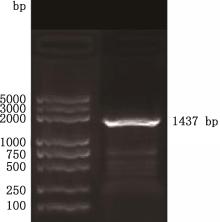
Fig.1
PCR amplification result of SCARB2 gene CDS in Lijiang pigs"
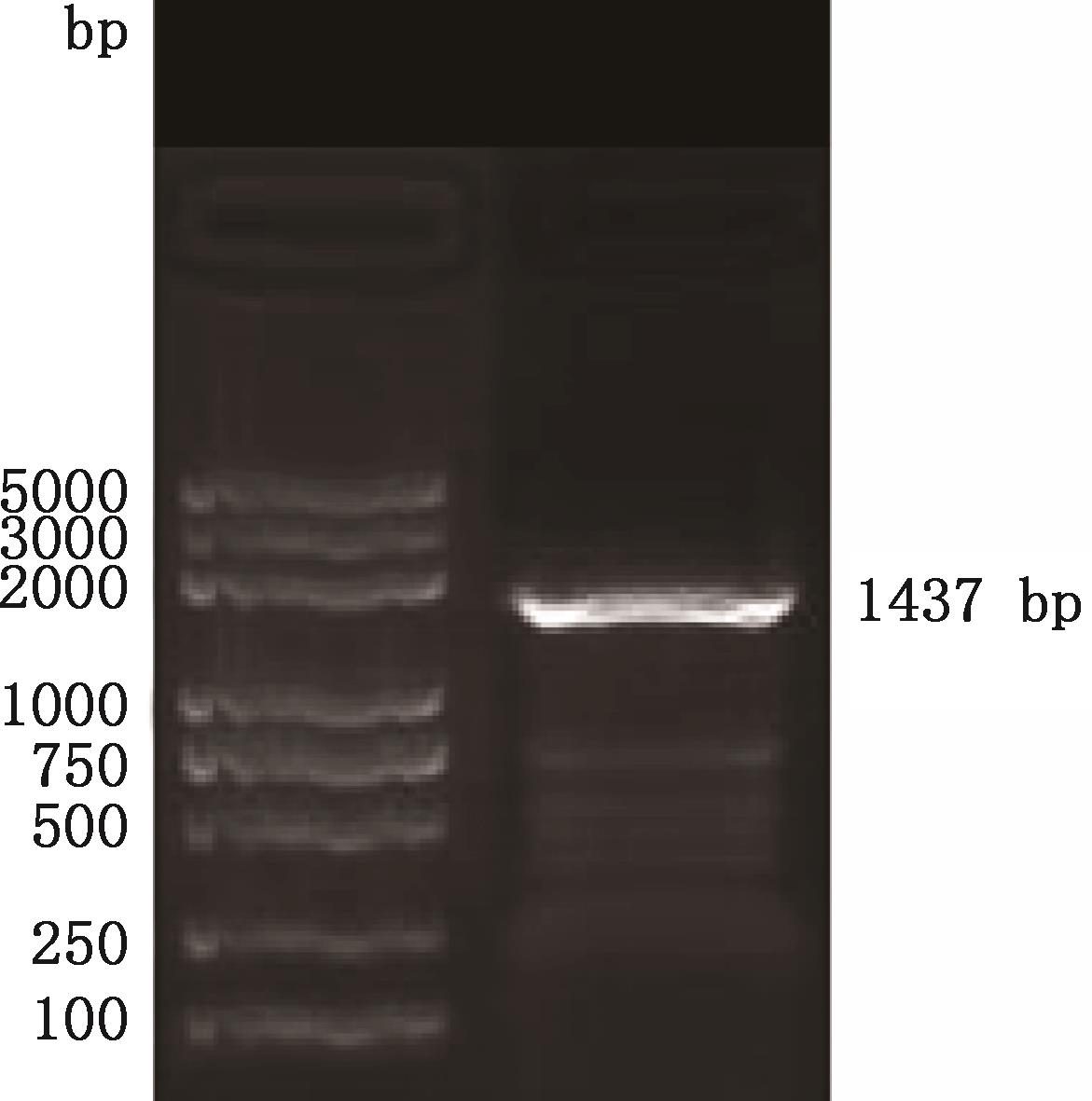
Table 5
Codon preference-related parameters of SCARB2 gene in different species"
物种 Species | 密码子适应指数 CAI | 有效密码子数 ENc | 密码子偏好性指数 CBI | 最佳密码子使用频率 FOP | GC | GC3s |
|---|---|---|---|---|---|---|
| 丽江猪 Lijiang pigs | 0.216 | 53.30 | 0.043 | 0.436 | 0.482 | 0.577 |
| 野猪 Sus scrofa | 0.220 | 53.19 | 0.047 | 0.438 | 0.479 | 0.568 |
| 人 Homo sapiens | 0.204 | 54.71 | -0.017 | 0.407 | 0.466 | 0.516 |
| 大鼠 Rattus norvegicus | 0.209 | 53.79 | -0.003 | 0.414 | 0.471 | 0.555 |
| 小鼠 Mus musculus | 0.211 | 54.06 | 0.025 | 0.427 | 0.474 | 0.570 |
| 牛 Bos taurus | 0.140 | 52.83 | -0.053 | 0.373 | 0.469 | 0.448 |
| 山羊 Capra hircus | 0.214 | 52.77 | 0.027 | 0.432 | 0.461 | 0.527 |
| 绵羊 Ovis aries | 0.218 | 52.55 | 0.043 | 0.441 | 0.460 | 0.527 |
| 原鸡 Gallus gallus | 0.219 | 54.46 | -0.037 | 0.386 | 0.450 | 0.438 |
| 马 Equus caballus | 0.196 | 52.67 | 0.009 | 0.418 | 0.467 | 0.543 |
| 兔 Oryctolagus cuniculus | 0.221 | 49.86 | 0.081 | 0.459 | 0.517 | 0.660 |
| 犬 Canis lupus familiaris | 0.200 | 52.55 | -0.018 | 0.406 | 0.455 | 0.516 |
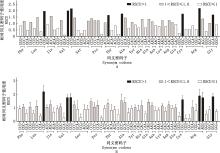
Fig.2
RSCU values of SCARB2 gene in Lijiang pigs and other speciesA, RSCU value of SCARB2 gene in Lijiang pigs; B, The average RSCU value of SCARB2 gene in 12 species"

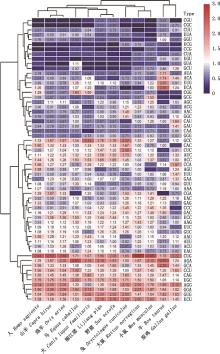
Fig.3
Codon clustering analysis of SCARB2 gene in different species"

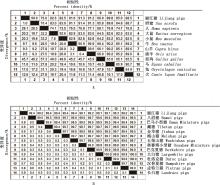
Fig.4
Similarity analysis of SCARB2 gene sequence in different species (A) and pig breeds (B)"

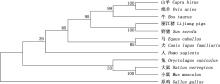
Fig.5
Phylogenetic tree of SCARB2 gene among different species"
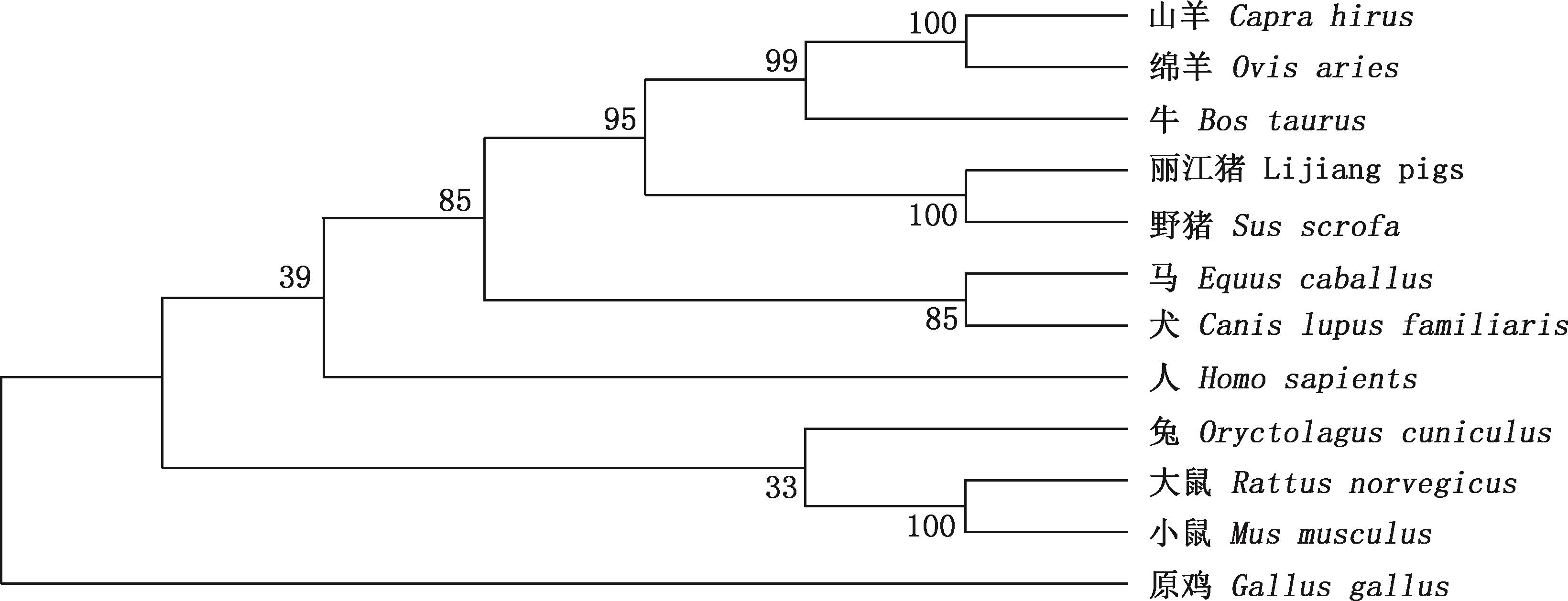
Table 6
Amino acid composition of SCARB2 protein in Lijiang pigs"
氨基酸 Amino acids | 数量 Number/个 | 比例 Proportion/% | 氨基酸 Amino acids | 数量 Number/个 | 比例 Proportion/% |
|---|---|---|---|---|---|
| 丙氨酸 Ala(A) | 25 | 5.23 | 亮氨酸 Leu(L) | 49 | 10.25 |
| 精氨酸 Arg(R) | 22 | 4.60 | 赖氨酸 Lys(K) | 23 | 4.81 |
| 天冬酰胺 Asn(N) | 28 | 5.86 | 蛋氨酸 Met(M) | 8 | 1.67 |
| 天冬氨酸 Asp(D) | 29 | 6.07 | 苯丙氨酸 Phe(F) | 29 | 6.07 |
| 半胱氨酸 Cys(C) | 8 | 1.67 | 脯氨酸 Pro(P) | 23 | 4.81 |
| 谷氨酰胺 Gln(Q) | 9 | 1.88 | 丝氨酸 Ser(S) | 25 | 5.23 |
| 谷氨酸 Glu(E) | 28 | 5.86 | 苏氨酸 Thr(T) | 34 | 7.11 |
| 甘氨酸 Gly(G) | 31 | 6.49 | 色氨酸 Trp(W) | 7 | 1.46 |
| 组氨酸 His(H) | 6 | 1.26 | 酪氨酸 Tyr(Y) | 20 | 4.18 |
| 异亮氨酸 Ile(I) | 36 | 7.53 | 缬氨酸 Val(V) | 38 | 7.95 |
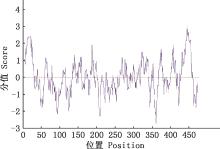
Fig.6
Hydrophilicity and hydrophobicity prediction of SCARB2 protein in Lijiang pigs"
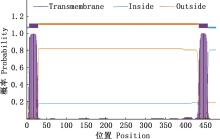
Fig.7
Transmembrane region prediction of SCARB2 protein in Lijiang pigs"
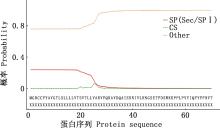
Fig.8
Signal peptide prediction of SCARB2 protein in Lijiang pigs"
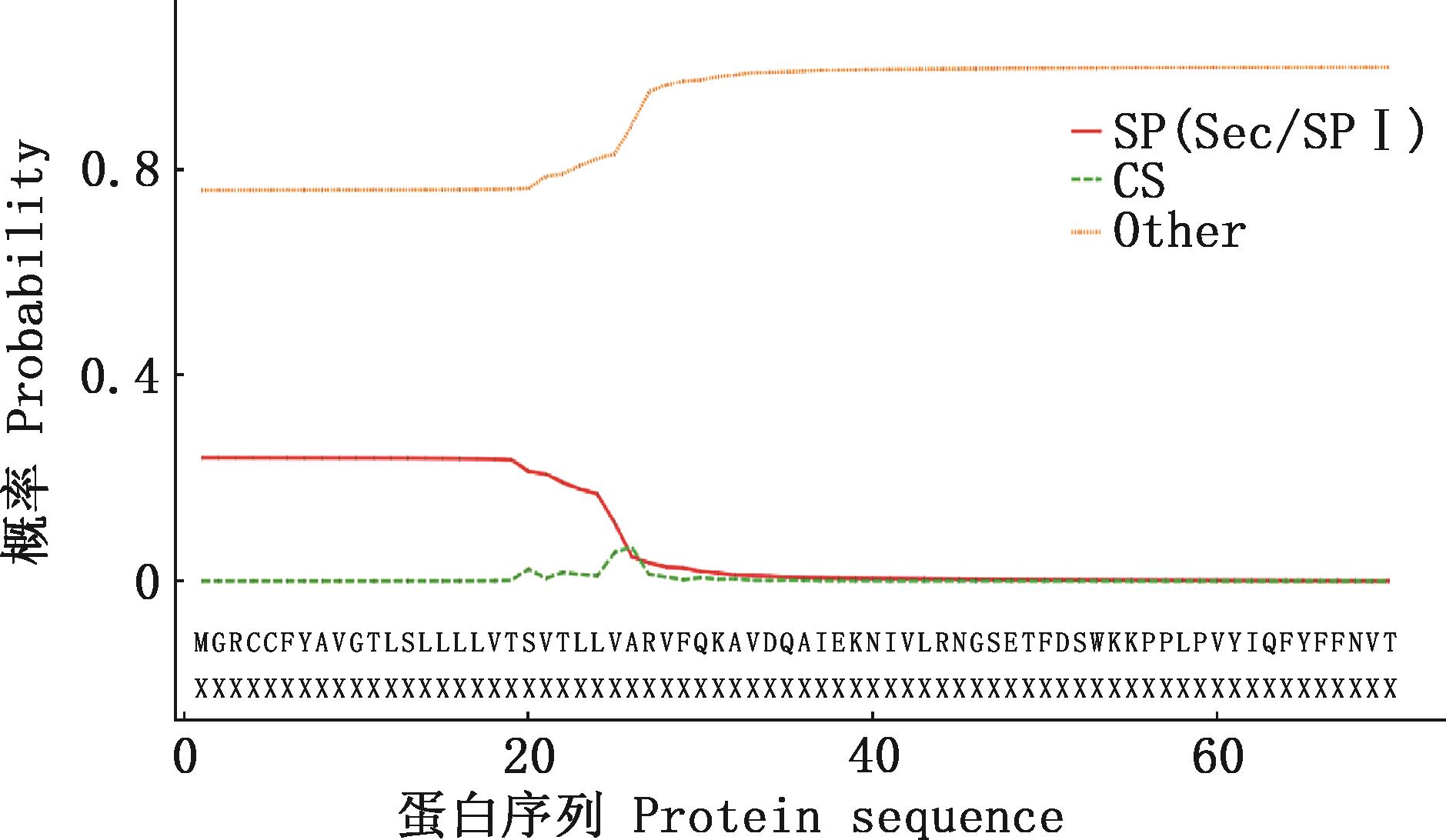
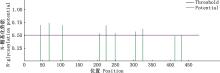
Fig.9
N-glycosylation site prediction of SCARB2 protein in Lijiang pigs"
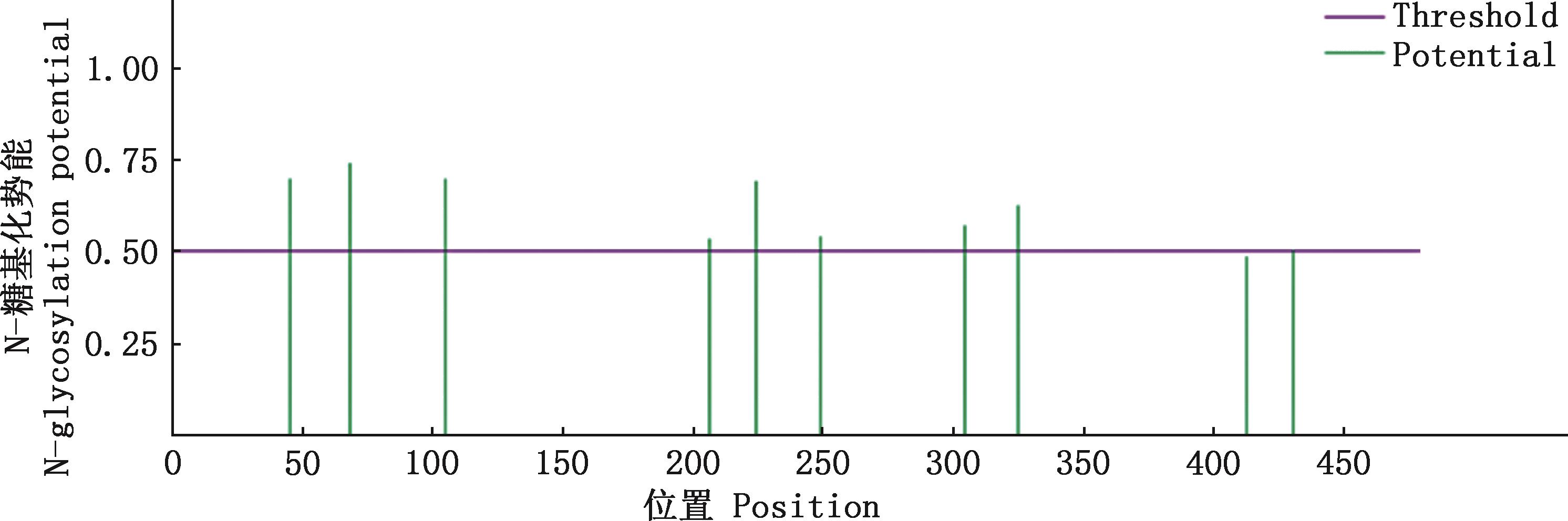
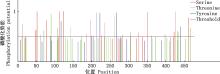
Fig.10
Phosphorylation site prediction of SCARB2 protein in Lijiang pigs"
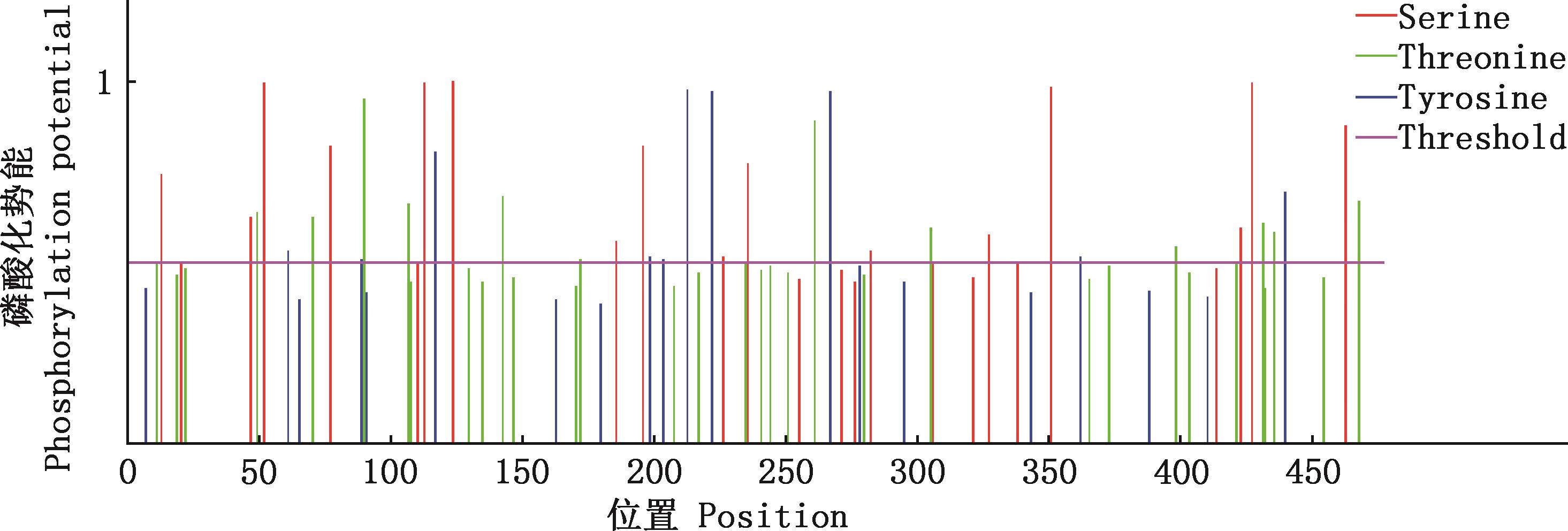
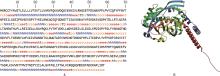
Fig.11
Secondary structure (A) and tertiary structure (B) prediction of SCARB2 protein in Lijiang pigsh, Aplha helix; c, Random coil; t, Beta turn; e, Extended chain"

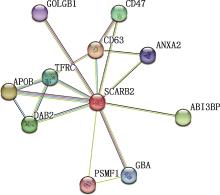
Fig.12
Interaction network prediction of SCARB2 protein in Lijiang pig s"
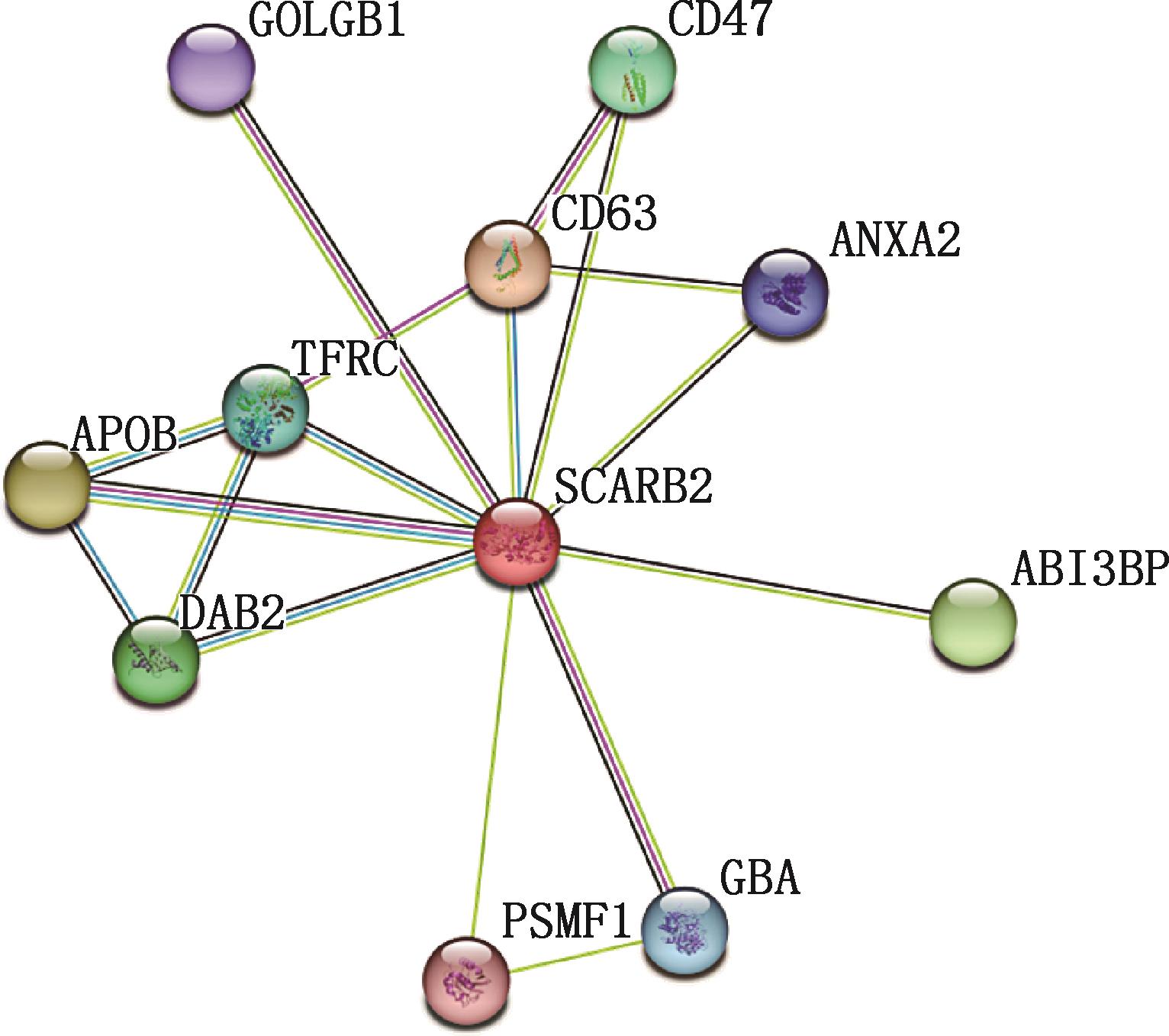
Fig.13
Tissue expression profile of SCARB2 gene in Lijiang pigsValues with different small letter superscripts mean significant difference (P<0.05);And with different capital letter superscripts mean extremely significant difference (P<0.01);While with the same letter superscripts mean no significant difference (P>0.05). The same as below"
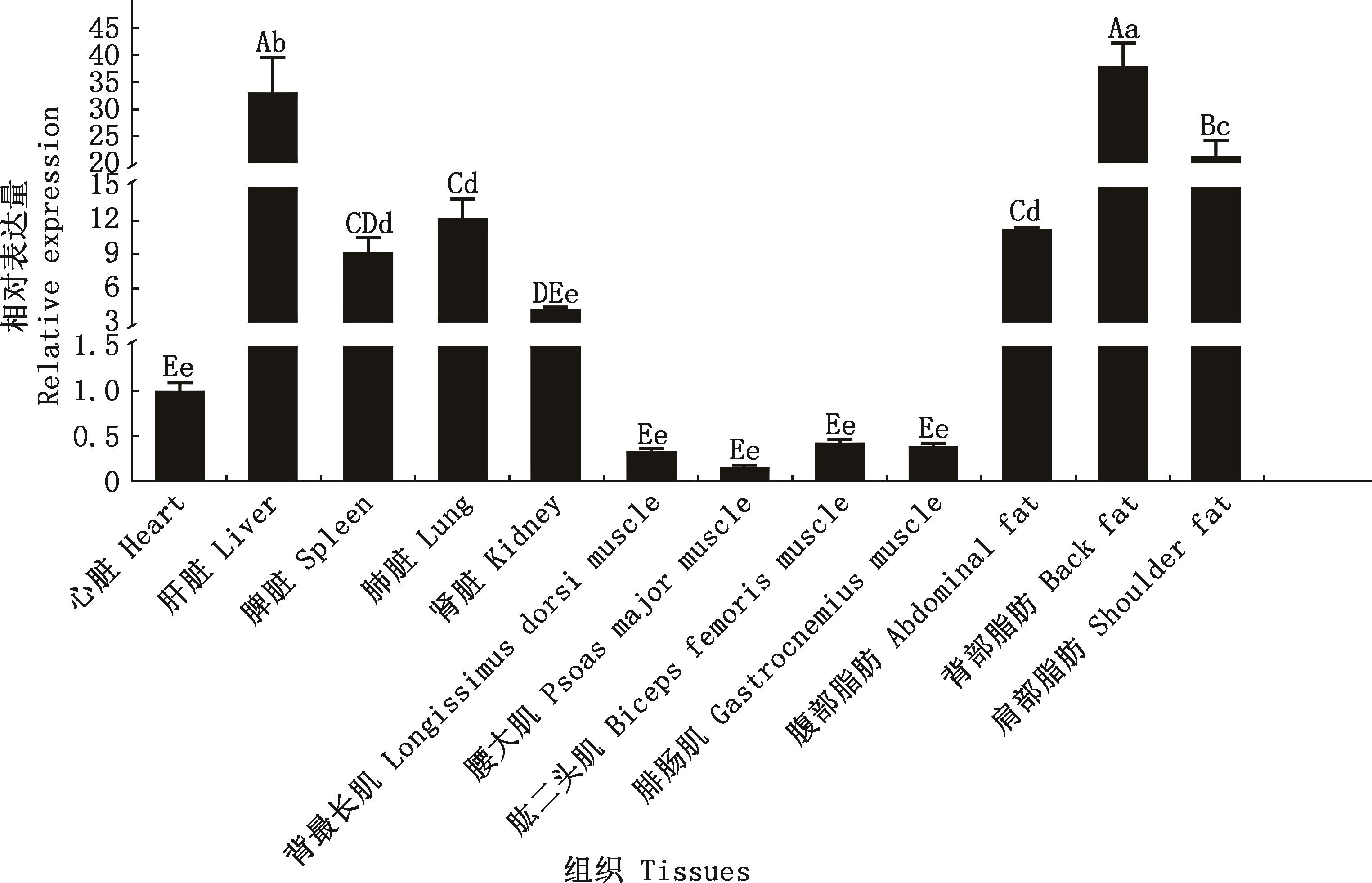
Fig.14
Relative expression of SCARB2 gene in adipose tissue of Lijiang pigs at different growth stages"
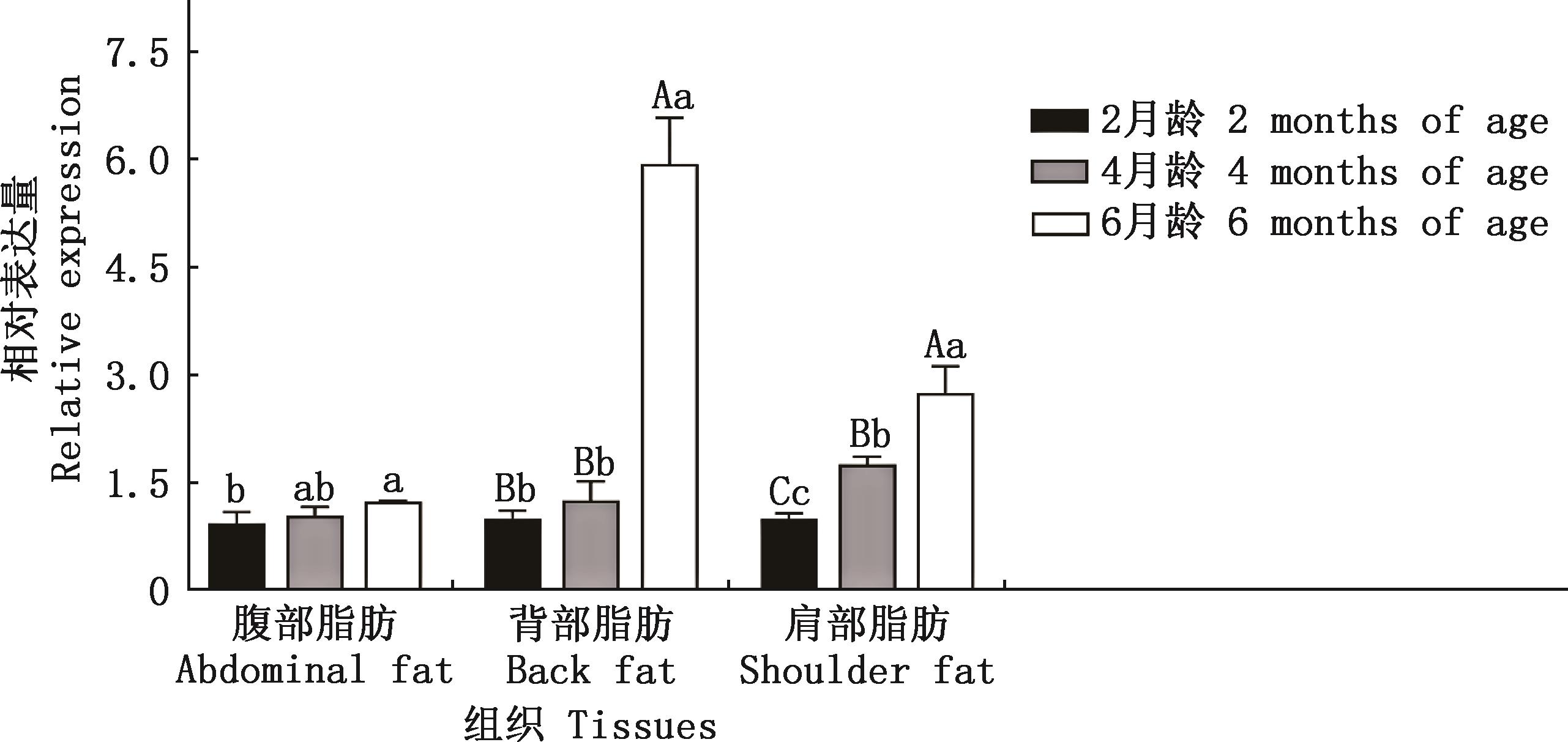
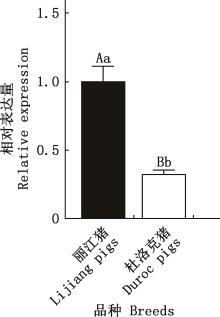
Fig.15
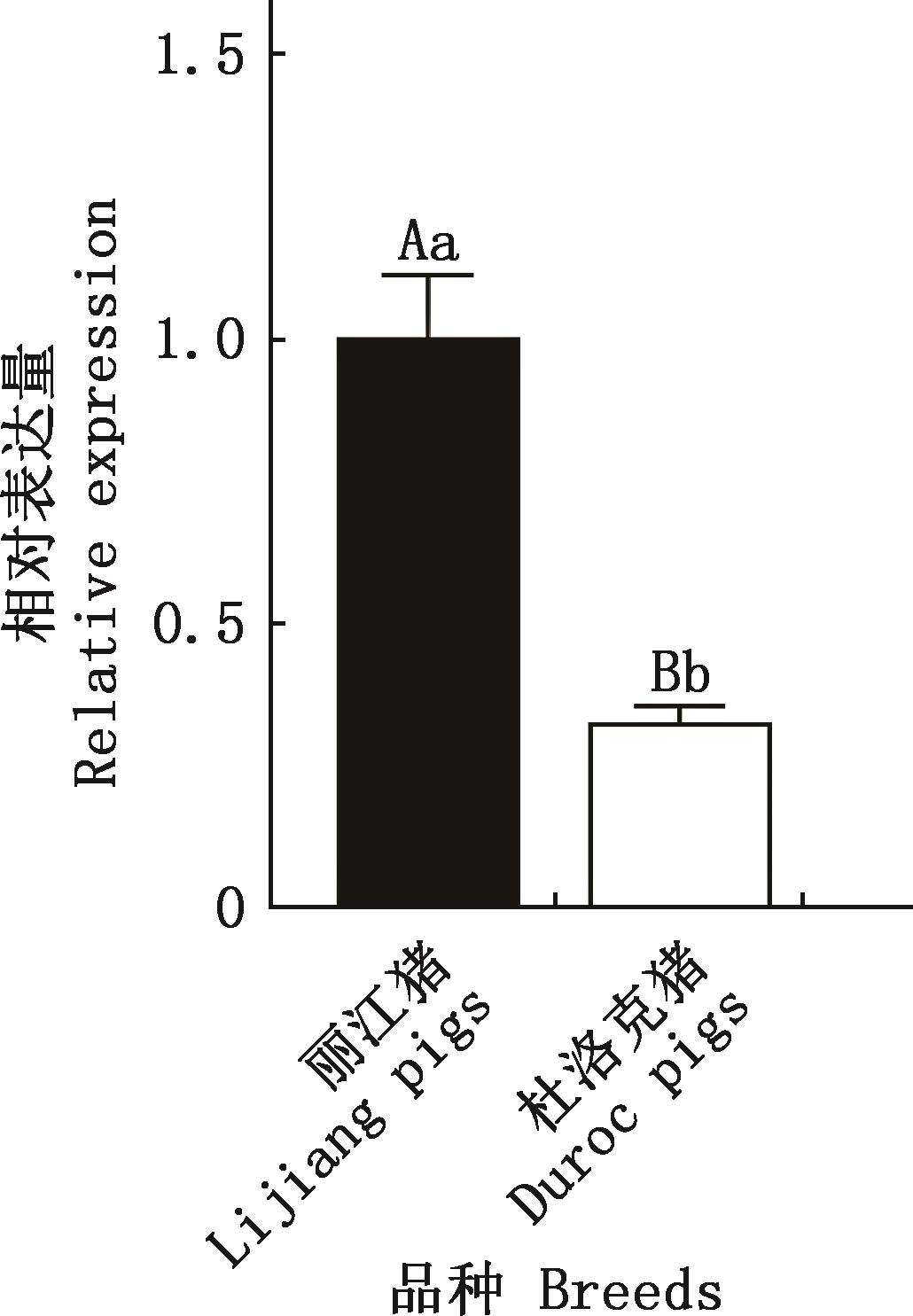
Differential expression of SCARB2 gene in back fat between Lijiang pigs and Duroc pigs at 6 months of age"
| [1] | WANG D, HUANG J, GUI T, et al. SR-BⅠ as a target of natural products and its significance in cancer[J]. Seminars in Cancer Biology, 2022, 80:18-38. |
| [2] | 张 敏. 青岛文昌鱼一种清道夫受体基因的鉴定、进化和功能研究[D]. 青岛:中国海洋大学, 2012. |
| ZHANG M. Characterization, evolution and functional analysis of one of the scavenger receptor in amphioxus Branchiostoma japonicum [D]. Qingdao: Ocean University of China, 2012. (in Chinese) | |
| [3] | KIM J W, ZHAO S H, UTHE J J, et al. Assignment of the scavenger receptor class B, member 2 gene (SCARB2) to porcine chromosome 8q11->q12 by somatic cell and radiation hybrid panel mapping[J]. Cytogenetic and Genome Research, 2006, 112(3-4):342H. |
| [4] | ALTUZAR J, NOTBOHM J, STEIN F, et al. Lysosome-targeted multifunctional lipid probes reveal the sterol transporter NPC1 as a sphingosine interactor[J]. Proceedings of the National Academy of Sciences of the United States of America, 2023, 120(11):e2213886120. |
| [5] | VEGA M A, SEGUÍ-REAL B, GARCÍA J A, et al. Cloning, sequencing, and expression of a cDNA encoding rat LIMPⅡ, a novel 74 kDa lysosomal membrane protein related to the surface adhesion protein CD36[J]. Journal of Biological Chemistry, 1991, 266(25):16818-16824. |
| [6] | TABUCHI N, AKASAKI K, TSUJI H. Distribution of a major lysosomal membrane glycoprotein, LGP85/LIMP Ⅱ, in rat tissues[J]. Biological & Pharmaceutical Bulletin, 2000, 23(4):394-396. |
| [7] | RUDNIK S, HEYBROCK S, COYAUD E, et al. The lysosomal lipid transporter LIMP-2 is part of lysosome-ER STARD3-VAPB-dependent contact sites[J]. Journal of Cell Science, 2024, 137(22):jcs261810. |
| [8] | MENG Y, HEYBROCK S, NECULAI D, et al. Cholesterol handling in lysosomes and beyond[J]. Trends in Cell Biology, 2020, 30(6):452-466. |
| [9] | CONRAD K S, CHENG T W, YSSELSTEIN D, et al. Lysosomal integral membrane protein-2 as a phospholipid receptor revealed by biophysical and cellular studies[J]. Nature Communications, 2017, 8(1):1908. |
| [10] | EBNER M, FRÖHLICH F, HAUCKE V. Mechanisms and functions of lysosomal lipid homeostasis[J]. Cell Chemical Biology, 2025, 32(3):392-407. |
| [11] | WEBB N R, CONNELL P M, GRAF G A, et al. SR-BⅡ, an isoform of the scavenger receptor BⅠ containing an alternate cytoplasmic tail, mediates lipid transfer between high density lipoprotein and cells[J]. Journal of Biological Chemistry, 1998, 273(24):15241-15248. |
| [12] | HEYBROCK S, KANERVA K, MENG Y, et al. Lysosomal integral membrane protein-2 (LIMP-2/SCARB2) is involved in lysosomal cholesterol export[J]. Nature Communications, 2019, 10(1):3521. |
| [13] | ROBICHAUD S, FAIRMAN G, VIJITHAKUMAR V, et al. Identification of novel lipid droplet factors that regulate lipophagy and cholesterol efflux in macrophage foam cells[J]. Autophagy, 2021, 17(11):3671-3689. |
| [14] | SUN L, YU F, YI F, et al. Acteoside from Ligustrum robustum (Roxb.) blume ameliorates lipid metabolism and synthesis in a HepG2 cell model of lipid accumulation[J]. Frontiers in Pharmacology, 2019, 10:602. |
| [15] | ZOU Y, PEI J, WANG Y, et al. The deficiency of SCARB2/LIMP-2 impairs metabolism via disrupted mTORC1-dependent mitochondrial OXPHOS[J]. International Journal of Molecular Sciences, 2022, 23(15):8634. |
| [16] | 孟 颖. B族清道夫受体SR-B1和LIMP-2介导胆固醇转运的机制研究[D]. 杭州: 浙江大学, 2020. |
| MENG Y. Dissecting the SR-B1 and LIMP-2 roles in cholesterol transport[D]. Hangzhou: Zhejiang University, 2020. (in Chinese) | |
| [17] | 段 婕,连林生,袁跃云,等. 丽江猪屠宰、胴体组成及肉质特性研究[J]. 养猪, 2014, 2:49-51. |
| DUAN J, LIAN L S, YUAN Y Y, et al. Study on dressing percentage and carcass composition and meat quality characteristic of Lijiang pig[J]. Swine Production, 2014, 2:49-51. (in Chinese) | |
| [18] | LAN Y, YAN D, LI X, et al. Muscle growth differences in Lijiang pigs revealed by ATAC-Seq multi-omics[J]. Frontiers in Veterinary Science, 2024, 11:1431248. |
| [19] | DOBERT J P, SCHÄFER J H, MASO T DAL, et al. Cryo-TEM structure of β-glucocerebrosidase in complex with its transporter LIMP-2[J]. Nature Communications, 2025, 16(1):3074. |
| [20] | TULLER T, WALDMAN Y Y, KUPIEC M, et al. Translation efficiency is determined by both codon bias and folding energy[J]. Proceedings of the National Academy of Sciences of the United States of America, 2010, 107(8):3645-3650. |
| [21] | TATARINOVA T V, ALEXANDROV N N, BOUCK J B, et al. GC3 biology in corn, rice, sorghum and other grasses[J]. BMC Genomics, 2010, 11:308. |
| [22] | ZHANG S, HUANG Y, ZHENG C, et al. Leucine improves the growth performance, carcass traits, and lipid nutritional quality of pork in Shaziling pigs[J]. Meat Science, 2024, 210:109435. |
| [23] | WILKE C O, DRUMMOND D A. Signatures of protein biophysics in coding sequence evolution[J]. Current Opinion in Structural Biology, 2010, 20(3):385-389. |
| [24] | LUPAS A, VAN DYKE M, STOCK J. Predicting coiled coils from protein sequences[J]. Science, 1991, 252(5009):1162-1164. |
| [25] | RECZEK D, SCHWAKE M, SCHRÖDER J, et al. LIMP-2 is a receptor for lysosomal mannose-6-phosphate-independent targeting of beta-glucocerebrosidase[J]. Cell, 2007, 131(4):770-783. |
| [26] | SILVA B, FAUSTINO P. An overview of molecular basis of iron metabolism regulation and the associated pathologies[J]. Biochimica et Biophysica Acta, 2015, 1852(7):1347-1359. |
| [27] | 李庆华,费露,丁正同. SCARB2基因突变致动作性肌阵挛-肾衰综合征[J]. 国际神经病学神经外科学杂志, 2022, 49(3):51-58. |
| LI Q H, FEI L, DING Z T. Action myoclonus-renal failure syndrome caused by SCARB2 gene mutation: A case report and literature review[J]. Journal of International Neurology and Neurosurgery, 2022, 49(3):51-58. (in Chinese) | |
| [28] | KRYSA J A, BALL G D C, VINE D F, et al. ApoB-lipoprotein remnant dyslipidemia and high-fat meal intolerance is associated with markers of cardiometabolic risk in youth with obesity[J]. Pediatric Obesity, 2021, 16(5):e12745. |
| [29] | ZHANG Z, FUNCKE J B, ZI Z, et al. Adipocyte iron levels impinge on a fat-gut crosstalk to regulate intestinal lipid absorption and mediate protection from obesity[J]. Cell Metabolism, 2021, 33(8):1624-1639.e9. |
| [30] | TAO W, MOORE R, MENG Y, et al. Disabled-2 determines commitment of a pre-adipocyte population in juvenile mice[J]. Scientific Reports, 2016, 6:35947. |
| [31] | JIAO X Y, GUO L, HUANG D Y, et al. Distribution of EV71 receptors SCARB2 and PSGL-1 in human tissues[J]. Virus Research, 2014, 190:40-52. |
| [32] | SCHAITER A, HENTSCHEL A, KLEEFELD F, et al. Molecular composition of skeletal muscle in infants and adults: A comparative proteomic and transcriptomic study[J]. Scientific Reports, 2024, 14(1):22965. |
| [33] | 孙金梅,路兴中,杨公社,等. 不同经济类型猪种脂肪细胞的发育及其脂肪合成能力的比较研究[J].畜牧兽医学报, 2000, 31(2):131-136. |
| SUN J M, LU X Z, YANG G S,et al. The comparison research on the development of adipocyte and its lipid synthesis from different economical pigs[J]. Acta Veterinaria et Zootechnica, 2000, 31(2):131-136.(in Chinese) | |
| [34] | KITAMOTO T, KITAMOTO A. Integrative proteomic and lipidomic analysis of GNB1 and SCARB2 knockdown in human subcutaneous adipocytes[J]. PLoS One, 2025, 20(3):e0319163. |
| [35] | ZHAO C, ZHANG T, XUE ST, et al. Adipocyte-derived glutathione promotes obesity-related breast cancer by regulating the SCARB2-ARF1-mTORC1 complex[J]. Cell Metabolism, 2024, 37(3):692-707.e9. |
| [36] | HAN J, WANG Y. mTORC1 signaling in hepatic lipid metabolism[J]. Protein & Cell, 2018, 9(2):145-151. |
| [37] | CAI H, DONG L Q, LIU F. Recent advances in adipose mTOR signaling and function: Therapeutic prospects[J]. Trends in Pharmacological Sciences, 2016, 37(4):303-317. |
| [38] | TONG B, BA Y, LI Z, et al. Targeting dysregulated lipid metabolism for the treatment of Alzheimer’s disease and Parkinson’s disease: Current advancements and future prospects[J]. Neurobiology of Disease, 2024, 196:106505. |
| [39] | ALCALAY R N, LEVY O A, WOLF P, et al. SCARB2 variants and glucocerebrosidase activity in Parkinson’s disease[J]. NPJ Parkinsons Disease, 2016, 2:16004. |
| [40] | LI Y, LIU X, SUN X, et al. Gut dysbiosis impairs intestinal renewal and lipid absorption in SCARB2 deficiency-associated neurodegeneration[J]. Protein & Cell, 2024, 15(11):818-839. |
| [41] | ALECU I, BENNETT S A L. Dysregulated lipid metabolism and its role in α-synucleinopathy in Parkinson’s disease[J]. Frontiers in Neuroscience, 2019, 13:328. |
| [42] | ZHAO C, TU J, WANG C, et al. Lysophosphatidylcholine binds α-synuclein and prevents its pathological aggregation[J]. National Science Review, 2024, 11(6):nwae182. |
| [43] | GASPAR P, MARQUES A R A, FERRAZ M J, et al. LIMP-2 deficiency-associated glycolipid abnormalities in mice[J]. Biochimica et Biophysica Acta-molecular and Cell Biology of Lipids, 2025, 1870(7):159657. |
| [44] | 段 婕,苟 潇,严达伟,等. 丽江猪种质资源特性与保护研究[J]. 安徽农业科学, 2014, 42(18):5862-5863. |
| DUAN J, GOU X, YAN D W, et al. Germplasm characteristics and conservation of genetic resources in Lijiang pig[J]. Journal of Anhui Agricultural Sciences, 2014, 42(18):5862-5863. (in Chinese) | |
| [45] | 曲星霖,张 琪,丁 德,等. 新加系杜洛克猪、大白猪、长白猪的胴体性能及肉品质比较分析[J]. 黑龙江畜牧兽医, 2021, 13:50-53. |
| QU X L, ZHANG Q, DING D, et al. Comparative analysis on the carcass performance and meat quality of new Canadian Duroc, Yorkshire and Landrace pigs[J]. Heilongjiang Animal Science and Veterinary Medicine, 2021, 13:50-53. (in Chinese) |
| [1] | WANG Mengdi, ZHANG Miaoxiang, ZENG Yubing, LIANG Yanjiao, HUANG Teng, HUANG Jianni. Expression of Chicken DDX21 Protein and Preparation and Application of Its Polyclonal Antibody [J]. China Animal Husbandry & Veterinary Medicine, 2026, 53(2): 973-983. |
| [2] | XU Yuanyuan, XIE Yingxue, LU Xingrong, FENG Chao, SHANG Jianghua. Sequence Analysis, Overexpression Vector Construction and Tissue Expression of BTG2 Gene in Buffalo [J]. China Animal Husbandry & Veterinary Medicine, 2025, 52(9): 4009-4020. |
| [3] | LI Zhiquan, GAO Mengruo, WEN Yijun, FU Sijing, XU Shuping, YANG Taotao, ZHANG Zhibang, FANG Xia, LI Kai, LI Pengcheng. Cloning,Bioinformatics Comparative Analysis and Tissue Expression of HSPB1 Gene Between Wuyi Black Pig and Duroc Pig [J]. China Animal Husbandry & Veterinary Medicine, 2025, 52(9): 4248-4259. |
| [4] | ZHENG Hao, LIU Mengyun, WANG Mingyu, DONG Xia, SHI Liangyu, YU Bo, YANG Yu, ZHOU Ao, CHEN Xing. Cloning, Bioinformatics and Tissue Expression Analysis of ARHGDIB Genes in Ducks [J]. China Animal Husbandry & Veterinary Medicine, 2025, 52(7): 3004-3015. |
| [5] | YANG Yan, HU Yanming, DING Jian, LI Ben, HE Yutong, LIU Xuewei, WANG Jiawen, LAN Zhuo, QIU Hongyu, GAO Junfeng, WANG Chunren. Characterization Analysis of Complete Mitochondrial Genome of Rhabdias bufonis [J]. China Animal Husbandry & Veterinary Medicine, 2025, 52(7): 3190-3201. |
| [6] | LI Zhiquan, FU Sijing, XU Shuping, GAO Mengruo, YANG Taotao, ZHANG Zhibang, LI Kai, LI Pengcheng. Cloning, Bioinformatics Analysis and Tissue Expression of HSPA5 Gene in Wuyi Black Pig [J]. China Animal Husbandry & Veterinary Medicine, 2025, 52(7): 3214-3224. |
| [7] | CHU Hongen, LIU Yuan, FENG Xue, BAI Xue, YANG Mengli, LI Juan, HE Lixia, LIU Shuang, FENG Lan, MA Yun. Cloning,Bioinformatics and Tissue Expression Analysis of Bovine TGFB1 Gene [J]. China Animal Husbandry & Veterinary Medicine, 2025, 52(6): 2506-2518. |
| [8] | SHAN Jinyan, LIAN Kaiqi, MA Jun, LIU Yuling, NIE Zhulan, LI Binshun, PENG Renhai, WEI Jie. Cloning,Sequence Analysis and Spationtemporal Expression of Runx2b Gene in Qihe Crucian Carp (Carassius auratus) [J]. China Animal Husbandry & Veterinary Medicine, 2025, 52(6): 2717-2728. |
| [9] | LI Tianxiu, LI Xinpeng, DONG Xinxing, LAN Guoxiang, YAN Dawei, ZHU Jiawei. Amplification,Sequence Analysis and Tissue Expression Study of HMOX2 Gene in Lijiang Pigs [J]. China Animal Husbandry & Veterinary Medicine, 2025, 52(5): 2219-2231. |
| [10] | AI Xiaonan, CHENG Lifen, BAI Pu, CHEN Zhenghao, XUE Lina, ZHOU Shenghua. Cloning and Bioinformatics Analysis of ACSL1 Gene and Its Expression Pattern During Adipocyte Differentiation in Lingqiu Qingbei Goats [J]. China Animal Husbandry & Veterinary Medicine, 2025, 52(2): 499-511. |
| [11] | ZHOU Yan, GAO Ruixia, HUANG Lige, FAN Xinyang, BAO Zhipeng, MIAO Yongwang. Cloning,Tissue Expression,and Polymorphism Analysis of GHRL Gene in Wuding Chicken [J]. China Animal Husbandry & Veterinary Medicine, 2025, 52(11): 5299-5309. |
| [12] | XIE Beiyiting, WANG Yue, MENG Chunhua, QIAN Yong, ZHANG Jun, ZHANG Jianli, WANG Huili, CAO Shaoxian, LI Yinxia. Cloning and Sequence Analysis of PSMB9 Gene in Hu Sheep and Its Effect on Myoblast Proliferation [J]. China Animal Husbandry & Veterinary Medicine, 2025, 52(1): 1-12. |
| [13] | ZHANG Xuedi, XU Kai, YIN Shuo, LIU Jing, WANG Zhonghao, QIN Jianhua, WU Pengyuan, WANG Chuanwen. Cloning,Sequence Analysis and Expression Characteristics of Carboxylesterase 2 Gene in Dermanyssus gallinae [J]. China Animal Husbandry & Veterinary Medicine, 2024, 51(7): 2973-2983. |
| [14] | JIANG Lei, WANG Yuxin, WAN Yuan, ZAN Linsen, WANG Hongbao. Bioinformatics and Expression Characteristics Analysis of MGP Gene in Qinchuan Cattle [J]. China Animal Husbandry & Veterinary Medicine, 2024, 51(6): 2261-2272. |
| [15] | SUN Shiyu, LI Jinlan, XING Jiani, DONG Yaohui, LI Yanyan, WANG Youli, LIN Yaqiu. Cloning,Bioinformatics Analysis and Spatiotemporal Expression of CKMT2 Gene in Jianzhou Big-eared Goats [J]. China Animal Husbandry & Veterinary Medicine, 2024, 51(6): 2342-2353. |
| Viewed | ||||||
|
Full text |
|
|||||
|
Abstract |
|
|||||
