
China Animal Husbandry & Veterinary Medicine ›› 2026, Vol. 53 ›› Issue (1): 151-164.doi: 10.16431/j.cnki.1671-7236.2026.01.014
• Nutrition and Feed • Previous Articles Next Articles
WANG Xuao( ), ZHOU Xiaodong, MA Xiaojing, MA Chengyan, ZHANG Jiaqi, HUANG Shuai()
Received:2025-04-27
Online:2026-01-05
Published:2025-12-26
Contact:
HUANG Shuai
E-mail:15769573736@163.com;shuaihuang010@nxu.edu.cn
CLC Number:
WANG Xuao, ZHOU Xiaodong, MA Xiaojing, MA Chengyan, ZHANG Jiaqi, HUANG Shuai. Effects of Glycyrrhiza Crude Polysaccharide on Silage Quality, Antioxidant Activity, Microbial Community Structure, and in vitro Ruminal Fermentation Parameters of Alfalfa Silage[J]. China Animal Husbandry & Veterinary Medicine, 2026, 53(1): 151-164.
Table 1
The chemical composition and the number of microorganisms of the fresh alfalfa"
| 项目 Items | 含量 Contents |
|---|---|
| 干物质 DM/% FM | 40.02±0.13 |
| 粗蛋白质 CP/% DM | 21.77±0.60 |
| 粗脂肪 EE/% DM | 2.57±0.60 |
| 可溶性碳水化合物 WSC/% DM | 4.23±0.12 |
| 中性洗涤纤维 NDF/% DM | 41.95±1.16 |
| 酸性洗涤纤维 ADF/% DM | 27.11±1.45 |
| 乳酸菌 LAB/(lg CFU/g FM) | 6.14±0.11 |
| 酵母菌 Yeast/(lg CFU/g FM) | 6.12±0.17 |
| 霉菌 Mold/(lg CFU/g FM) | 5.11±0.12 |
| 总多糖 TP/% DM | 1.09±1.41 |
Table 2
Determination results of nutrient components of alfalfa silage after GP supplementation"
项目 Items | 组别 Groups | |||
|---|---|---|---|---|
| CK | GP1 | GP2 | GP3 | |
| 干物质 DM/% FM | 35.18±0.16b | 36.85±0.66a | 37.02±0.34a | 37.55±0.34a |
| 粗蛋白质 CP/% DM | 19.24±0.75 | 19.43±0.25 | 19.79±0.52 | 19.96±0.33 |
| 粗脂肪 EE/% DM | 2.59±0.07c | 3.97±0.40b | 4.86±0.38a | 5.28±0.10a |
| 可溶性碳水化合物 WSC/% DM | 3.99±0.25b | 4.42±0.24b | 6.80±0.24a | 7.21±0.75a |
| 中性洗涤纤维 NDF/% DM | 40.77±0.63a | 38.69±0.49a | 37.85±0.49ab | 37.82±0.99b |
| 酸性洗涤纤维 ADF/% DM | 31.61±0.48 | 31.23±0.41 | 30.95±0.80 | 31.24±0.63 |
Table 3
Determination results of fermentation quality of alfalfa silage after GP supplementation"
项目 Items | 组别 Groups | |||
|---|---|---|---|---|
| CK | GP1 | GP2 | GP3 | |
| pH | 5.33±0.04a | 5.04±0.03b | 4.96±0.01b | 5.01±0.02b |
| 氨态氮/总氮 NH3-N/TN/% DM | 1.73±0.23 | 1.55±0.14 | 1.52±0.10 | 1.58±0.09 |
| 乳酸 LA/% DM | 4.10±0.17c | 6.02±0.61bc | 7.35±0.89ab | 8.32±0.71a |
| 乙酸 AA/% DM | 0.70±0.12 | 0.71±0.08 | 0.69±0.06 | 0.68±0.09 |
| 丙酸 PA/% DM | 0.23±0.05a | 0.17±0.01ab | 0.17±0.03ab | 0.10±0.03b |
| 丁酸 BA/% DM | ND | ND | ND | ND |
| 乳酸菌 LAB/(lg CFU/g FM) | 6.68±0.03c | 7.61±0.12b | 7.89±0.10ab | 8.03±0.09a |
| 酵母菌 Yeast/(lg CFU/g FM) | 3.95±0.06a | 3.52±0.17b | 3.44±0.21b | 3.30±0.12b |
| 霉菌 Mold/(lg CFU/g FM) | ND | ND | ND | ND |
Table 4
Determination results of antioxidant activity of alfalfa silage after GP supplementation"
项目 Items | 组别 Groups | |||
|---|---|---|---|---|
| CK | GP1 | GP2 | GP3 | |
DDPH自由基清除率 DDPH active radical scavenging/% | 89.12±1.13c | 92 .86±0.76ab | 93.71±0.60a | 91.96±0.60b |
| 谷胱甘肽过氧化氢酶GSH-Px/(U/g) | 120.37±16.55c | 337.34±46.71b | 436.16±25.73a | 459.19±54.72a |
| 超氧化物歧化酶 SOD/(U/g) | 96.59±2.35b | 99.65±3.72b | 125.99±11.27a | 125.47±8.69a |
| 总抗氧化能力T-AOC/(mmol/g) | 0.34±0.04d | 0.44±0.02c | 0.54±0.04b | 0.74±0.01a |
| 总多糖 TP/% DM | 1.04±0.04b | 1.31±0.14a | 1.47±0.14a | 1.50±0.19a |
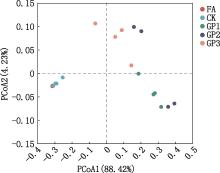
Fig.1
Principal coordinate analysis of microbial community structure in alfalfa silage"
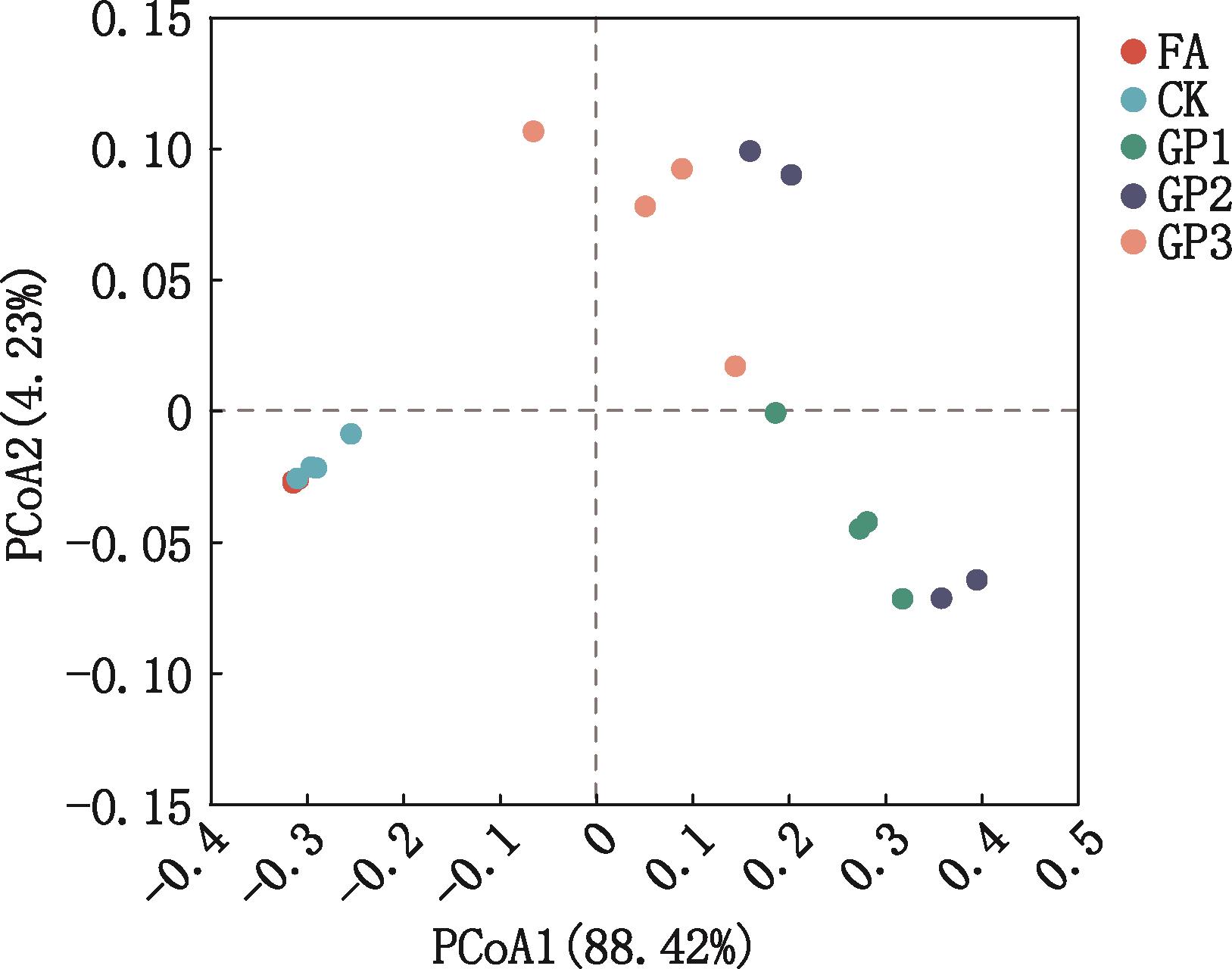
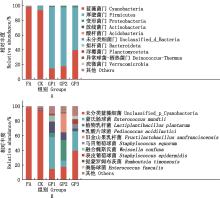
Fig.2
Relative abundance of microbial flora in alfalfa silage at phylum (A) and species (B) levels"

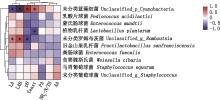
Fig.3
The correlation heatmap between fermentation quality of alfalfa silage and microbial species level*, Significantly correlation (P<0.05)"

Table 5
Determination results of IVDMD and IVNDFD of alfalfa silage fermented in vitro rumen for 48 h after GPsupplementation"
项目 Items | 组别 Groups | |||
|---|---|---|---|---|
| CK | GP1 | GP2 | GP3 | |
| 体外干物质消化率 IVDMD | 68.19±5.20b | 76.13±3.36a | 75.68±4.02a | 71.67±3.16a |
| 体外中性洗涤纤维消化率 IVNDFD | 41.45±1.67b | 49.12±2.58a | 51.48±2.26a | 49.89±1.01a |
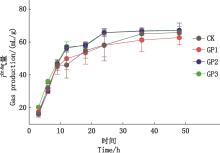
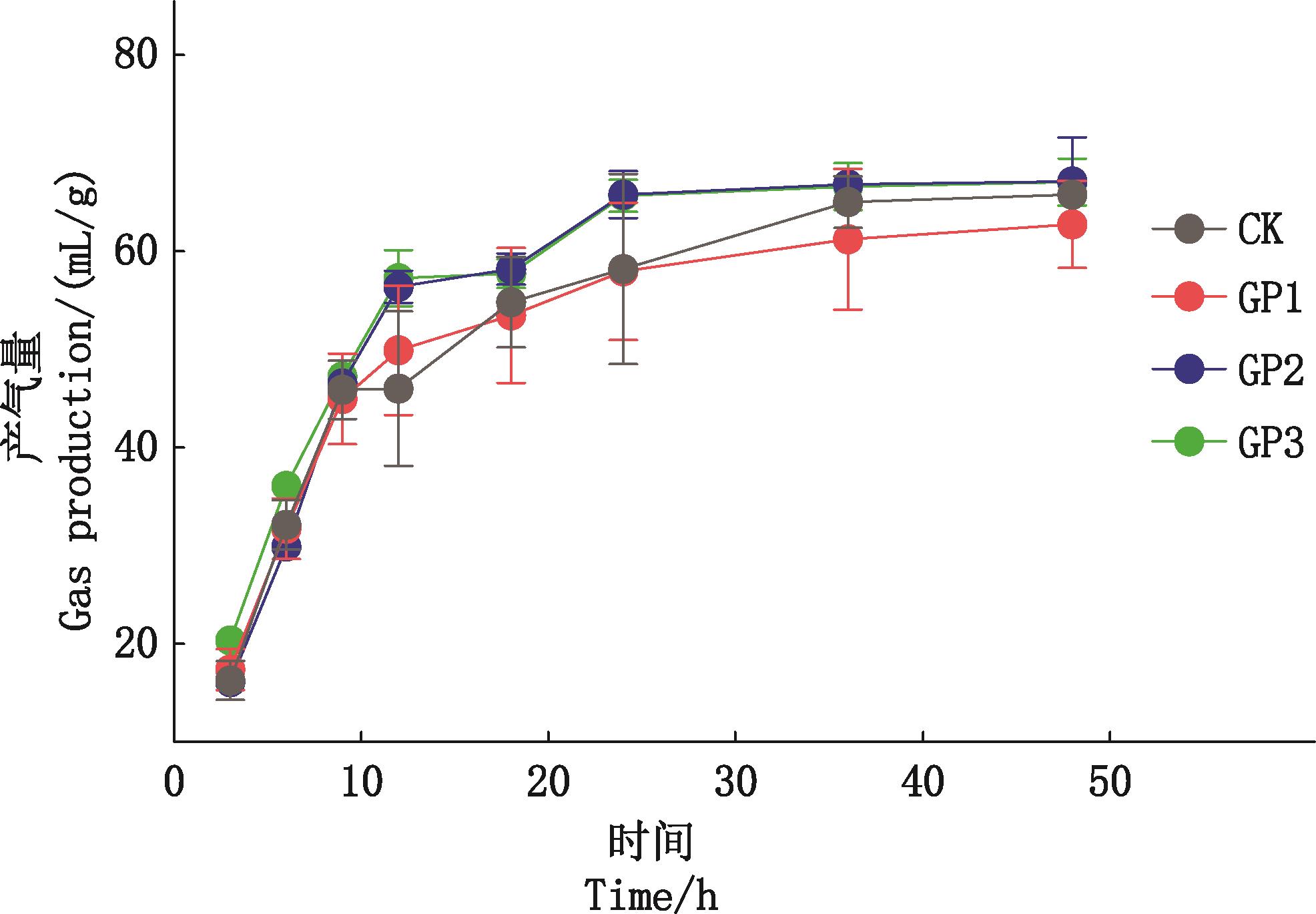
Fig.4
Dynamic changes of in vitro gas production of alfalfa silage from 0 to 48 h"
| [1] | NAZAR M, WANG S, ZHAO J, et al. The feasibility and effects of exogenous epiphytic microbiota on the fermentation quality and microbial community dynamics of whole crop corn[J]. Bioresource Technology, 2020, 306:123106. |
| [2] | WANG C, ZHENG M, WU S, et al. Effects of gallic acid on fermentation parameters,protein fraction, and bacterial community of whole plant soybean silage[J]. Frontiers in Microbiology, 2021, 12:662966. |
| [3] | FENG Q X, ZHANG J, LING W Q, et al. Ensiling hybrid Pennisetum with lactic acid bacteria or organic acids improved the fermentation quality and bacterial community[J]. Frontiers in Microbiology, 2023, 14:1216722. |
| [4] | GHELLER L S, GHIZZI L G, TAKIYA C S, et al. Different organic acid preparations on fermentation and microbiological profile, chemical composition, and aerobic stability of whole-plant corn silage[J]. Animal Feed Science and Technology, 2021, 281:115083. |
| [5] | WU Y F, XIAO Y, OKOYE C O, et al. Fermentation profile and bioactive component retention in honeysuckle residue silages inoculated with lactic acid bacteria: A promising feed additive for sustainable agriculture[J]. Industrial Crops and Products, 2025, 224:1200315. |
| [6] | LI J F, YUAN X J, DONG Z H, et al. The effects of fibrolytic enzymes, cellulolytic fungi and bacteria on the fermentation characteristics, structural carbohydrates degradation, and enzymatic conversion yields of Pennisetum sinese silage[J]. Bioresource Technology, 2018, 264:123-130. |
| [7] | 农业农村部. 农业农村部关于印发《农业绿色发展技术导则(2018—2030年)》的通知[J]. 中华人民共和国农业农村部公报, 2018, 7:41-51. |
| MINISTRY OF AGRICULTURE AND RURAL AFFAIRS. Notice of the ministry of agriculture and rural affairs on printing and distributing the technical guidelines for green agricultural development (2018—2030)[J]. Bulletin of the Ministry of Agriculture and Rural Affairs of the People’s Republic of China, 2018, 7:41-51.(in Chinese) | |
| [8] | 张欢,牟怡晓,张桂杰. 添加枸杞副产物对紫花苜蓿青贮发酵品质及微生物多样性的影响[J]. 草业学报, 2022, 31(4):136-144. |
| ZHANG H, MU Y X, ZHANG G J. Effects of Lycium barbarum by-products on fermentation quality and microbial diversity of alfalfa silage[J]. Acta Prataculturae Sinica, 2022, 31(4):136-144.(in Chinese) | |
| [9] | CHEN L, QU H, BAI S, et al. Effect of wet sea buckthorn pomace utilized as an additive on silage fermentation profile and bacterial community composition of alfalfa[J]. Bioresource Technology, 2020, 314:123773. |
| [10] | 周小栋,马成艳,张嘉琪,等. 柠条叶提取物对苜蓿青贮品质及抗氧化活性的影响[J]. 草业科学, 2024, 41(4):1-12. |
| ZHOU X D, MA C Y, ZHANG J Q, et al. Effects of leaf extracts of Caragana on silage quality and antioxidant activity of alfalfa[J]. Pratacultural Science, 2024, 41(4):1-12.(in Chinese) | |
| [11] | 金丽娜,蒋苏苏,敬淑燕,等. 黄芪药渣与全株玉米混合青贮对饲料感官、发酵品质及营养成分的影响[J]. 草地学报, 2024, 32(2):630-636. |
| JIN L N, JIANG S S, JING S Y, et al. Effects of adding Astragalus bunge residue on the sensory evaluation, fermentation quality, and nutritive value of whole-crop corn silage[J]. Acta Agrestia Sinica, 2024, 32(2):630-636.(in Chinese) | |
| [12] | 谢继圆.甜叶菊多糖对全株玉米混秣食豆和狼尾草青贮品质的影响及其机制研究[D].泰安:山东农业大学,2023. |
| XIE J Y. Effects of stevia polysaccharide on silage quality of whole corn hayseed bean and Pennisetum and its mechanism[D]. Tai’an: Shandong Agricultural University, 2023.(in Chinese) | |
| [13] | YAN B, HOU J, LI W, et al. A review on the plant resources of important medicinal licorice[J]. Journal of Ethnopharmacology, 2023, 301:115823. |
| [14] | DING Y, BRAND E, WANG W, et al. Licorice: Resources, applications in ancient and modern times[J]. Journal of Ethnopharmacology, 2022, 298:115594. |
| [15] | SHANG Z, LIU C, QIAO X, et al. Chemical analysis of the Chinese herbal medicine licorice (Gan-Cao): An update review[J]. Journal of Ethnopharmacology, 2022, 299:115686. |
| [16] | SIMAYI Z, ROZI P, YANG X, et al. Isolation, structural characterization, biological activity, and application of Glycyrrhiza polysaccharides: Systematic review[J]. International Journal of Biological Macromolecules, 2021, 183:387-398. |
| [17] | CHENG A, WAN F, WANG J, et al. Macrophage immunomodulatory activity of polysaccharides isolated from Glycyrrhiza uralensis Fish[J]. International Immunopharmacology, 2008, 8(1):43-50. |
| [18] | CHENG Z, ZHENG Q, DUAN Y, et al. Effect of subcritical water temperature on the structure,antioxidant activity and immune activity of polysaccharides from Glycyrrhiza inflata Batalin[J]. International Journal of Biological Macromolecules, 2024, 261:129591. |
| [19] | ZHANG C H, YU Y, LIANG Y Z, et al. Purification, partial characterization and antioxidant activity of polysaccharides from Glycyrrhiza uralensis [J]. International Journal of Biological Macromolecules, 2015, 79:681-686. |
| [20] | HASAN M K, ARA I, MONDAL M S A, et al. Phytochemistry, pharmacological activity, and potential health benefits of Glycyrrhiza glabra [J]. Heliyon, 2021, 7(6):e07240. |
| [21] | ZHANG X, ZHAO S, SONG X, et al. Inhibition effect of Glycyrrhiza polysaccharide (GCP) on tumor growth through regulation of the gut microbiota composition[J]. Journal of Pharmacological Sciences, 2018, 137(4):324-332. |
| [22] | 贾玉山,玉柱,格根图,等. 草产品加工与贮藏 学[M]. 北京:中国农业大学出版社, 2019. |
| JIA Y S, YU Z, GE G T, et al. Cereals Processing and Storage[M]. Beijing: China Agricultural University Press, 2019.(in Chinese) | |
| [23] | YI Q, YU M, WANG P, et al. Effects of moisture content and silage starter on the fermentation quality and in vitro digestibility of waxy corn processing byproduct silage[J]. Fermentation, 2023, 9(12):1025. |
| [24] | SÁEZ-PLAZA P, NAVAS M J, WYBRANIEC S, et al. An overview of the Kjeldahl method of nitrogen determination. Part Ⅱ. Sample preparation, working scale, instrumental finish, and quality control[J]. Critical Reviews in Analytical Chemistry, 2013, 43(4):224-272. |
| [25] | VAN SOEST P, ROBERTSON J, LEWIS B. Methods for dietary fiber, neutral detergent fiber, and nonstarch polysaccharides in relation to animal nutrition[J]. Journal of Dairy Science, 1991, 74(10):3583-3597. |
| [26] | BRODERICK G, KANG J. Automated simultaneous determination of ammonia and total amino acids in ruminal fluid and in vitro media[J]. Journal of Dairy Science, 1980, 63(1):64-75. |
| [27] | 陈德奎,吴硕,邹璇,等. 邻苯二酚对香椿叶青贮营养品质及抗氧化性的影响[J]. 草业学报, 2022, 31(3):207-213. |
| CHEN D K, WU S, ZOU X, et al. Effect of catechol on the quality and antioxidant activity of Toona sinensis leaf silage[J]. Acta Prataculturae Sinica, 2022, 31(3):207-213.(in Chinese) | |
| [28] | LIU B, HUAN H, GU H, et al. Dynamics of a microbial community during ensiling and upon aerobic exposure in lactic acid bacteria inoculation-treated and untreated barley silages[J]. Bioresource Technology, 2019, 273:212-219. |
| [29] | WANG Q, GARRITY G M, TIEDJE J M, et al. Naive bayesian classifier for rapid assignment of rRNA sequences into the new bacterial taxonomy[J]. Applied and Environmental Microbiology, 2007, 73(16):5261-5267. |
| [30] | MENKE K H, RAAB L, SALEWSKI A, et al. The estimation of the digestibility and metabolizable energy content of ruminant feeding stuffs from the gas production when they are incubated with rumen liquor in vitro [J]. The Journal of Agricultural Science, 1979, 93(1):217-222. |
| [31] | SUN Z Q, LI Y, LI S Y, et al. Pretreatment of sweet sorghum silages with Lactobacillus plantarum and cellulase with two different raw material characteristics: Fermentation profile, carbohydrate composition, in vitro rumen fermentation and microbiota communities[J]. Chemical and Biological Technologies in Agriculture, 2025, 12(1):33. |
| [32] | LIU X, LI D, GE Q, et al. Effects of harvest period and mixed ratio on the characteristic and quality of mixed silage of alfalfa and maize[J]. Animal Feed Science and Technology, 2023, 306:115796. |
| [33] | WILKINSON J M. Silage[M]. UK: Chalcombe Publications, 2005. |
| [34] | NI K, WANG F, ZHU B, et al. Effects of lactic acid bacteria and molasses additives on the microbial community and fermentation quality of soybean silage[J]. Bioresource Technology, 2017, 238:706-715. |
| [35] | DU Z, SUN L, LIN Y, et al. Use of napier grass and rice straw hay as exogenous additive improves microbial community and fermentation quality of paper mulberry silage[J]. Animal Feed Science and Technology, 2022, 285:115219. |
| [36] | THOMPSON D N, BARNES J M, HOUGHTON T P. Effect of additions on ensiling and microbial community of senesced wheat straw[J]. Applied Biochemistry and Biotechnology, 2005, 121(1-3):0021-0046. |
| [37] | ZHAO J, YIN X, WANG S, et al. Separating the effects of chemical and microbial factors on fermentation quality and bacterial community of napier grass silage by using gamma-ray irradiation and epiphytic microbiota transplantation[J]. Animal Feed Science and Technology, 2021, 280:115082. |
| [38] | ZHU W, ZHOU S, LIU J, et al. Prebiotic, immuno-stimulating and gut microbiota-modulating effects of Lycium barbarum polysaccharide[J]. Biomedicine & Pharmacotherapy, 2020, 121:109591. |
| [39] | ZHANG C, LI C, ZHAO P, et al. Effects of dietary Glycyrrhiza polysaccharide supplementation on growth performance,intestinal antioxidants, immunity and microbiota in weaned piglets[J]. Animal Biotechnology, 2022, 34(7):2273-2284. |
| [40] | MIRZADEH M, ARIANEJAD M R, KHEDMAT L. Antioxidant, antiradical, and antimicrobial activities of polysaccharides obtained by microwave-assisted extraction method: A review[J]. Carbohydrate Polymers, 2020, 229:115421. |
| [41] | NKOSI B D, MEESKE R, VAN DER MERWE H J, et al. Effects of homofermentative and heterofermentative bacterial silage inoculants on potato hash silage fermentation and digestibility in rams[J]. Animal Feed Science and Technology, 2010, 157(3-4):195-200. |
| [42] | YI Q, WANG P, YU M, et al. Effects of additives on the fermentation quality, in vitro digestibility, and aerobic stability of amaranth (Amaranthus hypochondriacus) and wheat bran mixed silage[J]. Fermentation, 2023, 9(8):711. |
| [43] | 卢德勋. 动物营养学科发展在战略方向上的重大突破:构建动物健康营养理论和技术体系及其实际应 用[J].动物营养学报, 2021, 33(1):1-12. |
| LU D X. A major breakthrough in development of animal nutrition in strategic direction: Building an animal health and nutrition theory and technology system and its application[J]. Chinese Journal of Animal Nutrition, 2021, 33(1):1-12.(in Chinese) | |
| [44] | LI W H, WANG L, HE H Y, et al. Expression of neutrophil gelatinase-associated lipocalin in low osmolar contrast-induced nephropathy in rats and the effect of N-acetylcysteine[J]. Experimental and Therapeutic Medicine, 2016, 12(5):3175-3180. |
| [45] | ZHANG X, GUO X, LI F, et al. Antioxidant, flavonoid, α-tocopherol, β-carotene, fatty acids, and fermentation profiles of alfalfa silage inoculated with novel Lactiplantibacillus plantarum and Pediococcus acidilactici strains with high-antioxidant activity[J]. Animal Feed Science and Technology, 2022, 288:115301. |
| [46] | MRUK D D, SILVESTRINI B, MO M Y, et al. Antioxidant superoxide dismutase—A review: Its function, regulation in the testis, and role in male fertility[J]. Contraception, 2002, 65(4):305-311. |
| [47] | LIU Y, WANG J, DING J, et al. Effects of hypoxia stress on oxidative stress,apoptosis and microorganisms in the intestine of Large Yellow croaker (Larimichthys crocea)[J]. Aquaculture, 2024, 581:740444. |
| [48] | ZHANG C, LI C, SHAO Q, et al. Effects of Glycyrrhiza polysaccharide in diet on growth performance, serum antioxidant capacity, and biochemistry of broilers[J]. Poultry Science, 2021, 100(3):100927. |
| [49] | HE L, ZHOU W, WANG C, et al. Effect of cellulase and Lactobacillus casei on ensiling characteristics, chemical composition, antioxidant activity, and digestibility of mulberry leaf silage[J]. Journal of Dairy Science, 2019, 102(11):9919-9931. |
| [50] | MUTAILLIFU P, BOBAKULOV K, ABUDUWAILI A, et al. Structural characterization and antioxidant activities of a water soluble polysaccharide isolated from Glycyrrhiza glabra[J]. International Journal of Biological Macromolecules, 2020, 144:751-759. |
| [51] | JUNG J S, RAVINDRAN B, SOUNDHARRAJAN I, et al. Improved performance and microbial community dynamics in anaerobic fermentation of triticale silages at different stages[J]. Bioresource Technology, 2022, 345:126485. |
| [52] | FENG Q, SHI W, CHEN S, et al. Addition of organic acids and Lactobacillus acidophilus to the leguminous forage chamaecrista rotundifolia improved the quality and decreased harmful bacteria of the silage[J]. Animals, 2022, 12(17):2260. |
| [53] | BAI B, QIU R, WANG Z, et al. Effects of cellulase and lactic acid bacteria on ensiling performance and bacterial community of Caragana korshinskii silage[J]. Microorganisms, 2023, 11(2):337. |
| [54] | SONG C, LI J, XING J, et al. Effects of molasses interacting with formic acid on the fermentation characteristics, proteolysis and microbial community of seed-used pumpkin leaves silage[J]. Journal of Cleaner Production,2022, 380:135186. |
| [55] | 陈荣强,雷小文,吴丽娟,等. 不同复合添加剂对饲料桑与王草混合青贮品质与微生物多样性的影响[J]. 中国畜牧兽医, 2024, 51(7):2849-2859. |
| CHEN R Q, LEI X W, WU L J, et al. Effects of different compound additives on quality and microbial diversity of mixed silage of forage mulberry and King grass[J]. China Animal Husbandry & Veterinary Medicine, 2024, 51(7):2849-2859.(in Chinese) | |
| [56] | BAI J, XU D, XIE D, et al. Effects of antibacterial peptide-producing Bacillus subtilis and Lactobacillus buchneri on fermentation, aerobic stability, and microbial community of alfalfa silage[J]. Bioresource Technology, 2020, 315:123881. |
| [57] | YANG L, YUAN X, LI J, et al. Dynamics of microbial community and fermentation quality during ensiling of sterile and nonsterile alfalfa with or without Lactobacillus plantarum inoculant[J]. Bioresource Technology, 2019, 275:280-287. |
| [58] | 牟怡晓, 张欢, 马聪慧, 等. 不同添加量枸杞副产物对柠条锦鸡儿发酵特性及微生物多样性的影 响[J].动物营养学报, 2021, 33(9):5152-5161. |
| MU Y X, ZHANG H, MA C H, et al. Effects of different supplemental levels of Lycium barbarum by-product on fermentation characteristic and microbial diversity of Caragana korshinskii silage[J]. Chinese Journal of Animal Nutrition, 2021, 33(9):5152-5161.(in Chinese) | |
| [59] | NI K, WANG X, LU Y, et al. Exploring the silage quality of alfalfa ensiled with the residues of Astragalus and hawthorn[J]. Bioresource Technology,2020,297:122249. |
| [60] | DU Z, SUN L, CHEN C, et al. Exploring microbial community structure and metabolic gene clusters during silage fermentation of paper mulberry, a high-protein woody plant[J]. Animal Feed Science and Technology, 2021, 275:114766. |
| [61] | ALVES J S, DE MOURA SOUZA R, LIMA MOREIRA J P D, et al. Antimicrobial resistance of Enterobacteriaceae and Staphylococcus spp. isolated from raw cow’s milk from healthy, clinical and subclinical mastitis udders[J]. Preventive Veterinary Medicine, 2024, 227:106205. |
| [62] | ARGUDÍN M A, VANDERHAEGHEN W, BUTAYE P. Antimicrobial resistance and population structure of Staphylococcus epidermidis recovered from pig farms in Belgium[J]. The Veterinary Journal, 2015, 203(3):302-308. |
| [63] | TESSEMA Z, BAARS R. Chemical composition, in vitro dry matter digestibility and ruminal degradation of napier grass (Pennisetum purpureum (L.) Schumach.) mixed with different levels of Sesbania sesban (L.) Merr[J]. Animal Feed Science and Technology, 2004, 117(1-2):29-41. |
| [64] | 冉航,朱声鑫,刘婷,等. 黄芪多糖粉对湖羊瘤胃体外发酵参数和微生物区系的影响[J]. 动物营养学报, 2025, 37(3):1880-1892. |
| RAN H, ZHU S X, LIU T, et al. Effects of astragalus polysaccharide powder on rumen fermentation parameters and microflora of hu sheep in vitro [J]. Chinese Journal of Animal Nutrition, 2025, 37(3):1880-1892.(in Chinese) | |
| [65] | ZHANG Q, WU S, ZOU X, et al. Effects of Neolamarckia cadamba leaves extract on methanogenesis, microbial community in the rumen and digestibility of stylo silage[J]. Journal of Cleaner Production, 2022, 369:133338. |
| [66] | GOMAA W, SALEEM A, MCGEOUGH E, et al. Effect of red osier dogwood extract on in vitro gas production, dry matter digestibility, and fermentation characteristics of forage-based diet or grain-based diet[J]. Heliyon, 2024, 10(6):e27991. |
| [67] | SALLAM S, NASSER M, EL-WAZIRY A, et al. Evaluation of some ruminant feed stuffs using gas production technique, in vitro [J]. Proceedings of the British Society of Animal Science, 2017, 2007:218. |
| [68] | MENKE K H. Estimation of the energetic feed value obtained from chemical analysis and in vitro gas production using rumen fluid[J]. Animal Research and Development, 1988, 28:7-55. |
| [69] | BABAEINASAB Y, ROUZBEHAN Y, FAZAELI H, et al. Chemical composition, silage fermentation characteristics, and in vitro ruminal fermentation parameters of potato-wheat straw silage treated with molasses and lactic acid bacteria and corn silage[J]. Journal of Animal Science, 2015, 93(9):4377-4386. |
| [1] | GAO Zhenzhen, ZHAO Liuwei, QIAO Jie, ZHANG Chao, YANG Ying. Process Optimization of Orobanche coerulescens Extract and Evaluation of Its Antioxidant Activities in vitro and in vivo [J]. China Animal Husbandry & Veterinary Medicine, 2025, 52(12): 5942-5955. |
| [2] | WANG Shiyi, SI Wei, TANG Chaohua, ZHANG Junmin, ZHANG Huiyan, ZHAO Qingyu, WANG Xuemin, MA Lin, ZHAO Jinshan, QIN Yuchang. Determination of Nutrient Components of Galega orientalis and Evaluation of Antioxidant Activity of Its Extracts [J]. China Animal Husbandry & Veterinary Medicine, 2024, 51(5): 1903-1911. |
| [3] | ZHANG Qiang, LEI Xiaowen, LIAN Hai, SHI Xiaosheng, HUANG Zhiwen, ZHONG Yunping. Study on the Quality and Microbial Diversity of Mixed Silage Between Distillers Grains and Navel Orange Residue [J]. China Animal Husbandry & Veterinary Medicine, 2024, 51(4): 1456-1465. |
| [4] | WANG Jiandong, DING Hui, LIU Xin, HOU Pengxia, LIANG Xiaojun, GAO Haihui, WANG Ruigang, JIANG Wu. Effects of Grape Pomace on Lymphocyte Subsets,Lymphocyte Transformation Rate,Apoptosis Rate and Antioxidant Activity in Peripheral Blood of Beef Cows [J]. China Animal Husbandry & Veterinary Medicine, 2024, 51(4): 1530-1536. |
| [5] | FENG Peng, WU Hongda, ZHENG Haiyan, YANG Zhao, WANG Di, SHI Chen, MENG Fankun. Effect of Exogenous Biological Agents on Silage Quality and Ruminal Degradability of Corn Stalk and Potato Pulp Mixed Silage [J]. China Animal Husbandry & Veterinary Medicine, 2022, 49(2): 529-538. |
| [6] | WANG Xiangyan, XIN Guoqin, XU Haiyan, GU Wei, LAN Jianghua, HAO Muqiang, FENG Gang. Screening of a Strain of Pediococcus pentosus with High Antioxidant Activity [J]. China Animal Husbandry & Veterinary Medicine, 2022, 49(1): 179-187. |
| [7] | REN Lijuan, CHEN Yakun, SHAN Liyan, ZHANG Xiaofeng, XU Fenglian, WANG Youyue, WANG Siwei, WANG Kun, BU Dengpan, WANG Jianping, ZHAO Heping, ZHAO Liansheng. Analysis of Comprehensive Quality of Whole Plant Corn Silage Based on Principal Component and Grey Correlation Degree [J]. China Animal Husbandry & Veterinary Medicine, 2021, 48(4): 1211-1221. |
| [8] | XU Baichang, FANG Ziyi, MENG Jinyan, CUI Qinghan, LI Hongman, SI Hongbin. Optimization of Extraction Process and Antioxidant Activity of Polyphenols from Leaves of Broussonetia papyrifera [J]. China Animal Husbandry & Veterinary Medicine, 2021, 48(3): 1046-1053. |
| [9] | XIONG Yunxia, WANG Li, WEN Xiaolu, HU Youjun, YI Hongbo, QIU Yueqin, YANG Xuefen, WU Qiwen, JIANG Zongyong. Effects of adding Ampelopsis grossedentata Extract in Diets on Growth Performance, Blood Biochemical Indexes and Antioxidant Activity in Pig [J]. China Animal Husbandry & Veterinary Medicine, 2019, 46(5): 1330-1339. |
| [10] | CHEN Chuanwei, ZHOU Luli, WANG Dingfa, ZHOU Hanlin. Study on Antioxidant and Anti-inflammatory Effects of Extracts from Piper sarmentosum Roxb. in vitro [J]. China Animal Husbandry & Veterinary Medicine, 2019, 46(3): 677-683. |
| [11] | TANG Zhenhua, YANG Chengjian, LI Mengwei, LIANG Xin, GUO Yanxia, LIANG Xianwei. Effect of Applying Lactobacillus plantarum and Lactobacillus buchneri on Quality and Aerobic Stability of Sugarcane Tops Silage [J]. China Animal Husbandry & Veterinary Medicine, 2018, 45(7): 1824-1832. |
| [12] | MU Shenglong, YANG Ranran, ZHOU Bo, REN Fengyun, LIANG Mingzhen, DU Xuezhen, ZOU Caixia, HE Renchun. Effects of Lactobacillus plantarum and Lactobacillus buchneri on the Quality of Sugarcane Tops Silage [J]. China Animal Husbandry & Veterinary Medicine, 2018, 45(5): 1226-1233. |
| [13] | ZHANG Fuxin, SONG Jiaxuan, LIU Xiaodong. Antioxidation and Immune Activity of Oxytropis kansuensis flavonoids [J]. China Animal Husbandry & Veterinary Medicine, 2018, 45(12): 3387-3394. |
| [14] | LIU Yue, ZHOU Zhenming, WANG Guogen, WU Hao, MENG Qingxiang, YANG Junxiang, LUO Feng, SUN Shoujun. Comparative Analysis of Silage Quality and Nutritive Value of Whole-plant Corn Silage with Different Varieties [J]. China Animal Husbandry & Veterinary Medicine, 2018, 45(11): 3043-3050. |
| [15] | WANG Mi, WANG Xiao-yang, ZHANG Li-fang, FEI Chen-zhong, ZHANG Ke-yu, WANG Chun-mei, YANG Rui-le, XUE Fei-qun. The Effect of Cordyceps Militaris Polysaccharides on the Antioxidant Function in Mice Injected With Cyclophosphamide [J]. China Animal Husbandry & Veterinary Medicine, 2016, 43(12): 3251-3256. |
| Viewed | ||||||
|
Full text |
|
|||||
|
Abstract |
|
|||||
