
China Animal Husbandry & Veterinary Medicine ›› 2026, Vol. 53 ›› Issue (2): 995-1008.doi: 10.16431/j.cnki.1671-7236.2026.02.043
• Basic Veterinary Medicine • Previous Articles Next Articles
YU Zhaizhuo1( ), ZHANG Liang2,3, CHEN Jiu2,3, WU Zhiyong2,3, ZHU Yangdong1, YAN Bin1(), YANG Hongjun2,3()
Received:2025-05-14
Online:2026-02-20
Published:2026-01-27
Contact:
YAN Bin, YANG Hongjun
E-mail:19510156290@163.com;robinyan2002@163.com;yanghongjun166@163.com
CLC Number:
YU Zhaizhuo, ZHANG Liang, CHEN Jiu, WU Zhiyong, ZHU Yangdong, YAN Bin, YANG Hongjun. Exploring the Therapeutic Mechanism of Maxing Shigan Decoction Against Mycoplasma bovis Infection Through Network Pharmacology, Molecular Docking, and Cellular Experiments[J]. China Animal Husbandry & Veterinary Medicine, 2026, 53(2): 995-1008.
Table 1
Primer information"
基因 Genes | 引物序列 Primer sequences (5'→3') | 退火温度 Annealing temperature/℃ | GenBank登录号 GenBank accession No. | |
|---|---|---|---|---|
| TNF-α | F: CGGTGGTGGGACTCGTATG | R: GCTGGTTGTCTTCCAGCTTCA | 60 | NM_173966.3 |
| IL-6 | F: TCTGGGTTCAATCAGGCGAT | R: GTCAGTGTTTGTGGCTGGAG | 56 | NM_173923.2 |
| IL-8 | F: TGGGCCACACTGTGAAAAT | R: TCATGGATCTTGCTTCTCAGC | 57 | NM_173925.2 |
| IL-10 | F: TGTTGACCCAGTCTCTGCTG | R: GGCATCACCTCTTCCAGGTA | 57 | NM_174088.1 |
| IL-17A | F: GAACTTCATCTATGTCACTGC | R: TGGACTCTGTGGGATGATGA | 54 | NM_001008412.2 |
| IL-2 | F: AACCTCAACTCCTGCCACAA | R: TGTGTTCCCCGTAGAGCTTG | 56 | NM_180997.2 |
| CASP3 | F:AGAACTTGGTGGTCCATACA | R:CTCAACCCGTCTCCCTTTAT | 54 | NM_001077840.1 |
| MMP9 | F:GGAGAACCACGAACCAACCT | R:CCAGGAGTGTAGCCATAGCG | 58 | NM_174744.2 |
| PTGS2 | F:GCATAAGCTGCGCCTTTTCA | R:TCTGTTGTGTTCCCGTAGCC | 56 | NM_174445.2 |
| β-actin | F: TGCTGTCACCTTCACCGTTC | R: CTGTTAGCTGCGTTACACCCT | 57 | NM_173979.3 |
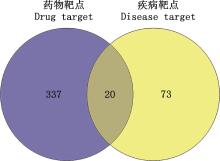
Fig.1
Venn diagram of active pharmaceutical ingredients and disease targets"
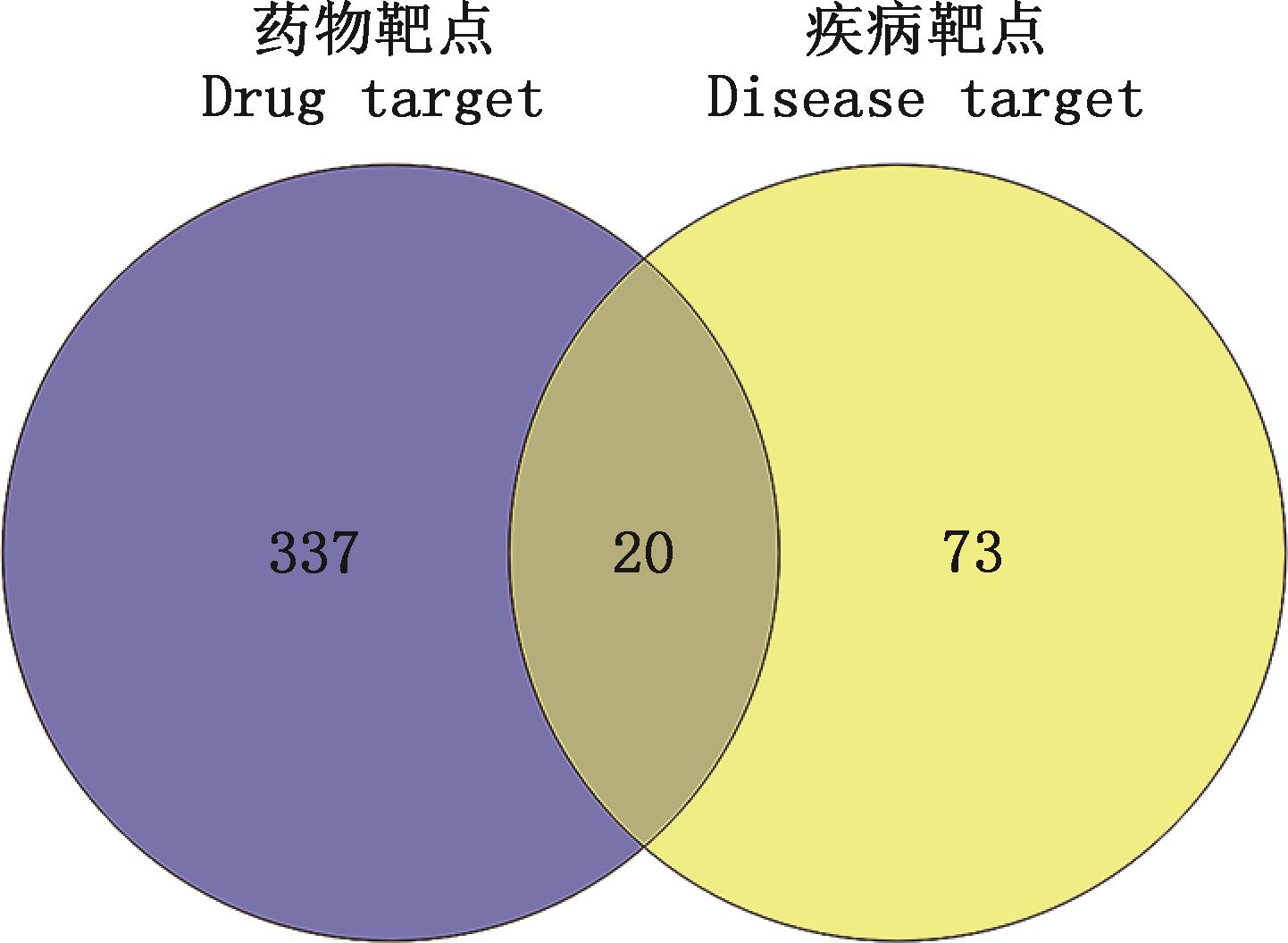
Fig.2
Network diagram of drug-ingredients-targets-diseasesBlue nodes represent core targets, cyan nodes denote different drugs, yellow, green and pink nodes correspond to the active ingredients within ephedra, licorice and bitter almond, respectively; A, B and C indicate the common components between ephedra and bitter almond, ephedra and licorice, and licorice and bitter almond, respectively"

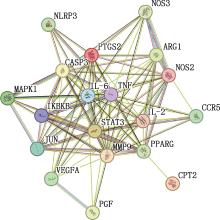
Fig.3
PPI network diagram of related targets of Maxing Shigan decoction against Mycoplasma bovis infection"
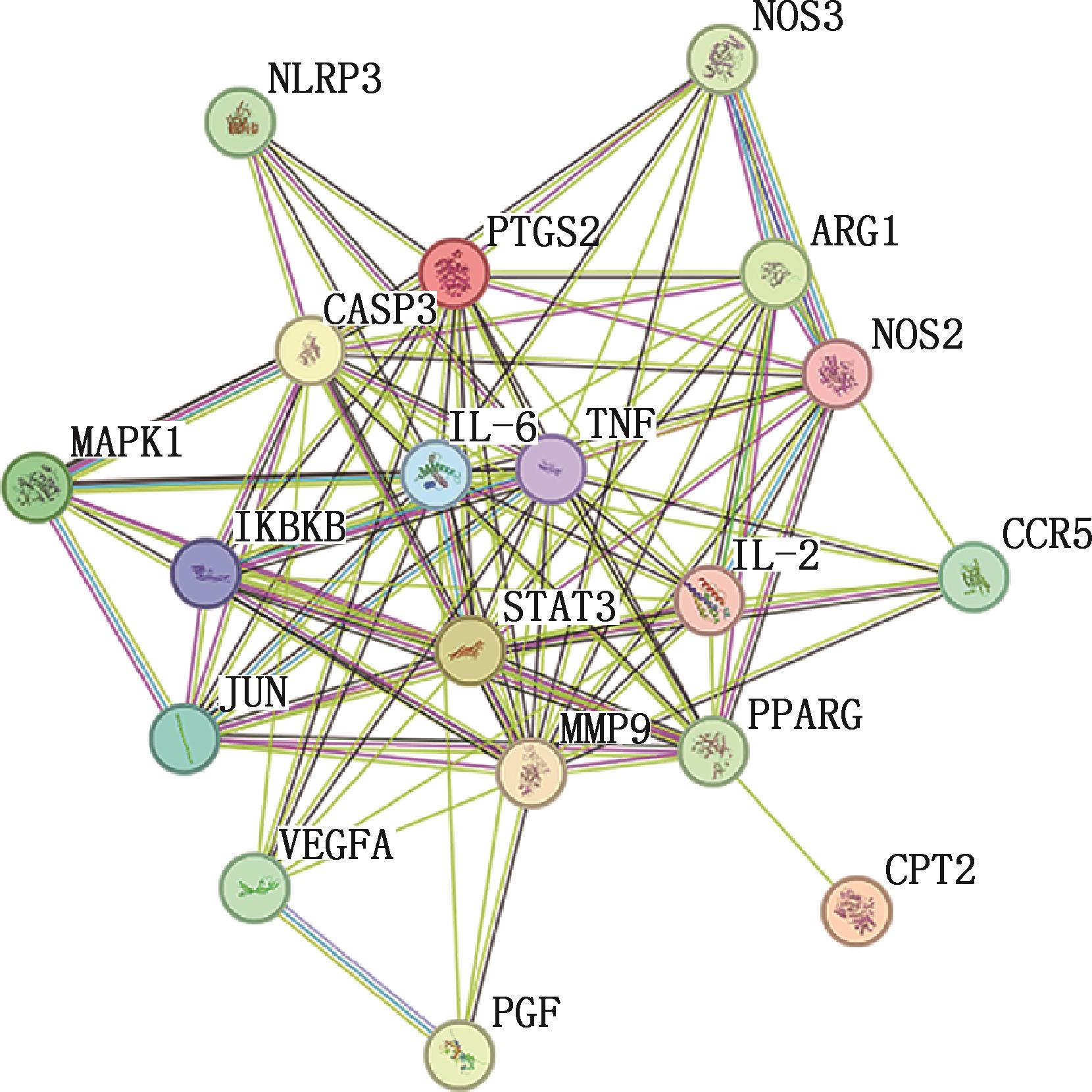
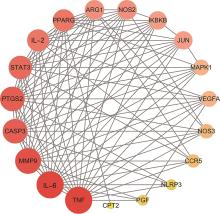
Fig.4
Core target diagram of Maxing Shigan decoction against Mycoplasma bovis infection"
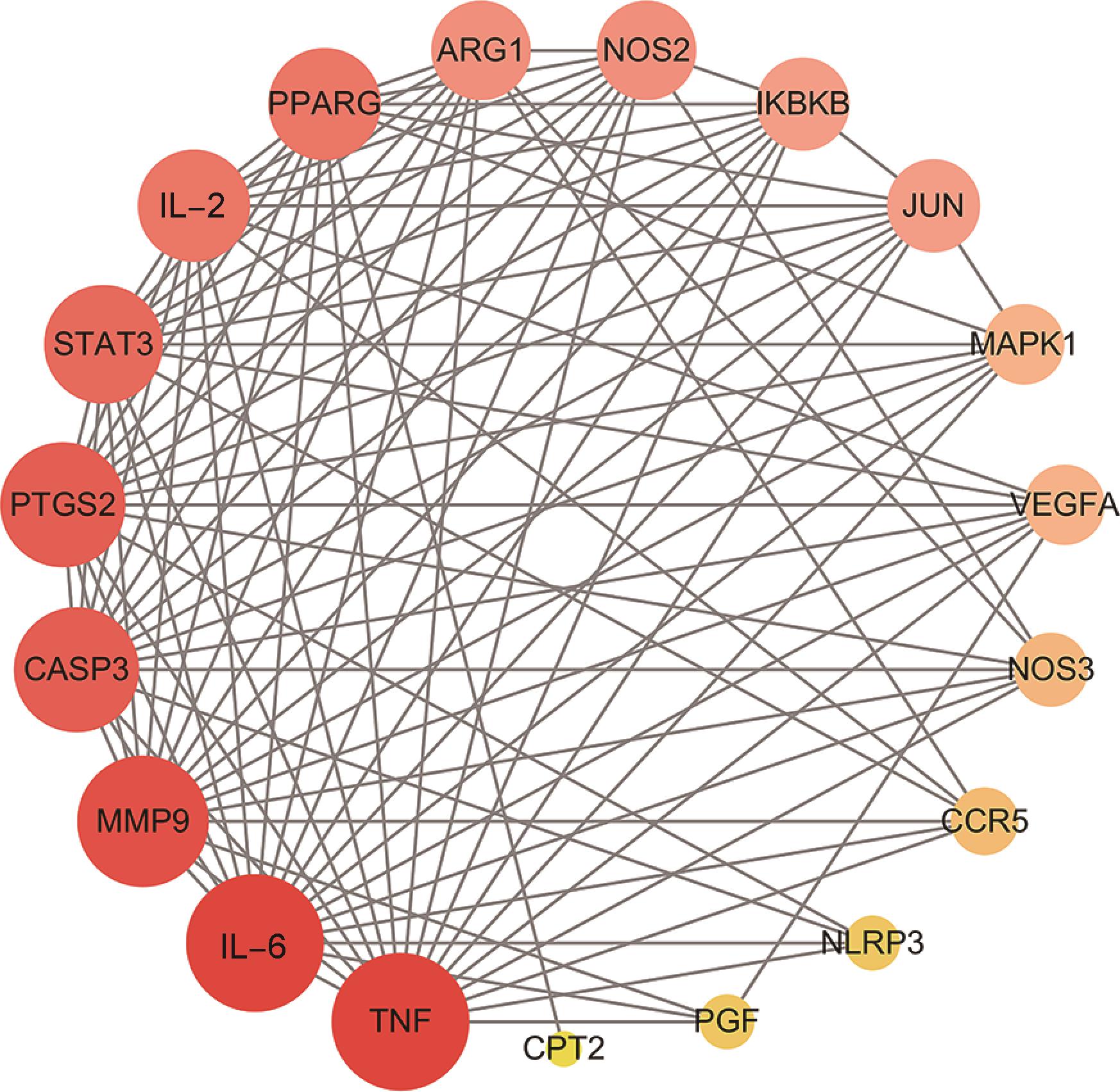
Table 2
Top 10 core targets and topological parameters"
| No. | 靶点 Targets | 度值 Degree | 介数中心性 Betweenness centrality | 接近中心性 Closeness centrality |
|---|---|---|---|---|
| 1 | IL-6 | 17 | 26.356 | 0.947 |
| 2 | TNF | 17 | 26.356 | 0.947 |
| 3 | MMP9 | 16 | 18.356 | 0.900 |
| 4 | CASP3 | 15 | 12.489 | 0.857 |
| 5 | PTGS2 | 15 | 12.489 | 0.857 |
| 6 | STAT3 | 14 | 7.180 | 0.818 |
| 7 | PPARG | 13 | 35.765 | 0.782 |
| 8 | IL-2 | 13 | 5.275 | 0.782 |
| 9 | NOS2 | 11 | 1.698 | 0.720 |
| 10 | ARG1 | 11 | 3.309 | 0.720 |
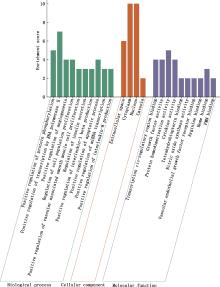
Fig.5
GO function enrichment analysis of Maxing Shigan decoction against Mycoplasma bovis infection"

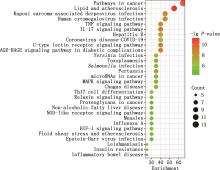
Fig.6
KEGG pathway enrichment analysis of Maxing Shigan decoction against Mycoplasma bovis infection"
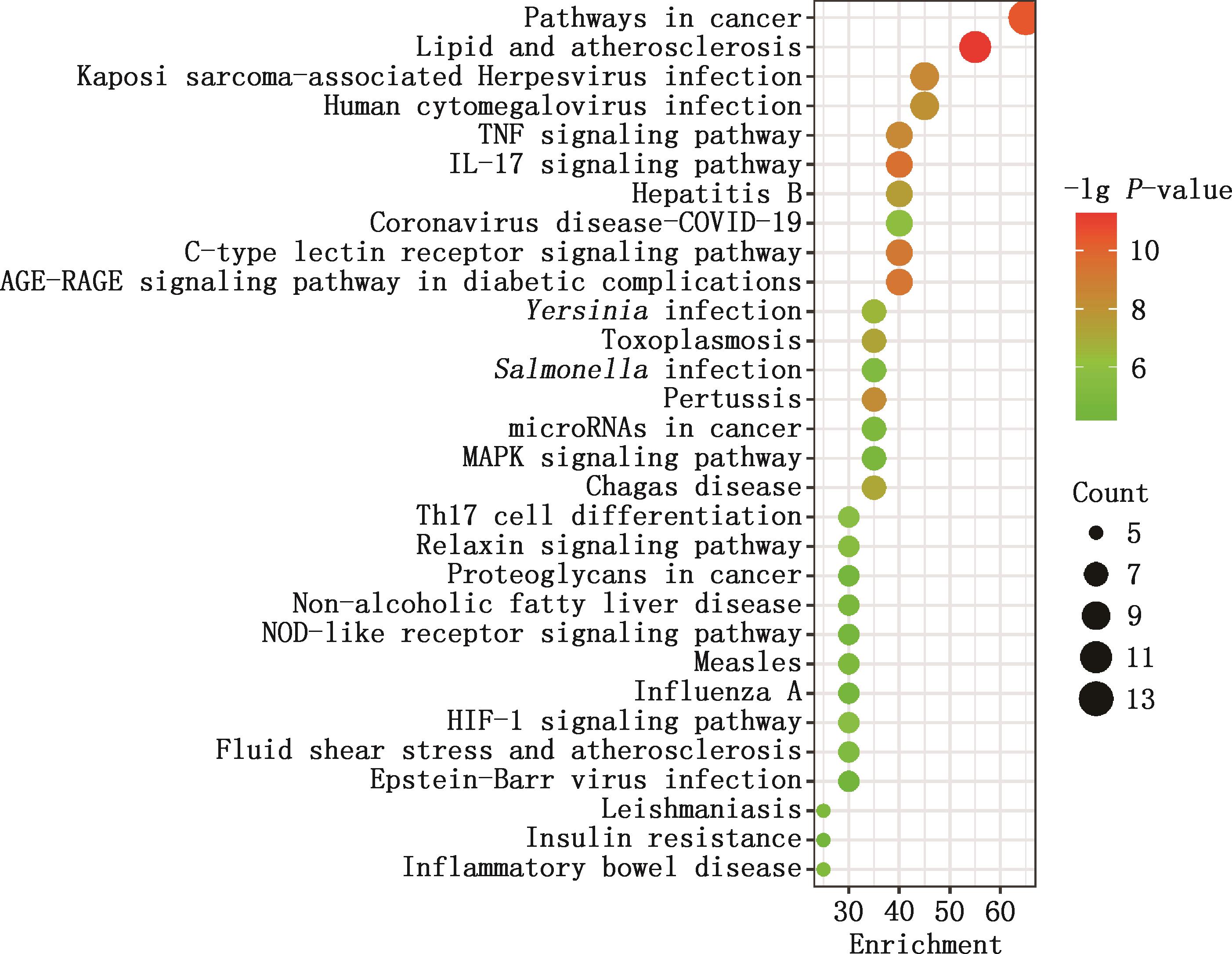
Table 3
Molecular docking results"
靶点 Targets | 结合能Binding energy | ||
|---|---|---|---|
| 柚皮素 Naringenin | 山柰酚 Kaempferol | 槲皮素 Quercetin | |
| IL-6 | -21.25 | -24.43 | -24.31 |
| TNF | -18.12 | -19.83 | -20.55 |
| MMP9 | -17.86 | -23.22 | -17.95 |
| PTGS2 | -22.09 | -27.91 | -28.45 |
| CASP3 | -23.26 | -26.86 | -28.87 |
| STAT3 | -22.81 | -22.09 | -21.63 |
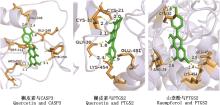
Fig.7
Visualization of molecular docking for the top 3 binding energies"
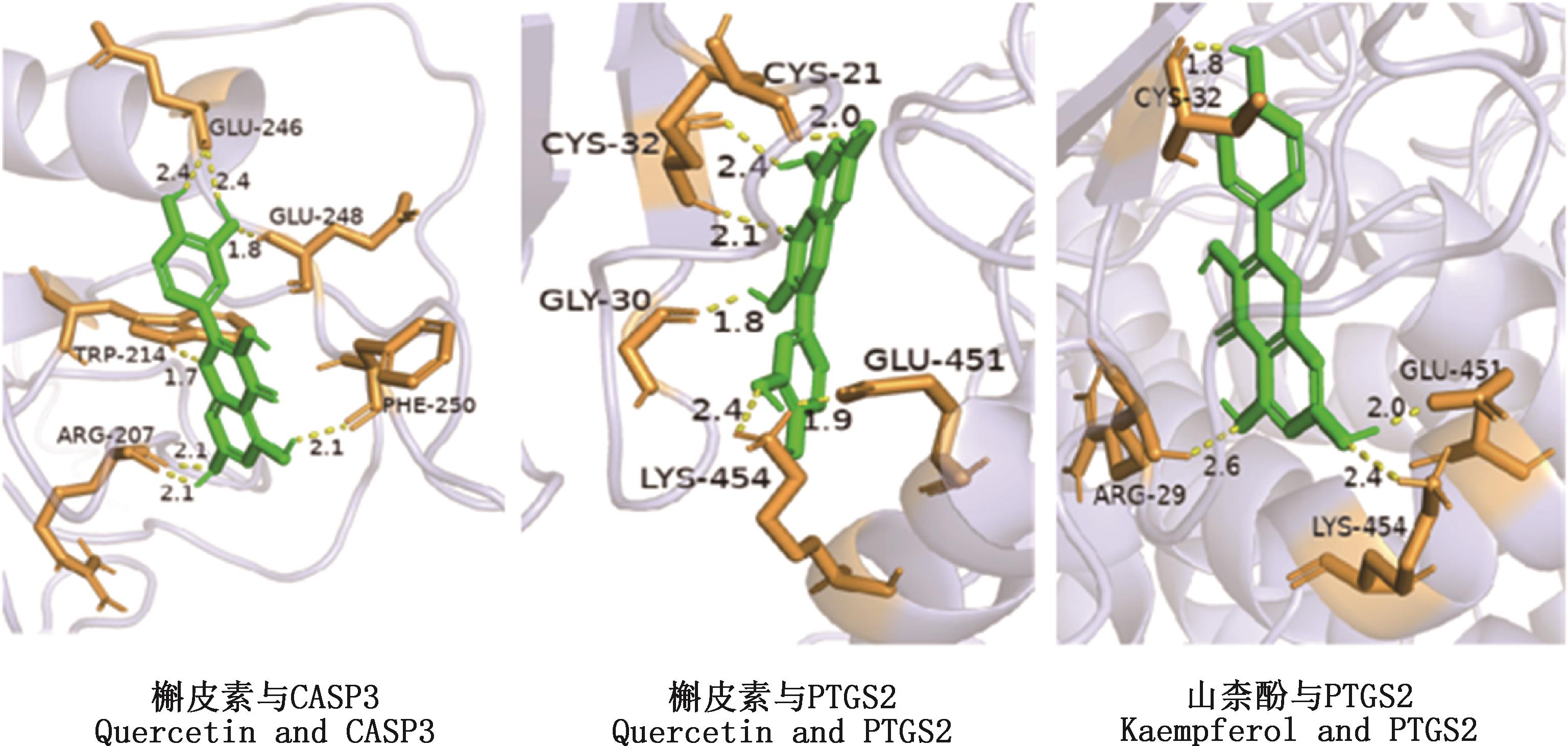
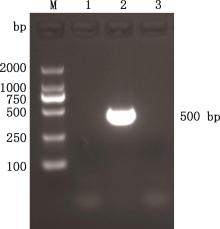
Fig.8
Electropherogram of Mycoplasma detection results in MDBK cellsM, DL2000 DNA Marker; 1, MDBK cells; 2, Positive control; 3, Negative control"
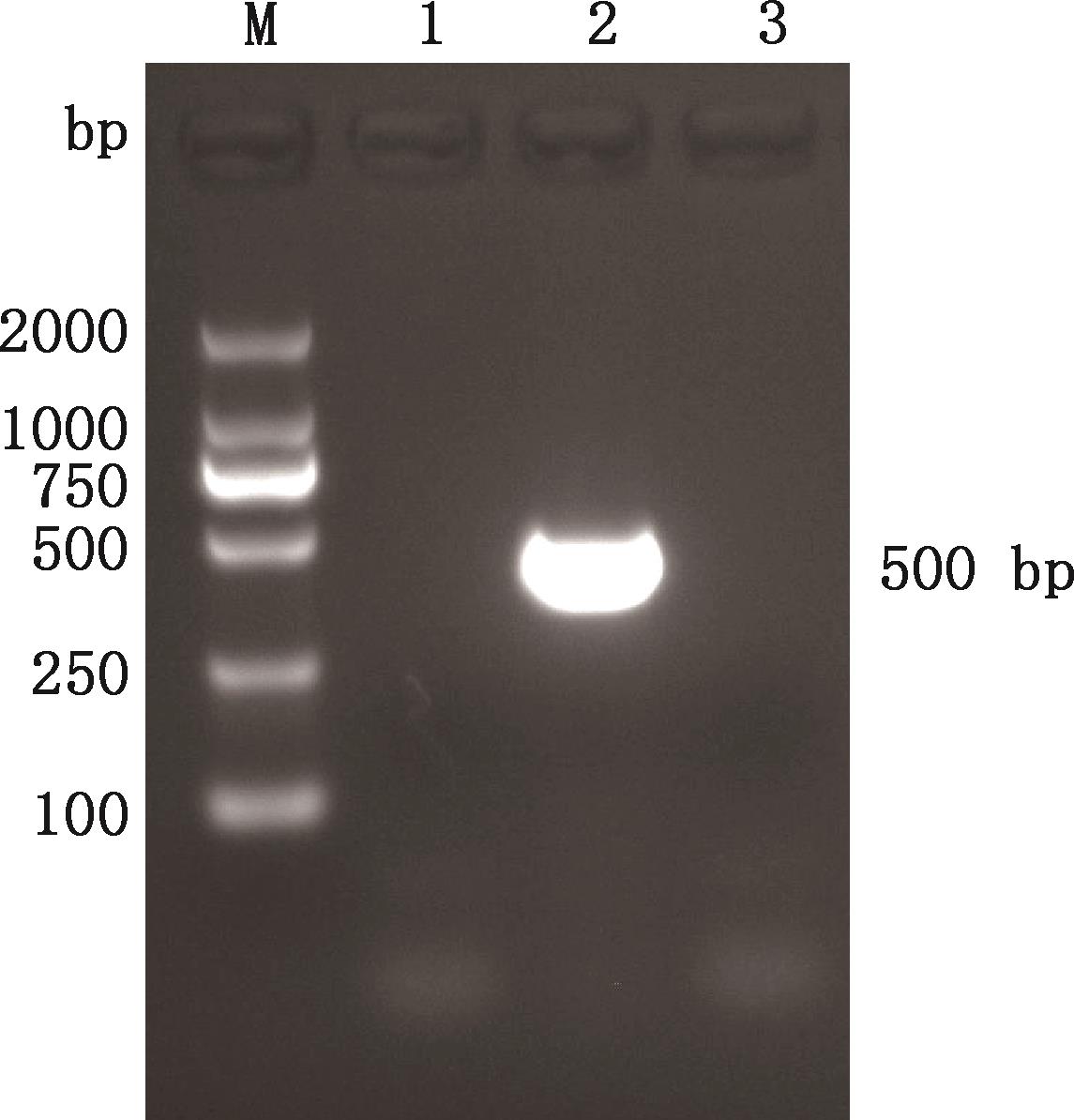
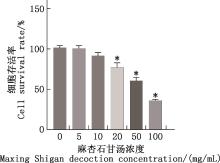
Fig.9
Effect of Maxing Shigan decoction on the activity of MDBK cellsCompared with blank control group (0 mg/mL Maxing Shigan decoction), *, Significant difference (P<0.05)"
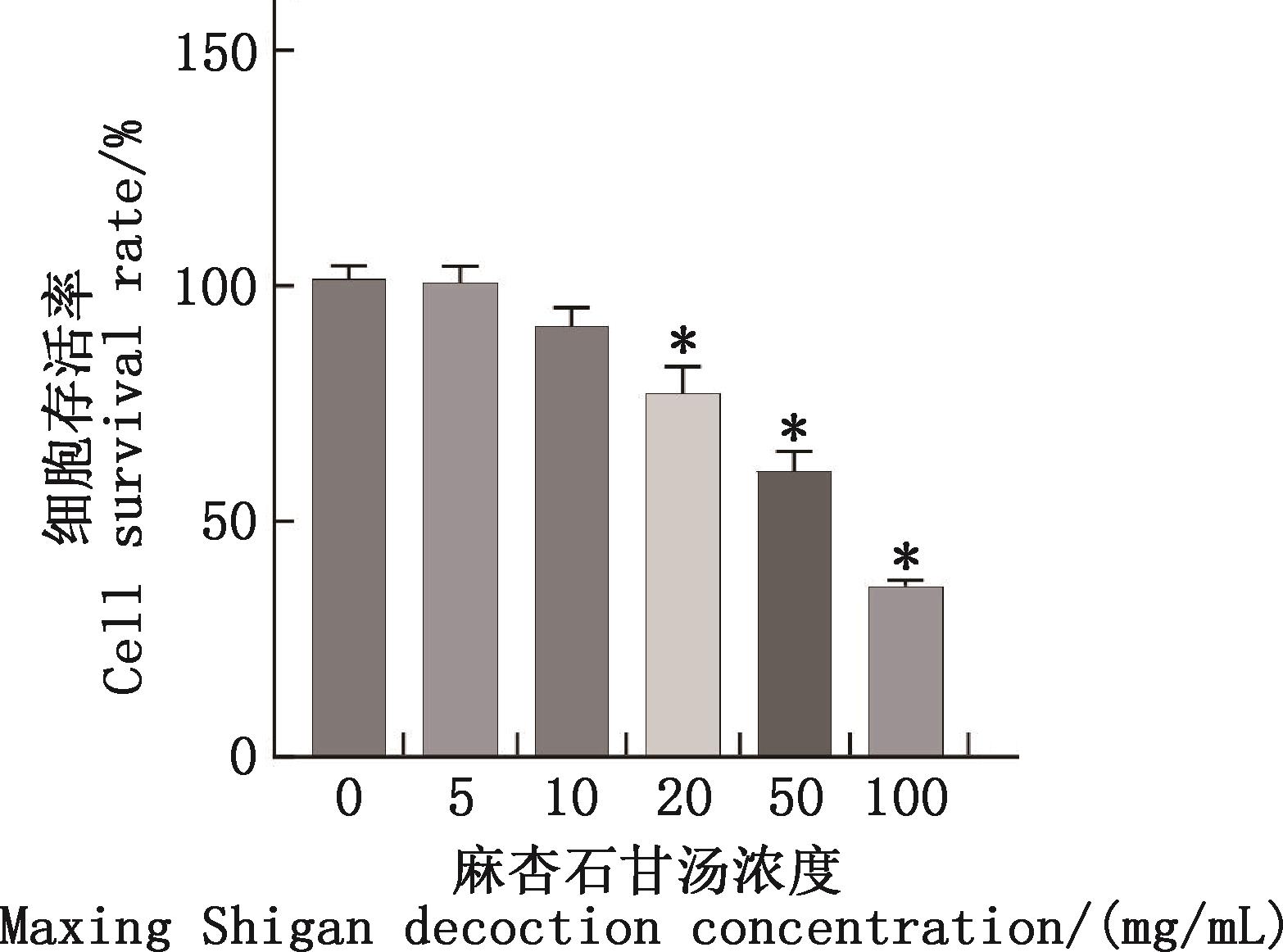
Fig.10
Effect of Maxing Shigan decoction on Mycoplasma bovis infectionCompared with model group, *, Significant difference (P<0.05)"
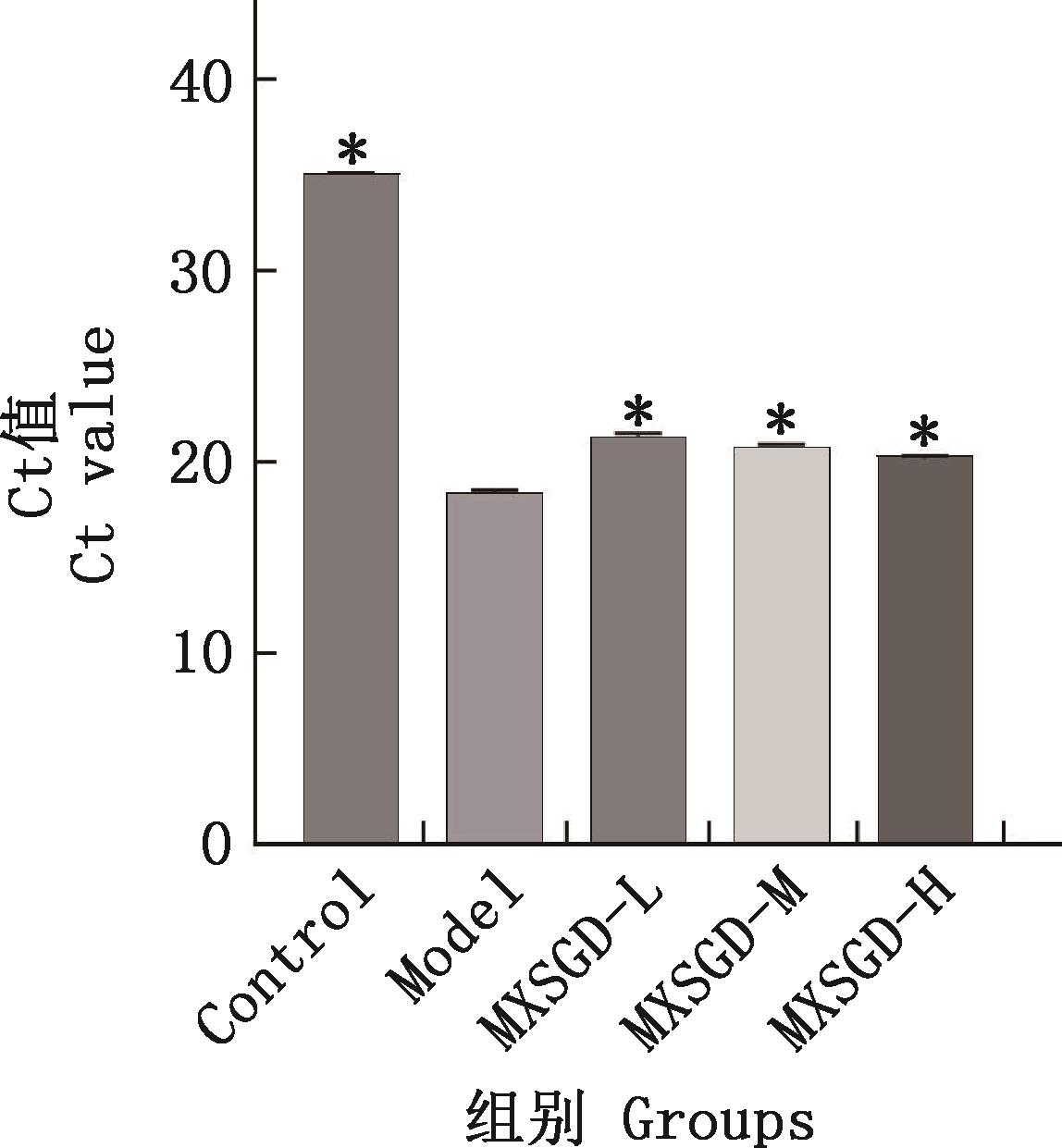
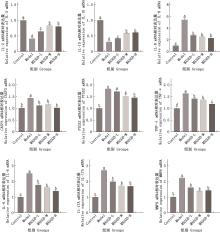
Fig.11
mRNA expression of inflammatory-related factors in each groupValues with different letter superscripts mean significant difference (P<0.05);While with the same letter superscripts mean no significant difference (P>0.05)"

| [1] | BAZ A A, CHEN S, HAO H, et al. Macrophage extracellular traps are induced by Mycoplasma bovis in bovine macrophages through NADPH oxidase/ROS-dependent manner and their antibacterial efficacy[J]. The FASEB Journal, 2024, 38(23): e70238. |
| [2] | 张妍, 战力源, 姜福洁, 等. 牛支原体重组蛋白P48原核表达、多克隆抗体制备及间接ELISA抗体检测方法的建立[J]. 中国畜牧兽医, 2023, 50(11): 4621-4631. |
| ZHANG Y, ZHAN L Y, JIANG F J, et al. Prokaryotic expression, polyclonal antibody production and development of an indirect ELISA antibody detection method of recombinant protein P48 of Mycoplasma bovis [J]. China Animal Husbandry & Veterinary Medicine, 2023, 50(11): 4621-4631. (in Chinese) | |
| [3] | 乔常宏, 陈翔宇, 刘宝玲, 等. 多组学视角下中药抗菌机制研究进展[J]. 中国畜牧兽医, 2025, 52(1): 52-59. |
| QIAO C H, CHEN X Y, LIU B L, et al. Research progress on the antimicrobial mechanism of traditional Chinese medicine through a multi-omics perspective[J]. China Animal Husbandry & Veterinary Medicine, 2025, 52(1): 52-59. (in Chinese) | |
| [4] | 王华, 李爱萍, 陈鹏举, 等. 犊牛支原体肺炎的中西医辨证治疗[J]. 河南畜牧兽医, 2025, 46(4): 15-16. |
| WANG H, LI A P, CHEN P J, et al. Differentiated treatment of calf Mycoplasma pneumonia using traditional Chinese medicine and Western medicine[J]. Henan Journal of Animal Husbandry and Veterinary Medicine, 2025, 46(4): 15-16. (in Chinese) | |
| [5] | 郑文秀, 谭倩, 王辰, 等. 麻杏石甘制剂在畜禽呼吸系统疾病中的应用[J]. 中国畜牧业, 2024, 17: 49-50. |
| ZHENG W X, TAN Q, WANG C, et al. Application of Maxingshigan formulation in respiratory diseases of livestock and poultry[J]. China Animal Industry, 2024, 17: 49-50. (in Chinese) | |
| [6] | 陈俊宇. 麻杏石甘制剂药理作用及其在兽医临床中的应用研究[J]. 山西农经, 2018, 16: 106. |
| CHEN J Y. Research on the pharmacological effects of Maxingshigan formulation and its application in veterinary clinical practice[J]. Shanxi Agricultural Economy, 2018, 16: 106. (in Chinese) | |
| [7] | 晁金. 牛支原体强弱菌株感染对犊牛免疫反应及其外周血单个核细胞转录谱调节的研究[D]. 武汉:华中农业大学, 2019. |
| CHAO J. Modification on immune responses and pbmctranscription profiles of calves infected with attenuated and virulent Mycoplasma bovis strains[D]. Wuhan: Huazhong Agricultural University, 2019. (in Chinese) | |
| [8] | 赵超蓉. 王左“治肺八法”经验举隅[J]. 辽宁中医杂志, 2009, 36(10): 1655-1657. |
| ZHAO C R. Examples of Wang Zuo’s experience with the "eight methods for lung treatment"[J]. Liaoning Journal of Traditional Chinese Medicine, 2009, 36(10): 1655-1657. (in Chinese) | |
| [9] | 张艳, 刘雪松, 薛沾枚, 等. 麻杏石甘汤处方药材研究进展[J]. 现代畜牧科技, 2023, 1: 5-8. |
| ZHANG Y, LIU X S, XUE Z M, et al. Research progress in prescriptions of Maxing Shigan decoction[J]. Modern Animal Husbandry Science & Technology, 2023, (1): 5-8. (in Chinese) | |
| [10] | 陈平, 何振富, 谢建鹏, 等. 口服麻杏石甘散对BRD犊牦牛血清指标的影响[J]. 寒旱农业科学, 2024, 3(5): 457-462. |
| CHEN P, HE Z F, XIE J P, et al. Effects of oral administration Maxingshigan powder on serum indexes of BRD yak calves[J]. Journal of Cold-Arid Agricultural Sciences, 2024, 3(5): 457-462. (in Chinese) | |
| [11] | 张力本, 庞敏, 陈娅婷, 等. 麻杏石甘散对患呼吸道疾病犊牛上呼吸道菌群的影响[J]. 中国兽医杂志, 2024, 60(8): 125-132. |
| ZHANG L B, PANG M, CHEN Y T, et al. Effects of Maxing Shigan powder on the upper respiratory tract microbiota in calves with bovine respiratory diseases[J]. Chinese Journal of Veterinary Medicine, 2024, 60(8): 125-132. (in Chinese) | |
| [12] | 李晓蝶, 潘诗琴, 王鲁, 等. 基于网络药理学的中兽药抗炎作用机制研究进展[J]. 畜牧兽医学报, 2025, 56(8): 3701-3721. |
| LI X D, PAN S Q, WANG L, et al. Research progress on the anti-inflammatory mechanism of traditional Chinese veterinary medicine based on network pharmacology[J]. Acta Veterinaria et Zootechnica Sinica, 2025, 56(8): 3701-3721. (in Chinese) | |
| [13] | 赵媛. 苗青教授应用麻杏石甘汤经验及加味麻杏石甘汤干预急性肺损伤机理研究[D]. 北京:中国中医科学院, 2023. |
| ZHAO Y. Professor Miao Qing’s experience in applying Maxingshigan decoction and mechanism of modified Maxingshigan decoction in intervention of acute lung injury[D]. Beijing: China Academy of Chinese Medical Sciences, 2023. (in Chinese) | |
| [14] | 张琪, 李铁, 赵晋莹, 等. 通经活络精油治疗类风湿性关节炎的网络药理机制及工艺研究[J]. 世界中医药, 2024, 19(22): 3420-3430. |
| ZHANG Q, LI T, ZHAO J Y, et al. Mechanism of Tongjing Huoluo essential oil in treating rheumatoid arthritis based on network pharmacology and extraction optimization[J]. World Chinese Medicine, 2024, 19(22): 3420-3430. (in Chinese) | |
| [15] | 中新国际联合研究院. 一种支原体PCR通用引物及其应用: 201910703993. 1[P]. 2020-01-17. |
| CHINA-SINGAPORE INTERNATIONAL JOINT RESEARCH INSTITUTE. A universal primer for Mycoplasma PCR and its application: 201910703993.1[P]. 2020-01-17. (in Chinese) | |
| [16] | LI B, LU Y, FENG Y, et al. Mycoplasma bovis invades non-phagocytic cells by clathrin-dependent endocytic pathways and escapes from phagocytic vesicles[J]. Pathogens, 2024, 13(11): 1003. |
| [17] | 山东省农业科学院奶牛研究中心. 一种牛支原体的SYBR Green Ⅰ荧光定量PCR检测方法: 202010424356. 3[P]. 2020-08-18. |
| DAIRY CATTLE RESEARCH CENTER, SHANDONG ACADEMY OF AGRICULTURAL SCIENCES. A SYBR Green Ⅰ fluorescence quantitative PCR method for the detection of Mycoplasma bovis : 202010424356.3[P]. 2020-08-18. (in Chinese) | |
| [18] | LYSNYANSKY I, AYLING R D. Mycoplasma bovis: Mechanisms of resistance and trends in antimicrobial susceptibility[J]. Frontiers in Microbiology, 2016, 7: 595. |
| [19] | 肖洋洋, 李芮芮, 马忠臣, 等. 新疆石河子地区牛支原体的分离鉴定及药物敏感性分析[J]. 中国畜牧兽医, 2023, 50(2): 754-763. |
| XIAO Y Y, LI R R, MA Z C, et al. Isolation, identification and drug sensitivity analysis of Mycoplasma bovis in Shihezi region of Xinjiang[J]. China Animal Husbandry & Veterinary Medicine, 2023, 50(2): 754-763. (in Chinese) | |
| [20] | 王东, 付磊, 黄玉海, 等. 杜仲提取物对犊牛生长性能及血清指标的影响[J]. 饲料研究, 2024, 47(21): 31-35. |
| WANG D, FU L, HUANG Y H, et al. Effects of Eucommia ulmoides extract on growth performance and serum indexes of calves[J]. Feed Research, 2024, 47(21): 31-35. (in Chinese) | |
| [21] | HUANG W J, RUAN S, WEN F, et al. Multidrug resistance of gastric cancer: The mechanisms and Chinese medicine reversal agents[J]. Cancer Management and Research, 2020, 12: 12385-12394. |
| [22] | 解慧梅, 张君胜, 郭广富, 等. 银芩麻杏石甘汤与桔芪麻杏石甘汤抗山羊支原体肺炎研究[J]. 中国农学通报, 2022, 38(35): 97-104. |
| XIE H M, ZHANG J S, GUO G F, et al. Study on anti-Mycoplasma capricolum subsp. capricolum by Yinqin Maxingshigan decoction and Juqi Maxingshigan decoction[J]. Chinese Agricultural Science Bulletin, 2022, 38(35): 97-104. (in Chinese) | |
| [23] | 雷亚萍, 周世伟, 滕雨萌, 等. 麻杏石甘口服液治疗肉鸡感染鸡毒支原体的效果评价[J]. 畜牧兽医学报, 2023, 54(12): 5264-5274. |
| LEI Y P, ZHOU S W, TENG Y M, et al. Effect evaluation of Maxing Shigan oral liquid in the treatment of broiler chicken infected with Mycoplasma gallisepticum [J]. Acta Veterinaria et Zootechnica Sinica, 2023, 54(12): 5264-5274. (in Chinese) | |
| [24] | 覃钊凡, 徐健, 王月颖, 等. 加味麻杏石甘汤治疗小儿支原体肺炎疗效及X线评价研究[J]. 中华中医药学刊, 2019, 37(6): 1526-1529. |
| QIN Z F, XU J, WANG Y Y, et al. Value of X light evaluating effect of modified Maxing Shigan decoction in treatment of Mycoplasma pneumonia in children[J]. Chinese Archives of Traditional Chinese Medicine, 2019, 37(6): 1526-1529. (in Chinese) | |
| [25] | 王媛, 张敏, 孟静, 等. 柚皮素对肺炎支原体感染小鼠肺组织修复效果及高迁移率族蛋白B1/核因子-κB信号通路的影响[J]. 安徽医药, 2024, 28(7): 1318-1322. |
| WANG Y, ZHANG M, MENG J, et al. Effect of naringenin on lung tissue repair and high mobility group protein B1/nuclear factor-κB signaling pathway in mice infected with Mycoplasma pneumoniae [J]. Anhui Medical and Pharmaceutical Journal, 2024, 28(7): 1318-1322. (in Chinese) | |
| [26] | DING N, LEI A, SHI Z, et al. Total flavonoids from Camellia oleifera alleviated Mycoplasma pneumoniae-induced lung injury via inhibition of the TLR2-mediated NF-κB and MAPK pathways[J]. Molecules, 2023, 28(20): 7077. |
| [27] | 张修进. 槲皮素介导AMPK/SIRT1/NF-κB信号通路抑制鸡毒支原体诱导的炎症反应机制研究[D]. 沈阳:辽宁大学, 2023. |
| ZHANG X J. Inhibitory effect of quercetin mediated AMPK/SIRT1/NF-κB signaling pathway on inflammation induced by Mycoplasma gallisepticum [D]. Shenyang: Liaoning University, 2023. (in Chinese) | |
| [28] | 陶欣, 杨云汉, 杨明坤, 等. 芫花素与水溶性磷酸盐柱[6]芳烃包合物的制备、表征及分子模拟研究[J]. 中草药, 2024, 55(1): 57-67. |
| TAO X, YANG Y H, YANG M K, et al. Preparation, characterization and molecular modeling studies of inclusion complex of genkwanin with water-soluble phosphate salt pillar[6]arene[J]. Chinese Traditional and Herbal Drugs, 2024, 55(1): 57-67. (in Chinese) | |
| [29] | XI L, WANG L, ZHANG M, et al. TNF-R1 cellular nanovesicles loaded on the thermosensitive F-127 hydrogel enhance the repair of scalded skin[J]. ACS biomaterials Science & Engineering, 2023, 9(10): 5843-5854. |
| [30] | HU S, GUO P, WANG Z, et al. Down-regulation of A3AR signaling by IL-6-induced GRK2 activation contributes to Th17 cell differentiation[J]. Experimental Cell Research, 2021, 399(2): 112482. |
| [31] | DALAMAGA M, KARAMPELA I, MANTZOROS C S. Commentary: Phosphodiesterase 4 inhibitors as potential adjunct treatment targeting the cytokine storm in COVID-19[J]. Metabolism, 2020, 109: 154282. |
| [32] | GOLEIJ P, AMINI A, TABARI M A K, et al. The role of interleukin (IL)-2 cytokine family in Parkinson’s disease[J]. Cytokine, 2025, 191: 156954. |
| [33] | KALEV-ALTMAN R, JANSSEN J N, BEN-HAIM N, et al. The gelatinases, matrix metalloproteinases 2 and 9, play individual roles in skeleton development[J]. Matrix Biology, 2022, 113: 100-121. |
| [34] | WANG H, GAO M, LI J, et al. MMP-9-positive neutrophils are essential for establishing profibrotic microenvironment in the obstructed kidney of UUO mice[J]. Acta Physiologica, 2019, 227(2): e13317. |
| [35] | 郭子凯, 罗安淇, 李炜晗, 等. 基于高分辨质谱-网络药理学探讨锦灯笼提取物抗传染性支气管炎的作用机制[J]. 中国畜牧兽医, 2025, 52(5): 2328-2340. |
| GUO Z K, LUO A Q, LI W H, et al. Study on the mechanism of action of extract of Physalis Calyx seu Fructus on avian infectious bronchitis treatment based on UPLC-Q-TOF-MS and network pharmacology[J]. China Animal Husbandry & Veterinary Medicine, 2025, 52(5): 2328-2340. (in Chinese) | |
| [36] | NI X, WANG W, LIU Y, et al. The bradykinin system contributes to the regulation of prostaglandin-endoperoxide synthase 2 expression in human amnion fibroblasts: Implications for term and preterm birth[J]. Frontiers in Endocrinology, 2022, 13: 873727. |
| [37] | PEEBLES JR R S. Prostaglandins in asthma and allergic diseases[J]. Pharmacology & Therapeutics, 2019, 193: 1-19. |
| [38] | REX D A B, DAGAMAJALU S, GOUDA M M, et al. A comprehensive network map of IL-17A signaling pathway[J]. Journal of Cell Communication and Signaling, 2023, 17(1): 209-215. |
| [39] | HOPPSTÄDTER J, AMMIT A J. Role of dual-specificity phosphatase 1 in glucocorticoid-driven anti-inflammatory responses[J]. Frontiers in Immunology, 2019, 10: 1446. |
| [40] | 幸丽姿, 李雨虹, 何佳, 等. 基于网络药理学及单细胞转录组学的芹菜素治疗动脉粥样硬化的作用机制探讨[J]. 药物评价研究, 2025, 48(8): 2191-2203. |
| XING L Z, LI Y H, HE J, et al. Exploration of mechanism of apigenin in treatment of atherosclerosis based on network pharmacology and single-cell transcriptomics[J]. Drug Evaluation Research, 2025, 48(8): 2191-2203. (in Chinese) |
| [1] | MENG Ling, WANG Wenwen, ZHENG Wei, WU Xuanmin, QIU Hao, WANG Jing, GAO Xun, SHI Yun. Mechanism of the Anti-tumor Effect of Scutellaria barbata D.Don by LC-MS Combined with Network Pharmacology [J]. China Animal Husbandry & Veterinary Medicine, 2026, 53(2): 1043-1054. |
| [2] | MA Quanchao, WU Haigang. Study on the Interaction Between Salafloxacin and Bovine Serum Albumin by Spectroscopic Method Combined with Molecular Docking [J]. China Animal Husbandry & Veterinary Medicine, 2025, 52(9): 4394-4405. |
| [3] | LIAO Hongtao, WEN Run, YAN Pupu, HUANG Yongxi, LIU Man, ZHU Jun, CHENG Haishan, GONG Yinuo, PENG Yangyun, QIN Meilin, LI Rong, SU Yingbing, GUO Liwei. Exploring of Mechanism of Action of Sihuang Zhili Granules in Treatment of Diarrhea in Livestock and Poultry by UPLC-Q-TOF-MS Combined with Network Pharmacology and Molecular Dynamics Simulation [J]. China Animal Husbandry & Veterinary Medicine, 2025, 52(9): 4427-4439. |
| [4] | MAO Chiwen, HUANG Mingfeng, LI Miaomiao, CHEN Lan, LUO Yihong, LIAN Kaiqi, MA Shengming, ZHU Erpeng. Exploration of the Mechanism of Echinacea purpurea Against Porcine Epidemic Diarrhea Virus Based on LC-MS and Network Pharmacology [J]. China Animal Husbandry & Veterinary Medicine, 2025, 52(9): 4471-4483. |
| [5] | CHEN Haiyan, ZHANG Jingzheng, XU Chenxin, LIU Yuanfen, ZHOU Yongmei, HAN Jin. Exploration of the Pharmacodynamic Substances of Anti-inflammatory and Mechanism of Clematidis Radix Decoction Using UPLC-Q-TOF-MS Combined with Network Pharmacology [J]. China Animal Husbandry & Veterinary Medicine, 2025, 52(6): 2851-2864. |
| [6] | GUO Zikai, LUO Anqi, LI Weihan, LIU Juncheng, JIANG Tao, LIU Yisong. Study on the Mechanism of Action of Extract of Physalis Calyx seu Fructus on Avian Infectious Bronchitis Treatment Based on UPLC-Q-TOF-MS and Network Pharmacology [J]. China Animal Husbandry & Veterinary Medicine, 2025, 52(5): 2328-2340. |
| [7] | YIN Kaiwen, MAO Wei, CAO Jinshan, SUN Yue, DONG Haiyan, HAN Kaifan, WANG Bo, LI Peifeng, ZHANG Zhidan, FAN Hongliang, GUO Yu, ZHAO Hongxia. Isolation and Identification of Major Pathogenic Bacteria and Mycoplasma Causing Bovine Respiratory Tract Infection and Detection of Drug Resistance and Virulence Genes [J]. China Animal Husbandry & Veterinary Medicine, 2025, 52(3): 1328-1341. |
| [8] | HUANG Yongxi, YAN Pupu, GUO Weili, LI Yana, ZHU Jun, LIU Man, HOU Chaoqun, QIN Meilin, LI Rong, WU Yi, SU Yingbing, YANG Xiaolin, GUO Liwei, WANG Xiong, DAI Gang. Exploration of the Mechanism of Action of Angelica Decoction on Atopic Dermatitis Mice Using UPLC-Q-TOF-MS Combined with Network Pharmacology [J]. China Animal Husbandry & Veterinary Medicine, 2025, 52(2): 874-889. |
| [9] | Yilalete, CHEN Peng, SA Chula, ZHANG Chunhua, WANG Bo, JIN Lu, LI Shengli, YANG Ding, SUN Yuzhuo, SUN Haizhou. Analysis of the Targets and Pathways of Pectin and Its Metabolites Regulating Endometriosis in Goats from the Perspective of Network Pharmacology [J]. China Animal Husbandry & Veterinary Medicine, 2025, 52(12): 5993-6006. |
| [10] | SONG Yu, SUN Yangang, ZHANG Yiyuan, ZHOU Siqi, ZHANG Lu, LI Wei, ZHANG Minghao, ZHANG Zijuan, MIAO Jinxin, CHEN Fang, CAO Shan, ZHANG Xiaoli, XIE Sha. Study on the Mechanism of Yinchenhao Decoction in Treating Diabetes Mellitus Based on Network Pharmacology and Experimental Verification [J]. China Animal Husbandry & Veterinary Medicine, 2024, 51(9): 4106-4119. |
| [11] | TANG Tian, WANG Zhen, YU Menghuan, XU Kun, HE Ruili, QIN Tianzhe, CHEN Chuangfu, MA Zhongchen, WANG Yong. Effect of Mycoplasma bovis Infection on Mitochondrial Pathway Mediated Apoptosis in Bovine Macrophages [J]. China Animal Husbandry & Veterinary Medicine, 2024, 51(8): 3625-3634. |
| [12] | SU Yuanyuan, YU Chengyuan, ZHANG Mixia, ZHANG Yanjun, ZHUANG Pengwei. Study on the Efficacy of Jianpi Qushi Decoction in the Treatment of Nonalcoholic Fatty Liver in Rats [J]. China Animal Husbandry & Veterinary Medicine, 2024, 51(8): 3662-3675. |
| [13] | WU Bowen, YAN Peiyu, WU Mishan. Mechanism of the Active Ingredients of Ephedra sinica Stapf Dried Grass Stems in the Treatment of Vasospasm Based on Network Pharmacology [J]. China Animal Husbandry & Veterinary Medicine, 2024, 51(6): 2680-2696. |
| [14] | WANG Huiqin, DUAN Yingying, YANG Yanping, YANG Miao, CUI Xiaowen, CUI Yizhe. Study on the Mechanism of Euphorbiae humifusae Herba in the Treatment of Ulcerative Colitis Based on Network Pharmacology [J]. China Animal Husbandry & Veterinary Medicine, 2024, 51(5): 2154-2168. |
| [15] | ZHI Yupeng, LIU Yutong, CHEN Dishi, GONG Mengfei, XIA Xuemei, REN Yupeng. Study on the anti-PEDV Mechanism and Experimental Verification of Chrysin and Naringenin Based on Network Pharmacology and Molecular Docking [J]. China Animal Husbandry & Veterinary Medicine, 2024, 51(4): 1757-1772. |
| Viewed | ||||||
|
Full text |
|
|||||
|
Abstract |
|
|||||
