
China Animal Husbandry & Veterinary Medicine ›› 2026, Vol. 53 ›› Issue (2): 1009-1022.doi: 10.16431/j.cnki.1671-7236.2026.02.044
• Basic Veterinary Medicine • Previous Articles Next Articles
YANG Qinhong1( ), YANG Jia1, JI Jia1, ZHANG Yongxian2, ZHU Youshuai2, YANG Shaohong3, HE Cheng4, YIN Hongbin5(), LI Suhua1()
Received:2025-07-23
Online:2026-02-20
Published:2026-01-27
Contact:
YIN Hongbin, LI Suhua
E-mail:yang-qinhong@swfu.edu.cn;freshyhb@hotmail.com;lisuhua@swfu.edu.cn
CLC Number:
YANG Qinhong, YANG Jia, JI Jia, ZHANG Yongxian, ZHU Youshuai, YANG Shaohong, HE Cheng, YIN Hongbin, LI Suhua. Solation, Identification, and Culture Condition Optimization of a Thermotolerant and High-protease-producing Strain of Aeribacillus pallidus[J]. China Animal Husbandry & Veterinary Medicine, 2026, 53(2): 1009-1022.
Table 1
Box-Behnken experimental design for the culture conditions of strain"
因素 Factors | 水平 Levels | ||
|---|---|---|---|
| -1 | 0 | 1 | |
| 培养时间 Incubation time/h | 72 | 84 | 96 |
| pH | 8.5 | 9.0 | 9.5 |
| NaCl浓度 NaCl concentration/% | 0.5 | 1 | 2 |
| Ca2+浓度 Ca2+concentration/% | 0.5 | 1 | 2 |
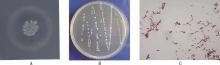
Fig.1
Hydrolysis characteristics of casein (A), morphological and structural characteristics (B), and Gram staining results (C, 1 000×) of the isolated strain"
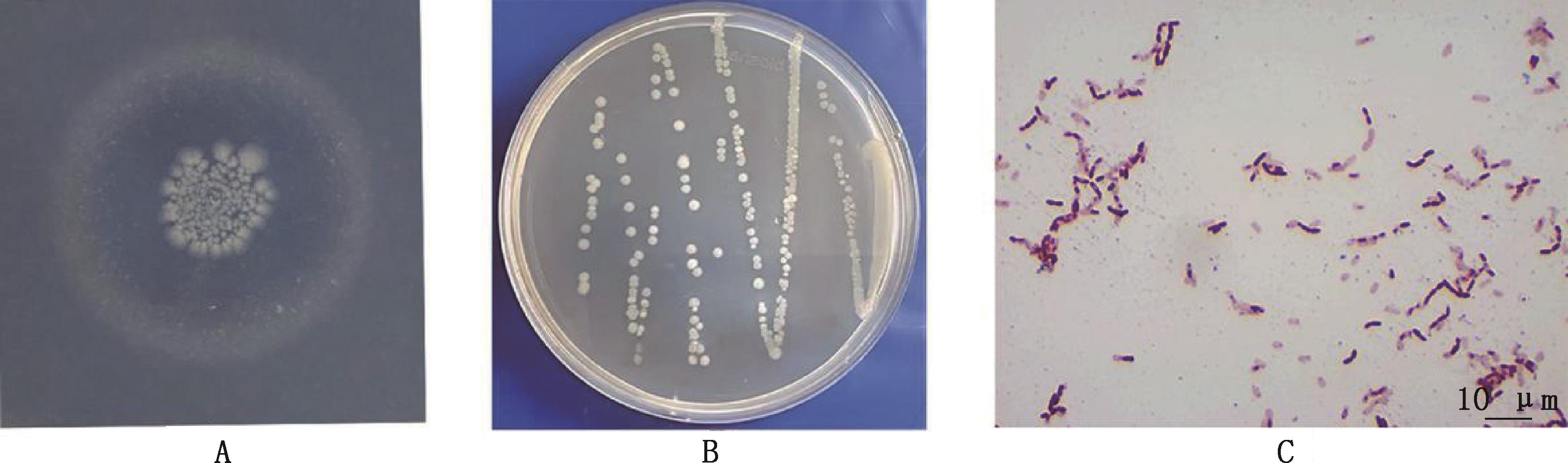
Table 2
Physiological and biochemical characteristics of strain 60"
| 项目 Items | 结果 Results | 项目 Items | 结果 Results |
|---|---|---|---|
| pH | 7.0~10.0 | 氧化酶 Oxidase | + |
| 温度 Temperature/℃ | 50~75 | 过氧化氢酶 Catalase | + |
| NaCl浓度 NaCl concentration/% | 0.5~4.0 | 明胶水解 Gelatin hydrolysis | + |
| 革兰染色 Gram stain | + | MR-VP试验 MR-VP test | - |
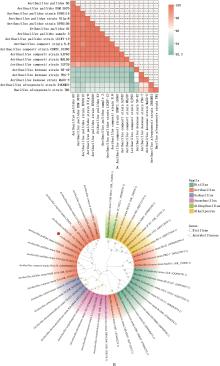
Fig.2
16S rRNA sequence similarity (A) and phylogenetic tree (B) of the isolated strain"

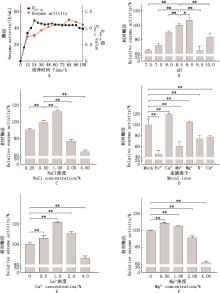
Fig.3
Single factor optimization of culture conditions for Aeribacillus pallidus 60*, Significant difference (P<0.05);**, Extremely significant difference (P<0.01)"

Table 3
Experimental design for response surface methodology optimization of culture conditions for Aeribacillus pallidus 60"
编号 No. | 时间 Time/h | pH | NaCl浓度 NaCl concentration/% | Ca2+浓度 Ca2+ concentration/% | 酶活 Enzyme activity/(U/mL) |
|---|---|---|---|---|---|
| 1 | 84 | 9.5 | 1 | 2 | 61.29 |
| 2 | 72 | 9.0 | 2 | 1 | 59.48 |
| 3 | 96 | 9.0 | 2 | 1 | 58.11 |
| 4 | 72 | 9.0 | 0.5 | 1 | 64.95 |
| 5 | 96 | 8.5 | 1 | 1 | 70.93 |
| 6 | 84 | 9.0 | 1 | 1 | 76.32 |
| 7 | 84 | 9.5 | 2 | 1 | 56.23 |
| 8 | 72 | 9.0 | 1 | 2 | 64.47 |
| 9 | 96 | 9.5 | 1 | 1 | 64.50 |
| 10 | 84 | 9.0 | 1 | 1 | 75.30 |
| 11 | 84 | 8.5 | 1 | 0.5 | 66.22 |
| 12 | 72 | 9.0 | 1 | 0.5 | 65.01 |
| 13 | 84 | 8.5 | 1 | 2 | 67.08 |
| 14 | 72 | 8.5 | 1 | 1 | 65.13 |
| 15 | 84 | 9.0 | 1 | 1 | 76.10 |
| 16 | 84 | 8.5 | 0.5 | 1 | 66.40 |
| 17 | 84 | 8.5 | 2 | 1 | 58.89 |
| 18 | 84 | 9.0 | 1 | 1 | 75.65 |
| 19 | 72 | 9.5 | 1 | 1 | 63.10 |
| 20 | 84 | 9.0 | 2 | 2 | 56.23 |
| 21 | 84 | 9.0 | 0.5 | 2 | 70.34 |
| 22 | 84 | 9.0 | 1 | 1 | 76.29 |
| 23 | 96 | 9.0 | 0.5 | 1 | 69.42 |
| 24 | 84 | 9.0 | 2 | 0.5 | 59.69 |
| 25 | 96 | 9.0 | 1 | 2 | 65.42 |
| 26 | 84 | 9.0 | 0.5 | 0.5 | 65.37 |
| 27 | 96 | 9.0 | 1 | 0.5 | 66.76 |
| 28 | 84 | 9.5 | 1 | 0.5 | 64.16 |
| 29 | 84 | 9.5 | 0.5 | 1 | 64.05 |
Table 4
Analysis of variance for the regression model of culture conditions for Aeribacillus pallidus 60"
来源 Source | 平方和 Sum of squares | 自由度 df | 均方 Mean square | F 值 F-value | P 值 P-value |
|---|---|---|---|---|---|
| 模型 Model | 958.85 | 14 | 68.49 | 195.27 | <0.001 |
| A | 5.07 | 1 | 5.07 | 14.46 | 0.003 |
| B | 37.36 | 1 | 37.36 | 106.50 | <0.001 |
| C | 121.85 | 1 | 121.85 | 347.41 | <0.001 |
| D | 2.46 | 1 | 2.46 | 7.01 | 0.023 |
| AB | 4.83 | 1 | 4.83 | 13.76 | 0.003 |
| AC | 9.63 | 1 | 9.63 | 27.47 | <0.001 |
| AD | 0.0883 | 1 | 0.0883 | 0.25 | 0.626 |
| BC | 0.3806 | 1 | 0.3806 | 1.09 | 0.320 |
| BD | 3.25 | 1 | 3.25 | 9.27 | 0.011 |
| CD | 3.43 | 1 | 3.43 | 9.77 | 0.010 |
| A² | 107.52 | 1 | 107.52 | 306.55 | <0.001 |
| B² | 174.09 | 1 | 174.09 | 496.35 | <0.001 |
| C² | 218.2 | 1 | 218.20 | 622.12 | <0.001 |
| D² | 151.29 | 1 | 151.29 | 431.35 | <0.001 |
| 残差 Residual | 3.86 | 11 | 0.3507 | ||
| 失拟值 Lack of fit | 3.07 | 7 | 0.4386 | 2.23 | 0.229 |
| 纯误差 Pure error | 0.7876 | 4 | 0.1969 | ||
| 总和Cor total | 962.71 | 25 |
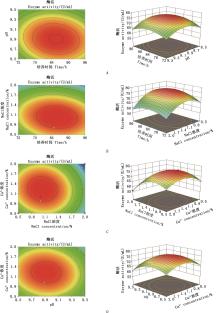
Fig.4
Contour and response surface plots of the interaction between culture conditions and protease activity in Aeribacillus pallidus 60A, Interaction between cultivation time and pH; B, Interaction between cultivation time and NaCl concentration; C, Interaction between NaCl concentration and Ca2+ concentration; D, Interaction between pH and Ca2+ concentration"

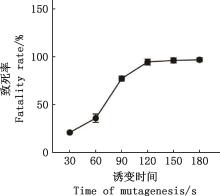
Fig.5
Effect of ultraviolet mutagenesis time on the fatality rate of Aeribacillus pallidus 60"
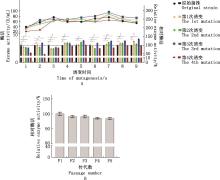
Fig.6
Effect of ultraviolet mutagenesis time (A) and passage number (B) on the protease activity of Aeribacillus pallidus 60"
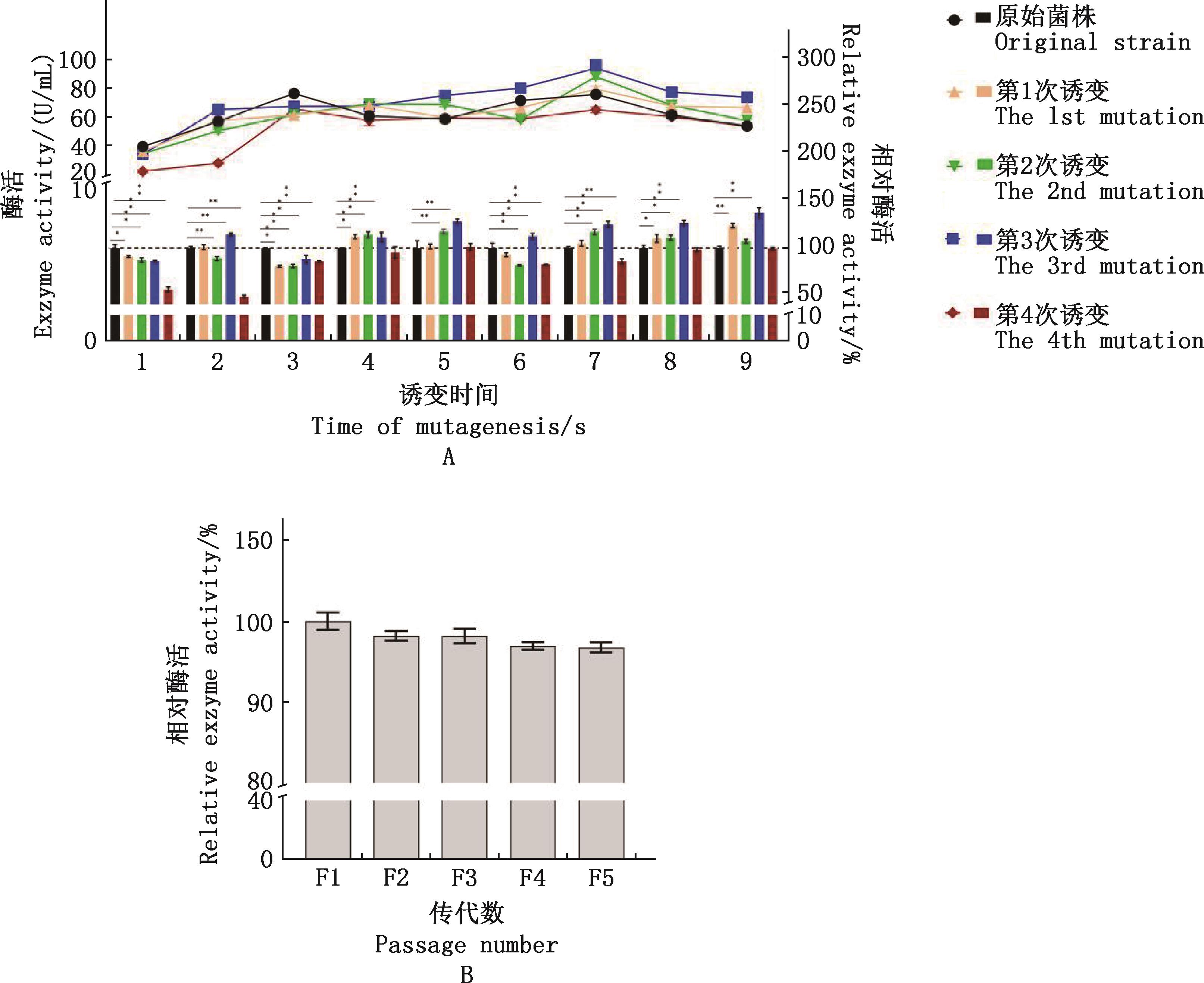
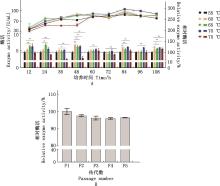
Fig.7
Effect of thermal acclimation time (A) and passage number (B) on the protease activity of Aeribacillus pallidus 60"

| [1] | 程灵豪, 焦永亮, 王国红, 等. 高温高压化制法处置病死动物尸体的实践应用[J]. 浙江畜牧兽医, 2020, 45(5): 10-11. |
| CHENG L H, JIAO Y L, WANG W G, et al. Practical application of high-temperature and high-pressure treatment method for the disposal of dead animal carcasses[J]. Zhejiang Animal Husbandry and Veterinary Medicine, 2020, 45(5): 10-11. (in Chinese) | |
| [2] | 李艳平, 肖安东, 欧阳龙, 等. 病死动物无害化处理产物肉骨渣营养成分含量分析[J]. 山东畜牧兽医, 2020, 41(2): 9-11. |
| LI Y P, XIAO A D, OUYANG L, et al. Nutritional composition analysis of meat and bone meal derived from the rendering of diseased animals[J]. Shandong Journal of Animal Science and Veterinary Medicine, 2020,41(2):9-11. (in Chinese) | |
| [3] | 来玉红. 基于组学技术分析芽孢杆菌对蛋白生物质废弃物的高效降解转化机制[D]. 济南: 山东大学, 2023. |
| LAI Y H. Efficient degradation and transformation mechanisms for protein biomass waste by Bacillus based on multi-omics method[D]. Jinan: Shandong University, 2023. (in Chinese) | |
| [4] | 袁京, 刘燕, 唐若兰, 等. 畜禽粪便堆肥过程中碳氮损失及温室气体排放综述[J]. 农业环境科学学报, 2021, 40(11): 2428-2438. |
| YUAN J, LIU Y, TANG R L, et al. A review of carbon and nitrogen losses and greenhouse gas emissions during livestock manure composting[J]. Journal of Agro-Environment Science, 2021, 40(11): 2428-2438. (in Chinese) | |
| [5] | 薛映. 厨余垃圾堆肥过程含氮物质变化及微生物群落特征研究[D]. 武汉: 华中科技大学, 2021. |
| XUE Y. A dissertation submitted in partial fulfillment of the requirements for the degree of master of engineering[D]. Wuhan: Huazhong University of Science and Technology, 2021. (in Chinese) | |
| [6] | GUO T, ZHANG Q, AI C, et al. Nitrogen enrichment regulates straw decomposition and its associated microbial community in a double-rice cropping system[J]. Scientific Reports, 2018, 8(1): 1847. |
| [7] | GURUMALLESH P, ALAGU K, RAMAKRISHNAN B,et al. A systematic reconsideration on proteases[J]. International Journal of Biological Macromolecules, 2019, 128: 254-267. |
| [8] | 韩爽, 张健, 井月欣,等. 微生物源蛋白酶研究进展[J]. 食品工业科技, 2020, 41(13): 321-327. |
| HAN S, ZHANG J, JIN Y X, et al. Progress in research about the protease extracted from microorganisms[J]. Science and Technology of Food Industry, 2020, 41(13): 321-327. (in Chinese) | |
| [9] | 杨钦鸿, 杨佳, 段文洁, 等. 1株耐高温热嗜淀粉芽孢杆菌的分离鉴定和产蛋白酶条件优化[J]. 中国畜牧兽医, 2025, 52(6): 2839-2850. |
| YANG Q H, YANG J, DUAN W J, et al. Isolation and identification of a high-temperature to lerant Bacillus thermoamylovorans and optimization of its enzyme production conditions[J]. China Animal Husbandry & Veterinary Medicine, 2025, 52(6): 2839-2850. (in Chinese) | |
| [10] | 布坎南R E.中国科学院微生物研究所《伯杰细菌鉴定手册》翻译组译. 伯杰细菌鉴定手册[M]. 第8版. 北京:科学出版社, 1984. |
| BUCHANAN R E. Chinese Academy of Microbiology, Translation Group of the Bergey’s Manual of Systematic Bacteriology. Bergey’s Manual of Systematic Bacteriology[M]. 8th ed. Beijing: Science Press, 1984. (in Chinese) | |
| [11] | 廖静如, 梁琦欣, 成洁如, 等. 高产蛋白酶菌的分离、诱变及其对羽毛的降解效果[J]. 嘉应学院学报, 2023, 41(6): 47-51. |
| LIAO J R, LIANG Q X, CHENG J R, et al. Mutation breeding of high-yield protease strains and evaluation of its feather-degrading ability[J]. Journal of Jiaying University (Natural Science), 2023, 41(6): 47-51. (in Chinese) | |
| [12] | MINANA-GALBIS D, PINZON D L, LOREN J G, et al. Reclassification of Geobacillus pallidus (Scholzet al. 1988) Banatet al. 2004 as Aeribacillus pallidus gen. nov., comb. nov[J]. International Journal of Systematic and Evolutionary Microbiology, 2010, 60(7): 1600-1604. |
| [13] | KIN M, OH H S, PARK S C, et al. Towards a taxonomic coherence between average nucleotide identity and 16S rRNA gene sequence similarity for species demarcation of prokaryotes[J]. International Journal of Systematic and Evolutionary Microbiology, 2014, 64(2): 346-351. |
| [14] | FINORE I, GIOIELLO A, LEONE L, et al. Aeribacillus composti sp. nov., a thermophilic Bacillus isolated from olive mill pomace compost[J]. International Journal of Systematic and Evolutionary Microbiology, 2017, 67(11): 4830-4835. |
| [15] | LI Y, ZHANG D, BO D, et al. A taxonomic note on the order Caryophanales: Description of 12 novel families and emended description of 21 families[J]. International Journal of Systematic and Evolutionary Microbiology, 2024, 74(11): 006539. |
| [16] | SCHOLZ T, DEMHARTER W, HENSEL R, et al. Bacillus pallidus sp. nov., a new thermophilic species from sewage[J]. Systematic and Applied Microbiology, 1987, 9(1): 91-96. |
| [17] | FU J, CHEN S, TAN Y, et al. Inoculation of thermophilic bacteria from giant panda feces into cattle manure reduces gas emissions and decreases resistance gene prevalence in short-term composting[J]. Journal Environmental Management, 2025, 373: 123601. |
| [18] | PENG C, ZHANG B, WANG W. Genome sequence of Aeribacillus pallidus W-12, a thermophilic bacterium containing possible biodesulfurization and biodenitrification pathways[J]. Microbiology Resource Announcements, 2019, 8(16):e0157018. |
| [19] | MECHRI S, BEN-ELHOUL B M, OMRANE B M, et al. Characterization of a novel protease from Aeribacillus pallidus strain VP3 with potential biotechnological interest[J]. International Journal of Biological Macromolecules, 2017, 94(A): 221-232. |
| [20] | TIMILSINA P M, PANDEY G R, SHRESTHA A, et al. Purification and characterization of a noble thermostable algal starch liquefying alpha-amylase from Aeribacillus pallidus BTPS-2 isolated from geothermal spring of Nepal[J]. Biotechnology Reports, 2020, 28:e00551 |
| [21] | YILDIRIM V, BALTACI M O, OZGENCLI I, et al. Purification and biochemical characterization of a novel thermostable serine alkaline protease from Aeribacillus pallidus C10: A potential additive for detergents[J]. Journal of Enzyme Inhibition and Medicinal Chemistry, 2017, 32(1): 468-477. |
| [22] | 罗粤雯, 杨勇, 唐兵. 提高微生物角蛋白酶产量和催化性能的研究进展[J]. 生物资源, 2024, 46(3): 211-219. |
| LUO Y W, YANG Y, TANG B. Research progress on improving the production and catalytic performance of microbial keratinase[J]. Biotic Resources, 2024, 46(3): 211-219. (in Chinese) | |
| [23] | 张延杰,王静雪,牟海津.嗜盐性蛋白酶产生菌Virgibacillus sp. P-4的筛选鉴定及其特性分析[J].食品科学,2017,38(22):102-108. |
| ZHANG Y J, WANG J X, MOU H J. Isolation, identification and properties of protease-producing halophilic bacterium virgibacillus sp. P-4 from traditional shrimp sauce[J]. Food Science, 2017, 38(22): 102-108.(in Chinese) | |
| [24] | 贾仲昕,赵佳男,季芳,等.高产中性蛋白酶芽孢杆菌的筛选鉴定及酶学性质研究[J].黑龙江畜牧兽医,2023,1:106-112. |
| JIA Z X, ZHAO J N, JI F, et al. Study on screening, identification and enzymatic properties of high neutral protease-producing Bacillus [J].Heilongjiang Animal Science and Veterinary Medicine, 2023, 1: 106-112.(in Chinese) | |
| [25] | 代雯,黄业传,韩佳钰,等.不同pH值对木瓜蛋白酶活性的影响及分子机制[J].肉类研究,2024,38(10):9-14. |
| DAI W, HAUNG Y C, HAN J Y, et al. Effect of different pH on papain activity and its molecular mechanism[J]. Meat Research, 2024, 38(10): 9-14.(in Chinese) | |
| [26] | 任涛. 蛋白酶的开发及其在皮革脱毛中的初步应用[D]. 无锡: 江南大学, 2024. |
| REN T. Development of proteases and their preliminary application in leather dehairing process[D]. Wuxi: Jiangnan University, 2024. (in Chinese) | |
| [27] | XU J, ZHUANG Y, WU B, et al. Calcium-ion-induced stabilization of the protease from Bacillus cereus WQ9-2 in aqueous hydrophilic solvents: Effect of calcium ion binding on the hydration shell and intramolecular interactions[J]. Journal of Biological Inorganic Chemistry, 2013, 18(2): 211-221. |
| [28] | 余茜, 张国丽, 敖晓琳. 金属离子对微生物蛋白酶活性的影响及机理[J]. 中国食品学报, 2019, 19(4): 287-294. |
| YU X, ZHANG G L, AO X L. Effect and mechanism of metal ions on the activity of microbial protease[J]. Journal of Chinese Institute of Food Science and Technology, 2019, 19(4): 287-294. (in Chinese) | |
| [29] | DUTTA J R, BANERJE R. Isolation and characterization of a newly isolated pseudomonas mutant for protease production[J]. Research Gate, 2006, 49: 37-47. |
| [30] | BASU A K. DNA damage, mutagenesis and cancer[J]. International Journal of Molecular Sciences, 2018, 19(4): 970. |
| [31] | 王晓云. 高产蛋白酶枯草芽孢杆菌的筛选与诱变选育研究[D]. 泰安: 山东农业大学, 2015. |
| WANG X Y. Screening and mutation breeding of high-yield protease Bacillus subtilis [D]. Tai’an: Shandong Agricultural University, 2015 (in Chinese) | |
| [32] | PITTERA J, JOUHET J, BRETON S, et al. Thermoacclimation and genome adaptation of the membrane lipidome in marine Synechococcus [J]. Environmental Microbiology, 2018, 20(2): 612-631. |
| [33] | WANG Z, WU S, FAN C, et al. Isolation and thermo-acclimation of thermophilic bacteria in hyperthermophilic fermentation system[J]. Bioprocess and Biosystems Engineering, 2022, 45(1):75-85. |
| [1] | JIAO Songjun, LIU Xuetao, LI Tiezhao, ZHAO Feng, WANG Yuming, HOU Jia, XIE Jingjing. Exploring the Influences of Feed Protein Resources on the Measurement of Protease Activity Using Azocasein Method [J]. China Animal Husbandry & Veterinary Medicine, 2025, 52(11): 5147-5156. |
| [2] | ZENG Chengrong, LIU Xin, BI Wenwen, MEI Shihui, HE Guangxia, ZHANG Junjie, WEN Ming, ZHOU Bijun, CHEN Jiangfeng, JIANG Haibo. Effect of Sodium Butyrate on the Growth and Virulence of Aeromonas hydrophila [J]. China Animal Husbandry & Veterinary Medicine, 2023, 50(7): 2987-2997. |
| [3] | WU Ya-kun, LIN Tao, ZHENG Ji-wen, WANG Jian-ying, DU Zhi-qiang. Study on Antimicrobial Related Functions of Recombinant PEN-2 in Litopenaeus vannamei [J]. China Animal Husbandry & Veterinary Medicine, 2013, 40(11): 224-226. |
| Viewed | ||||||
|
Full text |
|
|||||
|
Abstract |
|
|||||
