
China Animal Husbandry & Veterinary Medicine ›› 2026, Vol. 53 ›› Issue (1): 256-265.doi: 10.16431/j.cnki.1671-7236.2026.01.023
• Nutrition and Feed • Previous Articles Next Articles
ZHANG Ting( ), YUAN Weitao, ZHANG Tietao()
Received:2025-03-31
Online:2026-01-05
Published:2025-12-26
Contact:
ZHANG Tietao
E-mail:zhangting542118@163.com;zhangtietao@caas.cn
CLC Number:
ZHANG Ting, YUAN Weitao, ZHANG Tietao. Screening of a Zearalenone-degrading Bacillus Strainand Its Safety Evaluation[J]. China Animal Husbandry & Veterinary Medicine, 2026, 53(1): 256-265.
Table 1
Analysis results of 16S rRNA gene sequence of 8 strains of isolates"
菌株 Strains | 参考菌株 Reference strains | 参考菌株登录号 Reference strain accession No. | 相似性 Similarity/% |
|---|---|---|---|
| RDY03 | 贝莱斯芽孢杆菌Bacillus velezensis | PV014871.1 | 95.63 |
| RDY04 | 细长赖氨酸芽孢杆Lysinbacillus macroides | MF170826.1 | 99.71 |
| RDY08 | 波茨坦短芽孢杆菌Brevibacillus borstelensis | MT292327.1 | 100.00 |
| RDY11 | 枯草芽孢杆菌Bacillus subtils | MG576180.1 | 99.50 |
| RDY15 | 纺锤形赖氨酸芽孢Lysinibacillus fusiformis | MZ895414.1 | 99.80 |
| RDY18 | 解淀粉芽孢杆菌Bacillus amyloliquefaciens | QR220472.1 | 95.73 |
| RDY21 | 地衣芽孢杆菌Bacillus licheniformis | HE804782.1 | 99.61 |
| RDY29 | 海内氏芽孢杆菌Bacillus haynesii | PV915283.1 | 98.47 |
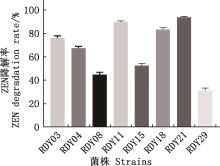
Fig.1
ZEN degradation rate of different strains"
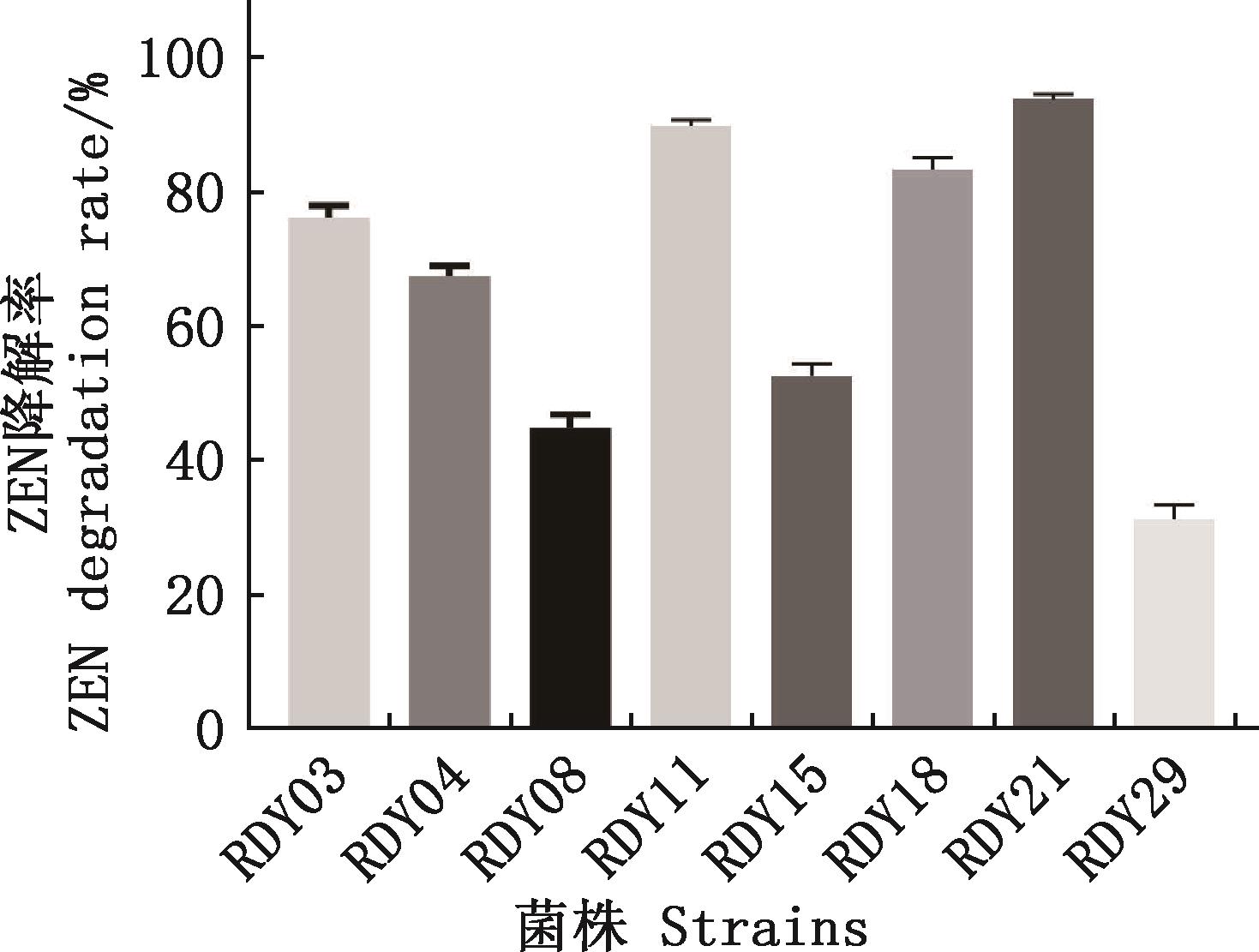
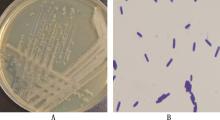
Fig.2
Colony morphology (A) and Gram staining microscopy (B) of RDY21 strain (1 000×)"
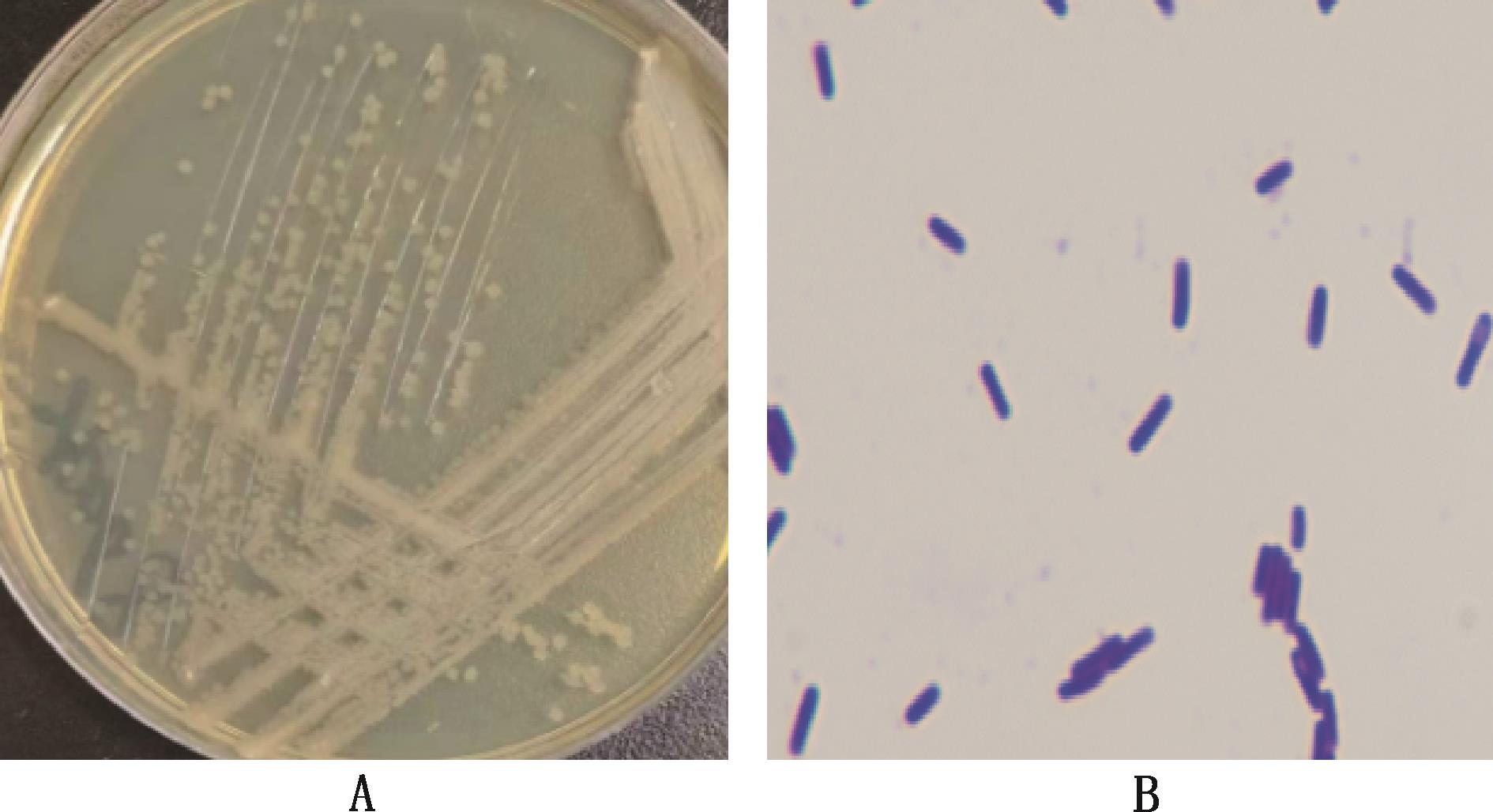
Table 2
Physiological and biochemical identification results of strain RDY21"
| 项目Items | 结果Results | 项目Items | 结果Results |
|---|---|---|---|
| 淀粉水解试验 Starch hydrolysis test | + | α-D-葡糖Alpha-D-glucose | + |
| 硝酸盐还原试验 Nitrate reduction test | - | D-半乳糖D-galactose | W |
| 柠檬酸利用试验Citric acid utilization test | + | D-甘露糖D-mannose | + |
| 丙酸盐利用试验Propionate utilization test | + | D-果糖D-fructose | + |
| V-P试验 V-P test | + | α-D-乳糖Alpha-D-lactose | - |
| 明胶液化试验Gelatin liquefaction test | - | D-岩藻糖D-fucose | - |
| 8%氯化钠 8% sodium chloride | + | L-岩藻糖L-fucose | - |
| 蔗糖Saccharose | + | L-鼠李糖L-rhamnose | W |
| D-麦芽糖D-maltose | + | D-甘露醇D-mannitol | + |
| D-麦海藻糖D-wheat trehalose | + | D-山梨醇D-sorbitol | + |
| D-纤维二塘D-fiber two ponds | + | 甘油Glycerinum | + |
| 水苏糖Stachyose | - | D-阿拉伯醇D-arabinol | - |
| 棉子糖Raffinose | W | 肌醇Inose | W |
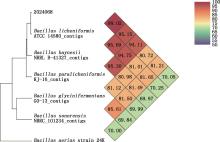
Fig.3
ANI value between strain RDY21 and its neighboring strainsThe data in the figure represented the ANI value, the larger the ANI value, the closer the phylogenetic relationship"
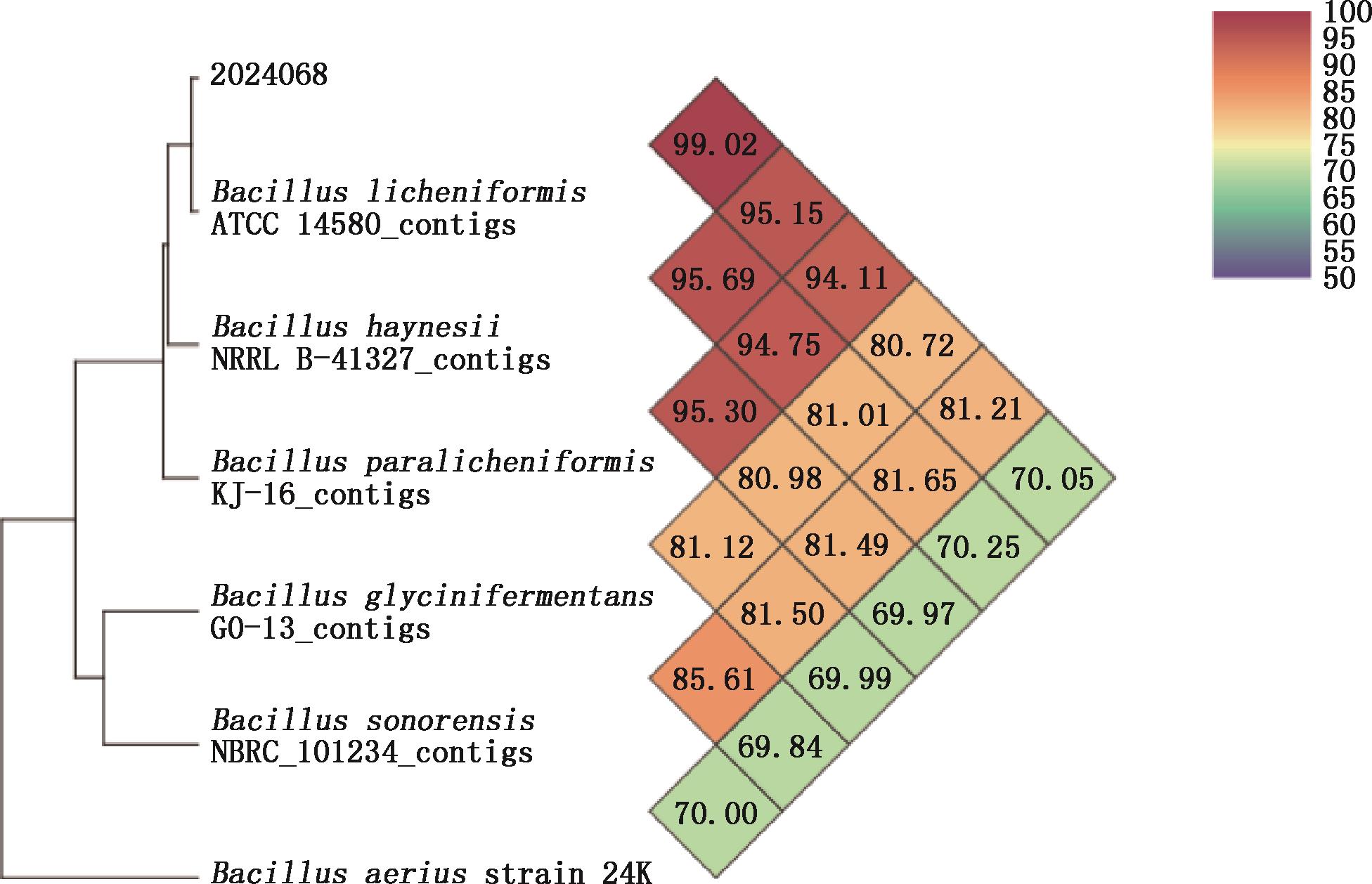
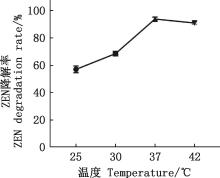
Fig.4
Effect of temperature on the efficiency of ZEN degradation by the strain"
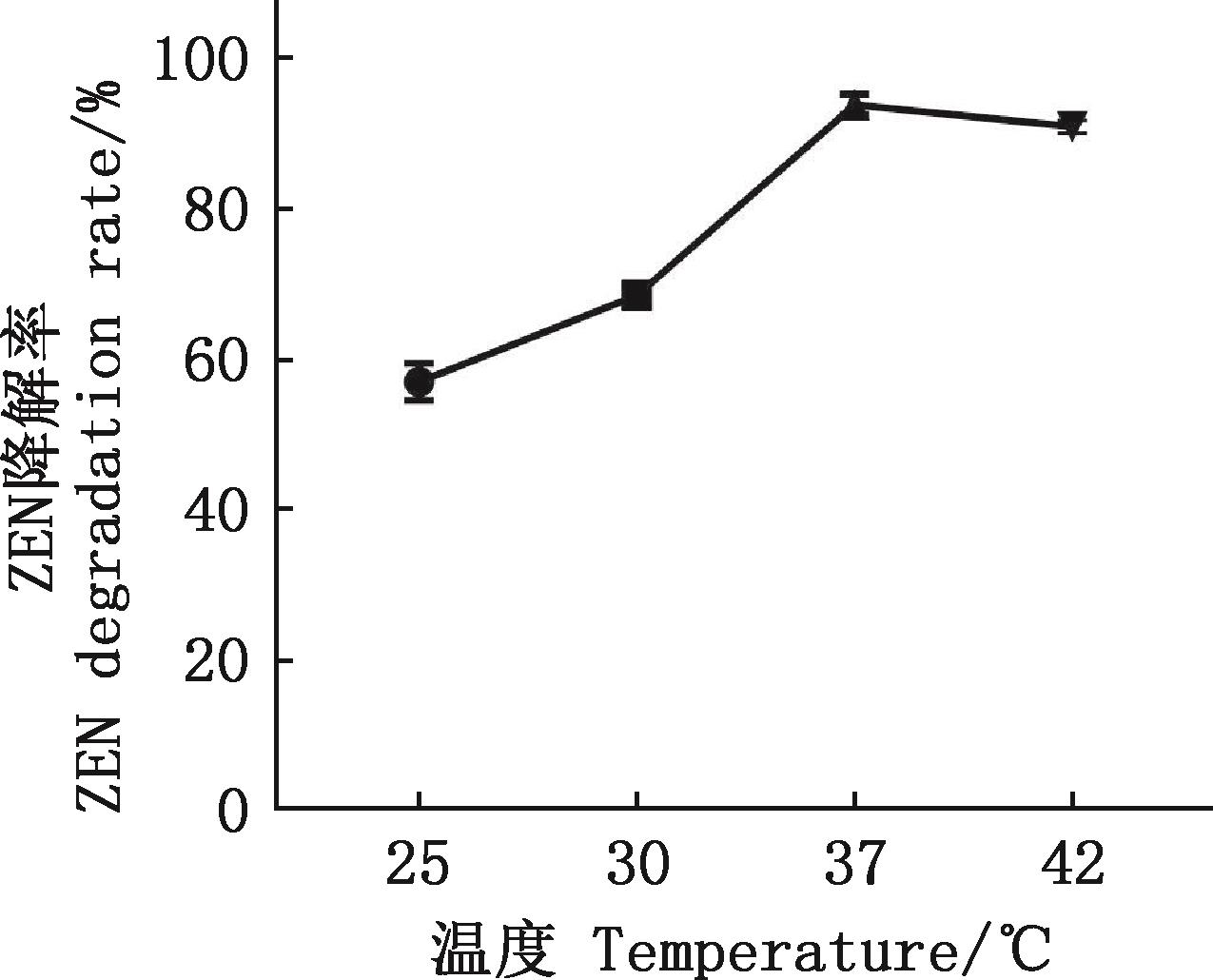
Fig.5
Effect of time on the efficiency of ZEN degradation by the strain"
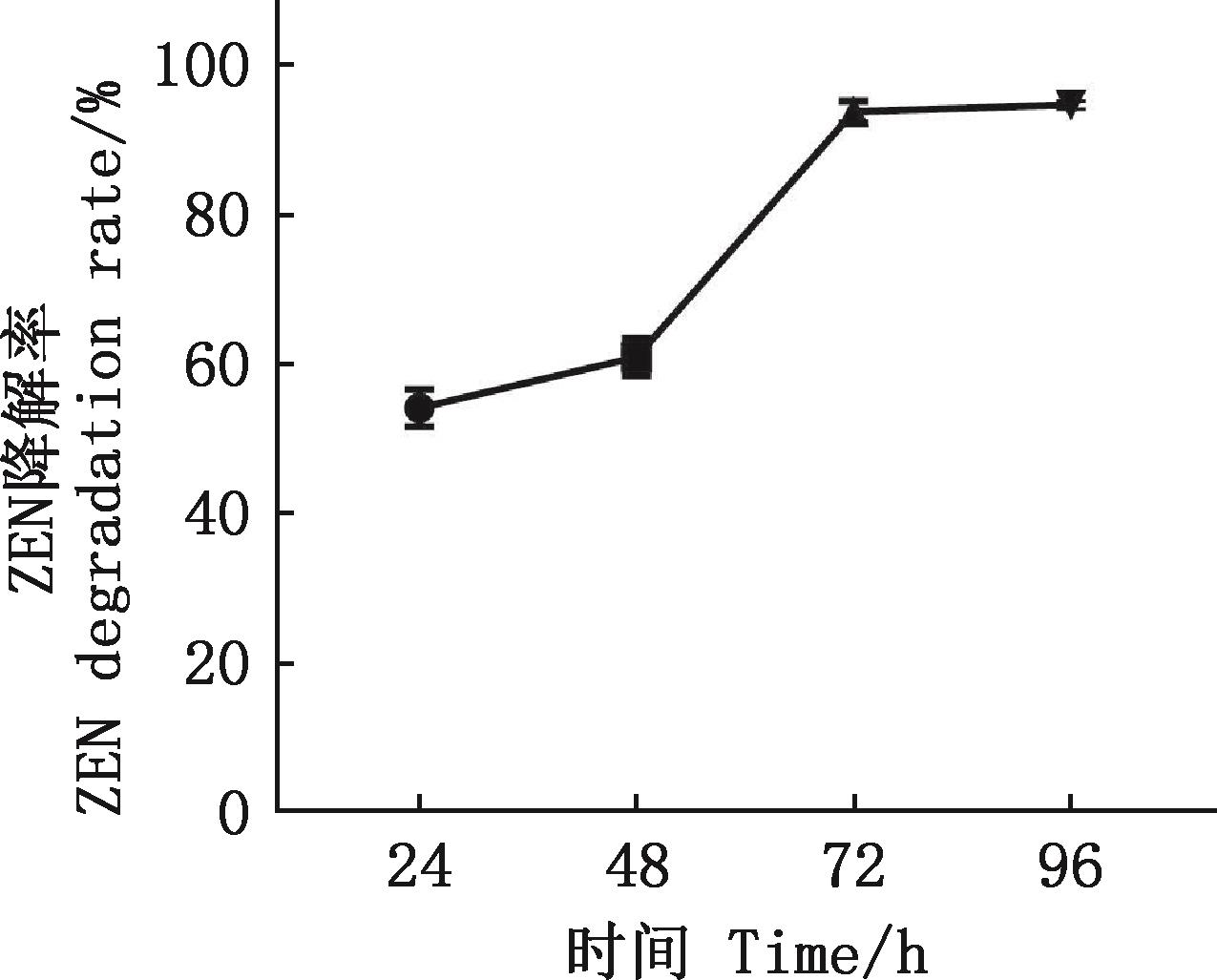
Fig.6
Effect of pH on the efficiency of ZEN degradation by the strain"
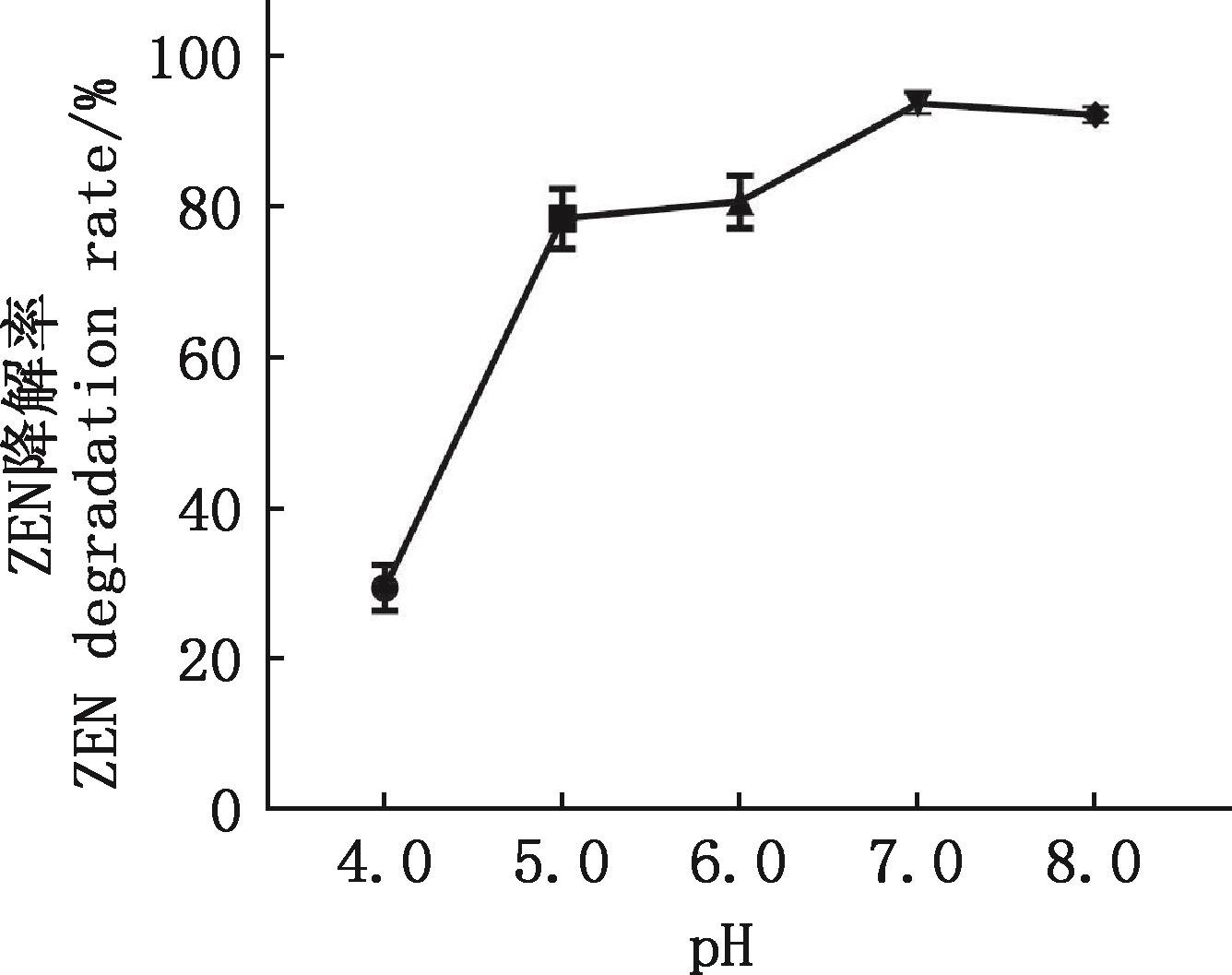
Fig.7
Effect of toxin concentration on the efficiency of ZEN degradation by the strain"
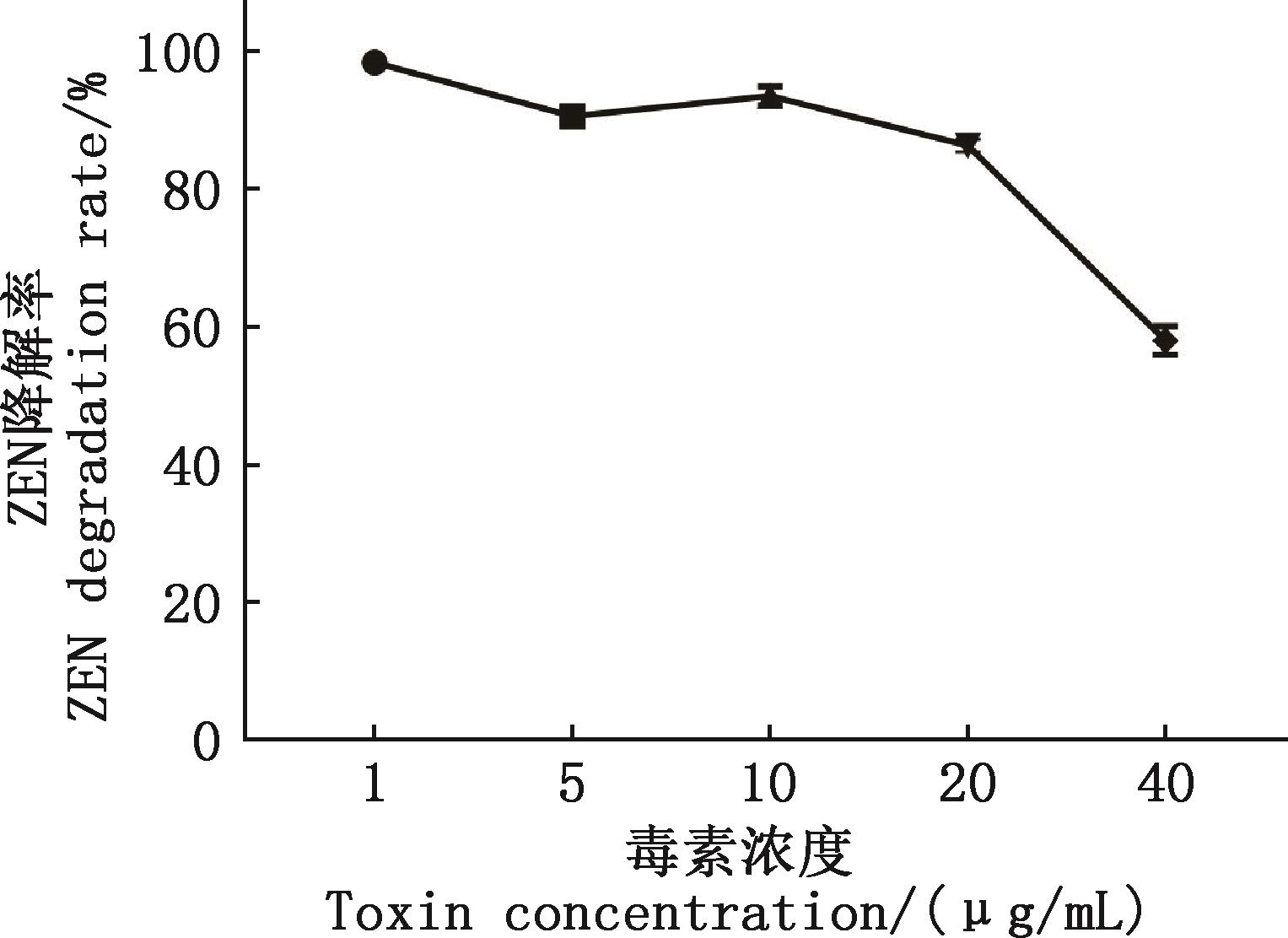
Table 3
Results of growth performance of mice in each group"
项目 Items | 对照组 Control group | 试验组 Experimental group | P值 P-value |
|---|---|---|---|
| 初始体重 Initial body weight | 26.68±1.59 | 26.99±1.58 | 0.63 |
| 第7天体重 Body weight on day 7 | 37.12±1.76 | 37.19±2.30 | 0.93 |
| 第14天体重 Body weight on day 14 | 39.64±1.78 | 39.97±2.25 | 0.70 |
| 第21天体重 Body weight on day 21 | 41.50±1.91 | 40.89±1.93 | 0.76 |
| 第28天体重 Body weight on day 28 | 42.85±1.81 | 42.58±2.16 | 0.84 |
| 平均日增重 Average daily weight gain | 0.58±0.05 | 0.55±0.06 | 0.30 |
| 平均日采食量 Average daily feed intake | 6.56±1.12 | 6.84±1.82 | 0.82 |
Table 4
Results of organ coefficient of mice in each group"
项目 Items | 对照组 Control group | 试验组 Experimental group | P值 P-value |
|---|---|---|---|
| 心脏指数 Heart index | 0.55±0.06 | 0.53±0.03 | 0.42 |
| 肝脏指数 Liver index | 4.68±0.46 | 4.28±0.47 | 0.37 |
| 脾脏指数 Spleen index | 0.32±0.19 | 0.26±0.06 | 0.36 |
| 肾脏指数 Kidney index | 1.48±0.18 | 1.44±0.21 | 0.69 |
| 胸腺指数 Thymus index | 0.16±0.05 | 0.17±0.04 | 0.65 |
Table 5
Results of blood physiological indices of mice in each group"
项目 Items | 对照组 Control group | 试验组 Experimental group | P值 P-value |
|---|---|---|---|
| 白细胞数量 White blood cell content/(×109/L) | 6.29±0.78 | 6.53±1.00 | 0.65 |
| 红细胞数量 Red blood cell content/(×1012/L) | 8.48±1.11 | 8.69±1.32 | 0.77 |
| 淋巴细胞数量 Lymphocyte content/(×109/L) | 4.33±0.75 | 4.60±0.72 | 0.53 |
| 单核细胞数量 Monocyte content/(×109/L) | 1.06±0.18 | 1.44±0.21 | 0.69 |
| 中性粒细胞数量 Neutrophil content/(×109/L) | 0.83±0.12 | 0.89±0.18 | 0.58 |
| 淋巴细胞百分比 Lymphocyte percentage/% | 68.44±3.84 | 70.48±1.46 | 0.25 |
| 单核细胞百分比 Monocyte percentage/% | 17.19±2.64 | 15.01±1.22 | 0.09 |
| 中性粒细胞百分比 Neutrophil percentage/% | 13.45±2.18 | 13.67±2.47 | 0.86 |
| 血红蛋白浓度 Hemoglobin concentration/(g/L) | 149.88±11.91 | 145.55±18.16 | 0.64 |
Table 6
Results of serum biochemical indices of mice in each group"
项目 Items | 对照组 Control group | 试验组 Experimental group | P值 P-value |
|---|---|---|---|
| 胆固醇 CHO/(mmol/L) | 3.17±0.20 | 3.06±0.15 | 0.32 |
| 甘油三酯 TG/(mmol/L) | 1.06±0.17 | 1.04±0.14 | 0.87 |
| 葡萄糖 GLU/(mmol/L) | 48.74±4.23 | 47.94±5.85 | 0.79 |
| 总蛋白 TP/(g/L) | 36.45±5.94 | 38.67±3.03 | 0.43 |
| 白蛋白 ALB/(g/L) | 23.05±2.88 | 24.60±2.48 | 0.34 |
| 球蛋白 GLB/(g/L) | 68.44±3.84 | 70.48±1.46 | 0.25 |
| 天门冬氨酸氨基转移酶AST/(U/L) | 89.18±16.29 | 88.99±14.12 | 0.98 |
| 丙氨酸氨基转移酶ALT/(U/L) | 35.75±5.05 | 37.93±4.46 | 0.44 |
| 尿素 UREA/(mmol/L) | 45.56±8.56 | 51.02±8.10 | 0.28 |
| 肌酐 CR/(μmol/L) | 8.99±1.61 | 9.47±0.92 | 0.54 |
| [1] | TAHEUR F BEN, KOUIDHI B, QURASHI Y M A AL,et al.Review:Biotechnology of mycotoxins detoxification using microorganisms and enzymes[J]. Toxicon,2019,160:12-22. |
| [2] | KONGKAPAN J, POAPOLATHEP S, ISARIYODOM S,et al.Simultaneous detection of multiple mycotoxins in broiler feeds using a liquid chromatography tandem-mass spectrometry[J]. Journal of Veterinary Medical Science,2016,78(2):259-264. |
| [3] | BAI X J, SUN C P, XU J, et al.Detoxification of zearalenone from corn oil by adsorption of functionalized GO systems[J]. Applied Surface Science,2018,430:198-207. |
| [4] | BISCOTO G L, SALVATO L A, ALVARENGA E R,et al.Mycotoxins in cattle feed and feed ingredients in Brazil: A five-year survey[J]. Toxin,2022,14(8): 552. |
| [5] | LIJALEM Y G, LIJALEM M A, YU H, et al.Occurrence of zearalenone and its major metabolites in cereal flour from Korea[J]. Food Additives & Contaminants:Part A, 2023,40:675-687. |
| [6] | 雷元培,周建川,郑文革,等.2023年中国饲料和原料中霉菌毒素污染调查报告[J]. 饲料工业,2025,46(22):160-164. |
| LEI Y P, ZHOU J C, ZHENG W G,et al.A survey report on mycotoxin contamination of Chinese raw materials and feed in 2023[J]. Feed Industry, 2025, 46(22): 160-164.(in Chinese) | |
| [7] | 薛琳琳,张朋振,杨小进,等.玉米赤霉烯酮降解菌的筛选鉴定及降解效果评价[J]. 西北农林科技大学学报(自然科学版),2025,53(1):13-22. |
| XUE L L, ZHANG P Z, YANG X J,et al.Screening, identification and degradation efficacy evaluation of zearalenone degrading bacteria[J]. Journal of Northwest A&F University (Natural Science Edition),2025,53(1):13-22. (in Chinese) | |
| [8] | 任红洋.利用罗伊氏乳杆菌发酵DDGS消减玉米赤霉烯酮的研究[D]. 大连:大连理工大学,2024. |
| REN H Y.Study on the reduction of ZEN in DDGS using fermentation by Lactobacillus reuteri [D]. Dalian:Dalian University of Technology,2024. (in Chinese) | |
| [9] | ZHANG H Y, DONG M J, YANG Q Y,et al.Biodegradation of zearalenone by Saccharomyces cerevisiae: Possible involvement of ZEN responsive proteins of the yeast[J]. Journal of Proteomics,2016, 143:416-423. |
| [10] | RISA A, KRIFATON C, KUKOLYA J,et al.Aflatoxin B1 and zearalenone-detoxifying profile profile of Rhodococcus type strains[J]. Current Microbiology,2018,75(7):907-917. |
| [11] | 任晓旭,张心悦,彭文静,等.皮氏不动杆菌对玉米赤霉烯酮降解特性及机制研究[J]. 食品科学技术学报,2025,43(3):78-88. |
| REN X X, ZHANG X Y, PENG W J,et al.Characteristics and mechanism of zearalenone degradation by Acinetobacter pittii [J]. Journal of Food Science and Technology,2025,43(3):78-88.(in Chinese) | |
| [12] | 金博文,徐长春,李根,等.玉米赤霉烯酮降解菌的分离、鉴定及其适宜降解条件的研究[J]. 中国畜牧兽医,2020,47(9):2808-2815. |
| JIN B W, XU C C, LI G,et al.Isolation,identification and its suitable degradation conditions of a zearalenone-degrading bacteria[J]. China Animal Husbandry & Veterinary Medicine,2020,47(9):2808-2815. (in Chinese) | |
| [13] | JI J, YU J, YANG Y,et al.Exploration on the enhancement of detoxification ability of zearalenone and its degradation products of Aspergillus niger FS10 under directional stress of zearalenone[J]. Toxins,2021,13(10):720. |
| [14] | OSORIO J S, WALLACE R L, TOMLINSON D J,et al.Effects of source of trace minerals and plane of nutrition on growth and health of transported neonatal dairy calves[J]. Journal of Dairy Science, 2012,95(10):5831-5844. |
| [15] | NOVAK K N, DAVIS E, WEHNES C A,et al.Effect of supplementation with an electrolyte containing a Bacillus-based direct-fed microbial on immune development in dairy calves[J]. Research in Veterinary Science,2012,92(3):427-434. |
| [16] | REUBEN R C, ROY P C, SARKAR S L,et al.Isolation, characterization, and assessment of lactic acid bacteria toward their selection as poultry probiotics[J]. BMC Microbiology,2019,19(1):253. |
| [17] | 东秀珠,蔡妙英.常见细菌系统鉴定手册[M]. 北京:科学出版社,2001. |
| DONG X Z, CAI M Y.Handbook of Systematic Identification of Common Bacteria[M]. Beijing:Science Press,2001.(in Chinese) | |
| [18] | BUCHANAN R E, GIBBONS N E.Bergey’s Manual of Determinative Bacteriology[M]. 9th ed. Baltimore: Williams and Wilkins Company,1994. |
| [19] | 段 锦,丁 轲,余祖华,等.玉米赤霉烯酮降解菌株的筛选及降解特性研究[J]. 动物营养学报,2021,33(9):5266-5276. |
| DUAN J, DING K, YU Z H,et al.Screening and degradation characteristics of strains degrading zearalenone[J]. Chinese Journal of Animal Nutrition, 2019, 33(9): 5266-5276.(in Chinese) | |
| [20] | 王楠.贝莱斯芽孢杆菌A2对玉米赤霉烯酮降解机制及其安全性评估[D]. 沈阳:沈阳农业大学,2019. |
| WANG N.Degradation mechanism and safety evaluation of zearalenone detoxification by Bacillus velezensis A2[D]. Shenyang:Shenyang Agricultural University, 2019.(in Chinese) | |
| [21] | YOON S H, HA S M, LIM J M,et al.A large-scale evaluation of algorithms to calculate average nucleotide identity[J]. Antonie van Leeuwenhoek,2017,110:1281-1286. |
| [22] | LE I, KIM Y O, PARK S C,et al.OrthoANI:An improved algorithm and software for calculating average nucleotide identity[J]. International Journal of Syatematic and Evolutionary Microbiology, 2015,66:1100-1103. |
| [23] | YI P J, PAI C K, LIU J R.Isolation and characterization of a Bacillus licheniformis strain capable of degrading zearalenone[J]. World Journal of Microbiology & Biotechnilogy,2011,27:1035-1043. |
| [24] | 田玉虎,李凤华.霉菌毒素降解菌株和吸附剂的体外效果评估和筛选[J]. 饲料研究,2020,43(5):61-64. |
| TIAN Y H, LI F H. In vitro evaluation and screening of strains and adsorbents for degrading of mycotoxin[J]. Feed Research,2020,43(5):61-64.(in Chinese) | |
| [25] | 景思源.玉米赤霉烯酮降解菌株的筛选及其降解效果研究[D]. 长春:吉林大学,2021. |
| JING S Y.Screening of zearalenone degrading bacteria and its degradation effect[D]. Changchun:Jilin University,2021.(in Chinese) | |
| [26] | 于秀菊,胡燕姣,孙铮,等.羊驼源地衣芽孢杆菌SXAU08的益生功能评价及其对小鼠肠道菌群的影响[J]. 动物营养学报,2024,36(10):6780-6790. |
| YU X J, HU Y J, SUN Z,et al.Probiotic function evaluation of Bacillus licheniformis SXAU08 from alpacas and its effects on gut microbiota of mice[J]. Chinese Journal of Animal Nutrition,2024,36(10):6780-6790.(in Chinese) | |
| [27] | 候 萌.羊源地衣芽孢杆菌B63的安全性和益生特性及对小鼠肠道免疫屏障影响的研究[D]. 乌鲁木齐:新疆农业大学,2023. |
| HOU M. Study on the safety and probiotics of Bacillus licheniformis B63 from sheep and its effect on intestinal immune barrier in mice[D]. Urumqi:Xinjiang Agricultural University,2023.(in Chinese) | |
| [28] | 董文豪,宫晓炜,郑福英,等.猪源地衣芽孢杆菌的分离筛选及其特性[J]. 甘肃农业大学学报,2021,56(5):8-17. |
| DONG W H, GONG X W, ZHENG F Y,et al.Isolation,screening and biological characteristics of Bacillus licheniformis from pigs[J]. Journal of Gansu Agricultural University,2021,56(5):8-17.(in Chinese) |
| [1] | LI Jiahui, LI Haonan, YANG Fan, XU Wenjing, CHEN Xiaoguang, ZHANG Ziqiang, LIU Yumei, LYU Qiongxia. Research Progress on the Role of Polyphenols in Alleviating Zearalenone-induced Hepatotoxicity in Animals [J]. China Animal Husbandry & Veterinary Medicine, 2026, 53(2): 564-572. |
| [2] | LIN Yanzhi, DENG Dun, MA Xianyong, YU Miao, LU Yusheng, SONG Min, JIANG Qingyan. Advances in Production and in vitro Degradation of Skatole in Livestock and Poultry [J]. China Animal Husbandry & Veterinary Medicine, 2025, 52(6): 2650-2661. |
| [3] | WANG Rui, HEJintong, CHENG Yuchen, REN Wenyi, MA Yulin, XU Xiaofeng. Study on Regulating the Fermentaiton Quality of Corn Silage by Bacillus licheniformis [J]. China Animal Husbandry & Veterinary Medicine, 2025, 52(3): 1070-1079. |
| [4] | XIE Huairu, PAN Yuhan, LIN Jun, SHI Rui, WANG Xuxiang, DAI Zongmao, JIN Qian, Dilraba DILIXIATI, Ayiqiaolifan SHAHAN, PENG Qimin, XIAO Ying, MAI Duo, WANG Jinquan. Isolation,Identification and Biological Characteristics of Bacillus Derived from Wild Milvus migrans [J]. China Animal Husbandry & Veterinary Medicine, 2025, 52(11): 5488-5498. |
| [5] | YANG Shuangming, TIAN Mei, SHEN Yan, ZHAO Xiaoqing, WANG Linian, WANG Wenqing, ZHAO Xiaoying, XU Xiaofeng, ZHANG Lili. The Effect of Compound Bacteria and Cellulase on Nutritional Value of Hedysarum scoparium Microbial Fermentation [J]. China Animal Husbandry & Veterinary Medicine, 2024, 51(9): 3837-3846. |
| [6] | ZHAO Xinnian, LI Bosen, SU Dongyao, YANG Xueying, ZHANG Xinzhu, JI Haixiang, ZHANG Huiwen, GAO Yuhong. Effects of Dietary Bacillus licheniformis and Clostridium butyricum on Growth,Digestion and Serum Biochemical Indexes in Fattening Lambs [J]. China Animal Husbandry & Veterinary Medicine, 2024, 51(8): 3337-3344. |
| [7] | ZHU Yundi, YANG Qing, WANG Xinfang, LIU Xiaowang, JIANG Guojun. Alleviative Effects of Three Traditional Chinese Medicine Components on Liver Injury in Zearalenone Poisoned Mice [J]. China Animal Husbandry & Veterinary Medicine, 2024, 51(1): 434-442. |
| [8] | LEI Qi, REN Jie, KANG Jie. Effects of Scutellaria baicalensis georgi on Antioxidant Capacity,Sex Hormone Levels and mRNA Expression of ERα in Female Mice Exposed to ZEA [J]. China Animal Husbandry & Veterinary Medicine, 2023, 50(3): 989-997. |
| [9] | DENG Zifeng, WANG Lijuan, WU Xiqiang, YANG Honghui, LI Tingyuan, WANG Lingling. Research Progress on Metabolism and Toxicity of Zearalenone in Animals [J]. China Animal Husbandry & Veterinary Medicine, 2023, 50(12): 5194-5203. |
| [10] | ZHANG Yu, MA Xi, ZHAO Jinbiao, LU Lin. Optimization of Fermentation Conditions and Determination of Antibacterial Activity of Bacillus licheniformis [J]. China Animal Husbandry & Veterinary Medicine, 2022, 49(7): 2812-2819. |
| [11] | CHEN Xueying, WANG Huisheng, WU Jie, DENG Bo, DIAO Xinping. Effects of Dietary Bacillus licheniformis and Bacillus amyloliquefaciens on Growth Performance and Blood Indicators of Weaned Piglets [J]. China Animal Husbandry & Veterinary Medicine, 2022, 49(7): 2547-2556. |
| [12] | WANG Jiaxin, HAN Yunsheng, CAI Hongying, WEN Zhiguo, XU Xin, ZHAO Zitao, MENG Kun, YANG Peilong. Effects of Bacillus licheniformis on Growth Performance, Serum Biochemical Indexes and Intestinal Morphology of Broilers [J]. China Animal Husbandry & Veterinary Medicine, 2022, 49(12): 4593-4603. |
| [13] | FU Chunni, LI Yuanhui, LI Pengcheng, LI Liuan, QIN Shunyi. Effects of Selenium-oligochitosan Against Zearalenone on the Expression of Tight Junction Protein in IPEC-J2 Cells [J]. China Animal Husbandry & Veterinary Medicine, 2021, 48(11): 4311-4318. |
| [14] | ZHU Gensheng, XIA Sugan, SHE Jinjin, BAI Yuni, ZOU Hui, GU Jianhong, YUAN Yan, LIU Xuezhong, LIU Zongping, BIAN Jianchun. Protective Effects of Resveratrol on Zearalenone-induced Liver Oxidative Damage and Inflammation in Mice [J]. China Animal Husbandry & Veterinary Medicine, 2021, 48(11): 4254-4261. |
| [15] | JIN Bowen, XU Changchun, LI Gen, LI Xiaoyu, WANG Lili, LI Jibin, XU Yongping. Isolation,Identification and Its Suitable Degradation Conditions of a Zearalenone-degrading Bacteria [J]. China Animal Husbandry & Veterinary Medicine, 2020, 47(9): 2808-2815. |
| Viewed | ||||||
|
Full text |
|
|||||
|
Abstract |
|
|||||
