
China Animal Husbandry & Veterinary Medicine ›› 2026, Vol. 53 ›› Issue (1): 71-80.doi: 10.16431/j.cnki.1671-7236.2026.01.007
• Review • Previous Articles Next Articles
DUO Qianqian1,2( ), ZHAO Yan1,2, CHEN He1, SHAO Wei2, ZHENG Nan3, WANG Cheng1, ZHAO Yankun1,2,3()
Received:2025-04-10
Online:2026-01-05
Published:2025-12-26
Contact:
ZHAO Yankun
E-mail:1275297857@qq.com;yankunzhao90@163.com
CLC Number:
DUO Qianqian, ZHAO Yan, CHEN He, SHAO Wei, ZHENG Nan, WANG Cheng, ZHAO Yankun. Research Progress on Volatile Flavor Compounds and Their Formation Mechanism in Camel Milk[J]. China Animal Husbandry & Veterinary Medicine, 2026, 53(1): 71-80.
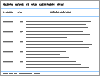
Table 1
Common volatile components of lipid pyrolysis[39]"
类别 Categories | 化合物 Compound | 香味阈值 Aroma threshold/(μg/kg) | 风味描述 Flavor description |
|---|---|---|---|
| 醛类 Aldehydes | 己醛 | 4.5、5 | 脂肪、青草味 |
| 庚醛 | 3 | 脂肪、塑料臭味 | |
| 辛醛 | 0.7 | 脂肪、肥皂、谷物味 | |
| 壬醛 | 1、8 | 清新、油脂、甜味 | |
| 癸醛 | 0.1~0.2 | 油脂、金属、橙皮味 | |
| 苯甲醛 | 350 | 杏仁、坚果味 | |
| 苯乙醛 | 8.0 | 花香、丁香、甜味 | |
| (E)-2-庚烯醛 | 13 | 脂肪、杏仁、生青味 | |
| (E)-2-壬烯醛 | 0.28、0.08 | 脂肪、油脂味 | |
| (E)-2-辛烯醛 | 3 | 黄瓜味 | |
| (E)-2-癸烯醛 | 0.3~0.4 | 牛脂、肉味 | |
| (E,E)-2,4-壬二烯醛 | 0.09 | 油脂、肥皂味 | |
| (E,E)-2,4-癸二烯醛 | 0.2、0.07 | 脂肪味 | |
| 2-十一烯醛 | 1.4 | 橘皮味 | |
| 十一醛 | 5 | 肥皂味 | |
| 醇类 Alcohols | 己醇 | 2 500 | 清新、奶酪味 |
| 辛醇 | 0.023 | 玫瑰、黄油、焦味 | |
| 庚醇 | 330 | 泥土、霉味 | |
| 戊醇 | 4 000 | 橡胶、香料味 | |
| 1-辛烯-3-醇 | 1 | 蘑菇、真菌、土豆味 | |
| 酮类 Ketones | 2-庚酮 | 140 | 霉味、奶酪味 |
| 2-壬酮 | 38.9 | 似乙醇、牛奶味 | |
| 酸类 Acids | 乙酸 | 22 000 | 酸味 |
| 己酸 | 3 000 | 汗酸味 | |
| 其他 Other | 十四烷 | 1 000 | — |
| 十五烷 | 13 000 | — | |
| 2-戊基呋喃 | 6 | 山楂、草香、豆味 | |
| 乙酸乙酯 | 0.08 | 醚香、果香味 |
| [1] | BURGER P A, CIANI E, FAYE B. Old world camels in a modern world—A balancing act between conservation and genetic improvement[J]. Animal Genetics, 2019, 50(6): 598-612. |
| [2] | 王建文, 任万路, 孙志文, 等. 马乳、驴乳、驼乳对小鼠生长性能、免疫及抗氧化指标的影响[J]. 中国乳品工业,2024,52(8):16-19. |
| WANG J W, REN W L, SUN Z W, et al. Effect of mare milk, donkey milk and camel milk on growth performance, immune index and antioxidant index of mice[J]. China Dairy Industry,2024,52(8):16-19. (in Chinese) | |
| [3] | MBYE M, AYYASH M, MOHAMED H, et al. Effects of ultrafiltration followed by heat or high-pressure treatment on camel and bovine milk cheeses[J]. NFS Journal, 2023, 31: 123-132. |
| [4] | MUTHUKUMARAN M S, MUDGIL P, BABA W N, et al. A comprehensive review on health benefits, nutritional composition and processed products of camel milk[J]. Food Reviews International, 2023, 39(6): 3080-3116. |
| [5] | ELSAHORYI N A, AL-SAYYED H F. Manufacture of Dairy and Non-dairy Camel Milk Products[M]. New York: Handbook of Research on Health and Environmental Benefits of Camel Products. IGI Global Scientific Publishing, 2020. |
| [6] | 李学贤, 张 雪, 童 灵, 等. 游离氨基酸改善作物风味品质综述[J]. 中国农业大学学报,2022,27(4):73-81 |
| LI X X, ZHANG X, TONG L, et al. Summary of free amino acids to improve crop flavor quality[J]. Journal of China Agricultural University,2022,27(4):73-81. (in Chinese) | |
| [7] | 迟雪露. 生牛乳风味活性物质解析及影响因素研究[D]. 乌鲁木齐: 新疆农业大学,2023. |
| CHI X L. Study on raw milk flavor profile and influenced factors [D].Urumqi: Xinjiang Agricultural University, 2023. (in Chinese) | |
| [8] | 刘庆雪, 肖梓军. 牦牛乳及其风味物质研究进展[J]. 乳业科学与技术,2022,45(5):53-58. |
| LIU Q X, XIAO Z J. Research progress on yak milk and its flavor substances[J]. Journal of Dairy Science and Technology,2022,45(5):53-58. (in Chinese) | |
| [9] | VALERO E, VILLAMIEL M, MIRALLES B, et al. Changes in flavour and volatile components during storage of whole and skimmed UHT milk[J]. Food Chemistry, 2001, 72(1): 51-58. |
| [10] | LICÓN C C, DE MENDOZA J H, MAGGI L, et al. Optimization of headspace sorptive extraction for the analysis of volatiles in pressed ewes’ milk cheese[J]. International Dairy Journal, 2012, 23(1): 53-61. |
| [11] | LIU H, HUI T, FANG F, et al. Characterization and discrimination of key aroma compounds in pre-and postrigor roasted mutton by GC-O-MS, GC E-nose and aroma recombination experiments[J]. Foods, 2021, 10(10): 2387. |
| [12] | 马瑞娟,许英瑞,薛元泰,等.牦牛乳风味物质及影响因素研究进展[J].食品工业科技,2020,41(10):363-368. |
| MA R J, XU Y R, XUE Y T, et al. Research progress on flavor substances and influencing factors of yak milk[J]. Science and Technology of Food Industry,2020,41(10):363-368. (in Chinese) | |
| [13] | 张晓梅,仝令君,迟雪露,等.奶牛乳,水牛乳与牦牛乳的挥发性风味物质分析[J].食品研究与开发, 2017, 38(18): 126-131. |
| ZHANG X M, TONG L J, CHI X L, et al. Analysis of volatile flavor components of cattle milk,buffalo milk and yak milk[J]. Food Research and Development, 2017, 38(18): 126-131. (in Chinese) | |
| [14] | MAJCHER M, JELEŃ H H. Comparison of suitability of SPME, SAFE and SDE methods for isolation of flavor compounds from extruded potato snacks[J]. Journal of Food Composition and Analysis, 2009, 22(6): 606-612. |
| [15] | 何艳艳,刘俊男,李瑞杰.等 .酱香型白酒风味及其关键物质分析技术研究进展[J].中国酿造,2024,43(11):1-7. |
| HE Y Y, LIU J N, LI R J . et al. Research progress on the flavor and key substance analysis techniques of sauce-flavor Baijiu[J]. China Brewing.2024,43(11):1-7. (in Chinese) | |
| [16] | 何 静,阿拉腾萨其拉,吉日木图.热处理对驼乳营养成分与挥发性风味物质的影响[J].食品与发酵工业,2021,47(22):208-213. |
| HE J, BATTULGA A, JIRI M. Effect of different heat treatment on the nutritional quality and volatile flavor compounds of camel milk[J].Food and Fermentation Industries,2021,47(22):208-213.(in Chinese) | |
| [17] | 陈银阁,张养东,李 宁,等.生乳中风味物质特征及来源研究进展[J].中国畜牧兽医,2024,51(3):1103-1110. |
| CHEN Y G, ZHANG Y D, LI N, et al. Research progresson flavour substance characteristics and sources in raw milk[J]. China Animal Husbandry & Veterinary Medicine,2024,51(3):1103-1110. (in Chinese) | |
| [18] | DAI L, HU S, PANG X, et al. Community diversity of psychrophilic bacteria in dairy farm raw milk and its characteristic enzyme production at different temperature[J]. Food Bioscience, 2023, 54: 102921. |
| [19] | SARHIR S T, AMANPOUR A, BOUSETA A, et al. Fingerprint of aroma-active compounds and odor activity values in a traditional Moroccan fermented butter “Smen” using GC-MS-olfactometry[J]. Journal of Food Composition and Analysis, 2021, 96: 103761. |
| [20] | LOFFI C, CAVANNA D, SAMMARCO G, et al. Non-targeted high-resolution mass spectrometry study for evaluation of milk freshness[J]. Journal of Dairy Science, 2021, 104(12): 12286-12294. |
| [21] | MCAULIFFE O, KILCAWLEY K, STEFANOVIC E. Symposium review: Genomic investigations of flavor formation by dairy microbiota[J]. Journal of Dairy Science, 2019, 102(1): 909-922. |
| [22] | XIAO Z, YU D, NIU Y, et al. Characterization of aroma compounds of Chinese famous liquors by gas chromatography-mass spectrometry and flash GC electronic-nose[J]. Journal of Chromatography B, 2014, 945: 92-100. |
| [23] | PANAGIOTIDIS P, TZIA C, SPANIER A M, et al. Effect of milk composition and heating on flavor and aroma of yogurt[J]. Special Publication-Royal Society of Chemistry, 2001, 274: 160-170. |
| [24] | CAI X, SHEN Y, CHEN M, et al. Characterisation of volatile compounds in Maotai flavour liquor during fermentation and distillation[J]. Journal of the Institute of Brewing, 2019, 125(4): 453-463. |
| [25] | MARIACA R G, FERNÁNDEZ-GARCÍA E, MOHEDANO A F, et al. Volatile fraction of ewe’s milk semi-hard cheese manufactured with and without the addition of a cysteine proteinase[J]. Food Science and Technology International, 2001, 7(2): 131-139. |
| [26] | 许忠平, 梁明锋, 张娇娇, 等. 不同地区酱香型白酒风格特征及风味物质构成差异相关性研究.[J]. 中国酿造,2024,43(2):35-42. |
| XU Z P, LIANG M F, ZHANG J J, et al. Correlation between style characteristics and flavor composition of sauce-flavor Baijiu from different regions [J]. China Brewing,2024,43(2):35-42. (in Chinese) | |
| [27] | FAN S, TANG K, XU Y, et al. Characterization of the potent odorants in Tibetan Qingke Jiu by sensory analysis, aroma extract dilution analysis, quantitative analysis and odor activity values[J]. Food Research International, 2020, 137: 109349. |
| [28] | CADWALLADER D C, GERARD P D, DRAKE M A. The role of packaging on the flavor of fluid milk[J]. Journal of Dairy Science, 2023, 106(1): 151-167. |
| [29] | 郝秋月, 岳旭良, 樊 凡, 等. 发酵乳风味物质生成机制研究进展[J].食品安全质量检测学报,2024,15(20):157-166. |
| HAO Q Y, YUE X L, FAN F, et al. Research progress on the formation mechanism of flavor substances in fermented milk[J]. Journal of Food Safety and Quality Testing,2021,12(15):6111-6117. (in Chinese) | |
| [30] | CHEN C, LIU Z, YU H, et al. Flavoromic determination of lactones in cheddar cheese by GC-MS-olfactometry, aroma extract dilution analysis, aroma recombination and omission analysis[J]. Food Chemistry, 2022, 368: 130736. |
| [31] | MANZOCCHI E, MARTIN B, BORD C, et al. Feeding cows with hay, silage, or fresh herbage on pasture or indoors affects sensory properties and chemical composition of milk and cheese[J]. Journal of Dairy Science, 2021, 104(5): 5285-5302. |
| [32] | XU L, YU X, LI M, et al. Monitoring oxidative stability and changes in key volatile compounds in edible oils during ambient storage through HS-SPME/GC-MS[J]. International Journal of Food Properties, 2017, 20(sup3): S2926-S2938. |
| [33] | CAO M, FONSECA L M, SCHOENFUSS T C, et al. Homogenization and lipase treatment of milk and resulting methyl ketone generation in blue cheese[J]. Journal of Agricultural and Food Chemistry, 2014, 62(25): 5726-5733. |
| [34] | WANG J, YNG Z J, WANG Y D, et al. The key aroma compounds and sensory characteristics of commercial Cheddar cheeses[J]. Journal of Dairy Science, 2021, 104(7): 7555-7571. |
| [35] | CHEN L, LI D, HAO D, et al. Study on chemical compositions, sensory properties, and volatile compounds of banana wine[J]. Journal of Food Processing and Preservation, 2020, 44(12): e14924. |
| [36] | LI N, LI G, GUAN X, et al. Volatile aroma compound-based decoding and prediction of sweet berry aromas in dry red wine[J]. Food Chemistry, 2025, 463: 141248. |
| [37] | GUO Q, PENG J, HE Y. A systematic comparative study on the physicochemical properties, volatile compounds, and biological activity of typical fermented soy foods[J]. Foods, 2024, 13(3): 415. |
| [38] | CHENG H. Volatile flavor compounds in yogurt: A review[J]. Critical Reviews in Food Science and Nutrition, 2010, 50(10): 938-950. |
| [39] | 赵志程, 赵 巍, 张爱霞, 等. 脂质热解形成的挥发性成分及途径研究进展[J]. 粮食与油脂,2024,37(8):12-18 |
| ZHAO Z C, ZHAO W, ZHANG A X, et al. Research progress on volatile components and pathways formed by lipid pyrolysis[J]. Cereals & Oils,2024,37(8):12-18. (in Chinese) | |
| [40] | FERRANTI P, TRAISCI M V, PICARIELLO G, et al. Casein proteolysis in human milk: Tracing the pattern of casein breakdown and the formation of potential bioactive peptides[J]. Journal of Dairy Research, 2004, 71(1): 74-87. |
| [41] | MARTIN F, CACHON R, PERNIN K, et al. Effect of oxidoreduction potential on aroma biosynthesis by lactic acid bacteria in nonfat yogurt[J]. Journal of Dairy Science, 2011, 94(2): 614-622. |
| [42] | PAN C, CUI H, HAYAT K, et al. Exogenous glutamic acid effectively involved in N-(1-deoxy-D-galulos-1-yl)-glutamic acid degradation for simultaneous improvement of both milk-like and baking flavor[J]. Food Bioscience, 2022, 47: 101697. |
| [43] | BYEON Y S, HEO J A, PARK K, et al. Consumer preference of traditional Korean soy sauce (ganjang) and its relationship with sensory attributes and physicochemical properties[J]. Foods, 2023, 12(12): 2361. |
| [44] | OTT A, GERMOND J E, CHAINTREAU A. Origin of acetaldehyde during milk fermentation using 13C-labeled precursors[J]. Journal of Agricultural and Food Chemistry, 2000, 48(5): 1512-1517. |
| [45] | TIAN H, YU B, YU H, et al. Evaluation of the synergistic olfactory effects of diacetyl, acetaldehyde, and acetoin in a yogurt matrix using odor threshold, aroma intensity, and electronic nose analyses[J]. Journal of Dairy Science, 2020, 103(9): 7957-7967. |
| [46] | BRANDSMA J B, BRINKMAN J, WOLKERS-ROOIJACKERS J C M, et al. Pyruvate stimulates transamination of leucine into α-ketoisocaproic acid and supports 3-methylbutanal production by Lactococcus lactis [J]. Journal of Applied Microbiology, 2024, 135(10): lxae257. |
| [47] | PINO J, MOO-HUCHIN V, SOSA-MOGUEL O, et al. Characterization of aroma-active compounds in Choch (Lucuma hypoglauca Standley) fruit[J]. International Journal of Food Properties, 2017, 20(sup1): S444-S448. |
| [48] | ULLRICH L, CASTY B, ANDRÉ A, et al. Influence of the cocoa bean variety on the flavor compound composition of dark chocolates[J]. ACS Food Science & Technology, 2023, 3(3): 470-477. |
| [49] | WANG L, YIN H, SHAO X, et al. Improving the aging aroma profiles of Italian riesling and petit verdot wines: Impact of spontaneous and inoculated fermentation processes[J]. Food Chemistry: X, 2023, 20: 100978. |
| [50] | ZABALETA L, ALBISU M, BARRON L J R. Volatile compounds associated with desirable flavour and off-flavour generation in ewe’s raw milk commercial cheeses[J]. European Food Research and Technology, 2017, 243: 1405-1414. |
| [51] | HALES K E. Relationships between digestible energy and metabolizable energy in current feedlot diets[J]. Translational Animal Science, 2019, 3(3): 945-952. |
| [52] | ONG L, SHAH N P. Probiotic cheddar cheese: Influence of ripening temperatures on proteolysis and sensory characteristics of cheddar cheeses[J]. Journal of Food Science, 2009, 74(5): S182-S191. |
| [53] | CHANDEL N S. Glycolysis[J]. Cold Spring Harbor Perspectives in Biology, 2021, 13(5): a040535. |
| [54] | COMASIO A, HARTH H, WECKX S, et al. The addition of citrate stimulates the production of acetoin and diacetyl by a citrate-positive Lactobacillus crustorum strain during wheat sourdough fermentation[J]. International Journal of Food Microbiology, 2019, 289: 88-105. |
| [55] | 邓 红, 王玉珠, 史乐伟, 等. 清涧红枣香气成分的分析鉴定[J]. 食品研究与开发,2013,34(24):201-205. |
| DENG H, WANG Y Z, SHI L W, et al. Analysis and identification of aroma components for the Qingjian date[J]. Food Research and Development,2013,34(24):201-205. (in Chinese) | |
| [56] | RODRÍGUEZ-ALONSO P, CENTENO J A, GARABAL J I. Biochemical study of industrially produced Arzúa-Ulloa semi-soft cows’ milk cheese: Effects of storage under vacuum and modified atmospheres with high-nitrogen contents[J]. International Dairy Journal, 2011, 21(4): 261-271. |
| [57] | PARK Y W, LEE J H, LEE S J. Effects of frozen and refrigerated storage on organic acid profiles of goat milk plain soft and Monterey jack cheeses[J]. Journal of Dairy Science, 2006, 89(3): 862-871. |
| [58] | KAPSE S, KEDIA P, KUMAR A, et al. A non-invasive method for detection of freshness of packaged milk[J]. Journal of Food Engineering, 2023, 346: 111424. |
| [59] | SAKHALA S, GANGULY S, RAJU P N, et al. Effect of packaging materials on quality parameters of buffalo milk ricotta cheese[J]. International Journal of Communication Systems, 2019, 7(5): 720-725. |
| [60] | NIKMARAM N, KEENER K M. The effects of cold plasma technology on physical, nutritional, and sensory properties of milk and milk products[J]. LWT-Food Science and Technology, 2022, 154: 112729. |
| [61] | LEE A P, BARBANO D M, DRAKE M A. The influence of ultra-pasteurization by indirect heating versus direct steam injection on skim and 2% fat milks[J]. Journal of Dairy Science, 2017, 100(3): 1688-1701. |
| [62] | SULEJMANI E I, HAYALOGLU A A. Characterisation of macedonian white‐brined cheese: Effect of raw or heat-treated caprine milk[J]. International Journal of Dairy Technology, 2018, 71(2): 408-416. |
| [63] | WANG Y, XIAO R, LIU S, et al. The impact of thermal treatment intensity on proteins, fatty acids, macro/micro-nutrients, flavor, and heating markers of milk—A comprehensive review[J]. International Journal of Molecular Sciences, 2024, 25(16): 8670. |
| [64] | FENG T, SUN J, SONG S, et al. Geographical differentiation of Molixiang table grapes grown in China based on volatile compounds analysis by HS-GC-IMS coupled with PCA and sensory evaluation of the grapes[J]. Food Chemistry: X, 2022, 15: 100423. |
| [65] | CARPINO S, MALLIA S, LA TERRA S, et al. Composition and aroma compounds of Ragusano cheese: Native pasture and total mixed rations[J]. Journal of Dairy Science, 2004, 87(4): 816-830. |
| [66] | BOLTAR I, ČANŽEK MAJHENIČ A, JARNI K, et al. Volatile compounds in Nanos cheese: Their formation during ripening and sesonal variation[J]. Journal of Food Science and Technology, 2015, 52: 608-623. |
| [67] | KALAČ P. The effects of silage feeding on some sensory and health attributes of cow’s milk: A review[J]. Food Chemistry, 2011, 125(2): 307-317. |
| [68] | GIL M, RAMIL F, AGIS J A. Hydroids (Cnidaria, Hydrozoa) from mauritanian coral mounds[J]. Zootaxa, 2020, 4878(3): 412-466. |
| [69] | YAO H, PAN Z, MA W, et al. Whole-genome resequencing analysis of the Camelus bactrianus (bactrian camel) genome identifies mutations and genes affecting milk production traits[J]. International Journal of Molecular Sciences, 2024, 25(14): 7836. |
| [70] | GUO L, DAOLEMA, LIU B, et al. Identification of milk-related genes and regulatory networks in bactrian camel either supplemented or under grazing[J]. Tropical Animal Health and Production, 2023, 55(5): 342. |
| [71] | DARWISH A M, ABDELHAFEZ M A, EL-METWALY H A, et al. Genetic divergence of two casein genes and correlated milk traits in Maghrebi camels[J]. Biologia, 2022, 77(7): 1889-1898. |
| [72] | YAO H, LIANG X, DOU Z, et al. Transcriptome analysis to identify candidate genes related to mammary gland development of Bactrian camel (Camelus bactrianus)[J]. Frontiers in Veterinary Science, 2023, 10: 1196950. |
| [1] | ZHAO Yan, DUO Qianqian, XU Xiaowei, ZHENG Nan, CHEN He, ZHANG Shiqi, ZHAO Yankun. Research Progress on the Functional Characteristics and Compositional Differences of Fat Globule Membrane Proteins in Camel Milk [J]. China Animal Husbandry & Veterinary Medicine, 2026, 53(2): 631-638. |
| [2] | XU Xiaowei, GAO Jiaojiao, MA Xianlan, ALIA Tuerdi, SHAO Wei, ZHENG Nan, ZHAO Yankun. Isolation,Identification and Analysis of Drug Resistance and Drug Resistance Genes of Klebsiella from Camel Milk in Xinjiang [J]. China Animal Husbandry & Veterinary Medicine, 2025, 52(10): 4941-4951. |
| [3] | LI Qilong, SHI Hanjing, CHEN Sisi, XU Junfei, ZHOU Wenyue, GONG Saibin, LUO Jie, YANG Feilai, LI Fengna, GUO Qiuping. Effects of Dietary Fermented Shiitake Residues Supplementation on Growth Performance,Meat Quality and Flavor Substances of Finishing Pigs [J]. China Animal Husbandry & Veterinary Medicine, 2025, 52(1): 182-194. |
| [4] | BAI Na, MING Liang, GAO Wan-ting, GUO Fu-cheng, QIAO Xiang-yu, CHAOGE Sulide, GUO Yan, YI Ri-gui, LIU Dong-hui, JI Rimutu. Effects of Different Milk Samples on Sensitization in BALB/c Mice [J]. China Animal Husbandry & Veterinary Medicine, 2017, 44(7): 2191-2196. |
| [5] | ZHANG Meng-hua, CHEN Gang-liang, ZANG Chang-jiang, DONG Jing, HUANG Xi-xia, LU Dong-lin. Analysis of Physicochemical Indexes of Junggar Bactrian Camel Milk [J]. China Animal Husbandry & Veterinary Medicine, 2016, 43(10): 2628-2633. |
| Viewed | ||||||
|
Full text |
|
|||||
|
Abstract |
|
|||||
