
中国畜牧兽医 ›› 2026, Vol. 53 ›› Issue (2): 959-972.doi: 10.16431/j.cnki.1671-7236.2026.02.040
张敏1,2( ), 李迎晓1,2(), 张璐璐1, 何书海1,2, 曲哲会1,2, 秦东升3, 刘纪成1,2, 焦凤超1,2()
修回日期:2025-06-11
出版日期:2026-02-20
发布日期:2026-01-27
通讯作者:
李迎晓,焦凤超
E-mail:xyzhangmin629@163.com;liyingxiao81@163.com;fengchaojiao@163.com
作者简介:张敏,E-mail: xyzhangmin629@163.com
基金资助:
ZHANG Min1,2(), LI Yingxiao1,2(), ZHANG Lulu1, HE Shuhai1,2, QU Zhehui1,2, QIN Dongsheng3, LIU Jicheng1,2, JIAO Fengchao1,2()
Revised:2025-06-11
Online:2026-02-20
Published:2026-01-27
Contact:
LI Yingxiao, JIAO Fengchao
E-mail:xyzhangmin629@163.com;liyingxiao81@163.com;fengchaojiao@163.com
摘要:
目的 了解信阳地区鸭星状病毒1型(Duck astrovirus type 1, DAstV1)流行株基因组的演化特征,为进一步研究信阳地区DAstV1的流行、遗传进化及致病特性提供参考依据。 方法 对某养殖场送检的病鸭进行禽腺病毒、禽星状病毒和鸭甲型肝炎病毒等12种常见病毒的PCR/RT-PCR筛查。采集病鸭肝脏组织,无菌处理后经卵黄囊途径接种10日龄SPF鸭胚,连续传代4次,并逐代收集尿囊液进行DAstV RT-PCR鉴定。对分离到的病毒进行全基因组测序,并对ORF1a、ORF1b和ORF2基因序列及其编码蛋白的氨基酸变异位点进行比对分析。 结果 送检病料筛查结果显示,禽星状病毒呈阳性。第1~4代鸭胚尿囊液中均呈DAstV1阳性,将该病毒命名为HN24XY06。第4代接种鸭胚全部死亡,死亡胚体发育不良且体表出血。HN24XY06基因组全长7 755 nt,包含ORF1a、ORF1b和ORF2 3个开放阅读框。序列比对和系统发育分析表明,HN24XY06属于DAstV1毒株,与山东分离株DAstV-SDZZ和DAstV-SDWF亲缘关系较近。ORF1a、ORF1b和ORF2蛋白的氨基酸序列分析显示,存在不同程度的突变,多发生在ORF1a编码的氨基酸序列中。 结论 本研究分离到了1株DAstV1,丰富了信阳地区DAstV1的分子流行病学资料,并为进一步研究DAstV1的致病机制奠定了基础。
中图分类号:
张敏, 李迎晓, 张璐璐, 何书海, 曲哲会, 秦东升, 刘纪成, 焦凤超. 鸭星状病毒1型信阳株全基因组扩增及遗传进化分析[J]. 中国畜牧兽医, 2026, 53(2): 959-972.
ZHANG Min, LI Yingxiao, ZHANG Lulu, HE Shuhai, QU Zhehui, QIN Dongsheng, LIU Jicheng, JIAO Fengchao. Whole Genome Amplification and Phylogenetic Analysis of Duck Astrovirus Type 1 Xinyang Strain[J]. China Animal Husbandry & Veterinary Medicine, 2026, 53(2): 959-972.
表1
病原检测引物信息"
病毒 Viruses | 引物序列 Primer sequences (5'→3') | 产物长度 Product length/bp | 退火温度 Annealing temperature/℃ | 参考文献 References |
|---|---|---|---|---|
| AAstV | F:GAYTGGACNMGNTWYGAYGGNACNATNCC | 434 | 45 | Todd等[ |
| R:YTTNACCCACATNCCRAA | ||||
| GAstV | F:ATTCTTGGCTCGGTTGTC | 489 | 54 | Zhang等[ |
| R:CCTGTGTTGCTCCTTCTC | ||||
| DHAV1 | F:GGAGGTGGTGCTGAAATAT | 214 | 55 | Chen等[ |
| R:CATGTGCCTGGACAGAT | ||||
| DHAV3 | F:GAAATCTGCACTCAATGGAGAG | 289 | 55 | Chen等[ |
| R:CCCAGGAAATGATTGGTCAG | ||||
| NGPV | F:GACTTAGACAGGCTTATGAAC | 781 | 55 | 杨晶等[ |
| R:ATTGCTGGTGAACTGGATT | ||||
| ARV | F:TAGCCACACCCGTGCTAGGA | 850 | 55 | 杨晶等[ |
| R:ATAGAGGTRTTRATACCACG | ||||
| DPV | F:ATGTCTAATTCTGGAGGTTC | 354 | 52 | 杨晶等[ |
| R:TTATCGCTGATCGTCTG | ||||
| DTMUV | F:GCCACGGAATTAGCGGTTGT | 401 | 55 | 杨晶等[ |
| R:TAATCCTCCATCTCAGCGGTGTAG | ||||
| NDV | F:CTGCACATAGAAGAGGAGCTA | 427 | 55 | 杨晶等[ |
| R:CTGGTGCTGGTAGTCATGG | ||||
| AIV | F:GGGAGCAAAAGCAGGAGT | 1413 | 53 | 杨晶等[ |
| R:GGAGTAGAAACAAGGAGTTTTTT | ||||
| DuCV | F:TGGGGACCACTCATACGATT | 449 | 55 | 杨晶等[ |
| R:ATGCGTGAGAGTTGACGACT | ||||
| FAdV | F:CAACTACATCGGGTTCAGGGATAACTTC | 766 | 55 | 杨晶等[ |
| R:CCAGTTTCTGTGGTGGTTGAAGGGGTT | ||||
| DAstV1 | F:CTTGGACTGTGGAAGCATATACC | 763 | 55 | Wei等[ |
| R:GTTGAAAACTGCCCTGAAGG | ||||
| DAstV2 | F:GCAGCGAATGTGGTTGGTTC | 401 | 55 | 刘宁[ |
| R:TCTGGAGTCGGCTGGATTCT | ||||
| DAstV3 | F:AATGTGCCCAGTGTGATCGT | 482 | 55 | 刘宁[ |
| R:TTCGTTGCGCATTGTGTCAG | ||||
| DAstV4 | F:AGGCTGGAAGGGAATTCTATCT | 436 | 53 | Li等[ |
| R:ATGGTGATTCCAGTGTCAGCG | ||||
| DAstV5 | F:AATGTAGGGAGGACCGAAAGTAG | 597 | 55 | Zhang等[ |
| R:GTTTGTCCTAACTCCTATTGG |
表2
DAstV1全基因组PCR扩增引物"
引物名称 Primer name | 引物序列 Primer sequences (5'→3') | 产物长度 Product length/bp |
|---|---|---|
| P1F | CCGAARTGGGCGAGTC | 919 |
| P1R | CCAGGTGTCAACAATCATGC | |
| P2F | GATGTTTATGGTGAGTTGTACACWG | 972 |
| P2R | GCTAGATGGTATTATGCCTCTTG | |
| P3F | TTGCAGCTCACTCTGGCATA | 666 |
| P3R | TGATGTCACTCCCTGTGAASC | |
| P4F | CTCGCGAAAGAAGTTAAGAGTG | 971 |
| P4R | CCTTCTTCATCGATGTCATTATCC | |
| P5F | CAGAGAATGCTTGATGAAGGY | 1 297 |
| P5R | TTWGGATACGCTGGTGTTGA | |
| P6F | CTTGGACTGTGGAAGCATATACC | 763 |
| P6R | GTTGAAAACTGCCCTGAAGG | |
| P7F | GTTACCAACTGGAGAAGTCTGTCA | 903 |
| P7R | TCCAAGTGTGACCACTGTTGTC | |
| P8F | GACAACAGTGGTCACACTTGGA | 1 082 |
| P8R | CCATGTGTGGTGTATATTGTGATR | |
| P9F | GAGGTGTTCTGGGCAGTTTCAA | 1 113 |
| P9R | CTCCATCATCATCCTCTCACACTG | |
| P10F | AGTGTGAGAGGATGATGATGGA | 240 |
| P10R | TGTGACCCACATGGTGATTTC | |
| 3'-Race-P1F | AGTGTGAGAGGATGATGATGGA | 240 |
| 3'-Race-P1R | GACTCGAGTCGACATCGA(T)18 | |
| 3'-Race-P2F | ACAGCTGCACTTTCTCATGC | 236 |
| 3'-Race-P2R | GACTCGAGTCGACATCGA |
表3
参考毒株信息"
毒株 Strains | 分离年 Year | 类型 Type | 分离地 Location | GenBank登录号 GenBank accession No. |
|---|---|---|---|---|
| DAstV-SDZZ | 2020 | DAstV1 | 中国 | MW217578.1 |
| DAstV-SDWF | 2021 | DAstV1 | 中国 | OL652659.1 |
| HB2015 | 2015 | DAstV1 | 中国 | KY646154.1 |
| DA08 | - | DAstV1 | 中国 | FJ919227.1 |
| DA07 | - | DAstV1 | 中国 | FJ919226.1 |
| D51 | 2012 | DAstV1 | 中国 | MH712856.1 |
| WF1201 | 2012 | DAstV1 | 中国 | JX439643.1 |
| D390 | 2013 | DAstV1 | 中国 | MN149395.1 |
| D120 | 2013 | DAstV1 | 中国 | MN149393.1 |
| D17 | 2013 | DAstV1 | 中国 | MN149392.1 |
| C-NGB | 2008 | DAstV1 | 中国 | NC_012437.1 |
| AAstV/Chicken/CHN/2018/CZ1801 | 2018 | AAstV | 中国 | MN807051.1 |
| TAstV/VA/99 | - | TAstV | 美国 | EU143851.1 |
| TAstV/CA/00 | - | TAstV | 美国 | EU143844.1 |
| YP2 | - | DAstV4 | 中国 | JX624774.1 |
| TAstV/AK/98 | - | TAstV | 美国 | EU143843.1 |
| X1257 | 2021 | DAstV | 中国 | OR924091.1 |
| C1365 | 2023 | DAstV | 中国 | OR902760.1 |
| C1388 | 2023 | DAstV | 中国 | OR902759.1 |
| X2250 | 2021 | DAstV | 中国 | OR924090.1 |
| CPH NM1002 | 2021 | DAstV3 | 中国 | OR924089.1 |
| CPH | 2013 | DAstV3 | 中国 | KJ020899.1 |
| JM | 2021 | DAstV5 | 中国 | OM095382.1 |
| SL1 | 2012 | DAstV2 | 中国 | KF753804.1 |
| SL5 | 2012 | DAstV2 | 中国 | KF753807.1 |
| Du/Egy/Gharbia/2021/DAstVs | 2021 | DAstV | 埃及 | PP512783.1 |
| JSHA | 2016 | GAstV | 中国 | MK125058.1 |
| GD | 2017 | GAstV | 中国 | MG934571.1 |
| GAstV-SDHZ | 2022 | GAstV | 中国 | OP946449.1 |
| AstV/Goose/2018/HLJ01 | 2018 | GAstV | 中国 | MN175321.1 |
| AstV/Goose/Guangdong/1812LMG/2018 | 2018 | GAstV | 中国 | MN127959.1 |
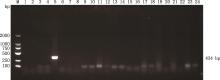
图1
临床病料PCR扩增检测结果M,DL2000 DNA Marker;1、3、5、7、9、11、13、15、17、19、21和23,分别为DHAV1、DHAV3、AAstV、GAstV、DTMUV、NDV、AIV、DRV、DuCV、FAdV、NGPV和DPV引物PCR扩增产物;2、4、6、8、10、12、14、16、18、20、22、24,阴性对照"
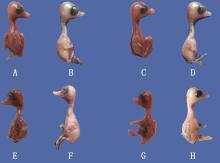
图2
SPF鸭胚病理变化A、C、E和G,分别为第1~4代试验鸭胚;B、D、F、H,对照鸭胚"
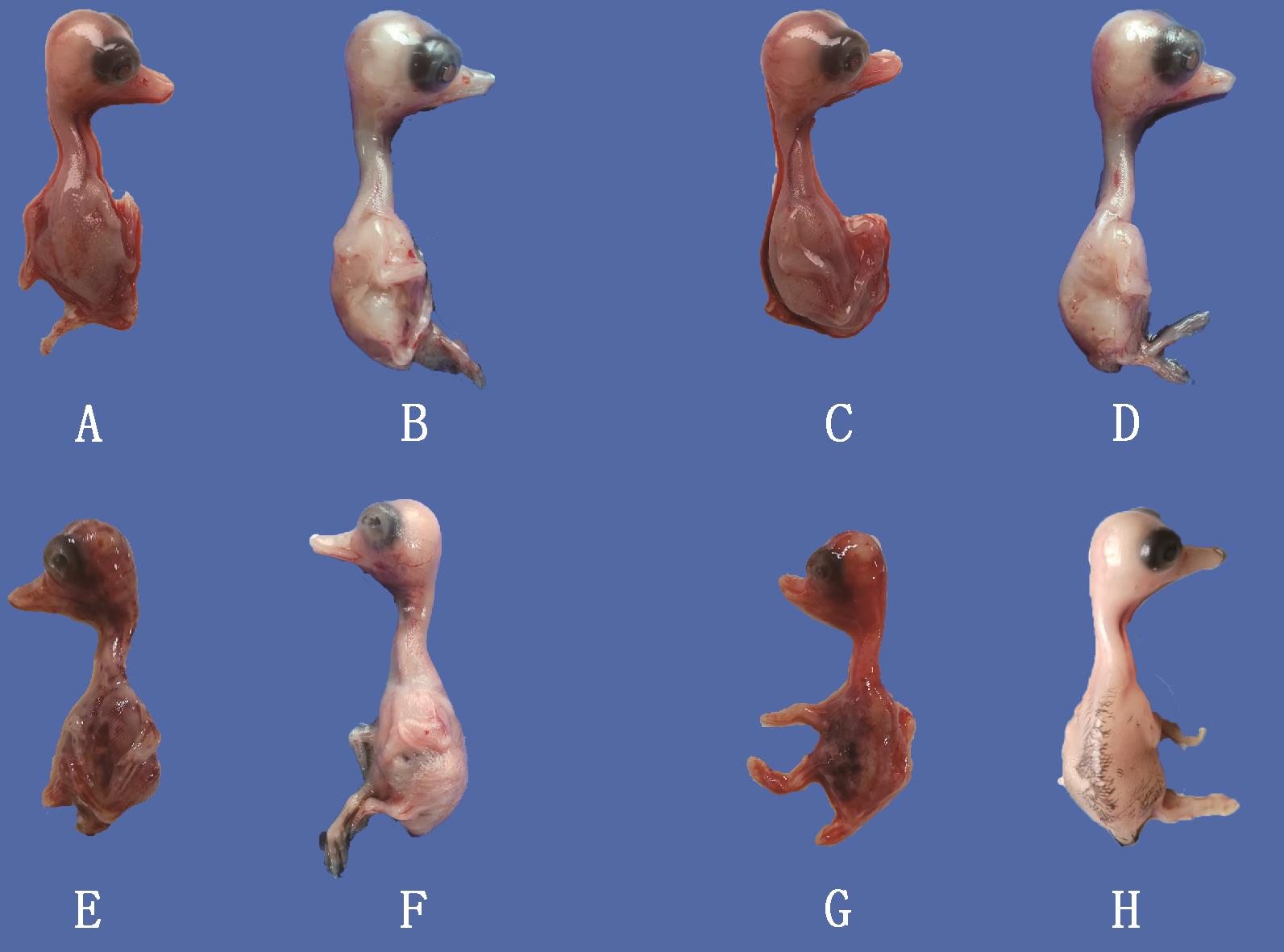
图3
尿囊液 PCR检测结果M,DL2000 DNA Marker;1、3、5、7和9,分别为尿囊液DAstV1、DAstV2、DAstV3、DAstV4和DAstV5引物PCR扩增产物;2、4、6、8和10,尿囊液阴性对照"
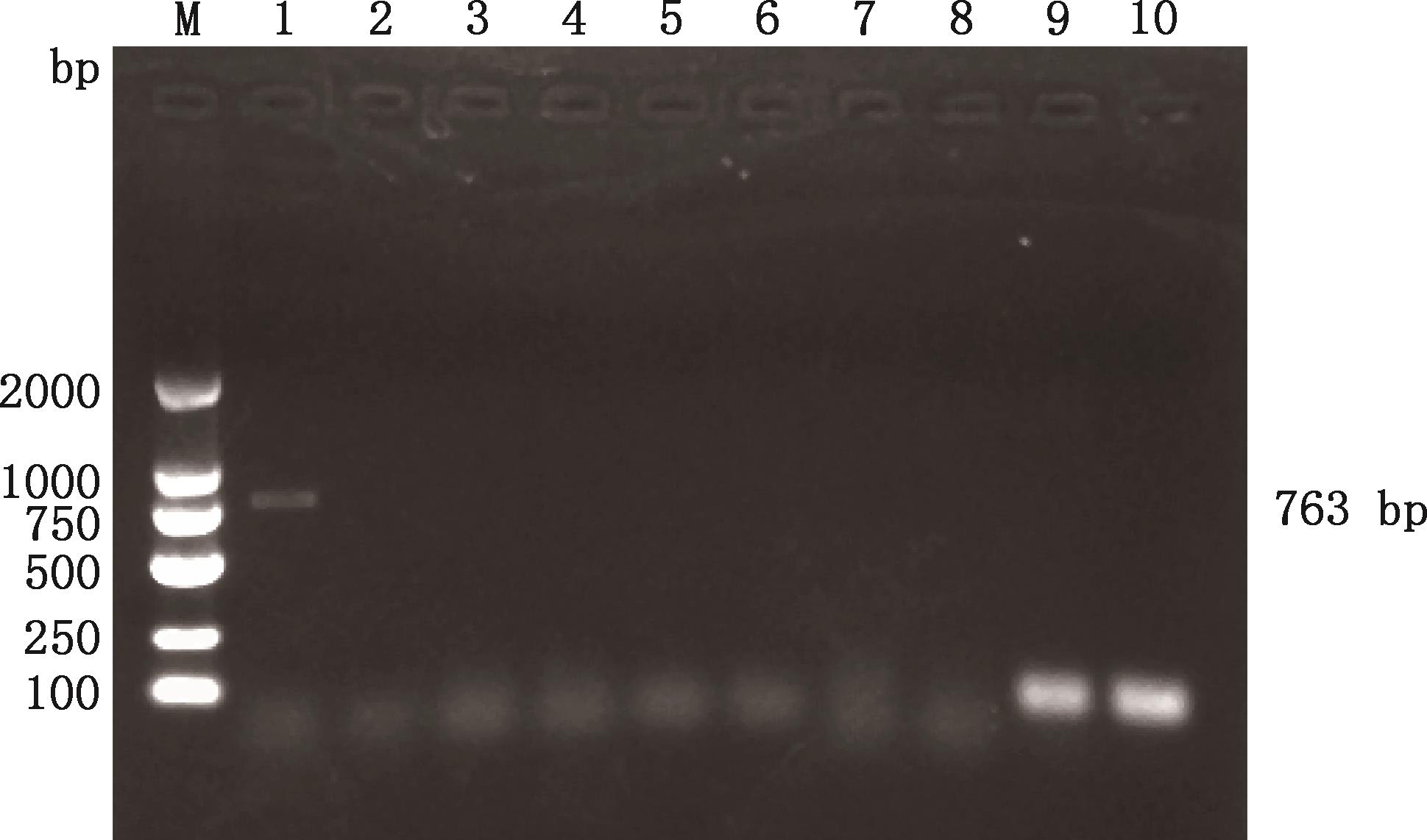
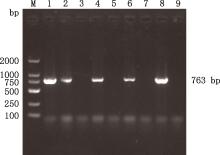
图4
第1~4代尿囊液DAstV1 PCR检测结果M,DL2000 DNA Marker;1,DAstV1阳性对照;2、4、6和8,第1~4代尿囊液;3、5、7和9,尿囊液阴性对照"
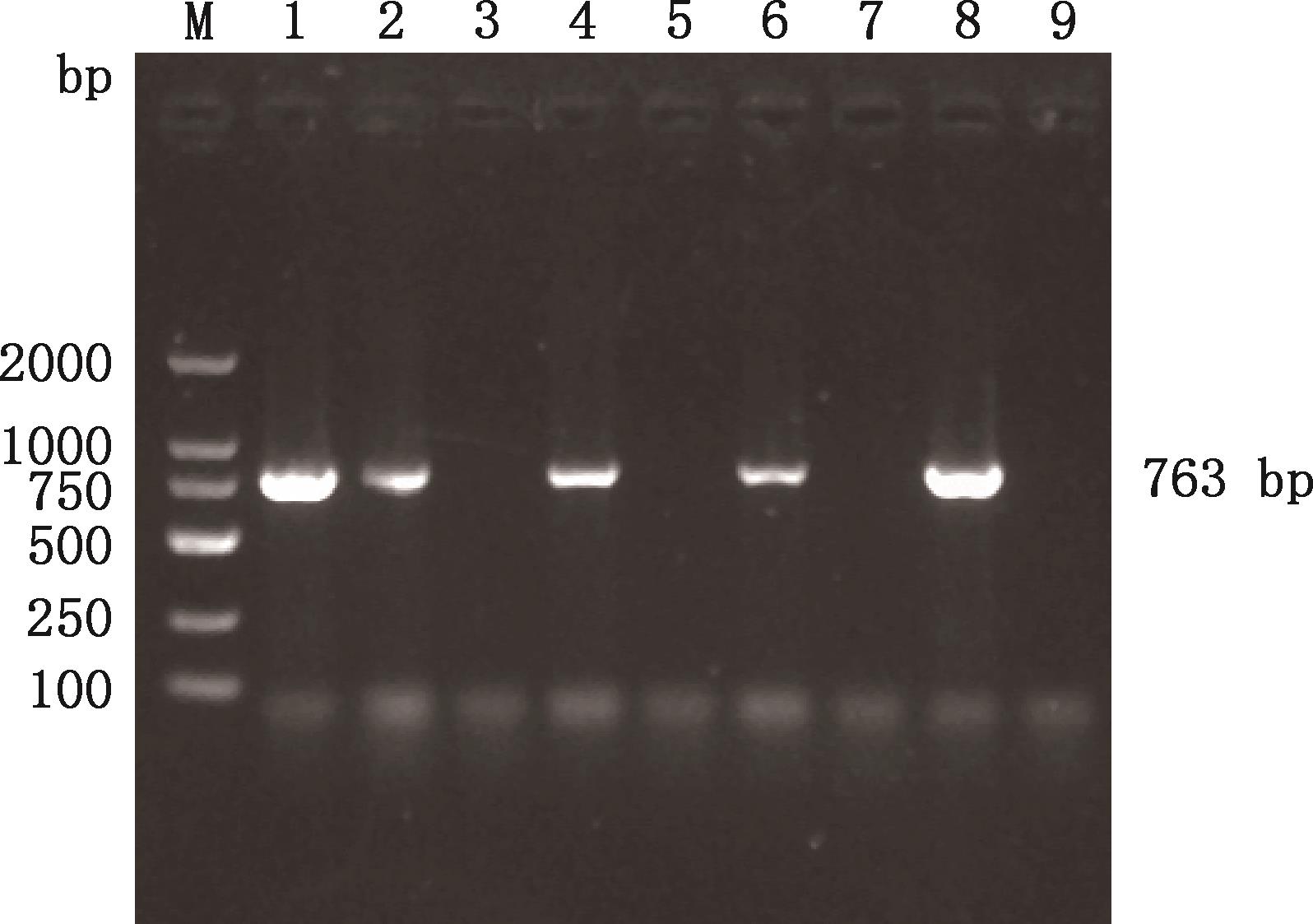
图5
HN24XY06株全基因组分段扩增结果M,DL2000 DNA Marker;1~10,P1~P10分段基因;11,3'-Race P2"
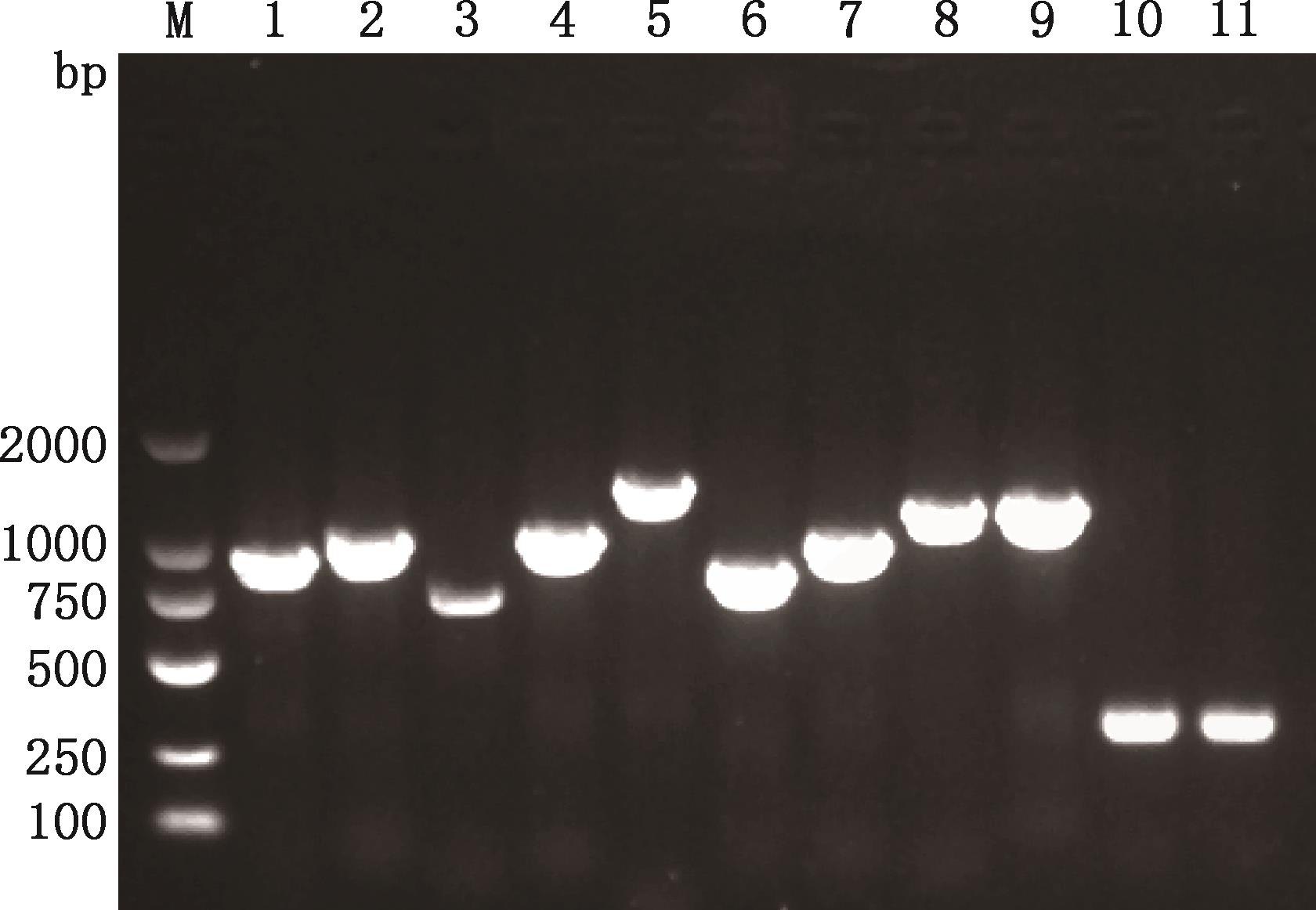

图6
HN24XY06株全基因组结构示意图"

表4
HN24XY06株与星状病毒参考毒株核苷酸序列相似性"
毒株 Strains | 类型 Type | 相似性 Similarities /% | 毒株 Strains | 类型 Type | 相似性 Similarities /% |
|---|---|---|---|---|---|
| DAstV-SDZZ | DAstV1 | 97.8 | X1257 | DAstV | 54.4 |
| DAstV-SDWF | DAstV1 | 97.8 | C1365 | DAstV | 54.4 |
| HB2015 | DAstV1 | 97.6 | C1388 | DAstV | 54.5 |
| DA08 | DAstV1 | 96.0 | X2250 | DAstV | 54.2 |
| DA07 | DAstV1 | 95.4 | CPH NM1002 | DAstV3 | 57.3 |
| D51 | DAstV1 | 91.2 | CPH | DAstV3 | 57.3 |
| WF1201 | DAstV1 | 91.2 | JM | DAstV5 | 54.3 |
| D390 | DAstV1 | 91.2 | SL1 | DAstV2 | 56.6 |
| D120 | DAstV1 | 91.2 | SL5 | DAstV2 | 56.9 |
| D17 | DAstV1 | 91.1 | Du/Egy/Gharbia/2021/DAstVs | DAstV | 57.4 |
| C-NGB | DAstV1 | 91.0 | JSHA | GAstV | 57.4 |
| AAstV/Chicken/CHN/2018/CZ1801 | AAstV | 57.2 | GD | GAstV | 57.6 |
| TAstV/VA/99 | TAstV | 61.1 | GAstV-SDHZ | GAstV | 57.6 |
| TAstV/CA/00 | TAstV | 60.9 | AstV/Goose/2018/HLJ01 | GAstV | 57.5 |
| YP2 | DAstV4 | 54.5 | Astv/Goose/Guangdong/1812LMG/2018 | GAstV | 56.7 |
| TAstV/AK/98 | TAstV | 61.3 |
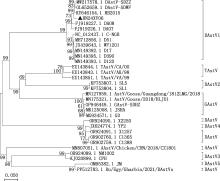
图7
基于全基因组序列的遗传进化树▲,本试验分离株。下同"
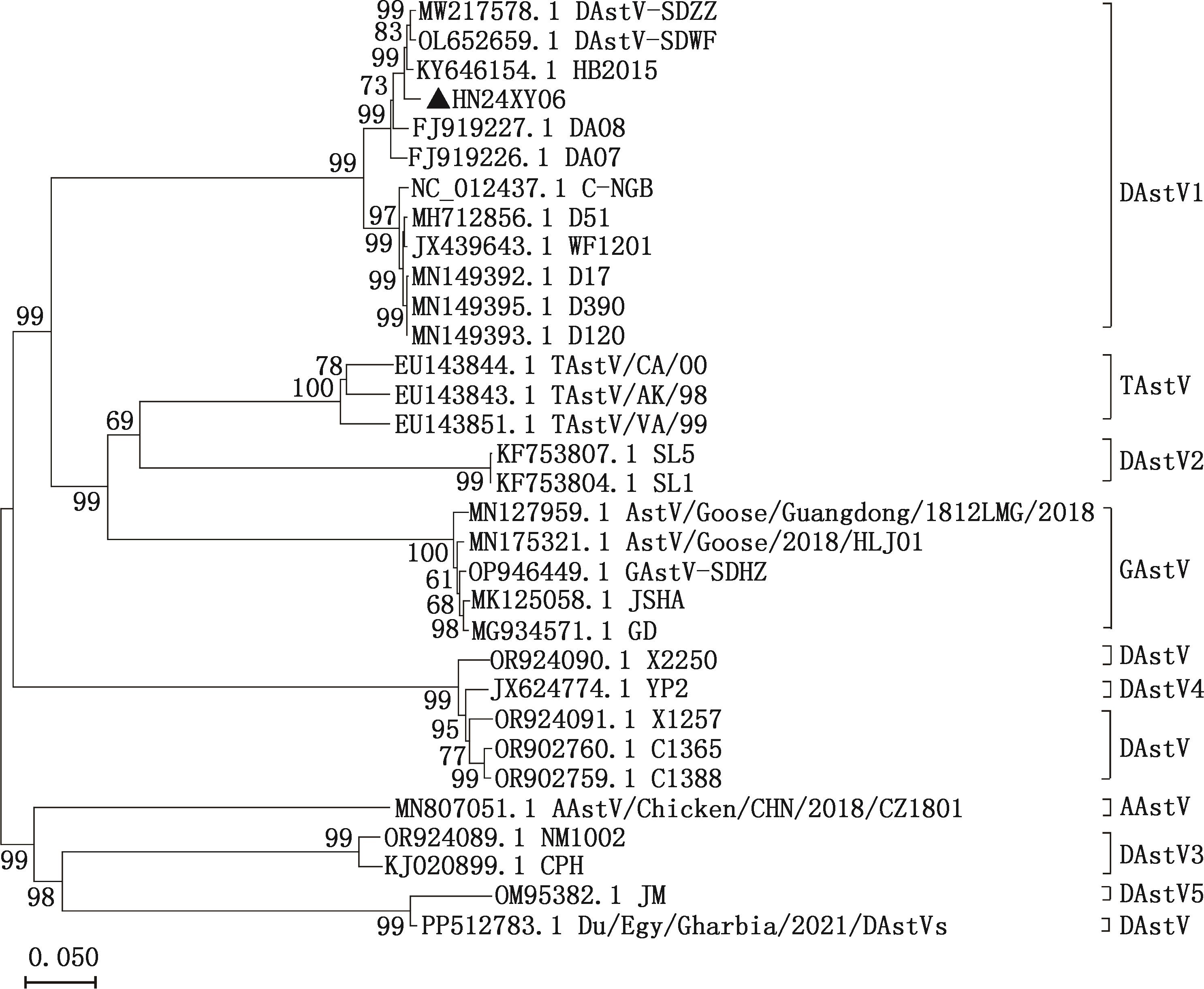
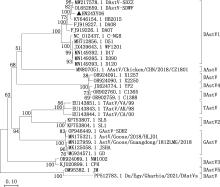
图8
基于ORF1a氨基酸序列的遗传进化树"

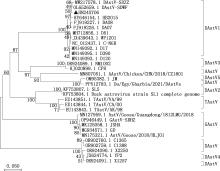
图9
基于ORF1b氨基酸序列遗传进化树"

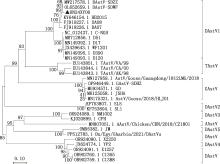
图10
基于ORF2氨基酸序列遗传进化树"
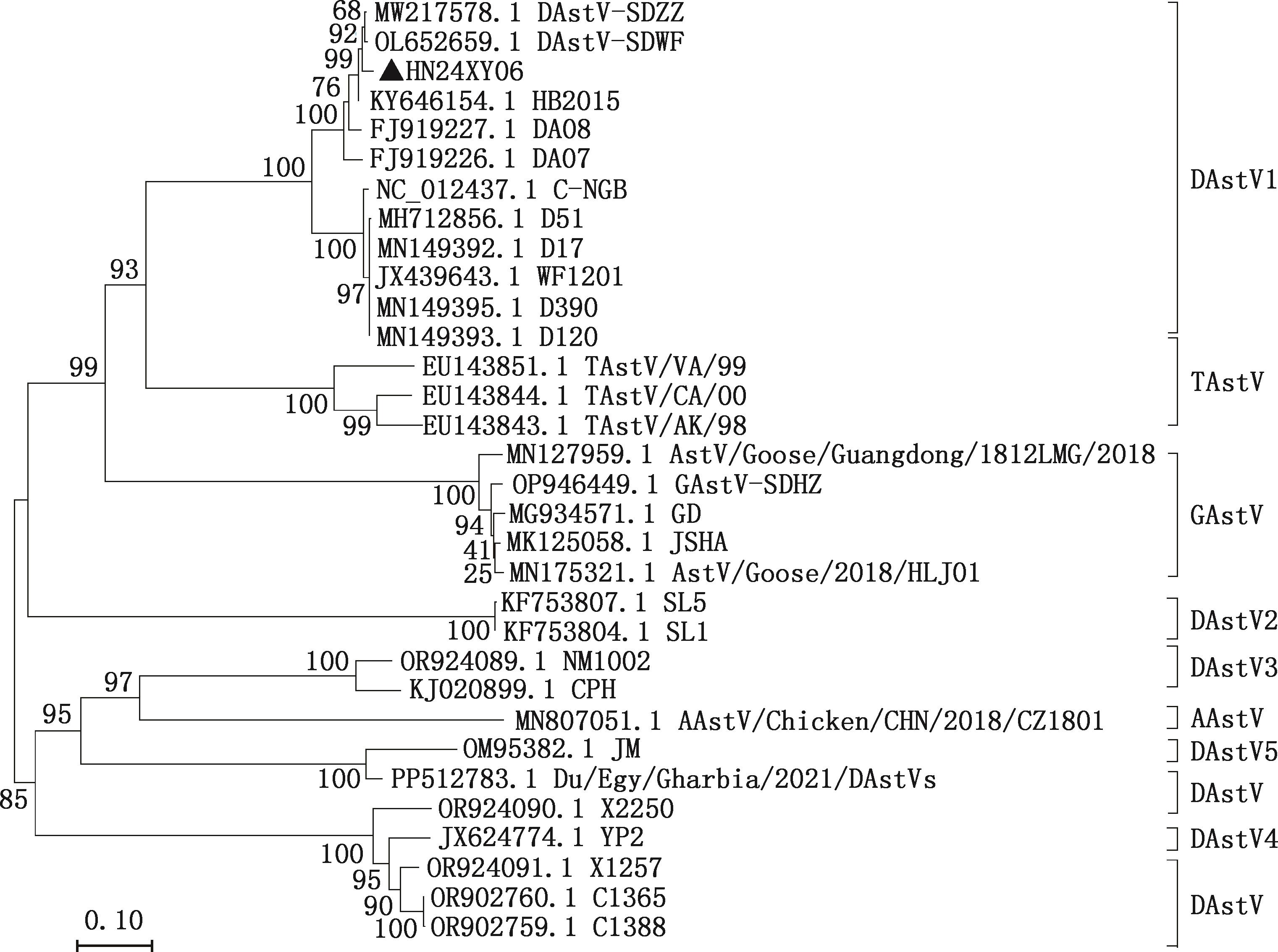
表5
HN24XY06株ORF1a、ORF1b、ORF2 氨基酸突变位点分析"
毒株 Strains | 开放阅读框 Open reading frame | 突变位点 Mutational site |
|---|---|---|
| C-NGB | ORF1a | Q11E、E17Q*、S25P、P26F、G50D、D50N、S103A、I104L、I143F、M148V、A185V、H192Q、F198Y*、M230I、L230I、E266D*、P283S、K306N、Q346K、H346Y、A361V*、S379T、I381F、I385M、T421K、L423I、T449I、M465I、S493K*、S501F、M504F、I528V、I545V、V565I、V595I、A624V、A651V、S677A、I700V、R747Q、L751P、T752I、V753A*、K757R、D761T、R766K、I817T、T831I、E833K*、I834T、R836G、A840T、A841T、K844N、S846C*、R856G*、E859K*、F862Y、T864A、A871T、T873A、T885A、K884R、E888G*、S971N、A1152V、L1156P、V1161A*、S1192N、I1217V、S1238P |
| ORF1b | E19K*、K60R、E108D*、I132M、N172S、K172R、F261Y、N303D、A324V、S3949、T396I、I397V、I437V | |
| ORF2 | P18L、K43R*、H60R、M113L、R137K、R140K、K280T、R307K、N373S、T392A、L427S、R4297P、P437S、S438P*、L461F、N471S、D487S、N488S、V514L、S516A、A520T、R529K、A597E、P602T、F604Y、N620D、S623T、D637E、N639V、V645E、V650G、L663F、E668D、L716P | |
| DAstV-SDWF | ORF1a | E17Q*、F198Y*、R223K、E266D*、A361V*、I385M、M465I、S493K*、V753A*、E833K*、A840T、S846C*、K854E、K856G*、E859K*、E888G*、T896A、F961S、V1161A*、A1233V |
| ORF1b | E19K*、E108D*、M324V | |
| ORF2 | K43R*、S438P*、K451Q | |
| DAstV-SDZZ | ORF1a | E17Q*、F198Y*、R223K、E266D*、A361V*、I385M、S387A、I428L、S493K*、V753A*、V808L、E833K*、V838M、A840T、S846C*、R856G*、E859K*、E888G*、I998M、V1161A*、A1233V |
| ORF1b | E19K*、R35G、K76Q、E108D*、K228Q、M324V | |
| ORF2 | K43R*、S438P*、N488S |
| [1] | 陶 禹,冯旭东,樊彦丽,等.鸭星状病毒1型SYBR Green Ⅰ荧光定量PCR检测方法的建立及其在病毒分离鉴定中的应用[J].中国兽医学报,2024,44(6):1127-1132. |
| TAO Y, FENG X D, FAN Y L, et al. Establishment of SYBR Green Ⅰ dye fluorescence quantitative PCR (qPCR) method for detection of duck Astrovirus type 1 and its application in virus isolation and identification[J]. Chinese Journal of Veterinary Science, 2024,44(6):1127-1132. (in Chinese) | |
| [2] | 封莹洁,孟鸽,蔡成杰,等.鸭星状病毒3型的分离鉴定及全基因组序列分析[J].中国动物检疫,2025,42(4):84-91. |
| FENG Y J, MENG G, CAI C J, et al. Isolation,identification and genomic sequence analysis of DAstV-3[J]. China Animal Health Inspection, 2025,42(4):84-91. (in Chinese) | |
| [3] | ZHANG J, HUANG Y, LI L, et al. First identification and genetic characterization of a novel Duck astrovirus in ducklings in China[J]. Frontiers in Veterinary Science, 2022, 9:873062. |
| [4] | LAN J, ZHANG R, LI P, et al. Identification of a type-specific epitope in the ORF2 protein of Duck astrovirus type 1[J]. Animals (Basel), 2019, 9(12):1069. |
| [5] | ASPLIN F D. Duck hepatitis[J]. Veterinary Record, 1965, 77(17):487. |
| [6] | HAIDER S A, CALNEK B W. In vitro isolation, propagation, and characterization of Duck hepatitis virus type Ⅲ[J]. Avian Diseases, 1979, 23(3):715-729. |
| [7] | TODD D, SMYTH V J, BALL N W, et al. Identification of Chicken enterovirus-like viruses, Duck hepatitis virus type 2 and Duck hepatitis virus type 3 as Astroviruses[J]. Avian Pathology, 2009, 38(1):21-30. |
| [8] | LIU N, WANG F, ZHANG D. Complete sequence of a novel Duck astrovirus[J]. Archives of Virology, 2014, 159(10):2823-2827. |
| [9] | LIAO Q, LIU N, WANG X, et al. Genetic characterization of a novel Astrovirus in Pekin ducks[J]. Infection, Genetics and Evolution, 2015, 32:60-67. |
| [10] | 刘 宁.鸭星状病毒的遗传变异性和抗原性及感染鸭肝脏的转录组分析[D].北京:中国农业大学,2017. |
| LIU N. Genetic variability and antigenicity of Duck astrovirus (DAstV) and transcriptome analysis on livers of DAstV-infected ducklings[D]. Beijing: China Agricultural University, 2017. (in Chinese) | |
| [11] | LI Y, LUO J, SHANG J, et al. Epidemiological investigation and pathogenicity analysis of waterfowl Astroviruses in some areas of China[J]. Frontiers in Microbiology, 2024, 15:1375826. |
| [12] | FU Y, PAN M, WANG X, et al. Complete sequence of a Duck astrovirus associated with fatal hepatitis in ducklings[J]. Journal of General Virology, 2009, 90(5):1104-1108. |
| [13] | 张富友.我国部分地区禽星状病毒分子流行病学调查及其基因组特性研究[D].泰安:山东农业大学,2021. |
| ZHANG F Y. Molecular epidemiology and genomic characteristics of Avian astrovirus in some areas of China[D]. Tai’an: Shandong Agricultural University,2021.(in Chinese) | |
| [14] | WEI F, WANG Y, WANG Q, et al. The isolation and characterization of Duck astrovirus type-1 remerging in China[J]. Transboundary and Emerging Diseases, 2022, 69(5):2890-2897. |
| [15] | XU J, YIN L, GUO Y, et al. The biological characteristics of DAstV molecular epidemiology and pathogenicity of Duck astrovirus causing hepatitis in ducks and chickens in Southeast China[J]. Poultry Science, 2024, 103(10):104076. |
| [16] | CHEN X, CHEN Y, LIU C, et al. Improved one-tube RT-PCR method for simultaneous detection and genotyping of Duck hepatitis A virus subtypes 1 and 3[J]. PLoS One, 2019, 14(8):e0219750. |
| [17] | 杨 晶,张日腾,王振忠,等.我国部分地区鸭病毒性疫病共感染的流行病学调查[J].中国兽医学报,2018,38(10):1872-1877. |
| YANG J, ZHANG R T, WANG Z Z, et al. Epidemiological investigation on co-infection of ducks viral pathogens in some areas of China[J]. Chinese Journal of Veterinary Science, 2018,38(10):1872-1877. (in Chinese) | |
| [18] | LI Y, LUO J, ZHANG F, et al. Establishment and application of quadruple fluorescence quantitative RT-PCR method for the identification of waterfowl Astrovirus[J]. Frontiers in Microbiology, 2024, 15:1328243. |
| [19] | 郭翠平.鸭星状病毒1型WF1202株全基因组序列的测定与单因子血清的制备[D].泰安:山东农业大学,2014. |
| GUO C P. Analysis of the complete genome sequence and preparation of mono-specific serum of Duck astrovirus type 1 WF1202 strain[D]. Tai’an: Shandong Agricultural University,2014.(in Chinese) | |
| [20] | 张富友,邓春冉,王素春,等.禽星状病毒研究进展[J].中国动物检疫,2022,39(5):83-91. |
| ZHANG F Y, DENG C R, WANG S C, et al. Advances in the researches on Avian astrovirus[J]. China Animal Health Inspection, 2022,39(5):83-91. (in Chinese) | |
| [21] | XU J, YIN L, YAN Z, et al. Impact of Duck astrovirus on susceptibility to infection across duck ages[J]. Poultry Science, 2024, 103(5):103564. |
| [22] | 王笑言.鸭产蛋下降相关新病毒的分子鉴定与生物学特性研究[D].北京:中国农业大学,2015. |
| WANG X Y. Molecular identification and biological characterization of newly discovered viruses associated with egg drop of ducks[D]. Beijing: China Agricultural University, 2015. (in Chinese) | |
| [23] | LIU N, JIANG M, WANG M, et al. Isolation and detection of Duck astrovirus CPH: Implications for epidemiology and pathogenicity[J]. Avian Pathology, 2016, 45(2):221-227. |
| [24] | 邓春冉.我国部分地区水禽星状病毒的分子流行病学调查与DAstV-3快速检测方法的建立[D].邯郸:河北工程大学,2022. |
| DENG C R. Molecular epidemiological investigation of Avian astrovirus from waterfowl in some regions of China and the establishment of a rapid detection method for DAstV-3[D]. Handan: Hebei University of Engineering, 2022. (in Chinese) | |
| [25] | 廖勤丰. 新发现的水禽星状病毒、微RNA病毒和嵌杯病毒的分子检测与鉴定[D].北京:中国农业大学,2014. |
| LIAO Q F. Molecular detection and characterization of newly discovered Astrovirus, Picornavirus and Calicivirus of waterfowl[D]. Beijing: China Agricultural University, 2014. (in Chinese) | |
| [26] | 于天浩.一株鸭源星状病毒生物学特性鉴定及其卵黄抗体对雏鸭保护性的研究[D].哈尔滨:东北林业大学, 2024. |
| YU T H. Identification of biological characteristics of a duck-derived Astrovirus and study on the protective effect of egg yolk antibody on ducklings[D]. Harbin: Northeast Forestry University, 2024. (in Chinese) | |
| [27] | DE NOVA-OCAMPO M, SOLIMAN M C, EPINOSA-HERNÁNDEZ W, et al. Human astroviruses: In silico analysis of the untranslated region and putative binding sites of cellular proteins[J]. Molecular Biology Reports, 2019, 46(1):1413-1424. |
| [28] | PANTIN-JACKWOOD M J, STROTHER K O, MUNDT E, et al. Molecular characterization of Avian astroviruses[J]. Archives of Virology, 2011, 156(2):235-244. |
| [29] | ARIAS C F, DUBOIS R M. The Astrovirus capsid: A review[J]. Viruses, 2017, 9(1):15. |
| [30] | DUBOIS R M, FREIDEN P, MARVIN S, et al. Crystal structure of the Avian astrovirus capsid spike[J]. Journal of Virology, 2013, 87(14):7853-7863. |
| [31] | 张思远,卢秀娴,梁昭平,等.我国部分地区新型鹅星状病毒ORF2基因序列及遗传变异分析[J].中国动物检疫,2021,38(6):1-5. |
| ZHANG S Y, LU X X, LIANG Z P, et al. ORF2 gene sequence of novel Goose astroviruses isolated in China and genetic variation analysis[J]. China Animal Health Inspection, 2021, 38(6):1-5. (in Chinese) | |
| [32] | WOHLGEMUTH N, HONCE R, SCHULTZ-CHERRY S. Astrovirus evolution and emergence[J]. Infection, Genetics and Evolution, 2019, 69:30-37. |
| [1] | 桂亚萍, 夏琦琦, 杨显超, 刘健, 徐平, 徐锋, 葛菲菲, 王建, 赵洪进. 上海地区牛腹泻相关病毒的检测及分析[J]. 中国畜牧兽医, 2026, 53(2): 937-947. |
| [2] | 张欣欣, 张岳, 崔安, 李金儒, 张芸菁, 何丽霞, 杨桂君, 任玉东, 李广兴. 黑龙江省猪流行性腹泻病毒流行毒株分离鉴定与遗传进化分析[J]. 中国畜牧兽医, 2026, 53(1): 378-389. |
| [3] | 杨彦, 胡雁鸣, 丁健, 李犇, 何雨桐, 刘雪薇, 王佳文, 兰卓, 邱鸿宇, 高俊峰, 王春仁. 蟾蜍棒线虫线粒体全基因组特征分析[J]. 中国畜牧兽医, 2025, 52(7): 3190-3201. |
| [4] | 钟玮霖, 尧建辉, 魏晓琪, 颜广智, 陈盛楠, 刘明杰, 黄良宗. 广东某规模化猪场PCV2d感染的诊断与遗传进化分析[J]. 中国畜牧兽医, 2025, 52(6): 2781-2789. |
| [5] | 林伟山, 马豆豆, 雷萌桐, 魏斌, 李国才, 王光华, 王戈平, 简莹娜, 李秀萍. 青海海北地区牦牛病毒性腹泻病毒流行病学调查及5'-UTR遗传进化分析[J]. 中国畜牧兽医, 2025, 52(3): 1241-1249. |
| [6] | 刘健, 周锦萍, 徐卫兵, 白艺兰, 杨显超, 桂亚萍, 夏琦琦, 徐锋, 沈莉萍, 刘佩红, 王建. 上海地区鸽Ⅰ型副黏病毒流行株HN基因遗传进化和生物信息学分析[J]. 中国畜牧兽医, 2025, 52(11): 5371-5380. |
| [7] | 王仲浩, 田野, 袁小远, 李桂明, 陈书民, 刘明超, 王传文, 孟凯. 鸽圆环病毒全基因组测序及遗传进化分析[J]. 中国畜牧兽医, 2025, 52(11): 5414-5421. |
| [8] | 李峰, 谢宾, 张帅. 2株重组禽传染性支气管炎病毒的分离鉴定及基因组序列分析[J]. 中国畜牧兽医, 2024, 51(9): 3958-3969. |
| [9] | 喻复心, 吴斯宇, 余界石, 张晓爱, 俞婷, 董博, 李建波, 王蕾, 魏文康. 广东部分地区鹅星状病毒的分离鉴定、全基因组测序及遗传进化分析[J]. 中国畜牧兽医, 2024, 51(6): 2633-2643. |
| [10] | 毕峻铭, 董雅琴, 崔进, 沙洲, 顾丛丛, 郑辉, 魏荣, 孙福亮, 张锋, 张志宏. 山东地区1株牛病毒性腹泻病毒的分离鉴定及遗传进化分析[J]. 中国畜牧兽医, 2024, 51(10): 4485-4499. |
| [11] | 陈昌毅, 李根, 何红玲, 陈昱彤, 黄学喆, 罗均, 郭霄峰. 1株猫嵌杯病毒的分离鉴定及全基因序列分析[J]. 中国畜牧兽医, 2023, 50(9): 3707-3718. |
| [12] | 唐海波, 姜佳佳, 陈凤莲, 杨锦兰, 白安斌, 刘金凤, 覃绍敏, 吴健敏. 竹鼠源细小病毒分离鉴定及全基因组序列分析[J]. 中国畜牧兽医, 2023, 50(7): 2843-2853. |
| [13] | 刘可欣, 王超, 张傲, 刘佳利, 谭斌, 张淑琴. 牛病毒性腹泻病毒LN-1株的分离鉴定及基因组序列分析[J]. 中国畜牧兽医, 2023, 50(3): 1150-1159. |
| [14] | 刘雨桐, 姚妍婷, 黎芮伶, 韩文琪, 石婷, 王一丹, 任玉鹏. 中国西南部分地区2020-2021年猪流行性腹泻病毒遗传变异分析[J]. 中国畜牧兽医, 2022, 49(6): 2279-2290. |
| [15] | 阴雅洁, 梁瑞英, 崔欢, 孟利佳, 倪维玲, 乔思娜, 郭康康, 张博, 李松励, 侯绍华, 董世山. 鸭坦布苏病毒分离鉴定及其囊膜蛋白遗传进化分析[J]. 中国畜牧兽医, 2022, 49(4): 1497-1506. |
| 阅读次数 | ||||||
|
全文 |
|
|||||
|
摘要 |
|
|||||
