
China Animal Husbandry & Veterinary Medicine ›› 2026, Vol. 53 ›› Issue (2): 1043-1054.doi: 10.16431/j.cnki.1671-7236.2026.02.047
• Basic Veterinary Medicine • Previous Articles
MENG Ling1( ), WANG Wenwen2, ZHENG Wei2, WU Xuanmin1, QIU Hao1, WANG Jing1, GAO Xun2,3, SHI Yun2,3()
Received:2025-06-04
Online:2026-02-20
Published:2026-01-27
Contact:
SHI Yun
E-mail:1317588879@qq.com;syun1@163.com
CLC Number:
MENG Ling, WANG Wenwen, ZHENG Wei, WU Xuanmin, QIU Hao, WANG Jing, GAO Xun, SHI Yun. Mechanism of the Anti-tumor Effect of Scutellaria barbata D.Don by LC-MS Combined with Network Pharmacology[J]. China Animal Husbandry & Veterinary Medicine, 2026, 53(2): 1043-1054.
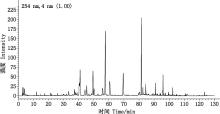
Fig.1
Chromatogram of SBD"
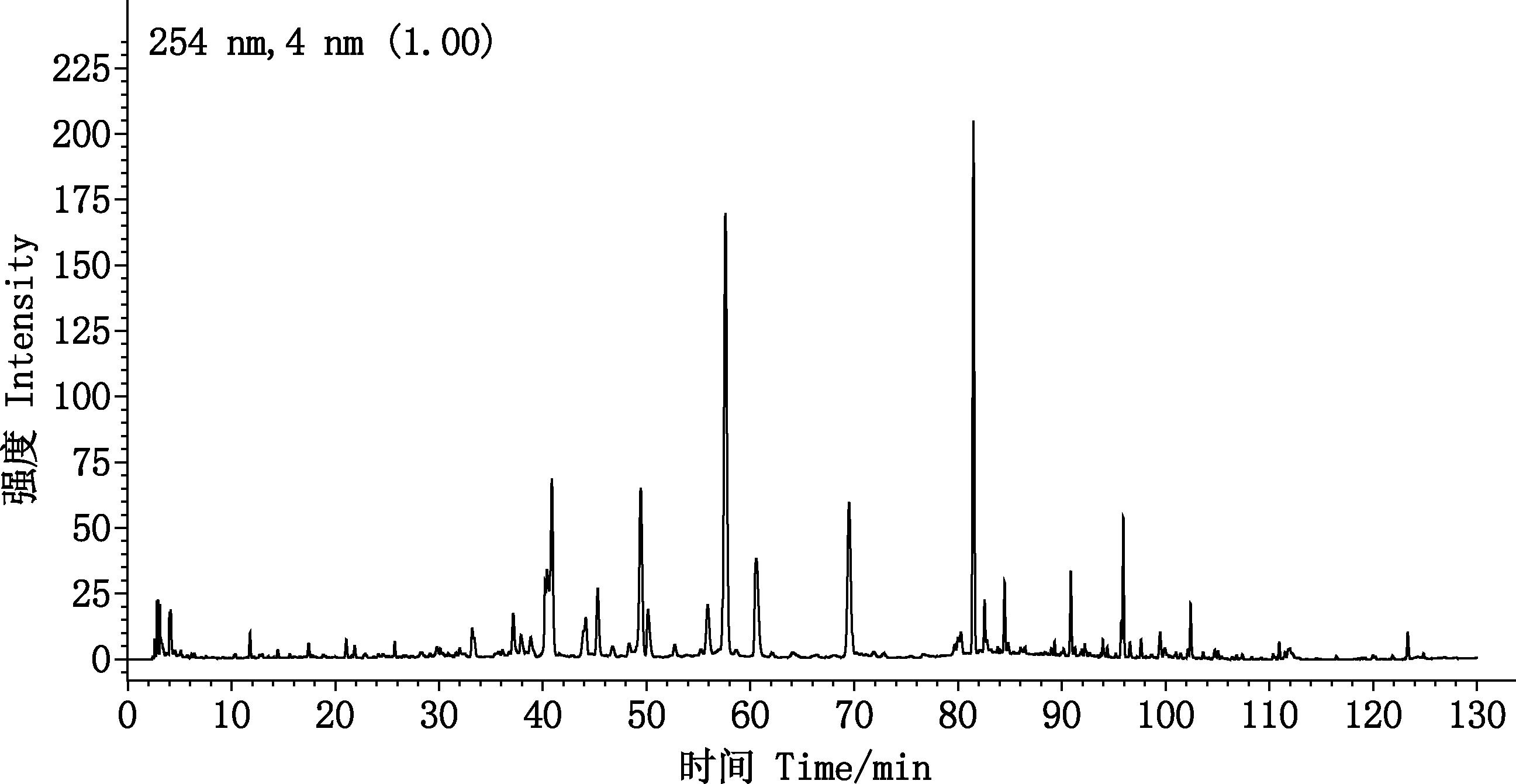
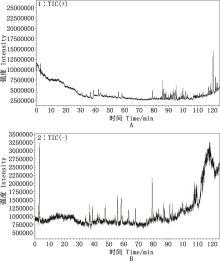
Fig.2
TIC chromatogram of the extract of SBD in positive (A) and negative (B) ion modes"

Table 1
Identification results of main compounds in SBD"
化合物 Compounds | 保留时间 Retention time/min | 分子质量 Molecular weight/u | 质荷比 Mass-to-charge ratio/(m/z) | |
|---|---|---|---|---|
正离子 Positive ion | 负离子 Negative ion | |||
| 木犀草素葡萄糖苷 Luteolin glucoside | 27.73 | 448 | 449.05 | 447.05 |
| 二氢野黄芩苷 Dihydroscutellarein | 34.08 | 464 | 465.05 | 463.10 |
| 野黄芩苷异构体 Isoscutellarein | 36.70 | 462 | 463.00 | 461.05 |
| 木犀草素葡萄糖苷 Luteolin glucoside | 42.22 | 448 | 449.05 | 447.10 |
| 野黄芩苷 Scutellarin | 43.72 | 462 | 463.05 | 461.05 |
| 芹菜素-7-O-葡萄糖醛酸苷Apigenin-7-O-glucronide | 47.47 | 446 | 447.05 | 445.10 |
3',4',5,7-四羟基-6-甲氧基黄酮的葡萄糖醛酸苷 3',4',5,7-tetrahydroxy-6-methoxyflavone glucuronide | 48.27 | 478 | 479.05 | 477.10 |
| 刚毛黄素葡萄糖醛酸苷Hispidulin-7-O-glucuronide | 51.67 | 476 | 477.05 | 475.10 |
| 野黄芩素 Scutellarein | 55.87 | 286 | 287.05 | 286.05 |
5,8,2-三羟基-7-O-葡萄糖醛酸黄酮苷 5,8,2-trihydroxy-7-O-glucuronyl flavone glycoside | 58.18 | 462 | 463.05 | 461.05 |
| 木犀草素 Luteolin | 68.05 | 286 | 287.00 | 285.05 |
| 芹菜素 Apigenin | 79.25 | 270 | 271.05 | 269.00 |
| 4'-羟基汉黄芩素 4'-hydroxywogonin | 80.09 | 300 | 301.00 | 299.05 |
5,6,2'-三羟基-7,8-二甲氧基黄酮 5,6,2'-trihydroxy-7,8-dimethoxyflavone | 81.50 | 330 | 331.05 | 329.05 |
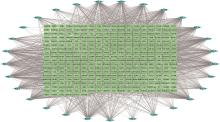
Fig.3
Network diagram of drug active components-targets"

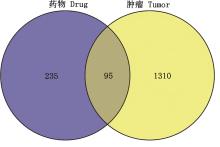
Fig.4
Venn diagram of the intersection between drug and disease targets"
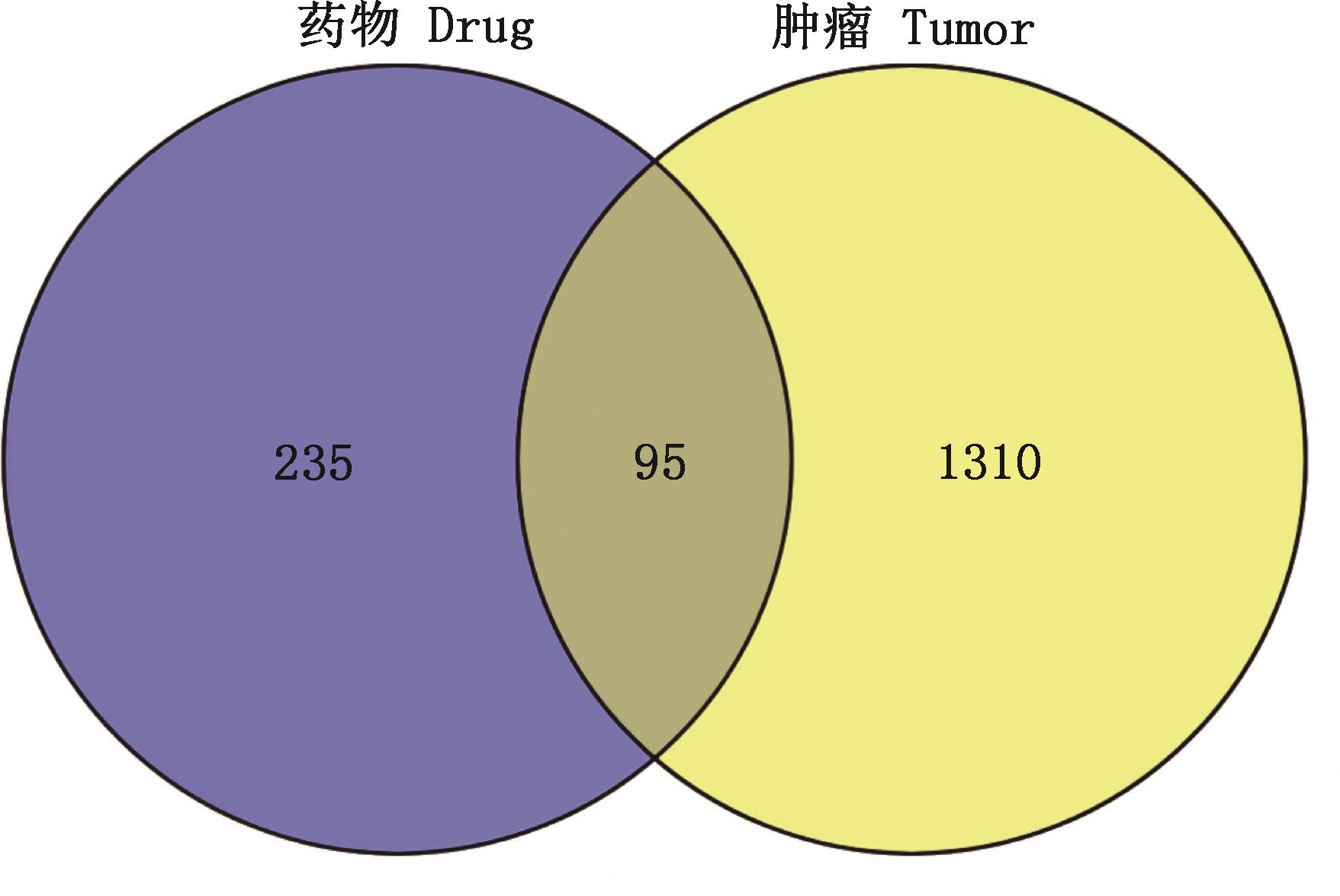
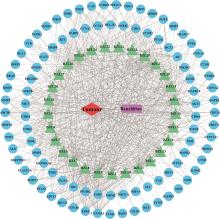
Fig.5
Network diagram of drug component-target-disease"

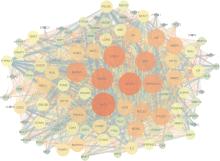
Fig.6
PPI network diagram of drug acting on disease targetsThe larger the node and the darker the color, the higher the importance of the target protein in the network; The thicker the line, the closer the degree of interaction between components"

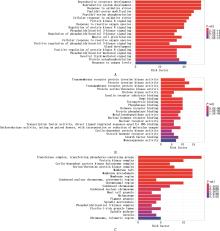
Fig.7
GO functional enrichment analysis of drug-disease intersection targetsA,Biological process;B,Molecular function;C,Cellular component"

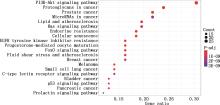
Fig.8
Bubble plot for KEGG pathway enrichment analysis of drug-disease intersection targets"
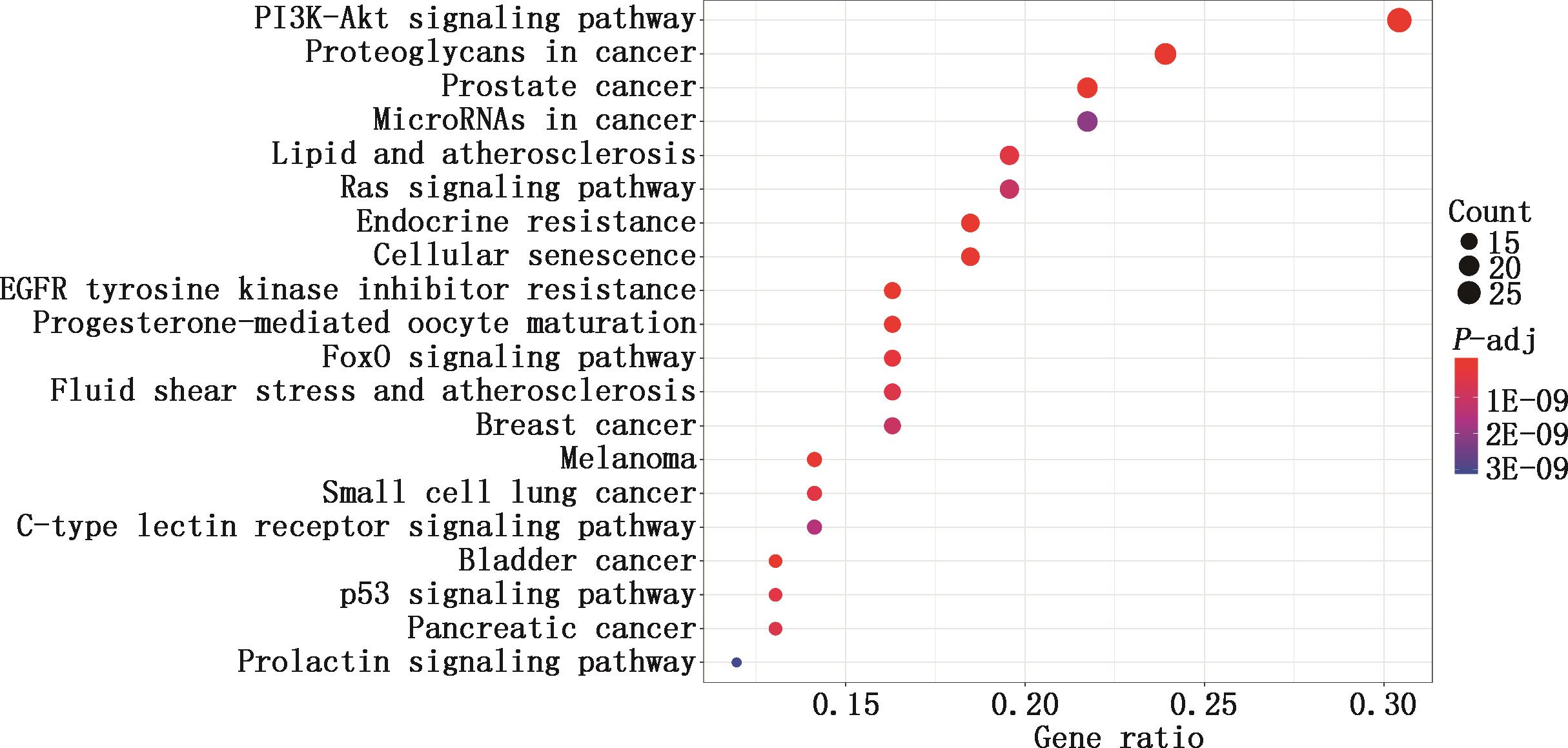
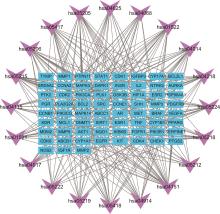
Fig.9
Network diagram of the main component-target-pathwayPurple inverted triangles represent KEGG pathways, and blue rectangles represent the key target for the anti-tumor effect of SBD"
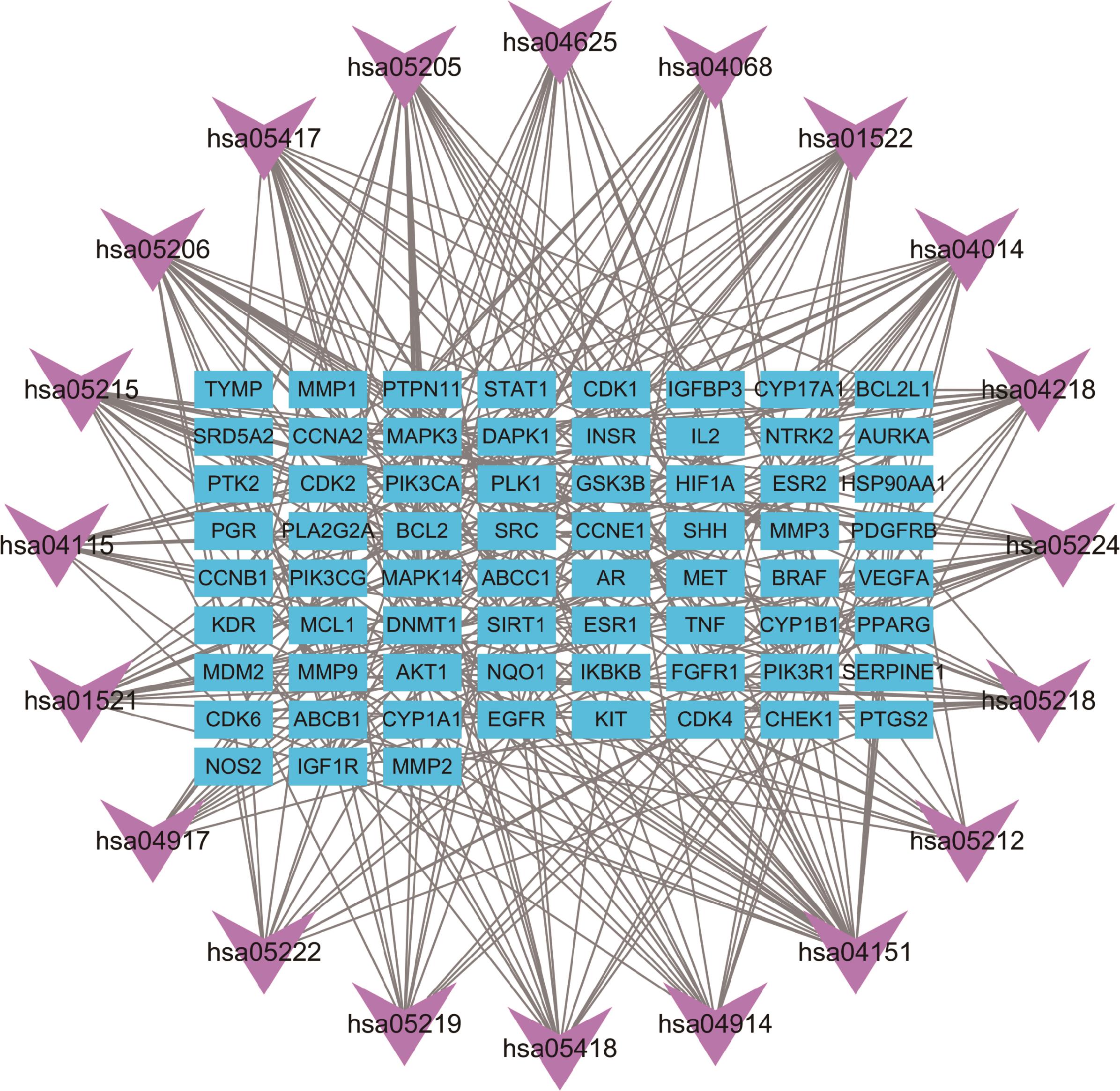
Table 2
Molecular docking results of target-compound interactions"
| 成分 Ingredients | 靶点 Targets | 结合能 Affinity/(kJ/mol) |
|---|---|---|
| 黄芩素 Baicalein | AKT1 | ―28.0 |
| EGFR | ―32.2 | |
| VEGFA | ―27.6 | |
| 汉黄芩素 Wogonin | AKT1 | ―24.3 |
| ESR1 | ―30.1 |
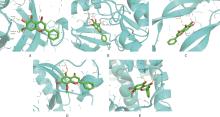
Fig.10
Molecular docking diagram of targets and compoundsA,AKT1-baicalein;B,EGFR-baicalein;C,VEGFA-baicalein;D,AKT1-wogonin;E,ESR1-wogonin"

| [1] | WU Y, HE S, CAO M, et al. Comparative analysis of cancer statistics in China and the United States in 2024[J]. Chinese Medical Journal,2024,137(24):3093-3100. |
| [2] | TAYLOR S, HAIDORSON G. A review of equine sarcoid[J]. Equine Veterinary Education,2013,25(4):210-216. |
| [3] | PARKINSON N J, WARD A, MALBON A J, et al. Bovine papillomavirus gene expression and inflammatory pathway activation vary between equine sarcoid tumour subtypes[J]. Veterinary Immunology and Immunopathology,2024,277:110838. |
| [4] | 刘红艳, 张 永.集约化牛场如何应对牛白血病[J].中国动物保健,2018,20(6):22-23. |
| LIU H Y, ZHANG Y. Strategies for managing bovine leukemia in intensive cattle operations[J]. China Animal Health,2018,20(6):22-23. (in Chinese) | |
| [5] | 钱志瑶, 罗永迪, 李丽琼,等.半枝莲水提液体外抑菌及抑菌稳定性研究[J].中国现代医生,2023,61(21):69-72. |
| QIAN Z Y, LUO Y D, LI L Q, et al. Study on antibacterial activity and stability of Scutellaria barbata aqueous extract in vitro [J]. China Modern Doctor,2023,61(21):69-72. (in Chinese) | |
| [6] | 张洪石, 苏文文, 张启明,等.半枝莲抗肿瘤生物活性研究进展[J].中国药物经济学,2022,17(5):124-128. |
| ZHANG H S, SU W W, ZHANG Q M, et al. Research progress on antitumor bioactivity of Scutellaria barbata [J]. China Journal of Pharmaceutical Economics,2022,17(5):124-128. (in Chinese) | |
| [7] | 牛淑睿, 石 芸, 杨 鑫,等.半枝莲化学成分的抗肿瘤作用研究进展[J].中国药房,2021,32(15):1915-1920. |
| NIU S R, SHI Y, YANG X, et al. Research progress on the antitumor effects of chemical constituents in Scutellaria barbata [J].China Pharmacy,2021,32(15):1915-1920. (in Chinese) | |
| [8] | 李 娜, 王 平, 孙铁锋,等.半枝莲化学成分、药理作用及质量控制研究进展[J].中国中药杂志,2020,45(21):5117-5128. |
| LI N, WANG P, SUN T F, et al. Research progress on chemical constituents, pharmacological action and quality control of Scutellaria barbata [J]. China Journal of Chinese Materia Medica,2020,45(21):5117-5128. (in Chinese) | |
| [9] | 严绪华, 周童曦, 梅 凌,等.半枝莲化学成分及其体外抑制乳腺癌细胞增殖活性[J].中成药,2023,45(6):1864-1870. |
| YAN X H, ZHOU T X, MEI L, et al. Chemical constituents from Scutellaria barbata and their inhibitory activities on the proliferation of breast cancer cells in vitro [J].Chinese Traditional Patent Medicine,2023,45(6):1864-1870. (in Chinese) | |
| [10] | SHENG D, ZHAO B, ZHU W, et al. Scutellaria barbata D.Don (SBD) extracts suppressed tumor growth, metastasis and angiogenesis in prostate cancer via PI3K/Akt pathway[J]. BMC Complementary Medicine and Therapies,2022,22(1):120. |
| [11] | 蔡芸芸, 高 嵩, 刘鲁明,等.半枝莲提取物通过Hippo/YAP通路抑制胰腺癌PANC-1细胞的增殖,侵袭转移和成瘤能力的研究[J].中华中医药杂志,2017,32(7):2947-2951. |
| CAI Y Y, GAO S, LIU L M, et al. Inhibitive effect of Scutellaria barbata D. Don extract on proliferation, invasion, metastasis and tumorigenesis of pancreatic cancer PANC-1 cells via Hippo/YAP signaling pathway[J]. China Journal of Traditional Chinese Medicine and Pharmacy,2017,32(7):2947-2951. (in Chinese) | |
| [12] | 杨 沙,段灿灿,晏仁义,等.基于网络药理学的半枝莲抗肿瘤活性成分及整合作用机制研究[J].中草药,2018,49(15):3471-3482. |
| YANG S, DUAN C C, YAN R Y, et al. Active-component and integrative mechanism of Scutellaria barbata in treatment of cancer based on network pharmacology method[J]. Chinese Traditional and Herbal Drugs,2018,49(15):3471-3482. (in Chinese) | |
| [13] | 郑云飞,李月凤,邓 鑫.抗肿瘤药物半枝莲的药理作用及其药对的研究进展[J/OL].中华中医药学刊,1-15[2025-09-23]. |
| ZHENG Y F, LI Y F, DENG X. Research advances in the pharmacological mechanisms and herbal pairs of anticancer drug Scutellaria barbata [J/OL]. Chinese Archives of Traditional Chinese Medicine,1-15[2025-09-23]. (in Chinese) | |
| [14] | QI J, LI J, BIE B, et al. miR-3,178 contributes to the therapeutic action of baicalein against hepatocellular carcinoma cells via modulating HDAC10[J]. Phytotherapy Research,2023, 37(1):295-309. |
| [15] | LU F, YANG J, ZENG J, et al.Wogonin induces cell cycle arrest and apoptosis of hepatocellular carcinoma cells by activating Hippo signaling[J]. Anti-Cancer Agents in Medicinal Chemistry,2022,22(8):1551-1560. |
| [16] | 黄秀兰,崔国辉,周克元.PI3K-Akt信号通路与肿瘤细胞凋亡关系的研究进展[J].癌症,2008,3:331-336. |
| HUANG X L, CUI G H, ZHOU K Y. Correlation of PI3K-Akt signal pathway to apoptosis of tumor cells[J]. Chinese Journal of Cancer,2008,3:331-336. (in Chinese) | |
| [17] | 陈 艳,蔺 婷,向福兰,等.VEGFA对肿瘤发生发展的作用及其机制的研究进展[J].现代医学,2023,51(9):1345-1352. |
| CHEN Y, LIN T, XIANG F L, et al. Research progress on the role and mechanism of VEGFA in tumor development[J]. Modern Medical Journal, 2023,51(9):1345-1352.(in Chinese) | |
| [18] | 吕 烨,赵雅惠,林 佳.EGFR在肿瘤发生发展及治疗中的作用研究进展[J].临床医学进展,2024,14(12):796-803. |
| LYU Y, ZHAO Y H, LIN J. Research progress on the role of EGFR in tumorigenesis, development and treatment[J]. Advances in Clinical Medicine,2024,14(12):796-803. (in Chinese) | |
| [19] | 张 颖,张师前.ESR1突变在雌激素依赖性恶性肿瘤中的研究进展[J].中华医学杂志,2023,103(28):2198-2201. |
| ZHANG Y, ZHANG S Q. Research advances on ESR1 mutations in estrogen-dependent malignancies[J]. National Medical Journal of China,2023,103(28):2198-2201. (in Chinese) | |
| [20] | 郝思远,周庆发.PI3K抑制剂在癌症治疗中的作用和未来的发展方向[J].药物化学,2023,11(2):100-107. |
| HAO S Y, ZHOU Q F. Role and future directions of PI3K inhibitors in cancer treatment[J]. Hans Journal of Medicinal Chemistry, 2023,11(2):100-107. (in Chinese) | |
| [21] | 张 锐,张文波,邹 晨.LNCRNA与p53通路在消化道肿瘤中作用的研究进展[J].肿瘤预防与治疗,2023,36(6):535-542. |
| ZHANG R, ZHANG W B, ZOU C. Advances in interactions between long non-coding RNA and p53 signaling pathways in digestive tract tumors[J]. Journal of Cancer Control and Treatment, 2023,36(6):535-542. (in Chinese) | |
| [22] | 易陈鹏,黄锦云,许蓝阳,等.转录因子FOXO1在肿瘤形成中的调控作用及机制研究进展[J].生命科学,2021,33(7):824-832. |
| YI C P, HUANG J Y, XU L Y, et al. Research progress on the regulation and mechanism of transcription factor FOXO1 in tumorigenesis[J]. Chinese Bulletin of Life Sciences,2021,33(7):824-832. (in Chinese) |
| [1] | Zhaizhuo YU, Liang ZHANG, Jiu CHEN, Zhiyong WU, Yangdong ZHU, Bin YAN, Hongjun YANG. Exploring the Therapeutic Mechanism of Maxing Shigan Decoction Against Mycoplasma bovis Infection Through Network Pharmacology, Molecular Docking, and Cellular Experiments [J]. China Animal Husbandry & Veterinary Medicine, 2026, 53(2): 995-1008. |
| [2] | LIAO Hongtao, WEN Run, YAN Pupu, HUANG Yongxi, LIU Man, ZHU Jun, CHENG Haishan, GONG Yinuo, PENG Yangyun, QIN Meilin, LI Rong, SU Yingbing, GUO Liwei. Exploring of Mechanism of Action of Sihuang Zhili Granules in Treatment of Diarrhea in Livestock and Poultry by UPLC-Q-TOF-MS Combined with Network Pharmacology and Molecular Dynamics Simulation [J]. China Animal Husbandry & Veterinary Medicine, 2025, 52(9): 4427-4439. |
| [3] | MAO Chiwen, HUANG Mingfeng, LI Miaomiao, CHEN Lan, LUO Yihong, LIAN Kaiqi, MA Shengming, ZHU Erpeng. Exploration of the Mechanism of Echinacea purpurea Against Porcine Epidemic Diarrhea Virus Based on LC-MS and Network Pharmacology [J]. China Animal Husbandry & Veterinary Medicine, 2025, 52(9): 4471-4483. |
| [4] | CHEN Haiyan, ZHANG Jingzheng, XU Chenxin, LIU Yuanfen, ZHOU Yongmei, HAN Jin. Exploration of the Pharmacodynamic Substances of Anti-inflammatory and Mechanism of Clematidis Radix Decoction Using UPLC-Q-TOF-MS Combined with Network Pharmacology [J]. China Animal Husbandry & Veterinary Medicine, 2025, 52(6): 2851-2864. |
| [5] | ZHANG Hechao, ZHANG Zhendong, LIU Xiwang, YANG Yajun, LI Shihong, QIN Zhe, LI Jianyong. Comparative Study on Pharmacokinetics of Two Eprinomectin Injections in Rabbits by HPLC-MS/MS [J]. China Animal Husbandry & Veterinary Medicine, 2025, 52(5): 2295-2304. |
| [6] | GUO Zikai, LUO Anqi, LI Weihan, LIU Juncheng, JIANG Tao, LIU Yisong. Study on the Mechanism of Action of Extract of Physalis Calyx seu Fructus on Avian Infectious Bronchitis Treatment Based on UPLC-Q-TOF-MS and Network Pharmacology [J]. China Animal Husbandry & Veterinary Medicine, 2025, 52(5): 2328-2340. |
| [7] | HUANG Yongxi, YAN Pupu, GUO Weili, LI Yana, ZHU Jun, LIU Man, HOU Chaoqun, QIN Meilin, LI Rong, WU Yi, SU Yingbing, YANG Xiaolin, GUO Liwei, WANG Xiong, DAI Gang. Exploration of the Mechanism of Action of Angelica Decoction on Atopic Dermatitis Mice Using UPLC-Q-TOF-MS Combined with Network Pharmacology [J]. China Animal Husbandry & Veterinary Medicine, 2025, 52(2): 874-889. |
| [8] | Yilalete, CHEN Peng, SA Chula, ZHANG Chunhua, WANG Bo, JIN Lu, LI Shengli, YANG Ding, SUN Yuzhuo, SUN Haizhou. Analysis of the Targets and Pathways of Pectin and Its Metabolites Regulating Endometriosis in Goats from the Perspective of Network Pharmacology [J]. China Animal Husbandry & Veterinary Medicine, 2025, 52(12): 5993-6006. |
| [9] | SONG Yu, SUN Yangang, ZHANG Yiyuan, ZHOU Siqi, ZHANG Lu, LI Wei, ZHANG Minghao, ZHANG Zijuan, MIAO Jinxin, CHEN Fang, CAO Shan, ZHANG Xiaoli, XIE Sha. Study on the Mechanism of Yinchenhao Decoction in Treating Diabetes Mellitus Based on Network Pharmacology and Experimental Verification [J]. China Animal Husbandry & Veterinary Medicine, 2024, 51(9): 4106-4119. |
| [10] | SU Yuanyuan, YU Chengyuan, ZHANG Mixia, ZHANG Yanjun, ZHUANG Pengwei. Study on the Efficacy of Jianpi Qushi Decoction in the Treatment of Nonalcoholic Fatty Liver in Rats [J]. China Animal Husbandry & Veterinary Medicine, 2024, 51(8): 3662-3675. |
| [11] | WU Bowen, YAN Peiyu, WU Mishan. Mechanism of the Active Ingredients of Ephedra sinica Stapf Dried Grass Stems in the Treatment of Vasospasm Based on Network Pharmacology [J]. China Animal Husbandry & Veterinary Medicine, 2024, 51(6): 2680-2696. |
| [12] | WANG Huiqin, DUAN Yingying, YANG Yanping, YANG Miao, CUI Xiaowen, CUI Yizhe. Study on the Mechanism of Euphorbiae humifusae Herba in the Treatment of Ulcerative Colitis Based on Network Pharmacology [J]. China Animal Husbandry & Veterinary Medicine, 2024, 51(5): 2154-2168. |
| [13] | ZHANG Lu, QIU Jicheng, GONG Xiaohui, CAO Yuying, KONG Jingyuan, CAO Xingyuan. Bioequivalence of Two Carprofen Formulations in Dogs [J]. China Animal Husbandry & Veterinary Medicine, 2024, 51(5): 2178-2187. |
| [14] | ZHU Jisheng, XING Weihai, LI Zheng, WANG Li, ZHANG Yawei, ZHANG Yuanqing, YANG Dan, YANG Youyou. Determination of Pentachlorophenol Residues in Swine Formula Feed and Farm Water Using High Performance Liquid Chromatography-triple Quadrupole Mass Spectrometry [J]. China Animal Husbandry & Veterinary Medicine, 2024, 51(4): 1438-1447. |
| [15] | ZHI Yupeng, LIU Yutong, CHEN Dishi, GONG Mengfei, XIA Xuemei, REN Yupeng. Study on the anti-PEDV Mechanism and Experimental Verification of Chrysin and Naringenin Based on Network Pharmacology and Molecular Docking [J]. China Animal Husbandry & Veterinary Medicine, 2024, 51(4): 1757-1772. |
| Viewed | ||||||
|
Full text |
|
|||||
|
Abstract |
|
|||||
