
China Animal Husbandry & Veterinary Medicine ›› 2026, Vol. 53 ›› Issue (1): 479-488.doi: 10.16431/j.cnki.1671-7236.2026.01.043
• Basic Veterinary Medicine • Previous Articles Next Articles
YU Zhiying( ), SU Chunyang, XU Enshuang, ZHENG Jiasan()
Online:2026-01-05
Published:2025-12-26
Contact:
ZHENG Jiasan
E-mail:2860343054@qq.com;zjs3399@aliyun.com
CLC Number:
YU Zhiying, SU Chunyang, XU Enshuang, ZHENG Jiasan. Differentially Expressed Protein Screening of Canine Mammary Tumor Cells CHMM and CHMP[J]. China Animal Husbandry & Veterinary Medicine, 2026, 53(1): 479-488.

Fig.1
Morphology of CHMP (A) and CHMM (B) cells (100×)"
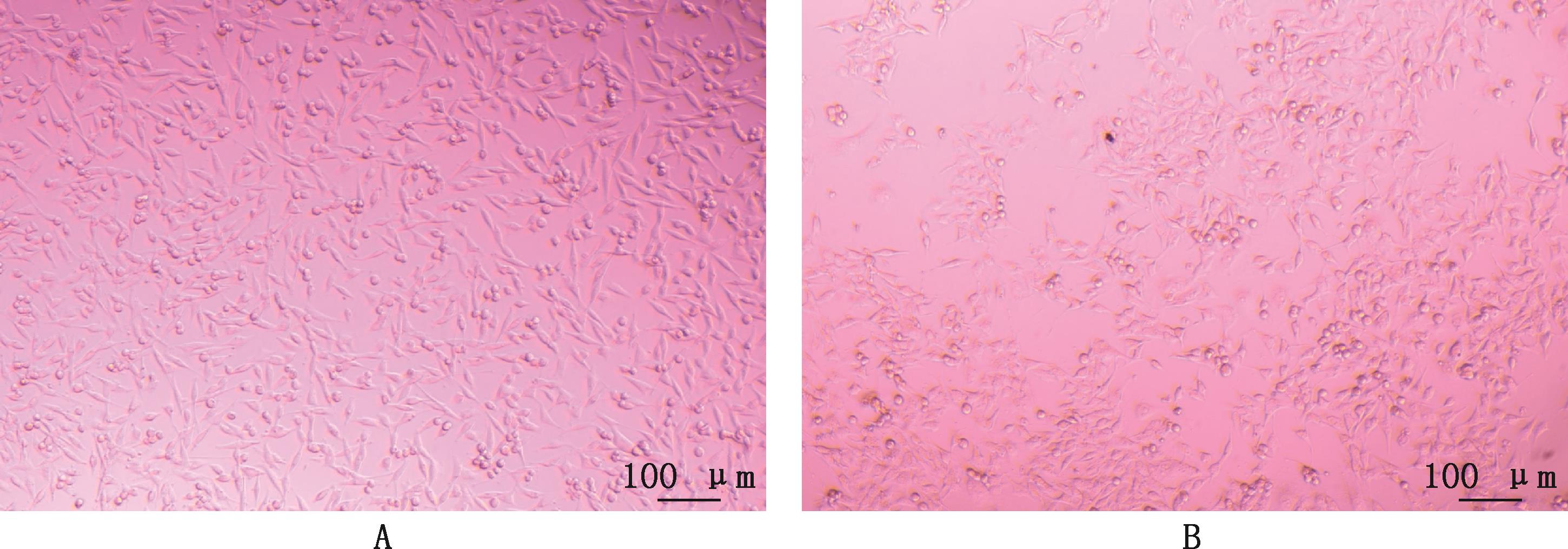
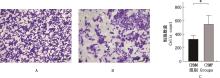
Fig.2
Changes in migration ability of CHMP (A, 100×) and CHMM (B, 100×) cells and statistical chart (C)*,Significant difference (P<0.05). The same as below"

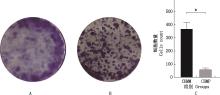
Fig.3
Changes in cloning ability of CHMP (A) and CHMM (B) cells and statistical chart (C)"

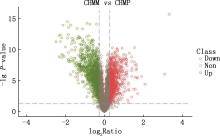
Fig.4
Volcano plot of differentially expressed proteins between CHMM and CHMP cells"
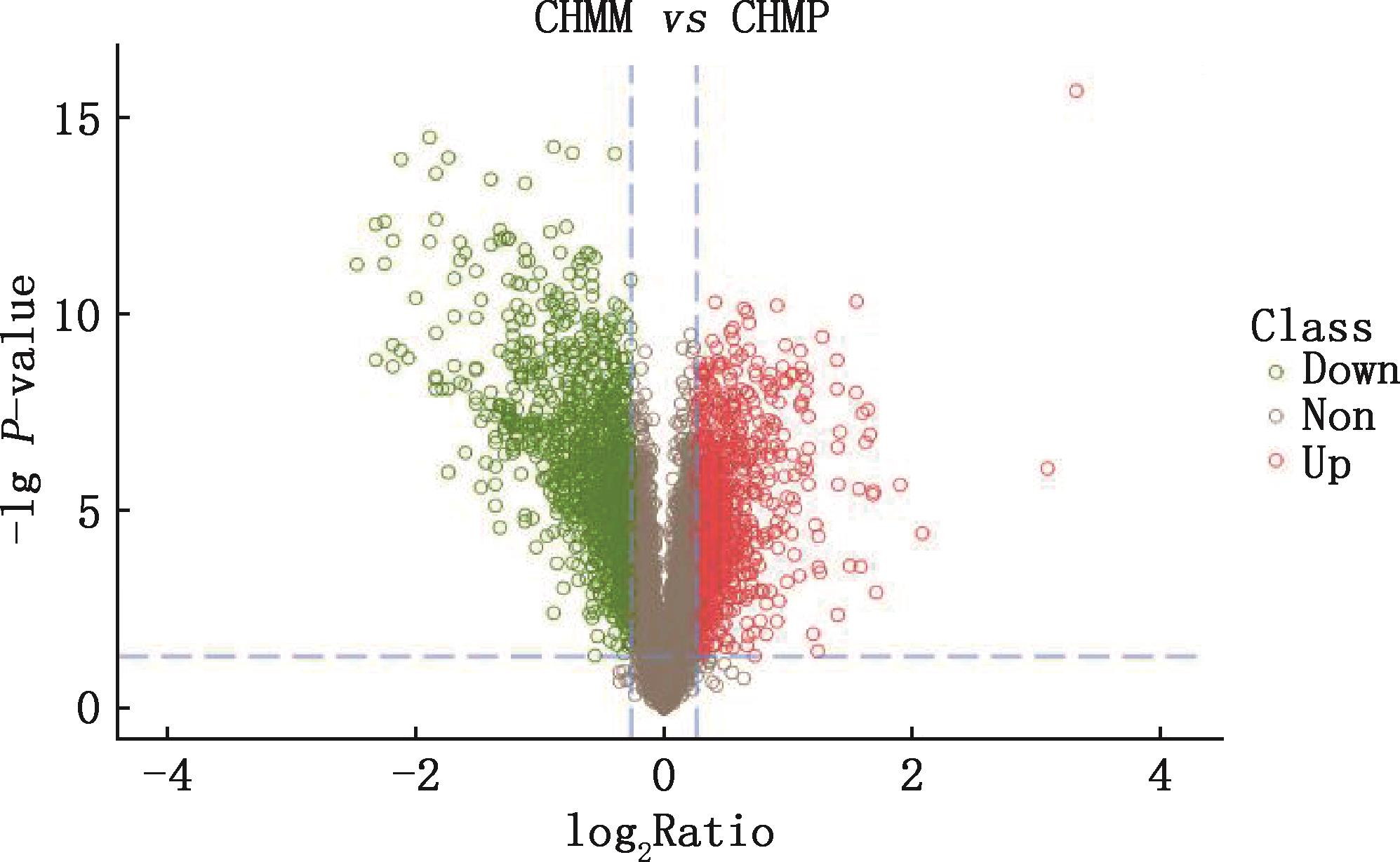
Table 1
Differentially expressed proteins between CHMM and CHMP cells"
蛋白名称 Protein name | P值 P-value | 模式 Pattern | 蛋白名称 Protein name | P值 P-value | 模式 Pattern |
|---|---|---|---|---|---|
| 蛋白磷酸酶1调节亚基14C PPP1R14C | 2.20E-16 | 上调 | 细胞黏附因子 CD44 | 5.86E-15 | 下调 |
| 跨膜单链糖蛋白 TF | 4.87E-11 | 上调 | 高密度脂蛋白结合蛋白 HDLBP | 8.64E-15 | 下调 |
| Gasdermin D蛋白 GSDMD | 5.10E-11 | 上调 | 平滑肌蛋白22 TAGLN | 1.10E-14 | 下调 |
| L抗原家族成员 LAGE3 | 6.16E-11 | 上调 | 二氢嘧啶酶样 3 DPYSL3 | 1.20E-14 | 下调 |
| 纤毛和鞭毛相关蛋白20 CFAP20 | 9.17E-11 | 上调 | 蛋白质S100-A4 S100A4 | 2.72E-14 | 下调 |
| SUMO特异性肽酶3 SENP3 | 1.71E-10 | 上调 | 侵袭基质金属蛋白酶14 MMP14 | 3.85E-14 | 下调 |
| 丝氨酸B10 SERPINB10 | 2.30E-10 | 上调 | α-辅肌动蛋白-1 ACTN1 | 4.90E-14 | 下调 |
| 人细胞角蛋白 Keratin 14 | 6.31E-10 | 上调 | 胸腺肽β-4 TMSB4 | 4.05E-13 | 下调 |
| 碳酰还原酶 LOC610164 | 4.31E-10 | 上调 | OCIA域2 OCIAD2 | 4.59E-13 | 下调 |
| 细胞分裂周期蛋白 73 CDC73 | 7.36E-10 | 上调 | FCH和双SH3结构域1 FCHSD1 | 5.35E-13 | 下调 |
Fig.5
Interaction between significantly upregulated proteins (A) and significantly downregulated proteins (B) between CHMM and CHMP cells"
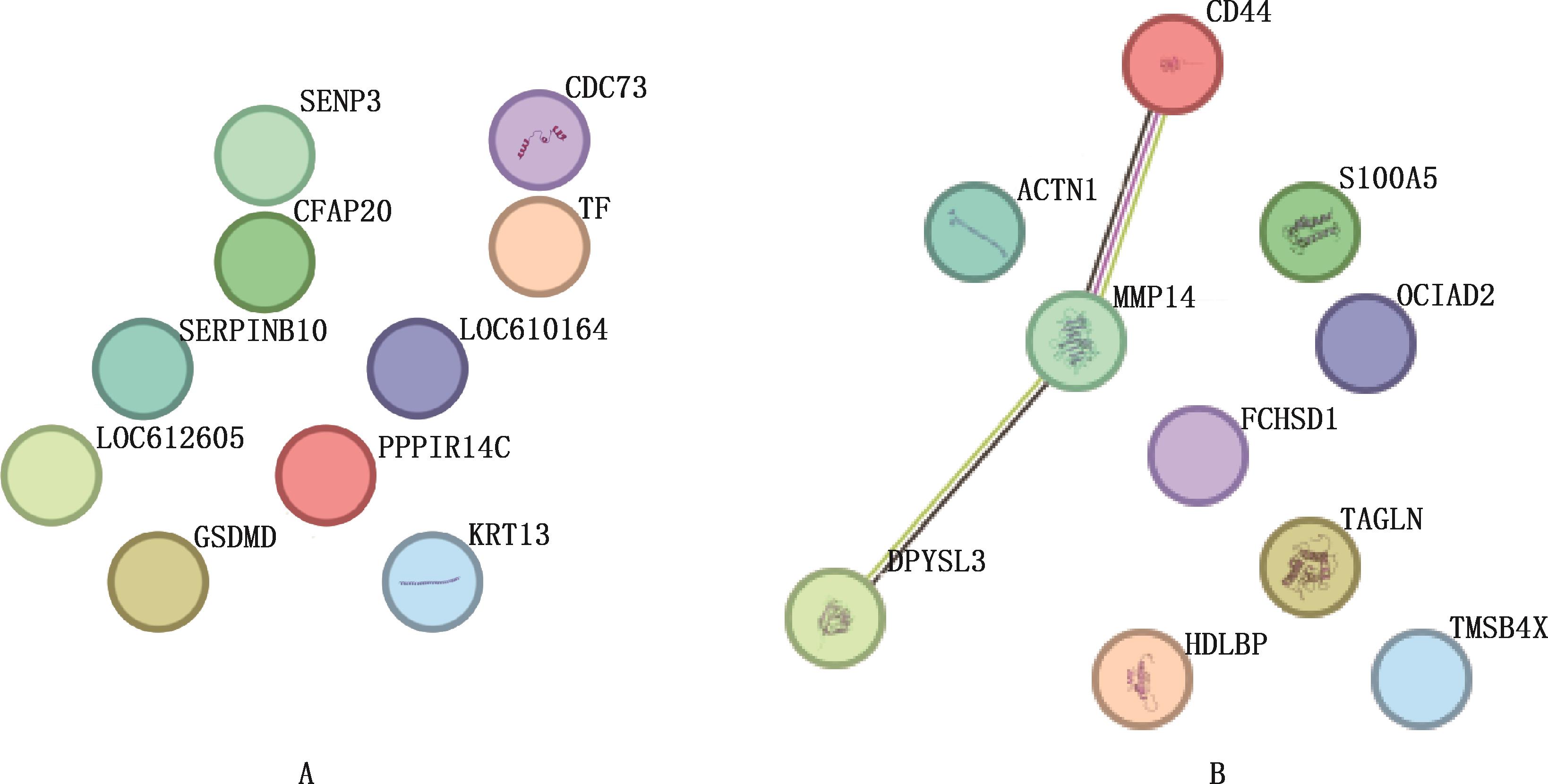
Fig.6
Western blotting detection (A) and gray value analysis (B and C) of differentially expressed proteins GSDMD and CD44 between CHMM and CHMP cells"
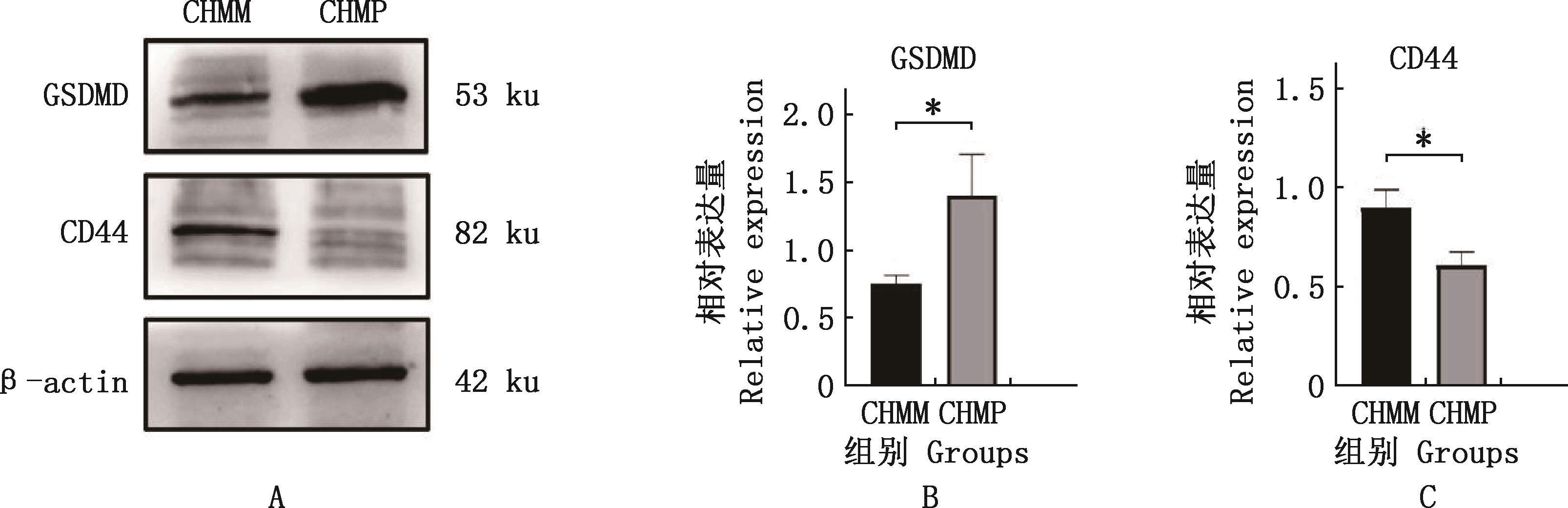
Fig.7
GO functional enrichment results of the differentially expressed proteins"
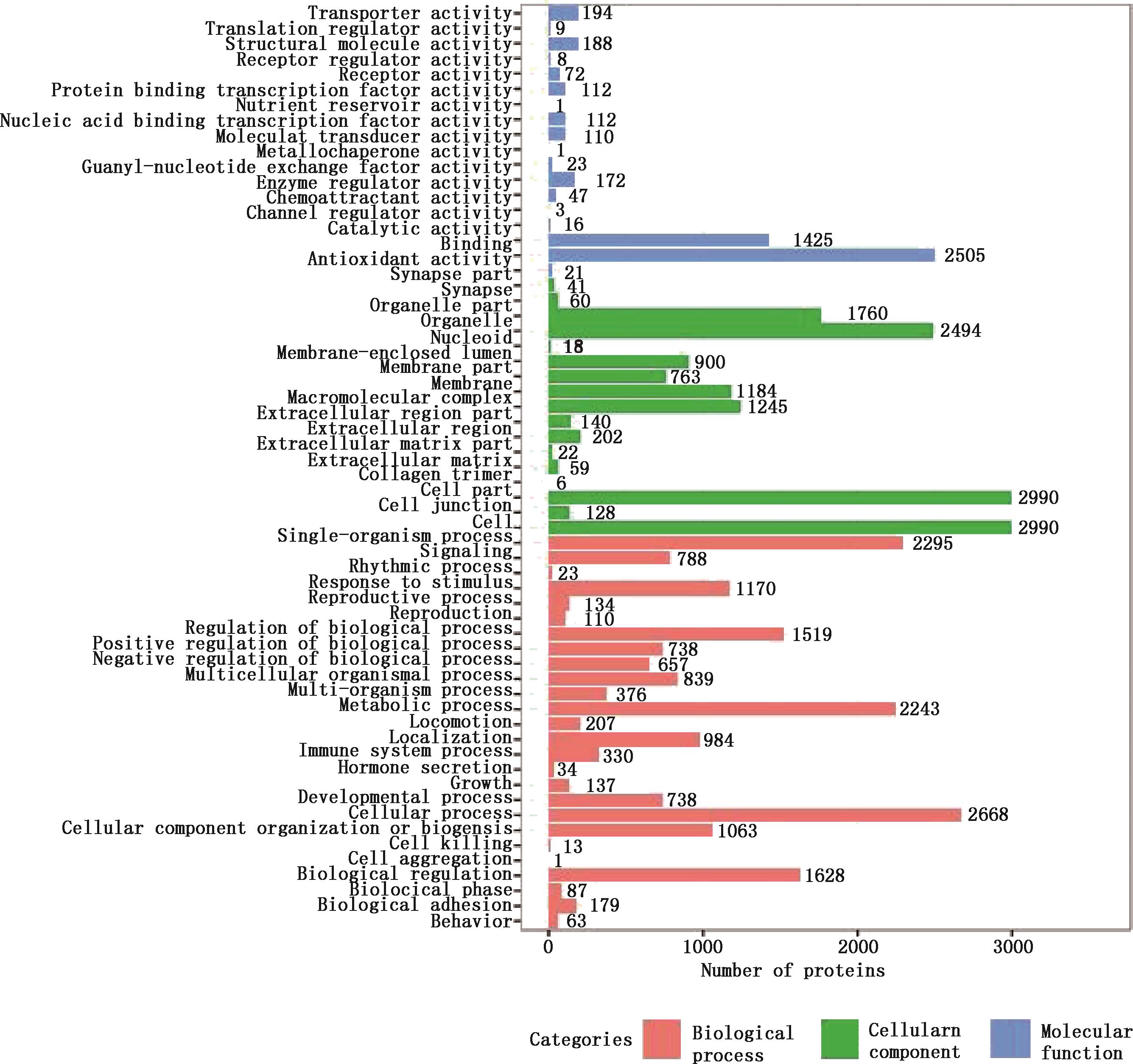
Fig.8
KEGG pathway enrichment analysis of differentially expressed proteins"
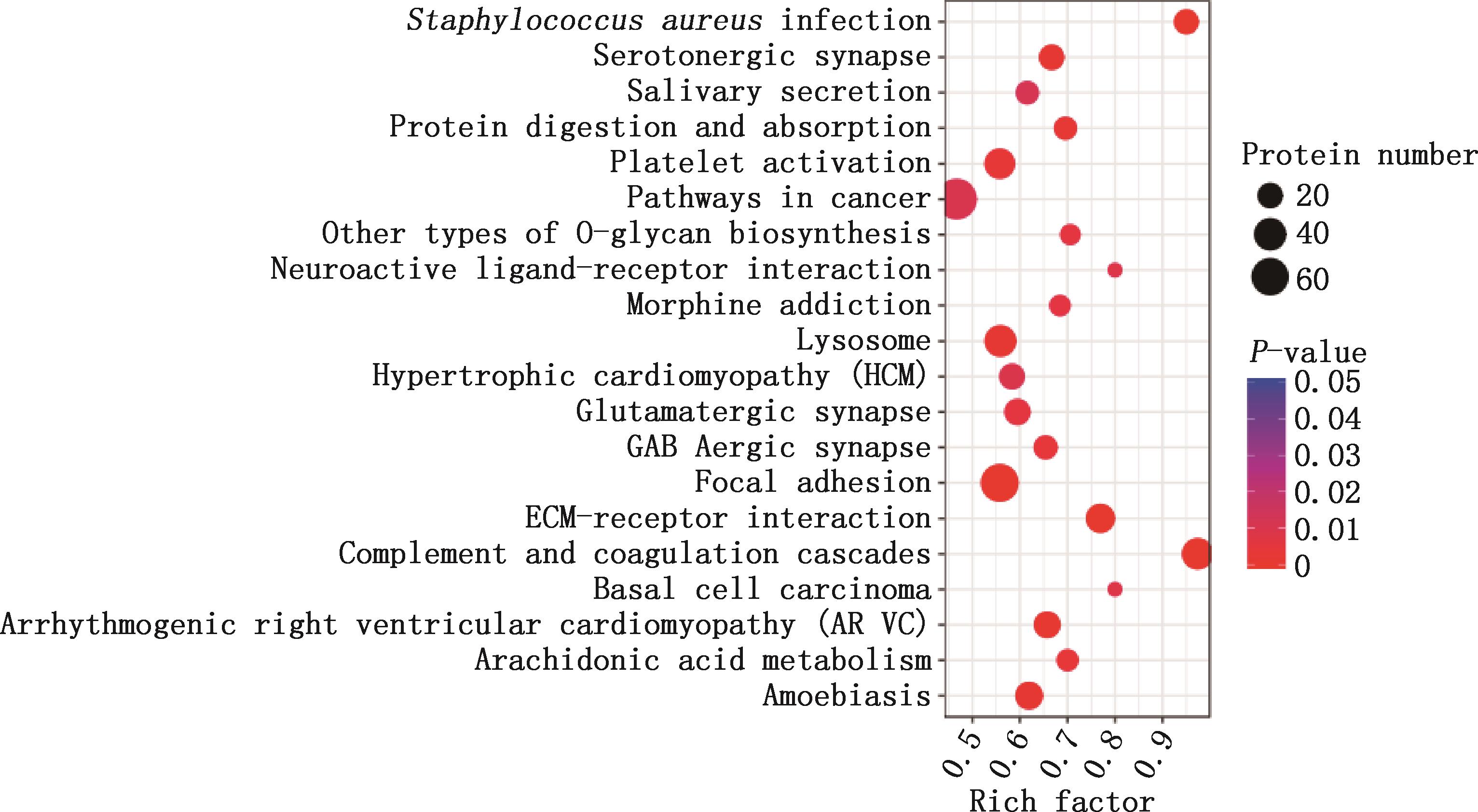
Table 2
Number of KEGG pathway enriched proteins"
通路 Pathways | 蛋白数量 Number of proteins | P值 P-value | 通路ID Pathway ID |
|---|---|---|---|
| 代谢途径Metabolic pathways | 629(12.66%) | 0.9857873 | ko01100 |
| 内吞作用Endocytosis | 186(3.74%) | 0.8479323 | ko04144 |
| 癌症通路Pathways in cancer | 165(3.32%) | 0.01051816 | ko05200 |
| RNA转运RNA transport | 135(2.72%) | 1 | ko03013 |
| 内质网中的蛋白质加工 Protein processing in endoplasmic reticulum | 131(2.64%) | 0.8149936 | ko04141 |
| 剪接体Spliceosome | 129(2.60%) | 0.9999984 | ko03040 |
| 亨廷顿氏疾病 Huntington’s disease | 126(2.54%) | 0.9885915 | ko05016 |
| 人类疱疹病毒4型感染 Epstein-Barr virus infection | 122(2.46%) | 0.9238041 | ko05169 |
| 核糖体Ribosome | 122(2.46%) | 0.9954844 | ko03010 |
| 肌动蛋白细胞骨架调控 Regulation of actin cytoskeleton | 121(2.44%) | 0.03166765 | ko04810 |
| PI3K-Akt信号通路 PI3K-Akt signaling pathway | 115(2.31%) | 0.2105181 | ko04151 |
| 细胞黏附Focal adhesion | 113(2.27%) | 0.00006281731 | ko04510 |
| [1] | GRAY M, MEEHAN J, MARTINEZ-PÉREZ C, et al. Naturally-occurring canine mammary tumors as a translational model for human breast cancer[J]. Frontiers in Oncology, 2020, 10: 617. |
| [2] | 娜仁托亚.谈犬乳腺肿瘤的诊断与治疗[J].吉林畜牧兽医,2024,45(6):166-168. |
| NAREN T Y. Diagnosis and treatment of canine breast tumors[J]. Jilin Animal Husbandry and Veterinary Medicine, 2024,45(6): 166-168.(in Chinese) | |
| [3] | 白亚楠,梁 强.潍坊地区宠物犬肿瘤临床病理学诊断与发病分析[J].吉林畜牧兽医,2020,41(8):1-2. |
| BAI Y N, LIANG Q. Clinathological diagnosis and pathogenesis analysis of pet dog tumors in Weifang[J]. Jilin Animal Husbandry and Veterinary Medicine, 2020,41(8): 1-2.(in Chinese) | |
| [4] | 常宏建,任晓丽,张 佩,等.犬常见肿瘤流行病学调查及组织病理学诊断[J].中国畜牧兽医,2018,45(5):1417-1425. |
| CHANG H J, REN X L, ZHANG P, et al. Epidemiological investigation and histopathological diagnosis of common tumors in dogs[J]. China Animal Husbandry & Veterinary Medicine, 2018,45(5):1417-1425.(in Chinese) | |
| [5] | 高 蕊.犬乳腺肿瘤的病理学诊断及流行病学分析[D].长春:吉林大学,2023. |
| GAO R. Pathological diagnosis and epidemiological analysis of canine mammary tumors[D]. Changchun: Jilin University, 2023.(in Chinese) | |
| [6] | 郑家三,王玉珠,刘 云.犬乳腺肿瘤治疗的研究进展[J].畜牧兽医杂志,2005,6:23-25. |
| ZHENG J S, WANG Y Z, LIU Y. Progress in the treatment of canine breast tumors[J]. Journal of Animal Science and Veterinary Medicine, 2005, 6: 23-25.(in Chinese) | |
| [7] | KIM T M, YANG I S, SEUNG B J, et al. Cross-species oncogenic signatures of breast cancer in canine mammary tumors[J]. Nature Communications, 2020, 11(1): 3616. |
| [8] | 邓金泰,刘 艺,孙秀华.蛋白质稳态的抗肿瘤策略及其临床意义[J].中国肿瘤临床与康复,2024,31(2):67-74. |
| DENG J T, LIU Y, SUN X H. Anti-cancer strategies from the perspective of protein homeostasis and their clinical implications[J]. Chinese Journal of Clinical Oncology and Rehabilitation, 2024,31(2):67-74.(in Chinese) | |
| [9] | 顾庆云, 金红岩, 封家旺. 犬乳腺肿瘤的临床分析[J]. 动物医学进展, 2016, 37(9): 119-122. |
| GU Q Y, JIN H Y, FENG J W. Clinical analysis of canine mammary tumors[J]. Progress in Veterinary Medicine, 2016,37(9): 119-122.(in Chinese) | |
| [10] | SANTOS A A, LOPES C C, RIBEIRO J R, et al. Identification of prognostic factors in canine mammary malignant tumours: A multivariable survival study[J]. BMC Veterinary Research, 2013, 9: 1. |
| [11] | 白建瑞.蛋白质组学技术及其植物营养学中的应用研究[J].现代农业研究,2023,29(12):144-147. |
| BAI J R. Proteomic technology and its application in plant nutrition[J]. Modern Agriculture Research, 2023,29(12):144-147.(in Chinese) | |
| [12] | 杨文惠.紫檀芪抑制小鼠乳腺癌移植瘤生长和侵袭及重塑其肿瘤微环境的作用机制[D]. 沈阳:沈阳农业大学,2022. |
| YANG W H. The mechanism of pterostilbene in inhibiting tumor growth and invasion and remodeling of its tumor microenvironment[D]. Shenyang: Shenyang Agricultural University, 2022.(in Chinese) | |
| [13] | 冉亚琴,陈 曦,谢晏讷,等.细胞焦亡在乳腺癌治疗中的机制及潜在应用策略[J].中国组织工程研究,2025, 29(36): 7880. |
| RAN Y Q, CHEN X, XIE Y N, et al. Mechanism and potential application strategies of pyroptosis in the treatment of breast cancer[J]. Chinese Journal of Tissue Engineering Research, 2025, 29(36): 7880.(in Chinese) | |
| [14] | YAN H, LUO B, WU X, et al. Cisplatin induces pyroptosis via activation of MEG3/NLRP3/caspase-1/GSDMD pathway in triple-negative breast cancer[J]. International Journal of Biological Sciences, 2021, 17(10): 2606. |
| [15] | 邵明涛,李伟文,王兴,等.基于生物信息学分析LAGE3在乳腺癌中的表达及其临床意义[J].齐齐哈尔医学院学报,2021,42(16):1391-1395. |
| SHAO M T, LI W W, WANG X, et al. Expression of LAGE3 in breast cancer and its clinical significance: Analysis results based on bioinformatic analysis[J]. Journal of Qiqihar University of Medicine, 2021,42(16): 1391-1395.(in Chinese) | |
| [16] | DONG X, YANG Q, GU J, et al. Identification and validation of L antigen family member 3 as an immune-related biomarker associated with the progression of papillary thyroid cancer[J]. International Immunopharmacology, 2021, 90: 107267. |
| [17] | 王 丽.CD44在乳腺癌中的作用与机制研究[D].天津:天津大学,2021. |
| WANG L. Study of the role and mechanism of CD44 in breast cancer[D]. Tianjin: Tianjin University, 2021.(in Chinese) | |
| [18] | 申 辉,罗赤苗.CD44与乳腺癌的相关研究进展[J].内江科技,2015,36(12):115-117. |
| SHEN H, LUO C M. Progress between CD44 and breast cancer[J]. Nei Jiang Science & Technology, 2015,36(12): 115-117.(in Chinese) | |
| [19] | 袁紫金,王婉昕,邢 娅,等.HDLBP通过调控氧化应激水平和炎性因子表达参与鹅肥肝的形成[J].畜牧兽医学报,2024,55(9):3897-3913. |
| YUAN Z J, WANG W X, XING Y, et al. HDLBP is involved in goose fatty liver formation by regulating the level of oxidative stress and the expression of inflammatory factors[J]. China Animal Husbandry & Veterinary Medicine, 2024,55(9): 3897-3913.(in Chinese) | |
| [20] | ZHOU W, ZHAO L, YUAN H, et al. A new small cell lung cancer biomarker identified by Cell-SELEX generated aptamers[J]. Experimental Cell Research, 2019, 382(2): 111478. |
| [1] | ZHANG Zhengjie, FENG Shengnan, CHEN Hailong, DONG Miaomiao, LI Pingyang, MENG Qingshi. Using Proteomics Techniques to Analyze the Effect Mechanism by Which Protein Composition Affects Beef Quality [J]. China Animal Husbandry & Veterinary Medicine, 2026, 53(2): 648-658. |
| [2] | LUO Qin, LIU Dingyu, LIU Baoling, QIAO Changhong, CHEN Xiangyu, HE Zhenwen, WANG Xiaohu, CHEN Jing, ZHANG Pian, HUANG Yuan, WANG Gang, LIU Hao, CAI Rujian. Research Progress on Antiviral Effect of Traditional Chinese Medicine Analyzed from Different Omics Perspectives [J]. China Animal Husbandry & Veterinary Medicine, 2025, 52(2): 554-561. |
| [3] | QIAO Changhong, CHEN Xiangyu, LIU Baoling, LUO Qin, LIU Dingyu, HE Zhenwen, WANG Xiaohu, CHEN Jing, ZHANG Pian, HUANG Yuan, BAI Aiquan, WANG Gang, CAI Rujian. Research Progress on the Antimicrobial Mechanism of Traditional Chinese Medicine Through a Multi-omics Perspective [J]. China Animal Husbandry & Veterinary Medicine, 2025, 52(1): 52-59. |
| [4] | ZHAO Depeng, XIAO Tao, LONG Xia, LUO Wei, YE Tao, YU Huan, CHEN Youbo, SHI Yushi, WANG Wenliang, LI Hui. Screening of Candidate Proteins Regulating Egg Green-shell Traits Based on TMT Quantitative Proteomics Technology [J]. China Animal Husbandry & Veterinary Medicine, 2024, 51(12): 5138-5149. |
| [5] | YIN Li, LU Chengshu, ZENG Guofang, ZENG Shiyuan, LYU Jiayu, WANG Huakun. Screening of Differentially Expressed Proteins in Asperuloside Intervention CUMS Rats Hippocampus Based on TMT and PRM Techniques [J]. China Animal Husbandry & Veterinary Medicine, 2023, 50(11): 4513-4525. |
| [6] | WU Tao, QI Yunxia, LIU Wei, ZHU Honglong, HUANG Dongwei, DING Haisheng, ZHAO Huiling, CHENG Guanglong, ZHAO Xiaowei. Effect of Colostrum and Milk Feeding on Hepatic Proteins of Calves Based on Proteomics Analysis [J]. China Animal Husbandry & Veterinary Medicine, 2023, 50(1): 37-45. |
| [7] | WANG Guang, ZOU Jiahao, ZHANG Yongtao, LI Dexian, LI Xueqing, YU Mengqi, CHEN Lu, YUAN Yuxin, LI Guang. Difference Analysis of Metabolites in Testis of Guanzhong Dairy Goats at Different Developmental Stages [J]. China Animal Husbandry & Veterinary Medicine, 2022, 49(9): 3453-3464. |
| [8] | DAI Guodong, YAN Hongbin, LI Li, FU Baoquan, JIA Wanzhong. Research Progress on Screening Methods for Candidate Vaccine Molecules Against Parasitic Zoonoses [J]. China Animal Husbandry & Veterinary Medicine, 2021, 48(6): 2177-2187. |
| [9] | HE Dongqian, TAO Jinzhong, CHEN Liyao, WANG Junkui. Research Progress of Sheep Hair Follicle and Keratin [J]. China Animal Husbandry & Veterinary Medicine, 2021, 48(1): 248-256. |
| [10] | NIU Chunyu, SHI Linlin, SUN Miao, LIU Yanmin, HUANG Shaolei, CHENG Chao, LI Peifeng. Applications of Omics Approaches in Isolation and Identification of Lactic Acid Bacteria and It’s Functional Research [J]. China Animal Husbandry & Veterinary Medicine, 2020, 47(12): 3882-3889. |
| [11] | WANG Xinyue, ZHANG Li. Research Progress on Application of Proteomics and Post-translational Modification of Proteins in Animal Husbandry [J]. China Animal Husbandry & Veterinary Medicine, 2019, 46(4): 1063-1073. |
| [12] | YANG Zuo-qing, TAO Jin-zhong, LI Ying-kang, DING Wei, LIU Yong-bin, WEI Bing-dong. Study on Differentially Expressed Proteins of Tan Sheep Skin Using iTRAQ Technology [J]. China Animal Husbandry & Veterinary Medicine, 2017, 44(9): 2682-2691. |
| [13] | FU Xue-feng, YANG Han-yulu, SHI Gang, XU Xin-ming, ZHANG En-ping, DI Jiang, ZHANG Yan-hua, HUANG Xi-xia, TIAN Ke-chuan. Proteome Array on Differentially Expressed Proteins of Skin Tissue in Fine-wool Sheep with Different Fiber Diameter [J]. China Animal Husbandry & Veterinary Medicine, 2016, 43(4): 879-891. |
| [14] | WANG Le-le, ZHAO Meng, HAN Wen-jing, WANG Zhi-xin, ZHANG Yan-jun, LI Jin-quan. Proteomics Technologies based on Mass Spectrometry and their Application in Wool-sheep and Cashmere-goat [J]. China Animal Husbandry & Veterinary Medicine, 2015, 42(12): 3179-3185. |
| [15] | HAN Wen-jing, ZHANG Yan-jun, WANG Le-le, LI Xiao-yan, SU Rui, WANG Rui-jun, LI Jin-quan. Application Research on Proteomics Technology [J]. China Animal Husbandry & Veterinary Medicine, 2015, 42(11): 2928-2934. |
| Viewed | ||||||
|
Full text |
|
|||||
|
Abstract |
|
|||||
