
China Animal Husbandry & Veterinary Medicine ›› 2026, Vol. 53 ›› Issue (1): 287-298.doi: 10.16431/j.cnki.1671-7236.2026.01.026
• Physiological and Biochemical • Previous Articles Next Articles
ZHANG Liqiong1,2( ), ZHAO Ying2, ZHANG Liuzhe1,2, WANG Yanfang2(), GUO Huihui1()
Received:2025-04-08
Online:2026-01-05
Published:2025-12-26
Contact:
WANG Yanfang, GUO Huihui
E-mail:zlq1728304890@163.com;wangyanfang@cass.cn;aladdin111@163.com
CLC Number:
ZHANG Liqiong, ZHAO Ying, ZHANG Liuzhe, WANG Yanfang, GUO Huihui. Effect of Rnf20 Gene on Branched-chain Amino Acid Content in Adipocytes[J]. China Animal Husbandry & Veterinary Medicine, 2026, 53(1): 287-298.
Table 1
Primer information"
基因 Genes | 引物序列 Primer sequences (5′→3′) | 片段大小 Fragment length/bp | |
|---|---|---|---|
| 18S rRNA | F:GTAACCCGTTGAACCCCATT | R:CCATCCAATCGGTAGTAGCG | 151 |
| Rnf20 | F:GTGAACCGGTACTGGAGCCAG | R:GAAAGCTGGCTCTTGCCCATC | 192 |
| Bcat2 | F:ACAGACCACATGCTGATGGTG | R:CTGGGTGTAGCGTGAGGTTC | 91 |
| Bckha | F:CTCCTGTTGGGACGATCTGG | R:CATTGGGCTGGATGAACTCAA | 258 |
| Bckhb | F:CTTCCGATGCACTGTTGGTTT | R:GATTTCCGCAATAGCTGTAGCA | 133 |
| Acad8 | F:TTTACATGGCGATGTTGCGG | R:TTAGCCCCAAGGAAGGATCG | 123 |
| Hibch | F:CCGGTGGAACCACTACACTC | R:TCTGAAGGAGCTGACCCTCG | 100 |
| Hibadh | F:ACCTTGGAATCAGGTCAGGC | R:GGGTTGTAAGTGTCGCTGGA | 94 |
| Pparγ | F:CGGAAGCCCTTTGGTGACTT | R:CCTCGATGGGCTTCACGTTC | 154 |
| Cebpα | F:CCCTTGCTTTTTGCACCTCC | R:GCTTTCTGGTCTGACTGGGG | 118 |
| Fas | F:GGGTCTATGCCACGATTC | R:GTGTCCCATGTTGGATTTG | 272 |
| Acc | F:GAGAGGGGTCAAGTCCTTCC | R:ACATCCACTTCCACACACGA | 152 |
| Scd1 | F:CTGACCTGAAAGCCGAGAAG | R:GCGTTGAGCACCAGAGTGTA | 172 |
| Adrb3 | F:TTTGATGGCTATGAAGGTGCG | R:CGTTGCTTGTCTTTCTGGAGG | 169 |
| Hsl | F:GACTCACCGCTGACTTCC | R:TGTCTCGTTGCGTTTGTAG | 161 |
| Atgl | F:CGTCACCTGTGCCTTACTC | R:GGGCTCAAACTCCCAAAC | 407 |
Table 2
siRNA sequences"
| siRNAs | 正义链 Sense (3′→5′) | 反义链 Antisense (5′→3′) |
|---|---|---|
| siRNF20 | GAGAUUCUGUUAAGGAUAATT | UUAUCCUUAACAGAAUCUCTT |
| siNC | UUCUCCGAACGUGUCACGUTT | ACGUGACACGUUCGGAGAATT |
Table 3
The contents of 3 amino acids in gWAT of WT and ASKO mice"
项目 Items | 含量 Contents/(μmol/kg) | ASKO/WT | P值 P-value | |
|---|---|---|---|---|
| WT | ASKO | |||
| 异亮氨酸 Ilu | 24.36±16.52 | 136.22±49.56 | 5.59 | <0.01 |
| 亮氨酸 Leu | 20.89±13.33 | 113.01±45.69 | 5.41 | <0.01 |
| 缬氨酸 Vel | 39.36±24.86 | 151.86±51.35 | 3.86 | <0.01 |
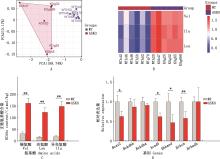
Fig.1
Targeted amino acid metabolomics analysis in gWAT of WT and ASKO mice①A and B, PCA diagram and heatmap of BCAAs composition in gWAT of mice, respectively;C, BCAAs contents in gWAT of mice; D, Expression of BCAAs catabolism genes in gWAT of mice. ②*, Significant difference (P<0.05); **, Extremely significant difference (P<0.01); No *, No significant difference (P>0.05). The same as below"

Table 4
BCAAs contents of serum in WT and ASKO mice"
项目 Items | 含量 Contents/(μmol/L) | ASKO/WT | P值 P-value | |
|---|---|---|---|---|
| WT | ASKO | |||
| 异亮氨酸 Ilu | 0.12±0.03 | 0.12±0.02 | 1.04 | 0.78 |
| 缬氨酸 Vel | 0.16±0.02 | 0.16±0.02 | 0.98 | 0.82 |
| 亮氨酸 Leu | 0.08±0.02 | 0.08±0.01 | 0.96 | 0.77 |
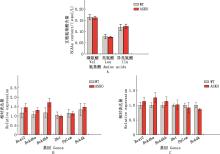
Fig.2
BCAAs contents (A) in serum and the expression of metabolic genes in liver (B) and gastrocnemius muscle (C) of WT and ASKO mice"

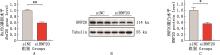
Fig.3
Expression of Rnf20 gene (A) and RNF20 protein (B and C) of adipocytes"

Fig.4
Effect of interfering with Rnf20 gene on lipid droplet formation in adipocytesA, The lipid droplet morphology of 3T3-L1 cells after 8 days of differentiation using oil red O staining; B, The quantitative result of oil red O staining"
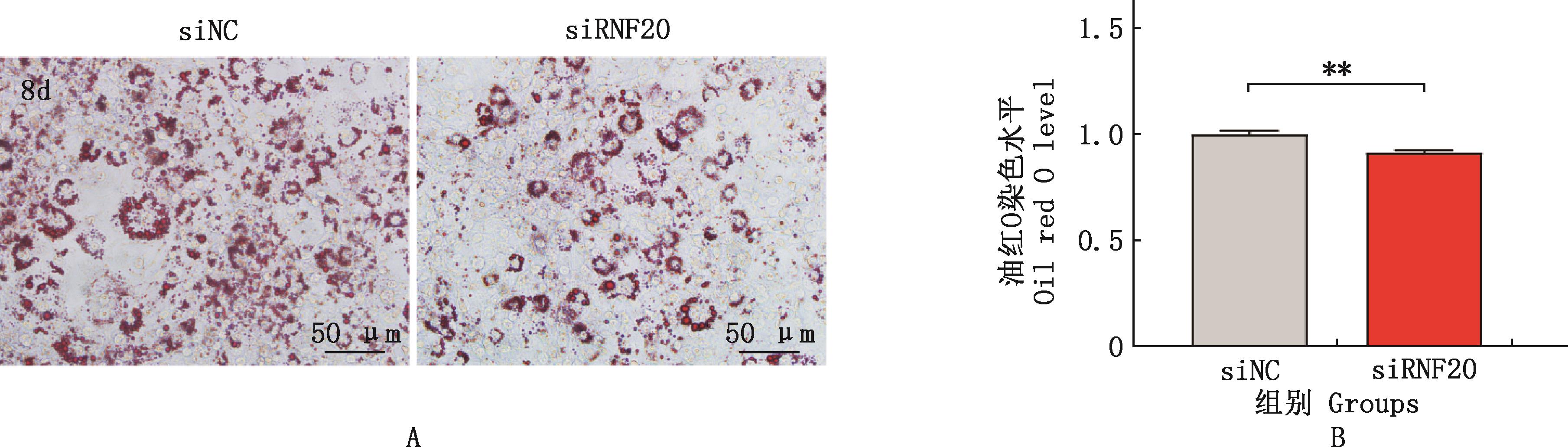
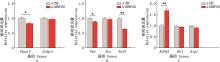
Fig.5
Effect of Rnf20 gene interference on the expression of genes related to adipocyte generation (A and B) and catabolism (C)"

Table 5
Contents of three kinds of amino acids in adipocytes with Rnf20 gene interference"
项目 Items | 含量 Contents/(μmol/L) | ASKO/WT | P值 P-value | |
|---|---|---|---|---|
| siNC | siRNF20 | |||
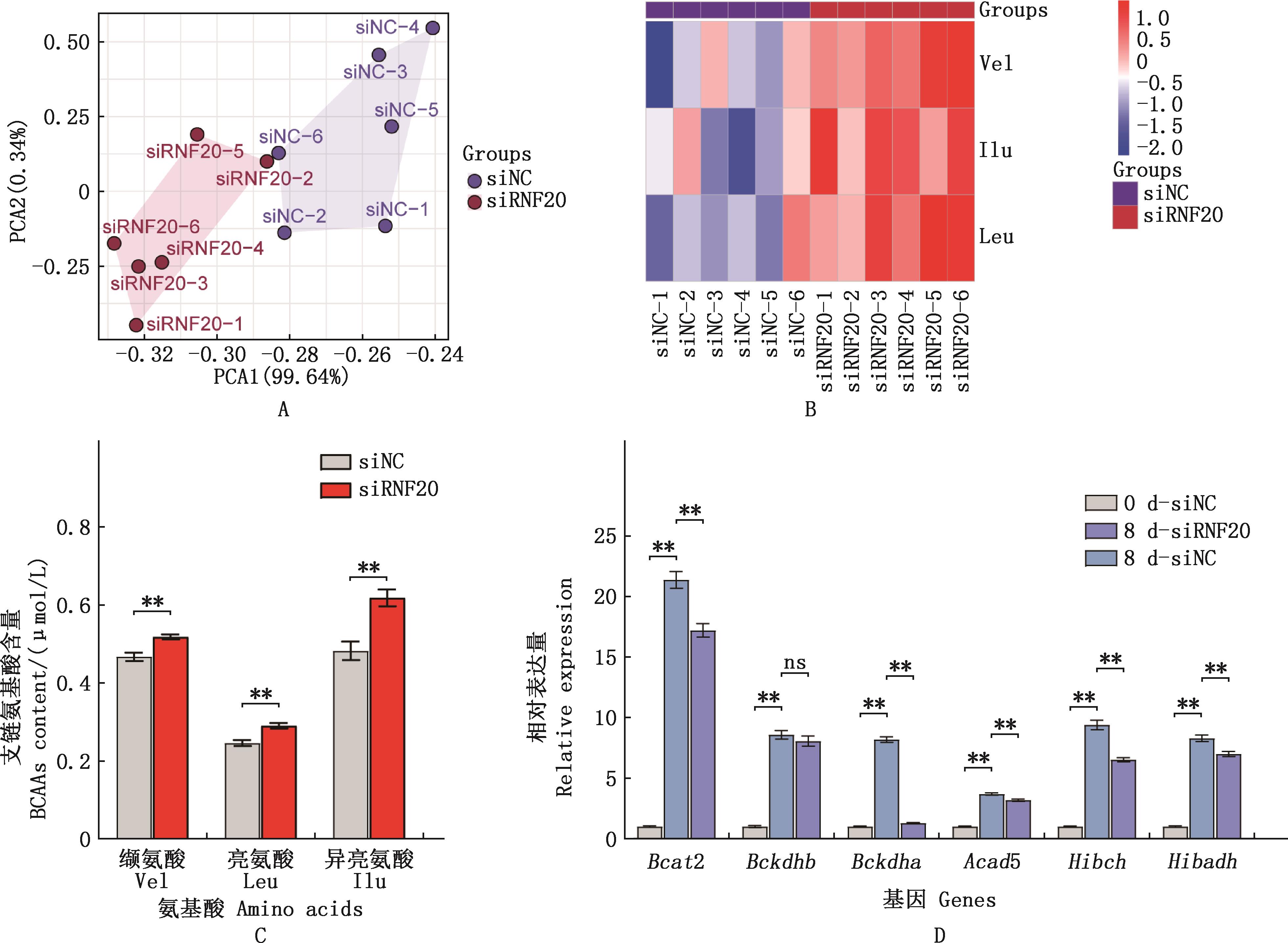
| 异亮氨酸 Ilu | 0.48±0.05 | 0.62±0.05 | 1.28 | <0.01 |
| 亮氨酸 Leu | 0.25±0.02 | 0.29±0.02 | 1.18 | <0.01 |
| 缬氨酸 Vel | 0.47±0.02 | 0.52±0.01 | 1.11 | <0.01 |
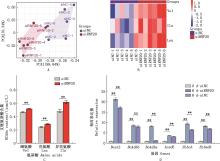
Fig.6
Metabolomics analysis of BCAAsand the expression of related genes in adipocyte with Rnf20 gene interferenceA-C, PCA diagram (A), heatmap (B), and bar chart (C) of BCAAs in culture medium after differentiation of 3T3-L1 cell line for 8 d, respectively; D, Expression of BCAAs catabolism genes on differentiation 0 and 8 d after knocking down Rnf20 gene in 3T3-L1 cell line"
| [1] | WANG Y, ZHOU P, ZHOU X, et al. Effect of host genetics and gut microbiome on fat deposition traits in pigs[J]. Frontiers in Microbiology, 2022, 13: 925200. |
| [2] | SHEN L, BAI X, ZHAO L, et al. Integrative 3D genomics with multi-omics analysis and functional validation of genetic regulatory mechanisms of abdominal fat deposition in chickens[J]. Nature Communications, 2024, 15(1): 9274. |
| [3] | TSENG Y H, CYPESS A M, KAHN C R. Cellular bioenergetics as a target for obesity therapy[J]. Nature Reviews. Drug Discovery, 2010, 9(6): 465-482. |
| [4] | JIN W, PATTI M E. Genetic determinants and molecular pathways in the pathogenesis of type 2 diabetes[J]. Clinical Science, 2009, 116(2): 99-111. |
| [5] | FUCHS G, SHEMA E, VESTERMAN R, et al. RNF20 and USP44 regulate stem cell differentiation by modulating H2B monoubiquitylation[J]. Molecular Cell, 2012, 46(5): 662-673. |
| [6] | LIANG Q, XIA W, LI W, et al. RNF20 controls astrocytic differentiation through epigenetic regulation of STAT3 in the developing brain[J]. Cell Death and Differentiation, 2018, 25(2): 294-306. |
| [7] | XU Z, SONG Z, LI G, et al. H2B ubiquitination regulates meiotic recombination by promoting chromatin relaxation[J]. Nucleic Acids Research, 2016, 44(20): 9681-9697. |
| [8] | JEON Y G, NAHMGOONG H, OH J, et al. Ubiquitin ligase RNF20 coordinates sequential adipose thermogenesis with brown and beige fat-specific substrates[J]. Nature Communications, 2024, 15(1): 940. |
| [9] | JEON Y G, LEE J H, JI Y, et al. RNF20 Functions as a transcriptional coactivator for PPARγ by promoting NCoR1 degradation in adipocytes[J]. Diabetes, 2020, 69(1): 20-34. |
| [10] | ZHAO Y, PAN J, CAO C, et al. RNF20 affects porcine adipocyte differentiation via regulation of mitotic clonal expansion[J]. Cell Proliferation, 2021, 54(12): e13131. |
| [11] | WANG T J, LARSON M G, VASAN R S, et al. Metabolite profiles and the risk of developing diabetes[J]. Nature Medicine, 2011, 17(4): 448-453. |
| [12] | PATRICK M, GU Z, ZHANG G, et al. Metabolon formation regulates branched-chain amino acid oxidation and homeostasis[J]. Nature Metabolism, 2022, 4(12): 1775-1791. |
| [13] | SHE P, REID T M, BRONSON S K, et al. Disruption of BCATm in mice leads to increased energy expenditure associated with the activation of a futile protein turnover cycle[J]. Cell Metabolism, 2007, 6(3): 181-194. |
| [14] | ISLAM M M, WALLIN R, WYNN R M, et al. A novel branched-chain amino acid metabolon. Protein-protein interactions in a supramolecular complex[J]. The Journal of Biological Chemistry, 2007, 282(16): 11893-11903. |
| [15] | GREEN C R, WALLACE M, DIVAKARUNI A S, et al. Branched-chain amino acid catabolism fuels adipocyte differentiation and lipogenesis[J]. Nature Chemical Biology, 2016, 12(1): 15-21. |
| [16] | ARANY Z, NEINAST M. Branched chain amino acids in metabolic disease[J]. Current Diabetes Reports, 2018, 18(10): 76. |
| [17] | SON S M, PARK S J, LEE H, et al. Leucine signals to mTORC1 via its metabolite acetyl-coenzyme A[J]. Cell Metabolism, 2019, 29(1): 192-201.e7. |
| [18] | ZHAO Y, YANG S, WANG Y, et al. Molecular characterization, expression profiling, and SNP analysis of the porcine RNF20 gene[J]. Animals, 2020, 10(5):888. |
| [19] | TIAN H, NI Z, LAM S M, et al. Precise metabolomics reveals a diversity of aging-associated metabolic features[J]. Small Methods, 2022, 6(7): e2200130. |
| [20] | SONG J W, LAM S M, FAN X, et al. Omics-driven systems interrogation of metabolic dysregulation in COVID-19 pathogenesis[J]. Cell Metabolism, 2020, 32(2): 188-202.e5. |
| [21] | LIANG X, TAO C, PAN J, et al. Rnf20 deficiency in adipocyte impairs adipose tissue development and thermogenesis[J]. Protein & Cell, 2021, 12(6): 475. |
| [22] | MA Q X, ZHU W Y, LU X C, et al. BCAA-BCKA axis regulates WAT browning through acetylation of PRDM16[J]. Nature Metabolism, 2022, 4(1): 106-122. |
| [23] | YONESHIRO T, WANG Q, TAJIMA K, et al. BCAA catabolism in brown fat controls energy homeostasis through SLC25A44[J]. Nature, 2019, 572(7771): 614. |
| [24] | XU H, WANG X, GENG G, et al. Association of circulating branched-chain amino acids with cardiovascular diseases: A mendelian randomization study[J]. Nutrients, 2023, 15(7): 1580. |
| [25] | ZHAO Y, CHEN C, PAN J, et al. Adipocyte Rnf20 ablation increases the fast-twitch fibers of skeletal muscle via lysophosphatidylcholine 16∶0[J]. Cellular and Molecular Life Sciences, 2023, 80(9): 243. |
| [26] | HE A, CHEN X, TAN M, et al. Acetyl-CoA derived from hepatic peroxisomal β-oxidation inhibits autophagy and promotes steatosis via mTORC1 activation[J]. Molecular Cell, 2020, 79(1): 30-42.e4. |
| [27] | BATRAN R AL, GOPAL K, CAPOZZI M E, et al. Pimozide alleviates hyperglycemia in diet-induced obesity by inhibiting skeletal muscle ketone oxidation[J]. Cell Metabolism, 2020, 31(5): 909-919.e8. |
| [28] | LACKEY D E, LYNCH C J, OLSON K C, et al. Regulation of adipose branched-chain amino acid catabolism enzyme expression and cross-adipose amino acid flux in human obesity[J]. American Journal of Physiology-Endocrinology and Metabolism, 2013, 304(11): E1175-E1187. |
| [29] | HSIAO G, CHAPMAN J, OFRECIO J M, et al. Multi-tissue, selective PPARγ modulation of insulin sensitivity and metabolic pathways in obese rats[J]. American Journal of Physiology. Endocrinology and Metabolism, 2011, 300(1): E164-E174. |
| [30] | DENG Z, AI H, SUN M, et al. Mechanistic insights into nucleosomal H2B monoubiquitylation mediated by yeast Bre1-Rad6 and its human homolog RNF20/RNF40-hRAD6A[J]. Molecular Cell, 2023, 83(17): 3080-3094.e14. |
| [1] | CHU Hongen, LIU Yuan, FENG Xue, BAI Xue, YANG Mengli, LI Juan, HE Lixia, LIU Shuang, FENG Lan, MA Yun. Cloning,Bioinformatics and Tissue Expression Analysis of Bovine TGFB1 Gene [J]. China Animal Husbandry & Veterinary Medicine, 2025, 52(6): 2506-2518. |
| [2] | ZHANG Qianwen, LI Jingping, YUE Chengguang, WANG Jiajun, LI Zhonghui, LI Wenrong. Study on the Proliferation and Differentiation Characterization of Precursor Adipocytes from Rump Adipose in Kazakh Sheep During Fetal Period [J]. China Animal Husbandry & Veterinary Medicine, 2025, 52(10): 4563-4574. |
| [3] | HAN Xu, PENG Yu, ZHANG Lilan, LIU Tianxia, LI Hongqiang, TAO Cong. Study on the Molecular Characteristics of Thermogenesis in Tibetan Pig Adipocytes [J]. China Animal Husbandry & Veterinary Medicine, 2025, 52(10): 4796-4808. |
| [4] | LIU Xiaotian, JIA Yuxin, GAO Feng, YUAN Xinxin, WANG Yongfa, XUE Yuheng, MENG Jun, ZENG Yaqi, LI Xiaobin. Effects of Supplemental Feeding of Branched-chain Amino Acids to Mares on Growth Performance and Fecal Flora of Lactating Foals [J]. China Animal Husbandry & Veterinary Medicine, 2024, 51(8): 3355-3364. |
| [5] | GUO Panpan, LI Qiang, LI Xiangzi, YAN Changguo, JIN Xin. Effect of Overexpression of DGAT2 Gene on Differentiation of Yanbian Bovine Preadipocytes [J]. China Animal Husbandry & Veterinary Medicine, 2023, 50(8): 3045-3055. |
| [6] | MENG Chaoqun, LI Chengping, ZHAO Wei, QIN Xuyong, ZHOU Guoli. Effect of miR-137-3p on Adipogenic Differentiation of Preadipocytes 3T3-L1 by Targeting MAX Gene [J]. China Animal Husbandry & Veterinary Medicine, 2023, 50(5): 1928-1937. |
| [7] | ZHANG Dianqi, MA Xinhao, YANG Zhimei, MEI Chugang, ZAN Linsen. Bioinformatics Analysis of PAI1 Gene and Its Effect on the Proliferation and Differentiation of Intramuscular Adipocytes in Qinchuan Beef Cattle [J]. China Animal Husbandry & Veterinary Medicine, 2023, 50(5): 1729-1741. |
| [8] | ZHANG Jiupan, MA Qing, WANG Jin, MA Lina, WEI Dawei, LIANG Xiaojun. Single-cell RNA Sequencing Technology and Its Application in the Study of Intramuscular Adipocytes [J]. China Animal Husbandry & Veterinary Medicine, 2023, 50(2): 479-489. |
| [9] | ZHANG Xueping, SHI Bingang, JIN Xiayang, WANG Xiangyan, LAN Lijuan, SHI Yu, QI Youpeng, ZHAO Shijie, LI Shaobin, HU Jiang. Expression Characterization Analysis of KLF7 Gene and Effects of Its Overexpression on Proliferation and Differentiation of Preadipocytes in Tibetan Sheep [J]. China Animal Husbandry & Veterinary Medicine, 2022, 49(8): 2920-2930. |
| [10] | GUO Panpan, JIN Xin, SUN Jianfu, LI Xiangzi, YIN Yunhou, YAN Changguo. Analysis of Differentially Expressed Genes in Differentiation of Yanbian Yellow Cattle Preadipocytes Induced by Cycloglitazone and Insulin Based on RNA-Seq Data [J]. China Animal Husbandry & Veterinary Medicine, 2021, 48(7): 2358-2368. |
| [11] | LI Anqi, JIANG Lei, SU Xiaotong, ZAN Linsen, WANG Hongbao. Expression Characteristics Analysis of ACTC1 Gene in Qinchuan Cattle [J]. China Animal Husbandry & Veterinary Medicine, 2020, 47(8): 2359-2367. |
| [12] | HUANG Huayun, LIANG Zhong, LIU Longzhou, ZHAO Zhenhua, WANG Qianbao, LI Chunmiao, HUANG Zhenyang, ZHANG Xin, LI Shoufeng. Mechanism of C-type Natriuretic Peptide Regulating Lipid Deposition of Intramuscular Adipocytes in Chickens [J]. China Animal Husbandry & Veterinary Medicine, 2020, 47(11): 3555-3562. |
| [13] | ZHAO Xinyan, GUO Yanting, CHEN Junzhen, LI Zeyu, SHI Huijun, FU Qiang. Isolation,Identification and Differentiation of Bovine Skeletal Muscle Satellite Cells [J]. China Animal Husbandry & Veterinary Medicine, 2020, 47(10): 3249-3258. |
| [14] | LYU Yang, CAO Yang, GAO Yi, LIU Lixiang, XUE Jiajia, ZHANG Guoliang. Cloning,Bioinformatics Analysis and Construction of Eukaryotic Expression Vector of AIDA Gene in Red Steppe Cattle [J]. China Animal Husbandry & Veterinary Medicine, 2019, 46(8): 2193-2202. |
| [15] | XIAO Cheng, JIN Haiguo, WEI Tian, CAO Yang. Study on the Expression of Genes Related to the Differentiation Process of Preadipocytes in Small-tail Han Sheep [J]. China Animal Husbandry & Veterinary Medicine, 2019, 46(7): 2030-2037. |
| Viewed | ||||||
|
Full text |
|
|||||
|
Abstract |
|
|||||
